


Diamond Carat
What Is A Diamond Carat?
The term carat refers to a diamond’s weight, not necessarily its visual size. Two diamonds with the same carat weight can appear very different depending on their proportions, shape, and dimensions, which is why carat weight is best considered alongside a diamond’s overall appearance and presence.
Diamond Carat Price
Diamonds with higher carat weights are cut from larger rough diamonds, which are far more rare than smaller rough material. Carat price is influenced not only by size, but also by the rarity of the diamond’s color, clarity characteristics, and overall cut quality. Understanding how these elements work together can help you find the right balance of beauty, rarity, and presence for your diamond.
The Brief History Of Diamond Carat
The term carat comes from the ancient method of weighing precious metal and stones against the seeds of the carob tree—which were considered to be even in weight. It wasn’t until 1907, at the Fourth General Conference on Weights and Measures, when it was agreed upon that one diamond carat would be equal to 200 mg, or .2 grams, of a diamond. Carats can also be measured in points; 100 points equals a full carat.
4 Things To Know About Carat
1. Consider diamonds just below popular milestone carat weights—such as 0.90 instead of 1.00 carat, or 1.90 instead of 2.00 carats—as small differences in carat weight can create meaningful savings while appearing very similar in size once worn.
2. Prioritize cut quality, as cut has the greatest influence on a diamond’s brilliance, sparkle, and overall light performance. Even a higher-carat diamond can appear less vibrant if cut proportions are poor.
3. Fancy-shaped diamonds often cost less per carat than round brilliant diamonds and can sometimes appear larger than round diamonds of the same carat weight depending on their proportions and shape.
4. Keep finger size and overall proportions in mind. A well-cut diamond with balanced dimensions can often appear larger, brighter, and more visually impactful than carat weight alone might suggest.
Carat Has The Biggest Effect On Price
You can thank movies, mass media, and advertising for the emphasis that people put on carat in relation to diamond quality. Carat weight has become an indication of a person’s status and wealth, but when it comes to diamonds, bigger is definitely not always better. Instead, focus on a balance of the 4Cs: cut, clarity, color, and carat to make a smart purchase.
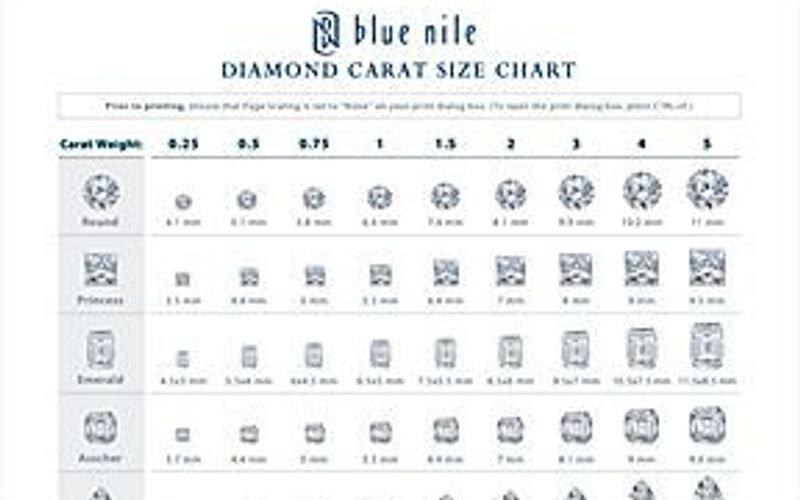
Diamond Carat Size Chart
This chart offers a directional view of how diamonds of varying carat weights and shapes can appear from above.
In practice, two diamonds of the same weight can present quite differently.
Proportions and dimensions - how a diamond is cut and how it holds its weight—play a defining role in its visual presence.
Understanding this balance allows for a more considered approach to choosing the right diamond.
A Few Additional Carat Tips Before You Buy A Diamond
1. Certain settings can make a diamond appear larger. A very popular setting to achieve this effect is the halo. This setting has a ring of small diamonds around the center stone. The ratio of the small to large diamonds skews the perspective in your favor, making the center diamond seem larger.
2. Band size affects the look of a diamond’s carat. Selecting a thin band creates a perspective that makes the center stone appear larger. A popular band to achieve this is the pavé, which features small diamonds embedded in the band.
3. Carat Total Weight (CTTW). Total carat weight is the measurement of all the diamonds in any given piece combined. So, be sure to inquire about the weights of the individual diamonds in any piece that you are buying.
Have A Question?
Contact us by phone at 1-800-242-2728 or email at service@bluenile.com.
In addition, Live Chat is available during most business hours.