


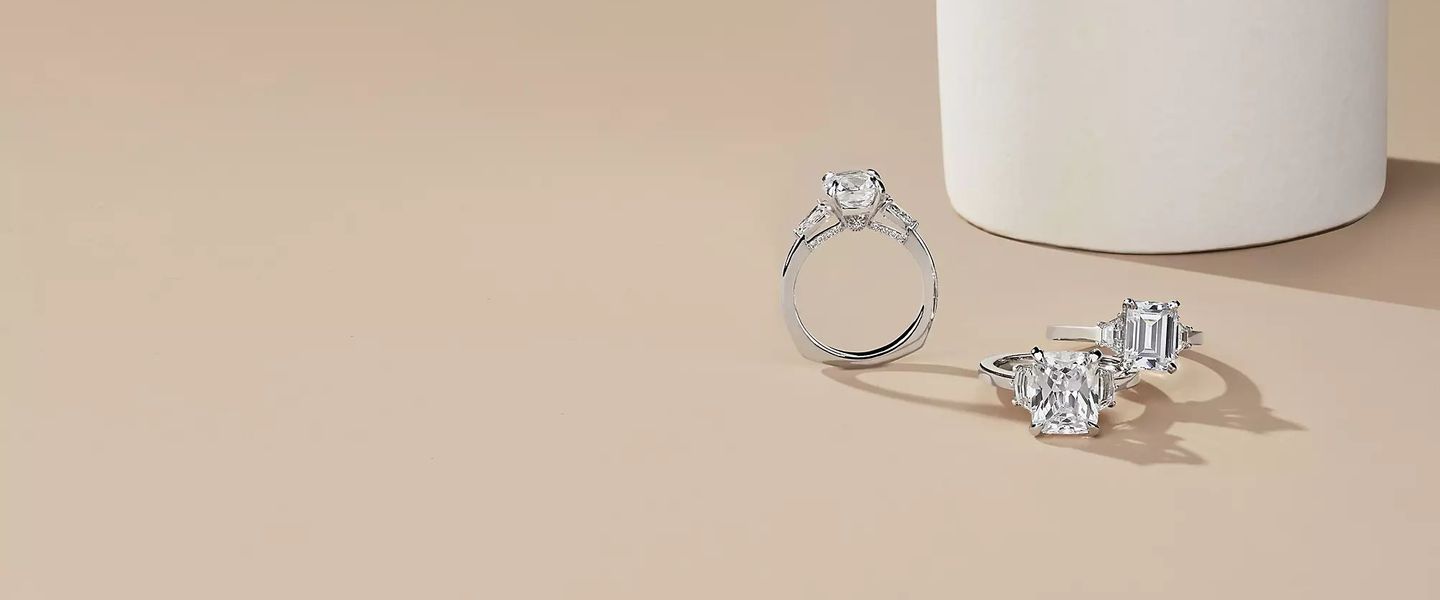
Moissanite and Lab Diamond Origins
Moissanite was first discovered in a meteorite and is exceptionally rare in nature, though today it’s created in controlled environments for consistency.
Lab-grown diamonds are also formed in controlled settings, replicating natural conditions to produce stones with the same core properties as mined diamonds.
While their origins differ, each offers a distinct perspective—shaped by composition, creation, and how the stone is experienced.
Comparing the Appearance of Lab Grown Diamonds vs Moissanite
Lab-grown diamonds and moissanite may appear similar, each offering strong brilliance.
Diamonds reflect balanced white light, while moissanite shows more pronounced flashes of color.
Diamonds are typically chosen for near-colorless tones; moissanite may show subtle variation.
Both deliver brightness and durability—the choice comes down to the light and look you prefer.
HARDNESS & WEARABILITY
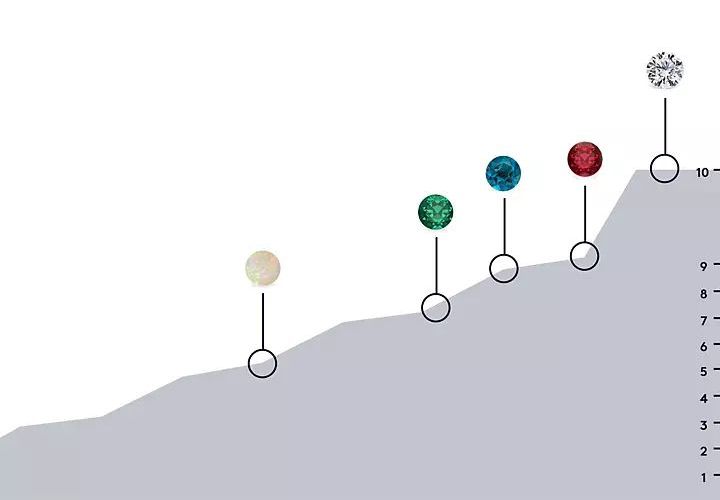
Lab diamonds are a perfect 10 on the Mohs scale, meaning they’re an incredibly durable gem that’s ideal for daily wear. With normal wear, it is difficult to break, crack or chip a lab diamond. Moissanites, on the other hand, are 9.25 on the Mohs scale. This means they are also very durable, but a little less hardy than diamonds.
Chemical Differences for Lab Diamonds Versus Moissanite
Lab-grown diamonds and moissanite differ in composition, shaping how each reflects light and wears over time.
Moissanite is made of silicon carbide, while lab-grown diamonds share the same carbon structure as natural diamonds—resulting in distinct expressions of brilliance.
Both offer durability and brightness, with differences in optical behavior creating unique visual character.
Gradings and Paperwork
When browsing lab-grown diamonds, many are graded on the 4Cs—cut, color, clarity, and carat—often with certifications from leading gemological labs.
Moissanite, by contrast, is typically measured by size (millimeters) rather than carat weight and is not graded within the same 4C framework.
FAQs About Moissanite and Lab Diamond Comparisons
Are moissanite gems real diamonds?
Moissanite is not a diamond—it’s a different gemstone with its own composition and optical properties.
While it can resemble a diamond, it reflects light differently and has a distinct overall appearance.
What is the difference between lab diamonds and moissanite?
Lab diamonds are chemically and optically identical to natural diamonds. Moissanites are different gems with their own chemical and optical properties. Lab grown diamonds are considered diamonds, but moissanites are not actually diamonds.
What is a diamond simulant?
A diamond simulant is a gemstone or material that mimics the look of a diamond. But, it is chemically different from diamonds. Moissanites are considered diamond simulants.
How easy is it to tell the difference between lab diamonds and moissanite?
Lab diamonds and moissanite differ most in how they reflect light.
Lab diamonds show crisp white brilliance, while moissanite reflects more rainbow-like flashes.
With magnification or testing, the distinction becomes unmistakable.
What are the pricing differences for lab grown diamonds vs moissanites?
Lab-grown diamonds and moissanite are both more accessible alternatives to natural diamonds.
Because lab-grown stones are true diamonds—with the same chemical and optical properties—they typically command higher prices than moissanite