









Key Takeaways:
- Some of the best engagement ring styles include solitaire, halo and three-stone
- Trendy engagement ring styles include east-west rings and toi et moi
- Buyers should choose a ring that suits their personal style, budget and overall lifestyle
Your engagement ring is a piece you’ll wear every day for the rest of your life, so getting the style right matters.
With so many settings, cuts and design details to choose from, narrowing down the best engagement ring styles can feel overwhelming. From the timeless simplicity of a solitaire to the modern edge of an east-west setting, each style offers a distinct look, brilliance and everyday wear.
Keep reading to understand your options and how each one compares to your preferred ring setting.
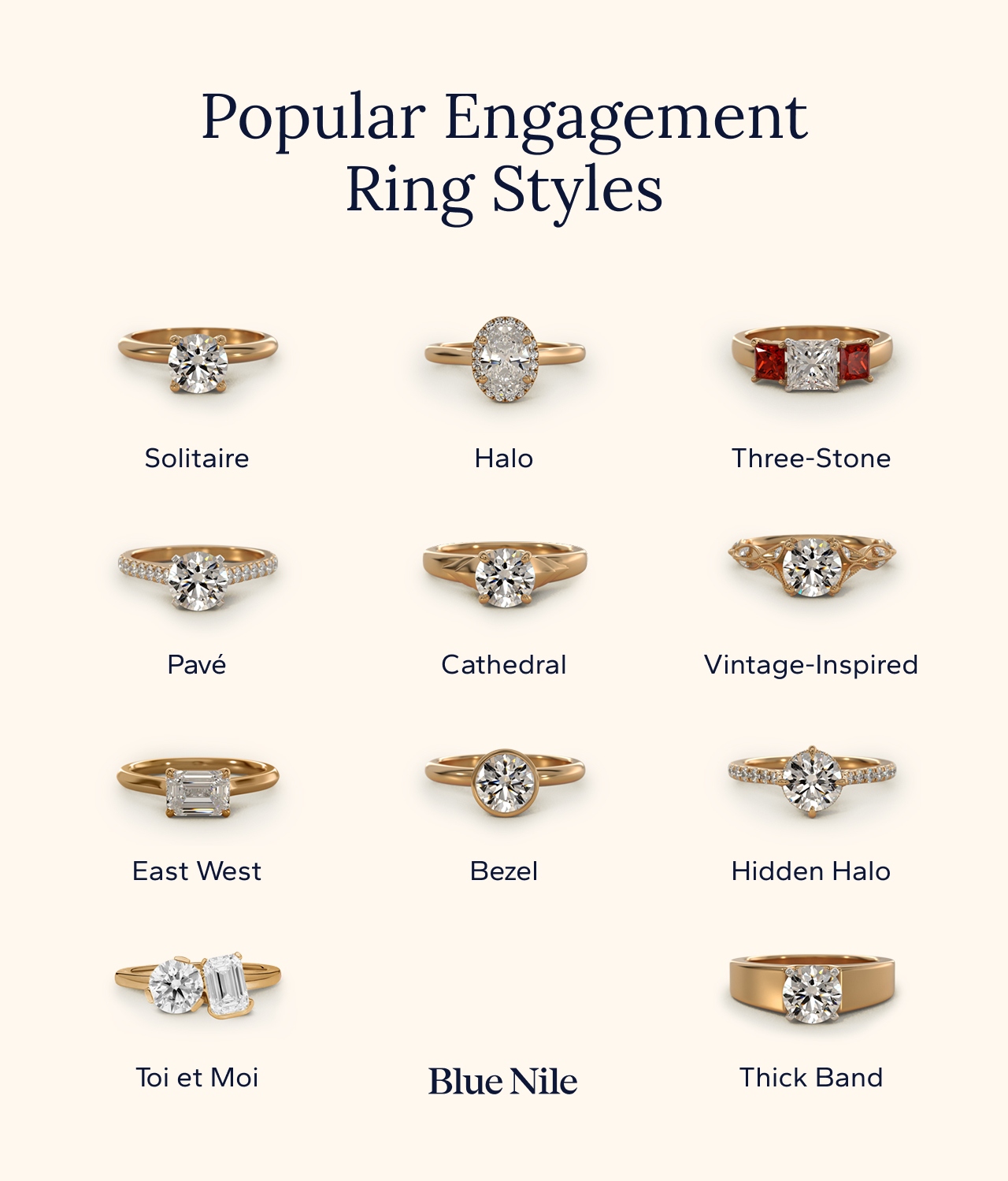
Engagement Ring Styles Chart
Every engagement ring style tells a different story, from the timeless shine of a solitaire to the bold statement of a toi et moi. Some styles maximize brilliance, others highlight the center stone and a few blend both for a completely custom look.
The chart below compares the most popular options at a glance:
| Style | Description | Best For | Benefits |
| Solitaire | A single diamond set on a plain band | Anyone who wants a clean, versatile look | Puts the spotlight on the center stone and pairs easily with any wedding band |
| Halo | A center stone circled by smaller diamonds | Shoppers who want extra shine without upsizing the center stone | Makes the center diamond look larger and adds overall brilliance |
| Three-Stone | A center diamond flanked by two side stones | Couples who want symbolic meaning built into the design | Often represents a couple’s past, present, and future |
| Pavé | Small diamonds set closely together along the band | Anyone who wants texture and shine beyond the center stone | Adds continuous sparkle without competing with the main diamond |
| Vintage-Inspired | Designs that borrow details from past eras, like milgrain edges or filigree | Shoppers drawn to heirloom-style character | Brings intricate, one-of-a-kind detail to a modern setting |
| Cathedral | Arches of metal that sweep up from the band to cradle the stone | Those who want a setting with architectural flair | Adds height and visual interest while keeping the stone secure |
| East West | A stone set horizontally rather than in the traditional vertical orientation | Shoppers who want a modern, unexpected twist on a classic shape | Gives elongated stones like ovals and emeralds a fresh look |
| Hidden Halo | A halo tucked beneath the center stone rather than around it | Anyone who wants extra sparkle with a more subtle silhouette | Boosts brilliance while keeping the top-down view simple |
| Bezel | A rim of metal that wraps fully around the diamond’s edge | Active wearers who need everyday durability | Protects the stone from chips and snags better than prong settings |
| Toi et Moi | Two gemstones set side by side on one band | Couples who want a distinctive, symbolic design | Represents two people coming together in one ring |
| Thick Band | A wider band than a traditional pavé or plain shank | Shoppers who want a bolder, more substantial look | Offers extra durability and a modern, statement-making profile |
1. Solitaire Engagement Ring
Best for: Anyone who wants a clean, versatile look
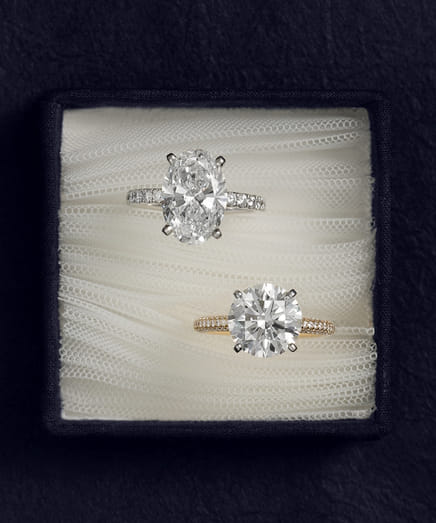
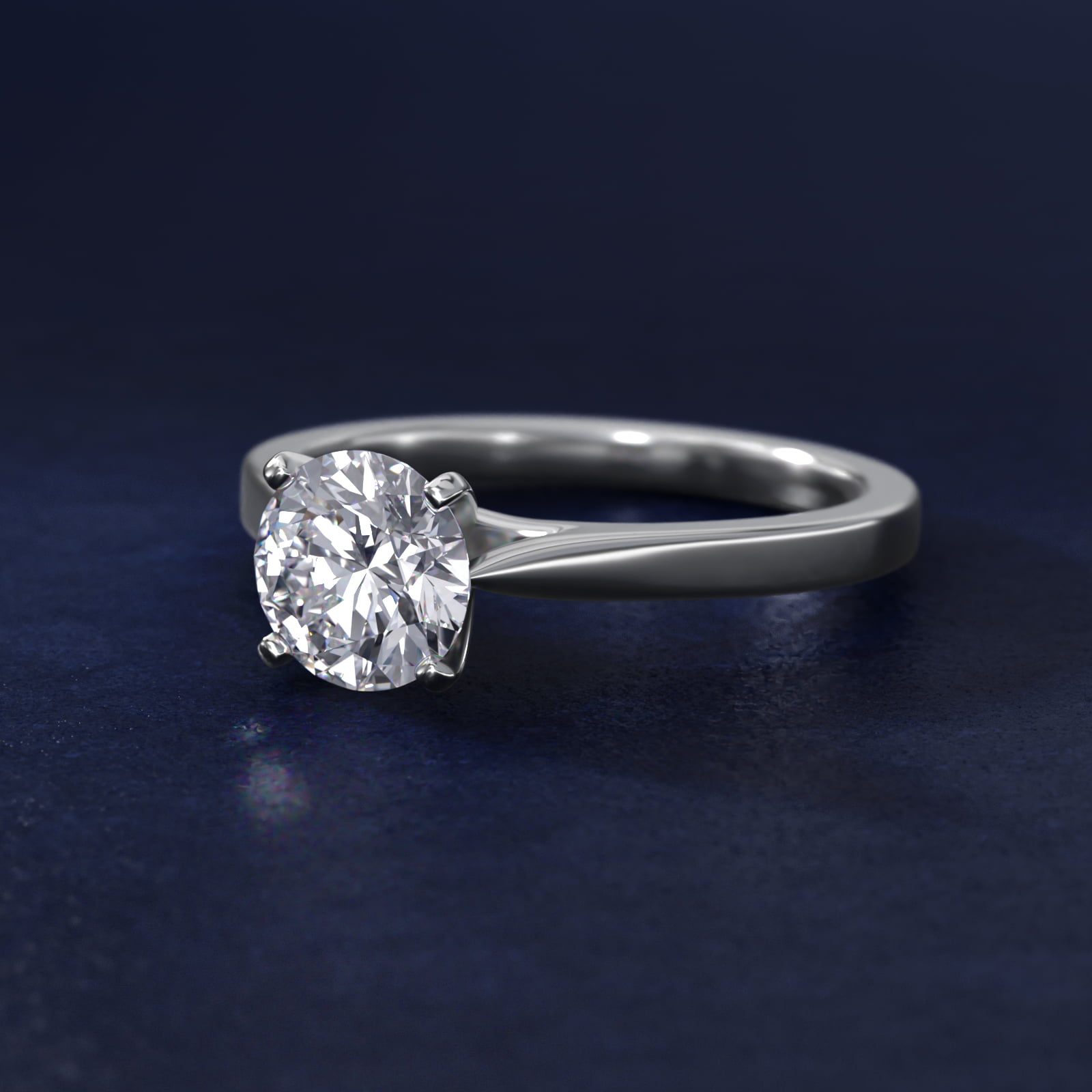
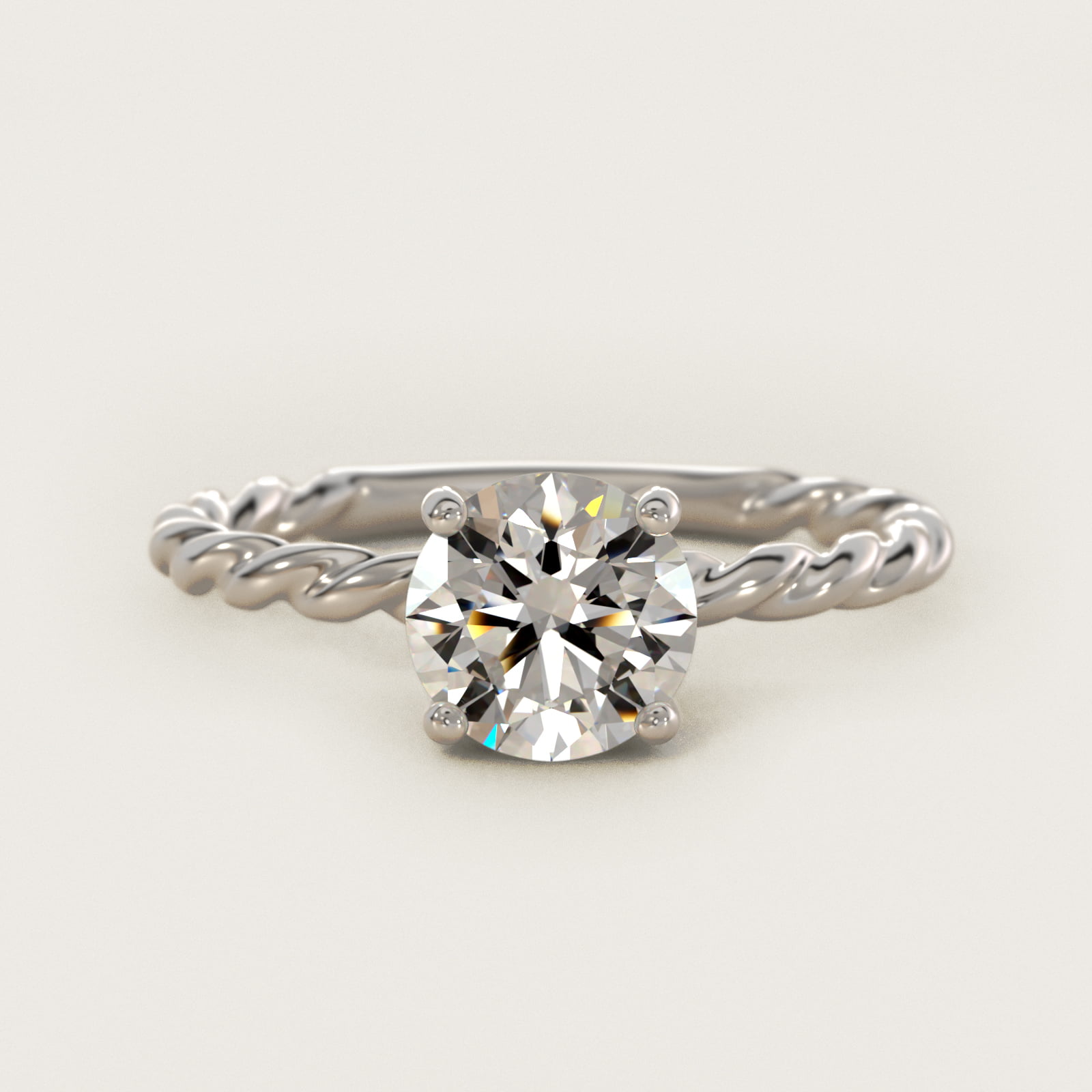
A solitaire features a single diamond or gemstone set on a plain band, with no side stones or extra detailing.
Prong, bezel and channel settings are all common ways to secure the stone, and each option affects how much light reaches the diamond. This simplicity is exactly what makes the solitaire so easy to wear day to day and pair with almost any wedding ring.
Because there’s nothing to distract from the center stone, shape and cut quality matter more here than in more elaborate settings. Round and oval cuts are especially popular choices for solitaires, though the style works well with nearly any diamond shape. Round is a brilliant cut diamond, meaning its facets are arranged to maximize light return, which is part of why it pairs so well with a simple solitaire setting.
2. Halo Engagement Ring
Best for: Shoppers who want extra shine without upsizing the center stone
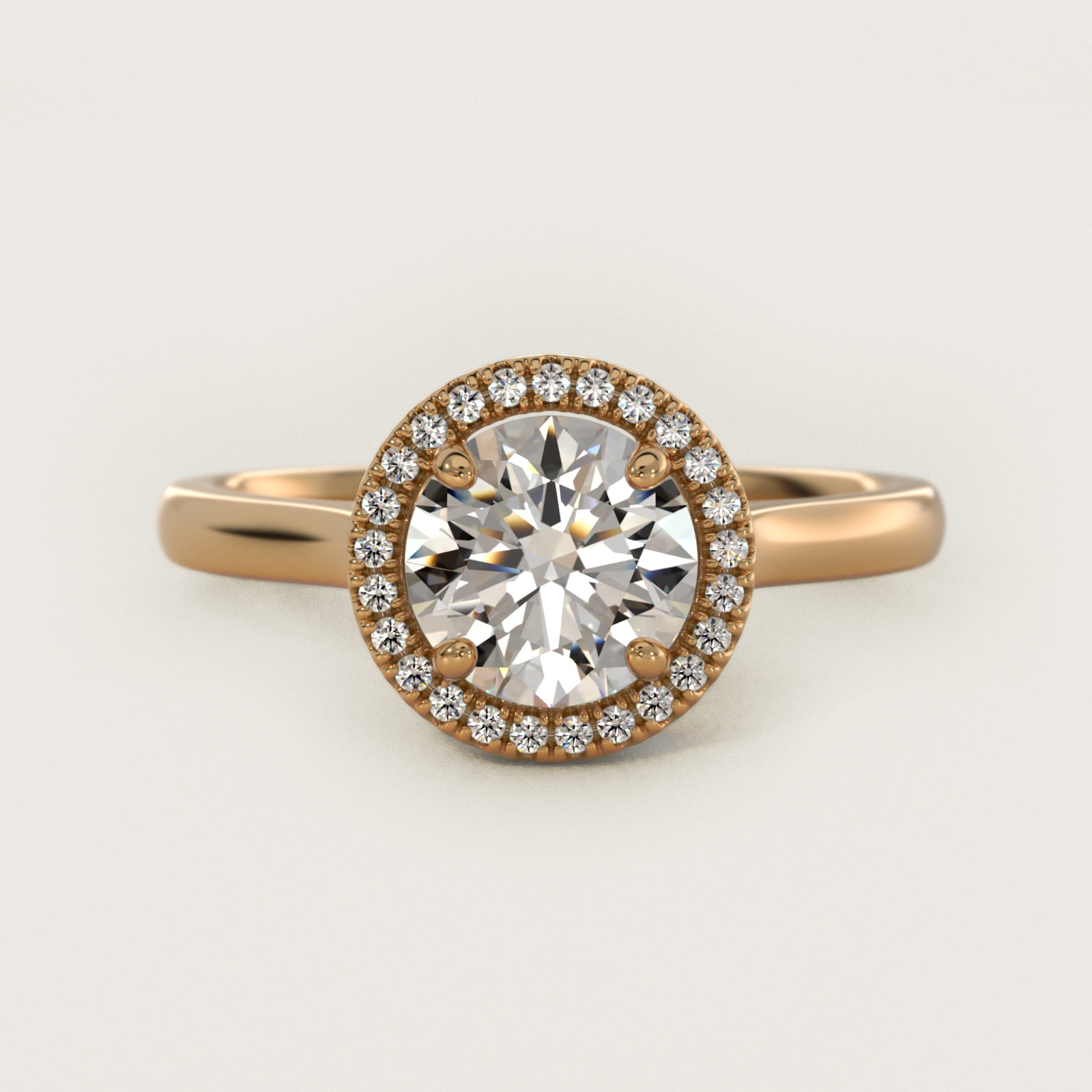
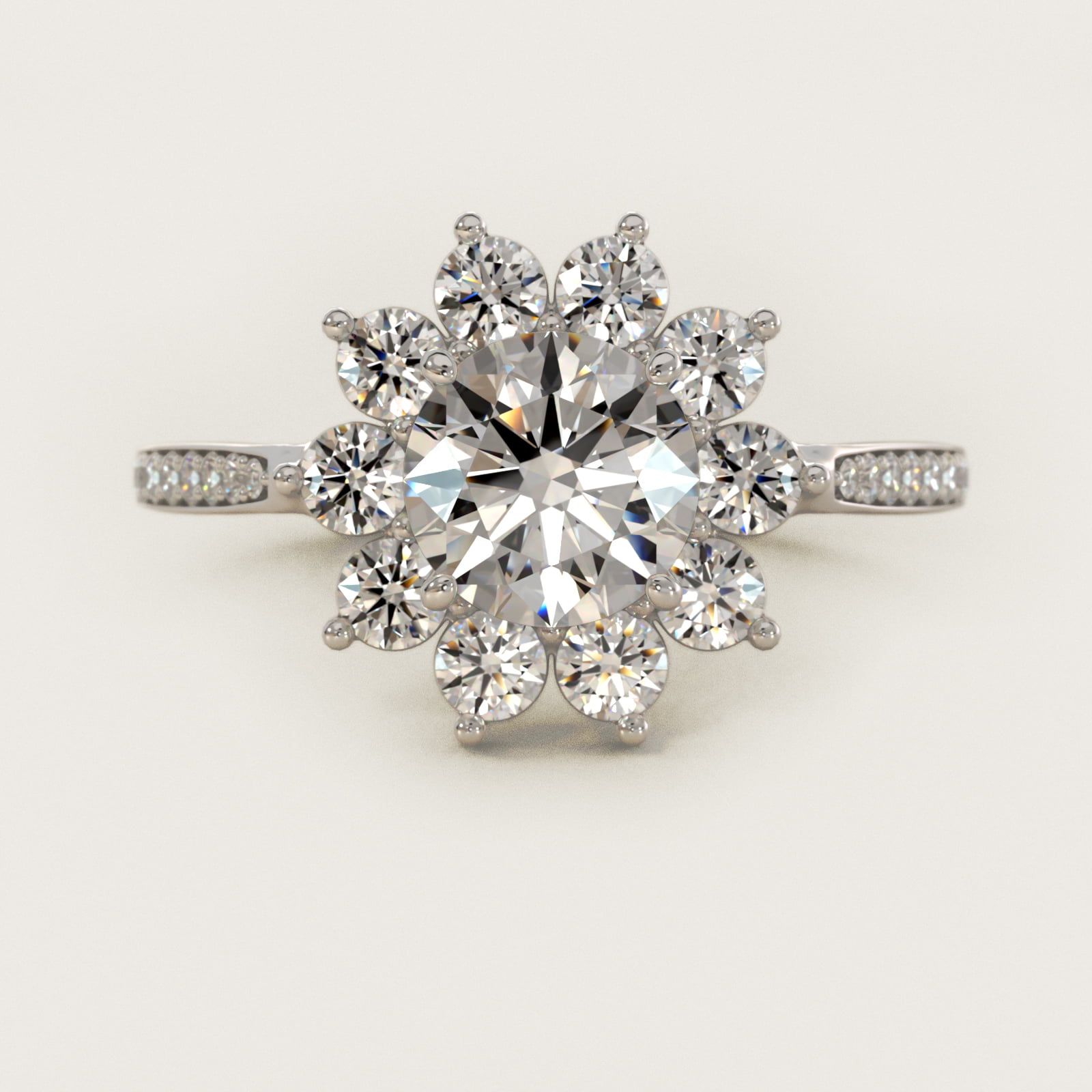
A halo setting surrounds the center diamond with a ring of smaller accent diamonds, creating the illusion of a larger stone while adding brilliance around the edges. This makes it a popular pick for anyone working with a specific budget who still wants a statement-making look. Halos also pair well with a range of center stone shapes, from round to cushion to emerald cut.
Beyond the visual impact, a halo can protect the center stone by creating a slightly raised edge around it. Shoppers can also choose a single or double halo depending on how much extra shine they want.

3. Three-Stone Engagement Ring
Best for: Couples who want symbolic meaning built into the design
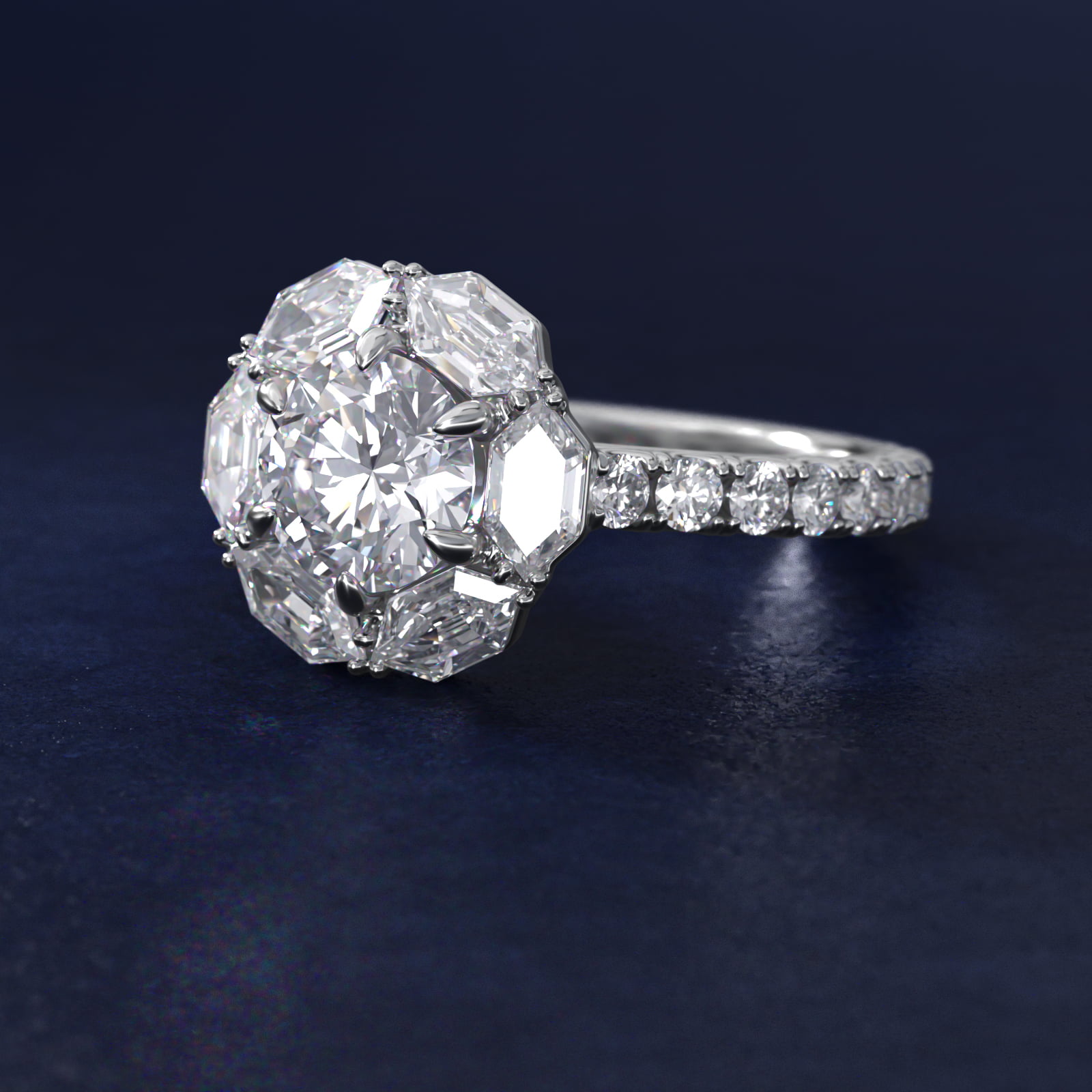
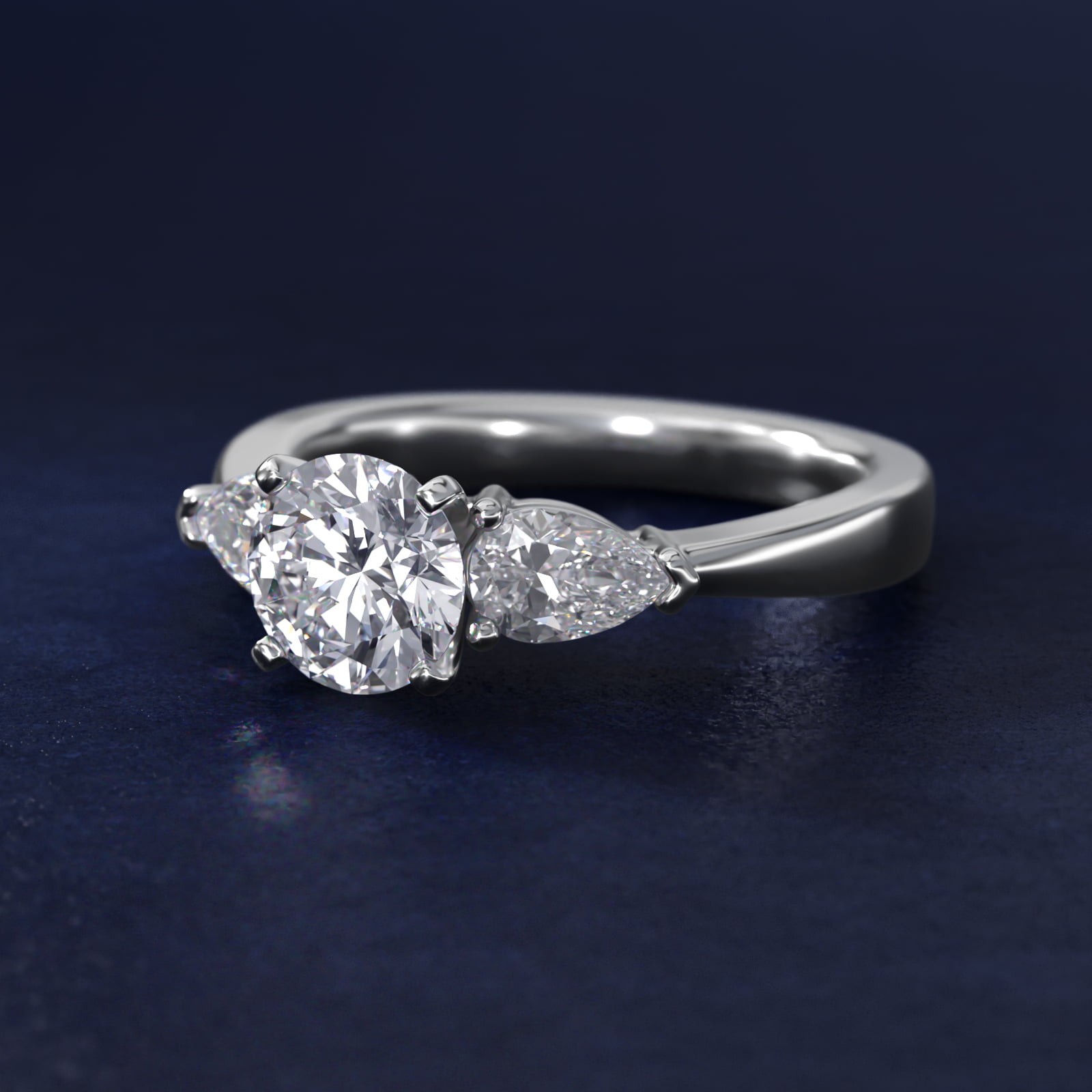
A three-stone setting features a center diamond flanked by two smaller side stones, often symbolizing a couple’s past, present and future. The side stones can match the center stone’s shape for a cohesive look, or contrast with a different cut for added dimension.
Round, trapezoid and baguette side stones are all common choices depending on the center stone’s shape.
This style also adds noticeably more shine than a solitaire while still keeping the center diamond as the clear focal point. It’s a good option for anyone who wants symbolism built into the design without an elaborate setting.
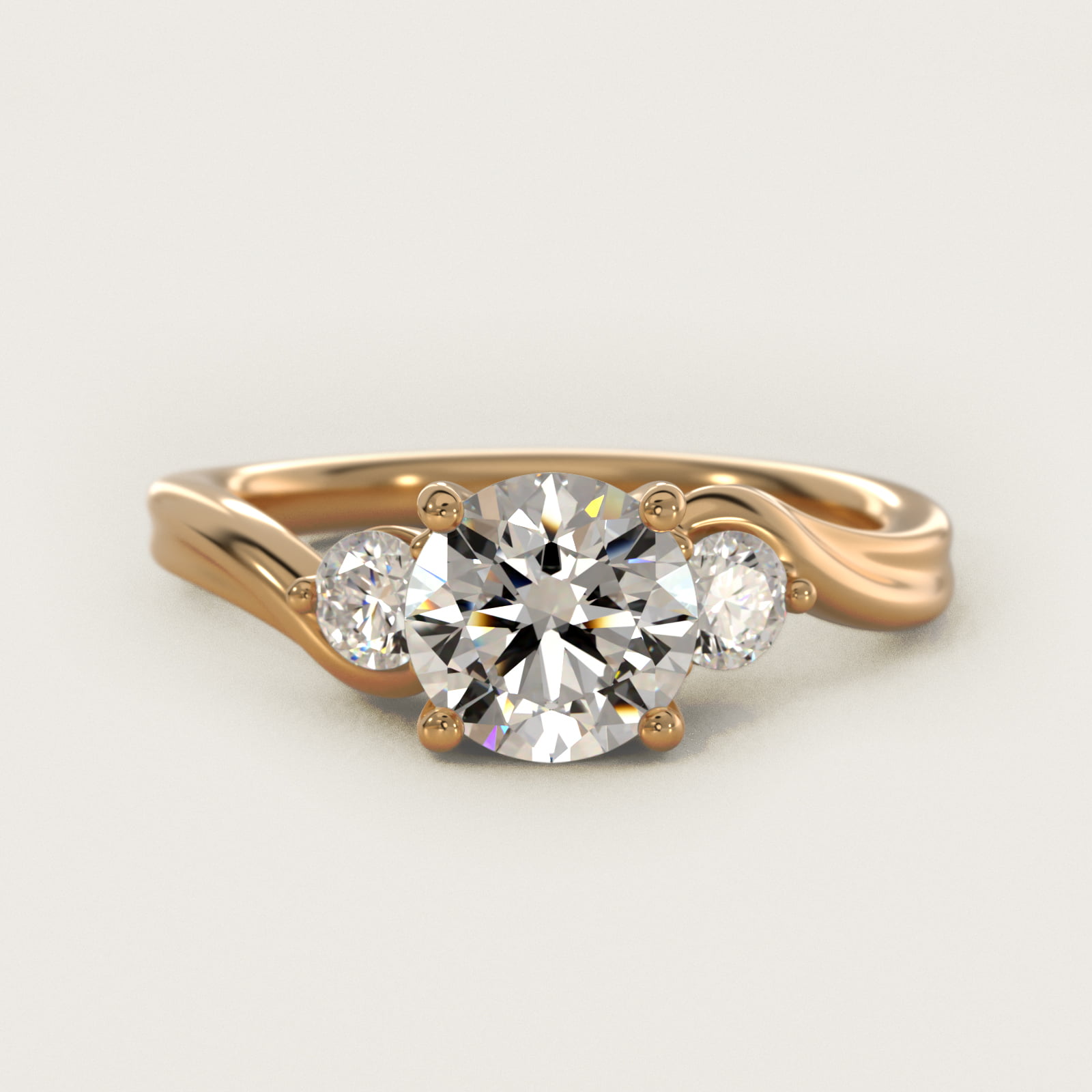

Emerald Cut Diamond Three Stone Engagement Ring With Pavé Set Diamonds In Platinum By James Allen
Shop Three-Stone Rings4. Pavé Engagement Ring
Best for: Anyone who wants texture and shine beyond the center stone
A pavé setting features small diamonds set closely together along the band, held in place by tiny metal beads or prongs. The stones sit so close that the metal nearly disappears, creating what looks like a continuous surface of diamonds. This adds a noticeable amount of brilliance without competing with the center stone for attention.
Pavé diamonds work with almost any center stone shape and setting style, which makes this an easy way to add extra shine to a solitaire, halo, or three-stone design. It’s worth noting that pavé settings require a bit more care, since the small stones sit closer to everyday wear and tear.


5. Vintage-Inspired Engagement Ring
Best for: Shoppers drawn to heirloom-style character
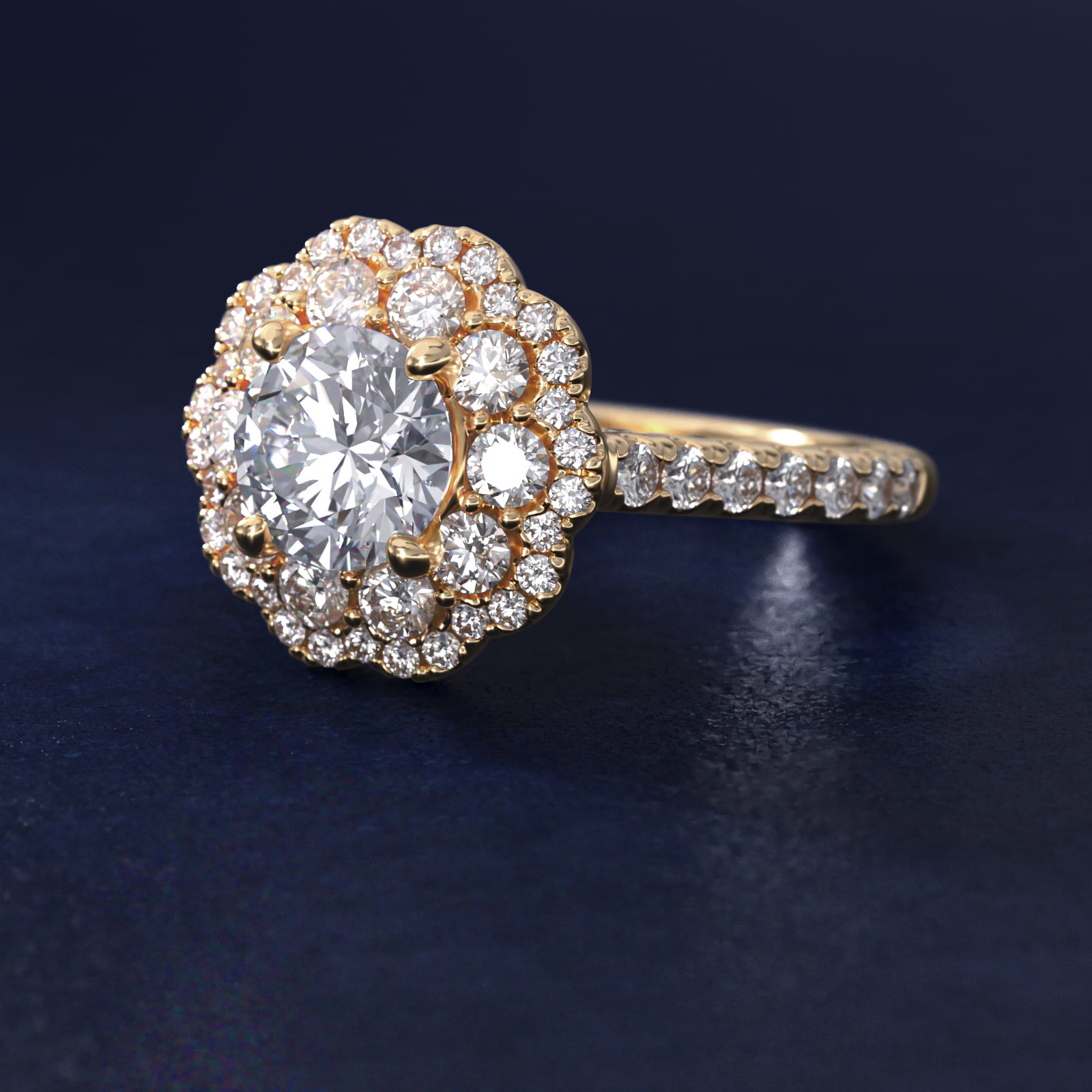
Vintage-inspired settings borrow design details from past eras, like milgrain edging, filigree metalwork and engraved patterns. These small touches add texture and personality to a ring, making each design feel distinct rather than mass-produced. Many vintage-inspired styles also incorporate halo or three-stone elements, layering old-world detail with classic structure.
This style tends to appeal to shoppers who want a ring with a story, whether that means echoing a specific decade or simply favoring ornate craftsmanship over a minimalist look. Because the detailing is often delicate, it’s worth asking about maintenance when choosing metal type and setting.
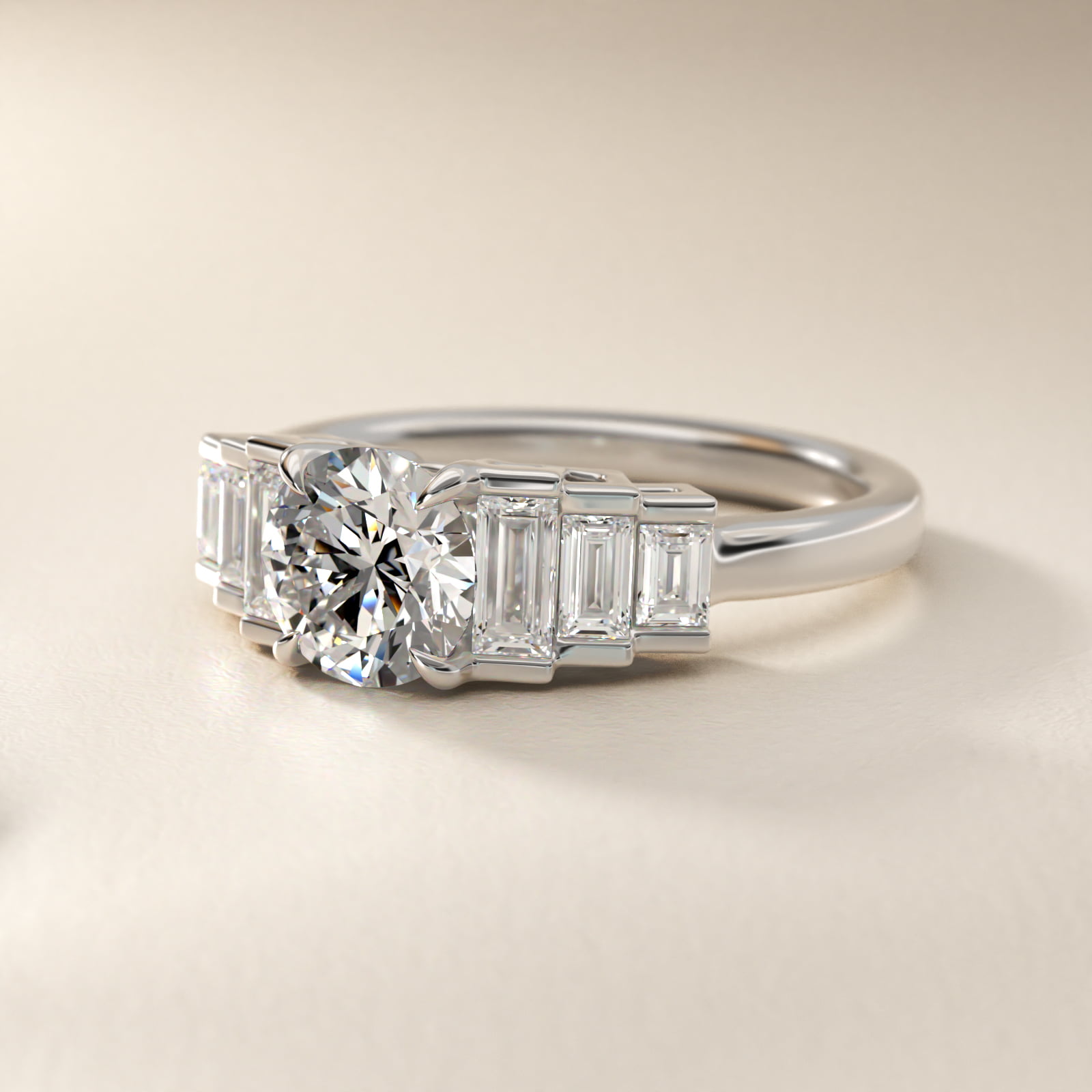
Escalating Baguette Side Stone Diamond Engagement Ring In Platinum By James Allen
Shop Vintage-Inspired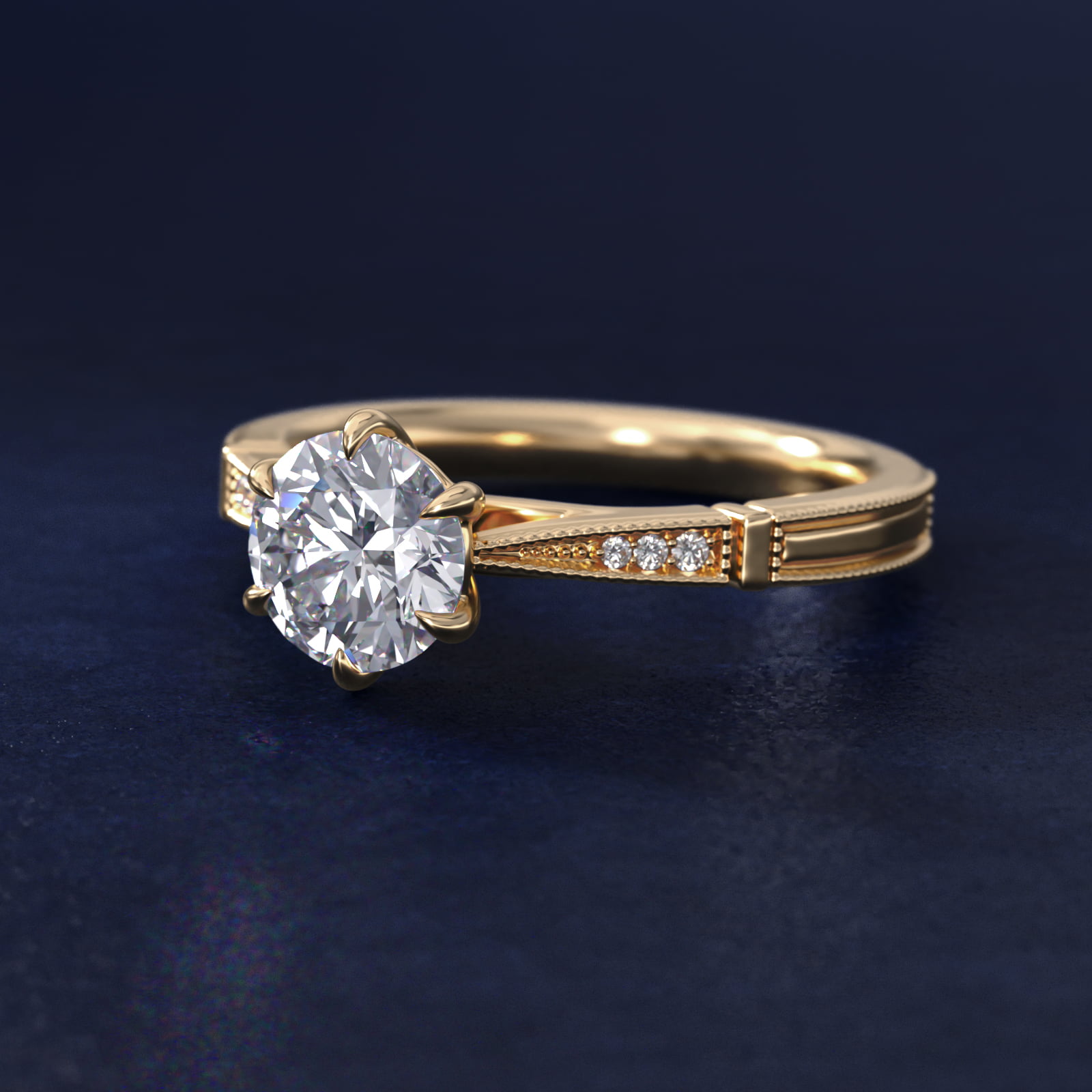
6. Cathedral Engagement Ring
Best for: Those who want a setting with architectural flair
A cathedral setting features metal arches that sweep up from the band to cradle the center stone, similar to those in cathedral architecture. This raises the diamond higher off the band, adding both height and structure to the overall design. The arches can also help protect the stone’s sides, as they extend up along its edges rather than leaving it fully exposed.
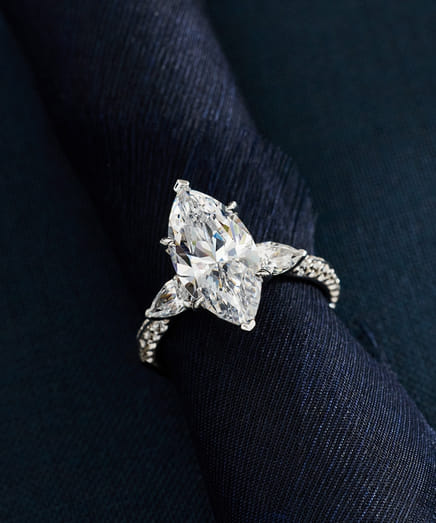
The cathedral ring setting pairs especially well with elongated shapes like ovals and marquises, since the raised arches complement the stones’ length.

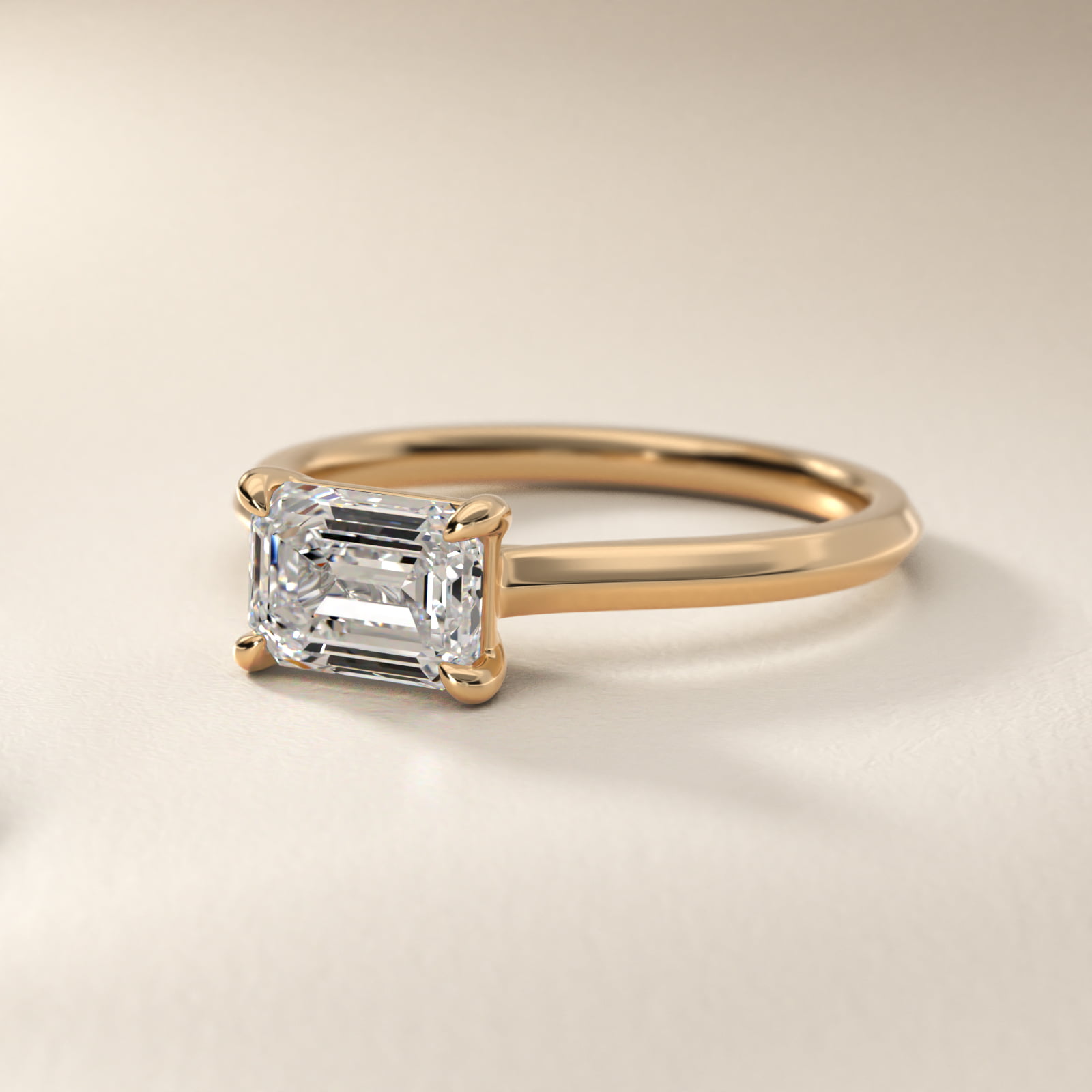
East West Knife Edge Cathedral Solitaire Engagement Ring In 14K Yellow Gold By James Allen
Shop Cathedral Rings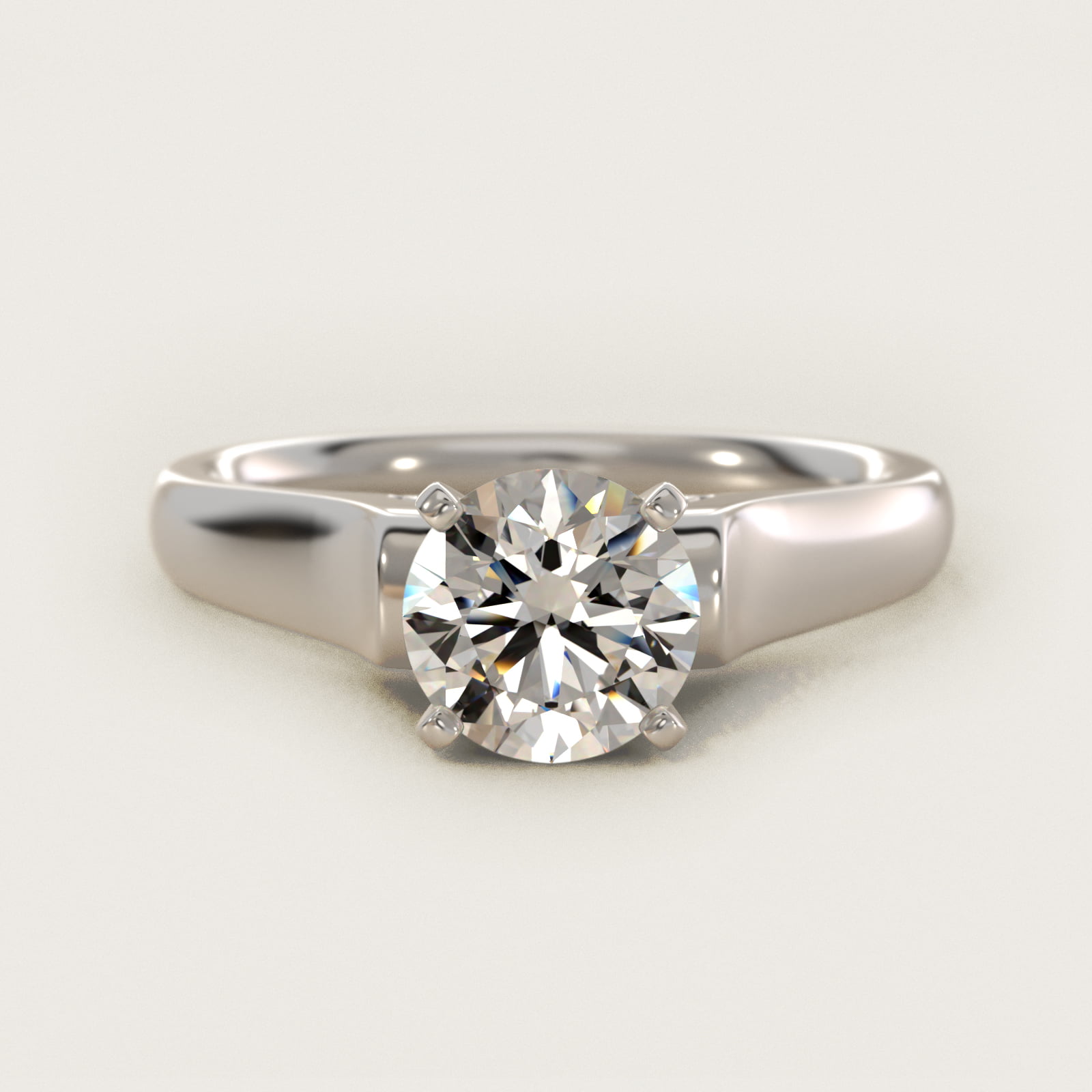
Cathedral Solitaire Plus Diamond Engagement Ring in 14k White Gold By Zac Zac Posen
Shop Cathedral Rings7. East West Engagement Ring
Best for: Shoppers who want a modern, unexpected twist on a classic shape
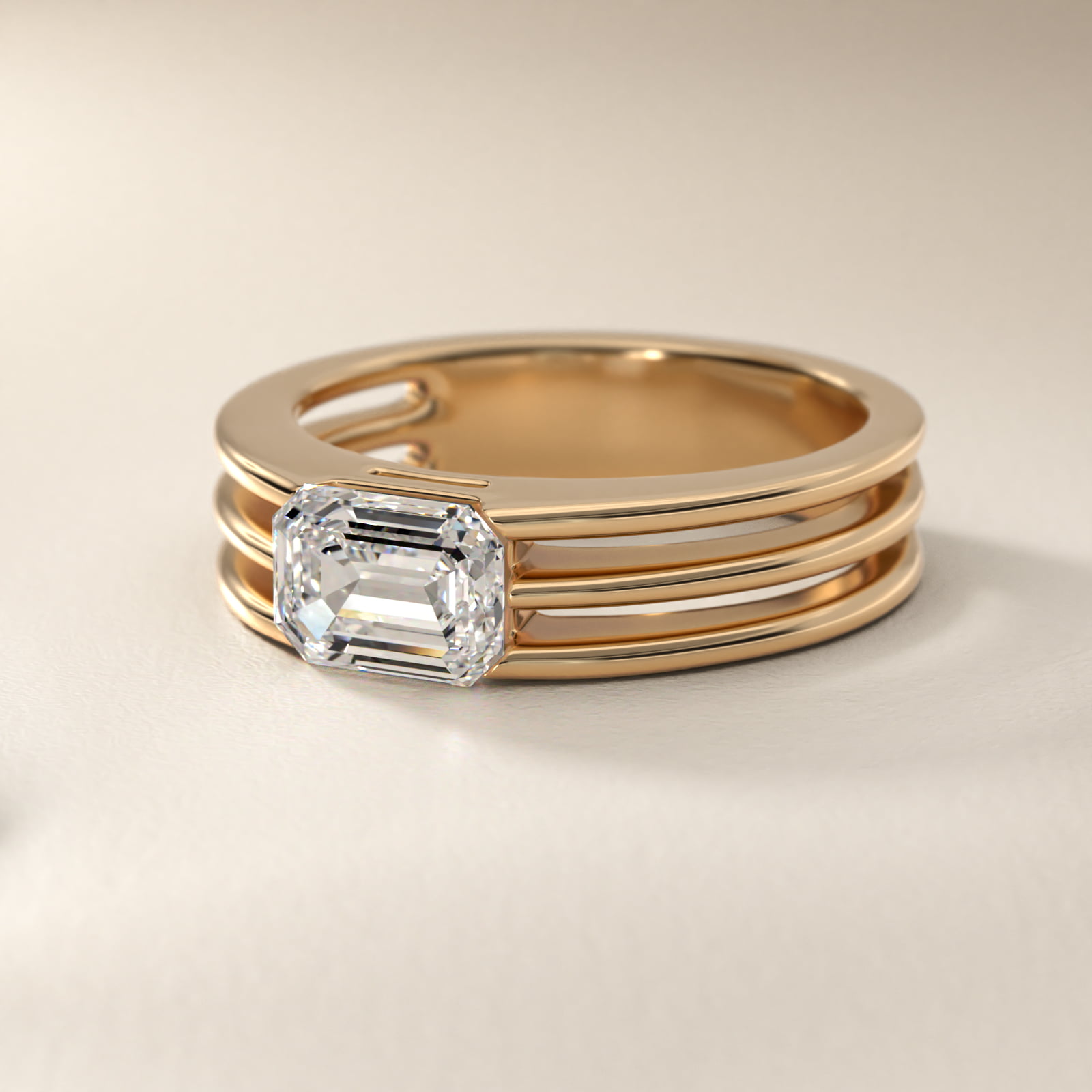
An east-west setting places the center stone horizontally across the band rather than in the traditional vertical orientation. This small shift gives the ring a distinctly modern look, even when paired with a classic diamond shape.
Elongated cuts like oval, emerald and marquise tend to work especially well in this orientation, since their length stands out even more when turned on its side.
Because east-west rings are less common than a traditional vertical setting, they tend to appeal to shoppers who want their ring to feel personal and a little unexpected. It also pairs easily with simple bands, since the stone’s orientation already makes the design stand out.
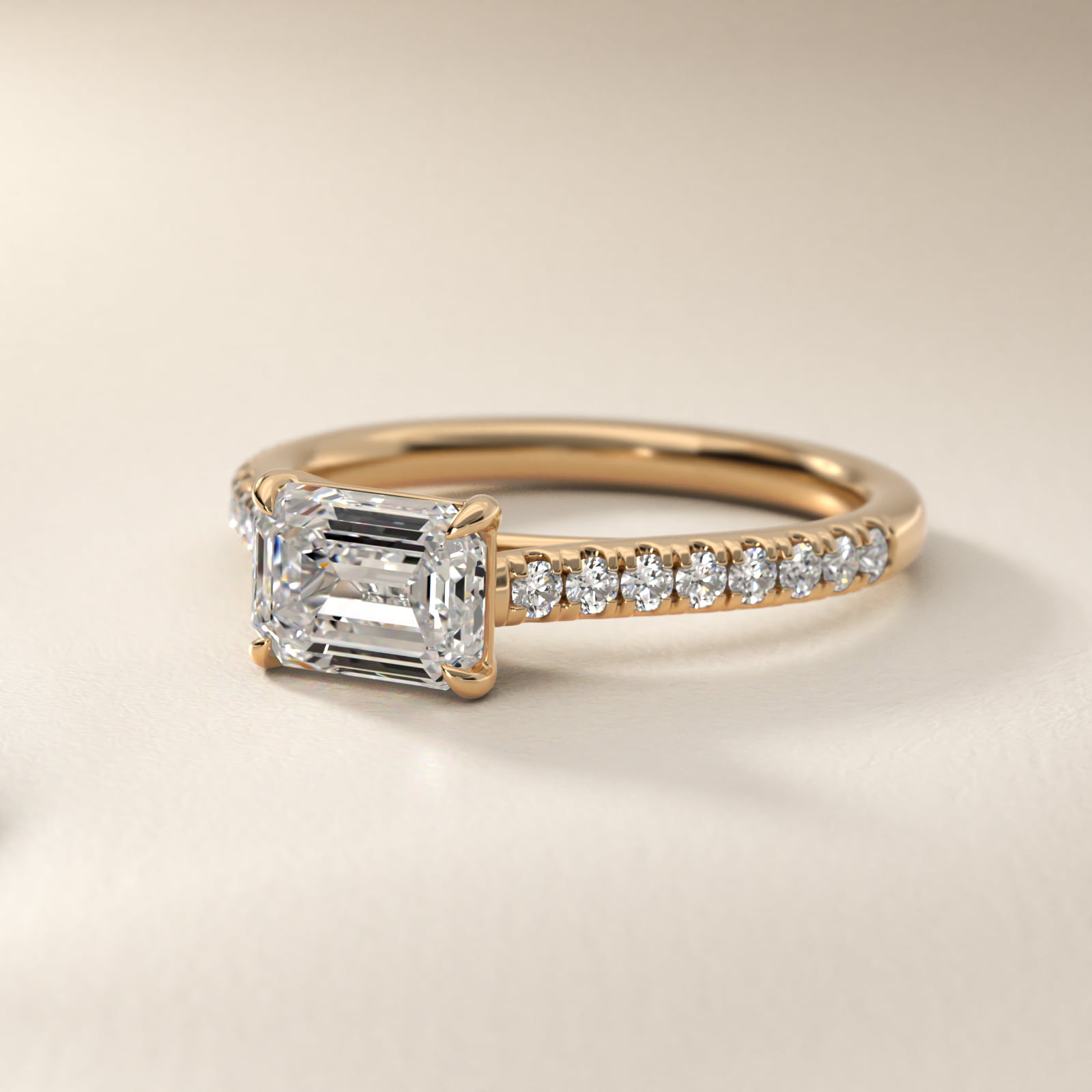

East-West Sidestone and Pavé Diamond Engagement Ring in 14k White Gold (1/4 ct. tw.)
Shop East West Rings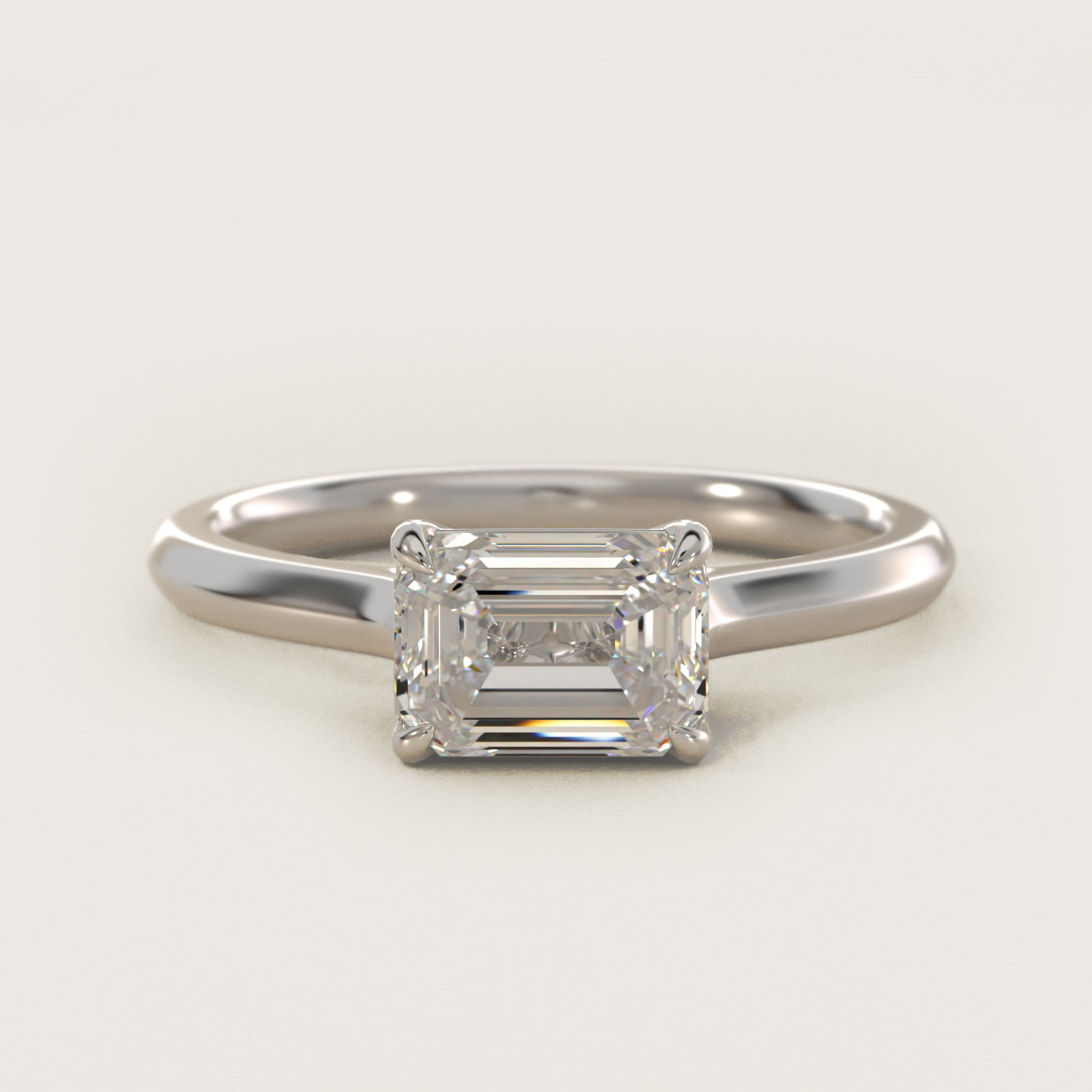
8. Hidden Halo Engagement Ring
Best for: Anyone who wants extra sparkle with a more subtle silhouette
A hidden halo engagement ring tucks accent diamonds beneath the center stone instead of surrounding it. Unlike with a traditional halo ring, from a hidden halo’s top-down view, the ring reads as a clean solitaire, but the hidden diamonds add a pop of brilliance from the side and catch the light as the hand moves. This makes it a good option for shoppers who like the sparkle of a halo but prefer a simpler silhouette.
A hidden halo ring can also make the center stone appear slightly larger, similar to a traditional halo, without adding visible width around the diamond. It works well with most center stone shapes, especially round and cushion cuts.

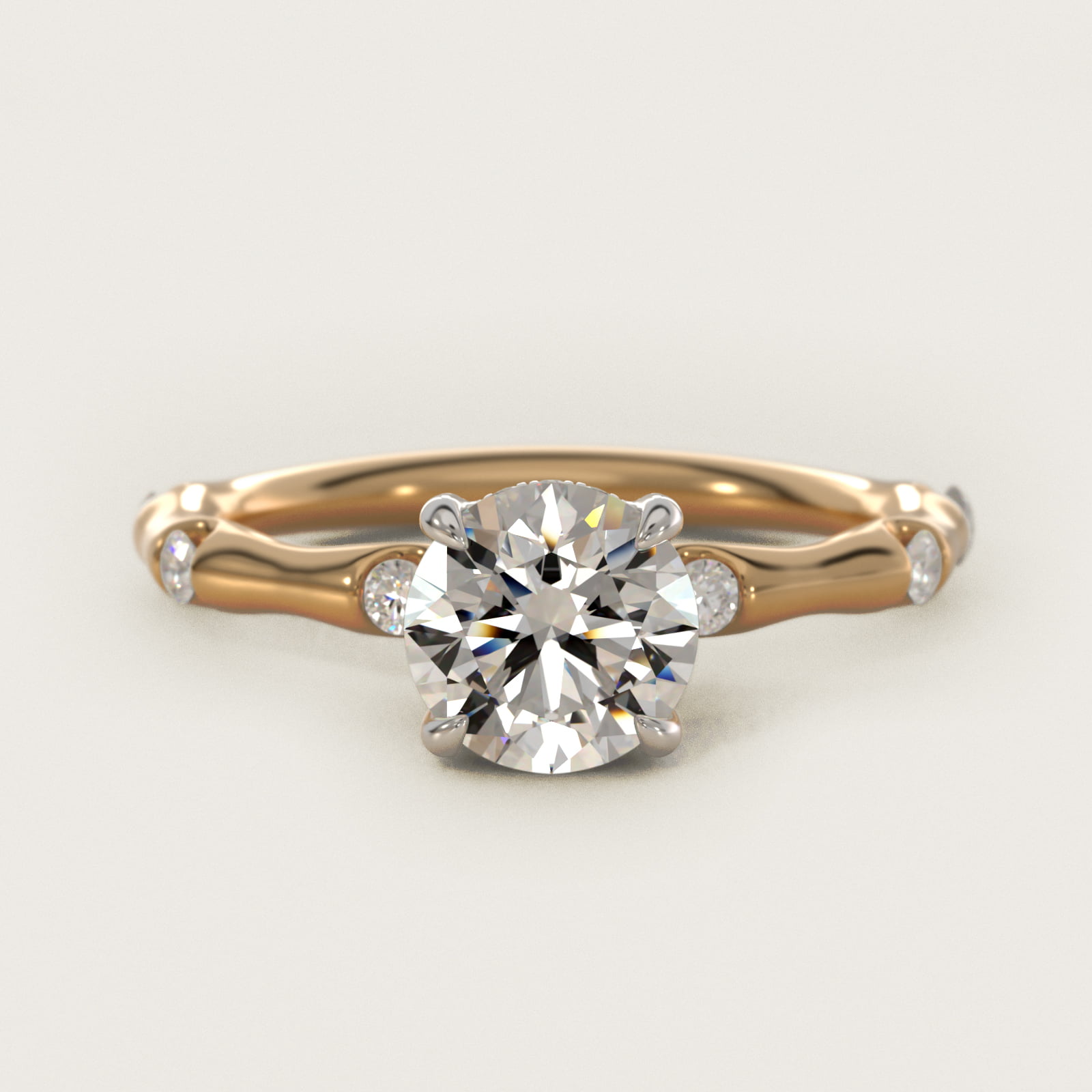
Bamboo Hidden Halo Side Stone Diamond Engagement Ring With Halo In 14K Yellow Gold By James Allen
Shop Hidden Halos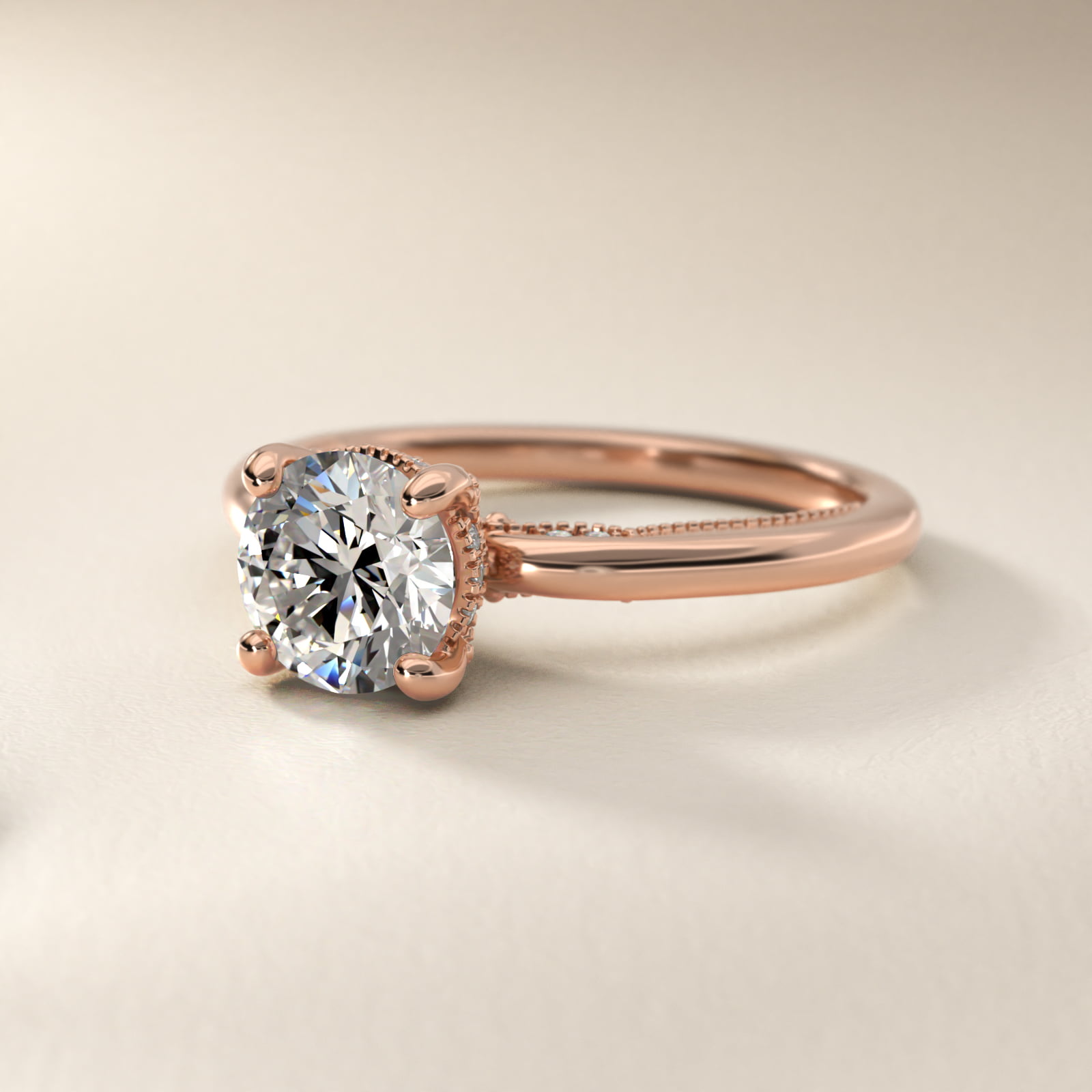
Lace Bridge Solitaire Plus Hidden Halo Diamond Engagement Ring in 14k Rose Gold (1/5 ct. tw.)
Shop Hidden Halos9. Bezel Engagement Ring
Best for: Active wearers who need everyday durability
A bezel setting wraps a metal rim fully around the diamond’s edge, rather than holding it in place with prongs. This fully encloses the stone’s perimeter, which makes it much harder to snag on clothing, hair or gym equipment. It’s a practical choice for anyone who works with their hands often or simply wants extra peace of mind.
Because the metal covers more of the stone’s edge, a bezel setting can make a diamond appear slightly smaller than the same stone in a prong setting. Many shoppers offset this by sizing up slightly or pairing the bezel with a halo for added brilliance.
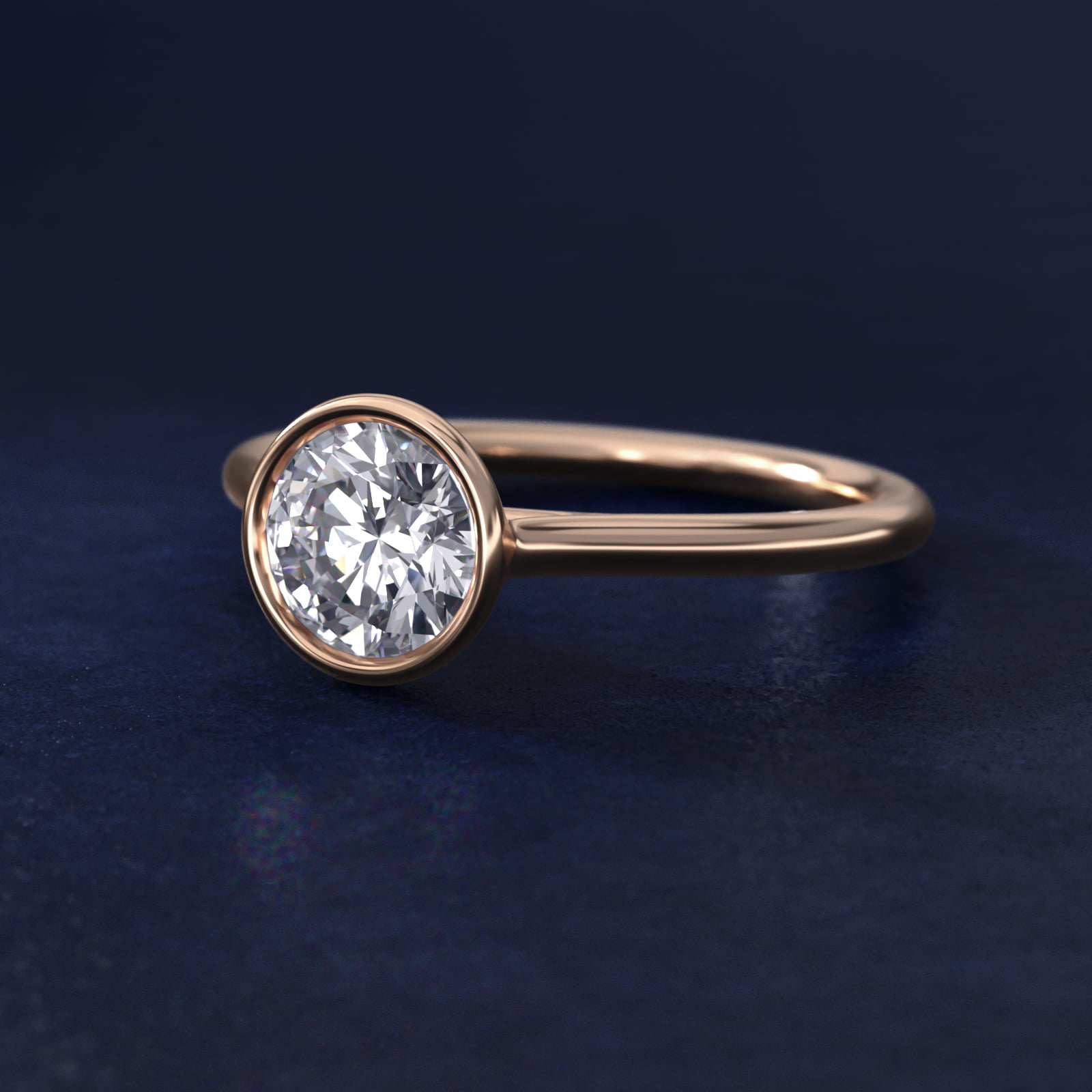
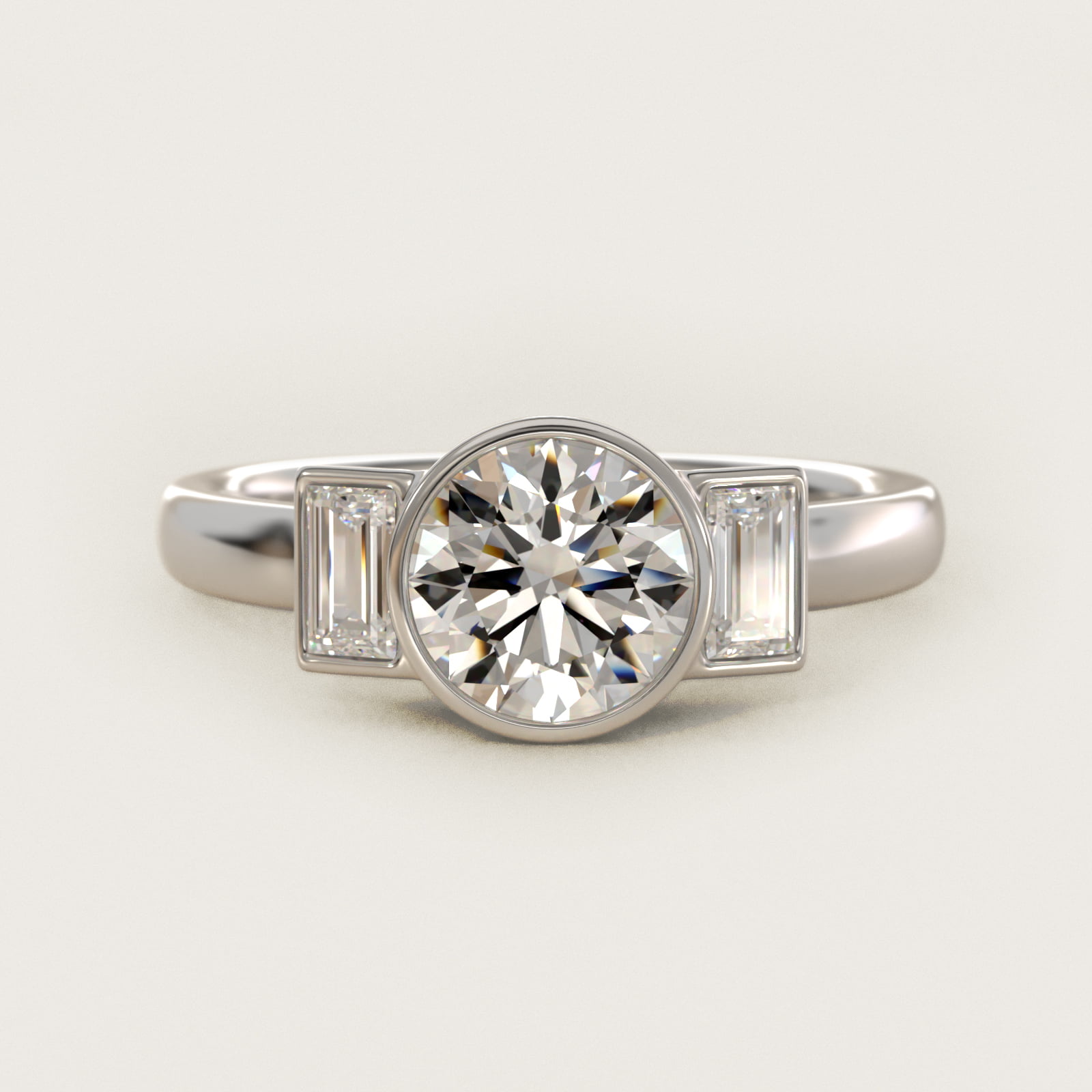
Bezel Straight Baguette Cut Diamond Three Stone Engagement Ring In Platinum By James Allen
Shop Bezel Rings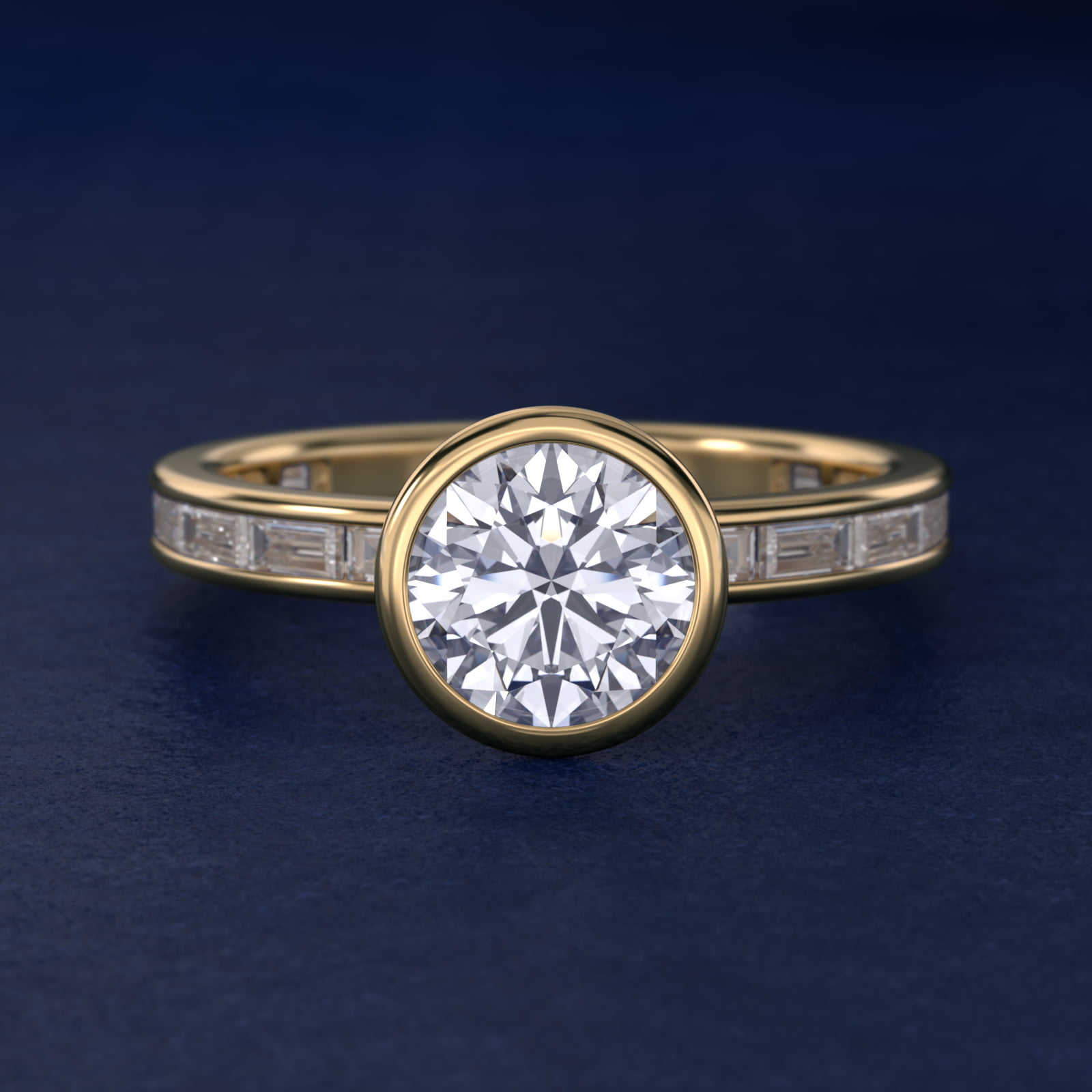
10. Toi et Moi Engagement Ring
Best for: Couples who want a distinctive, symbolic design
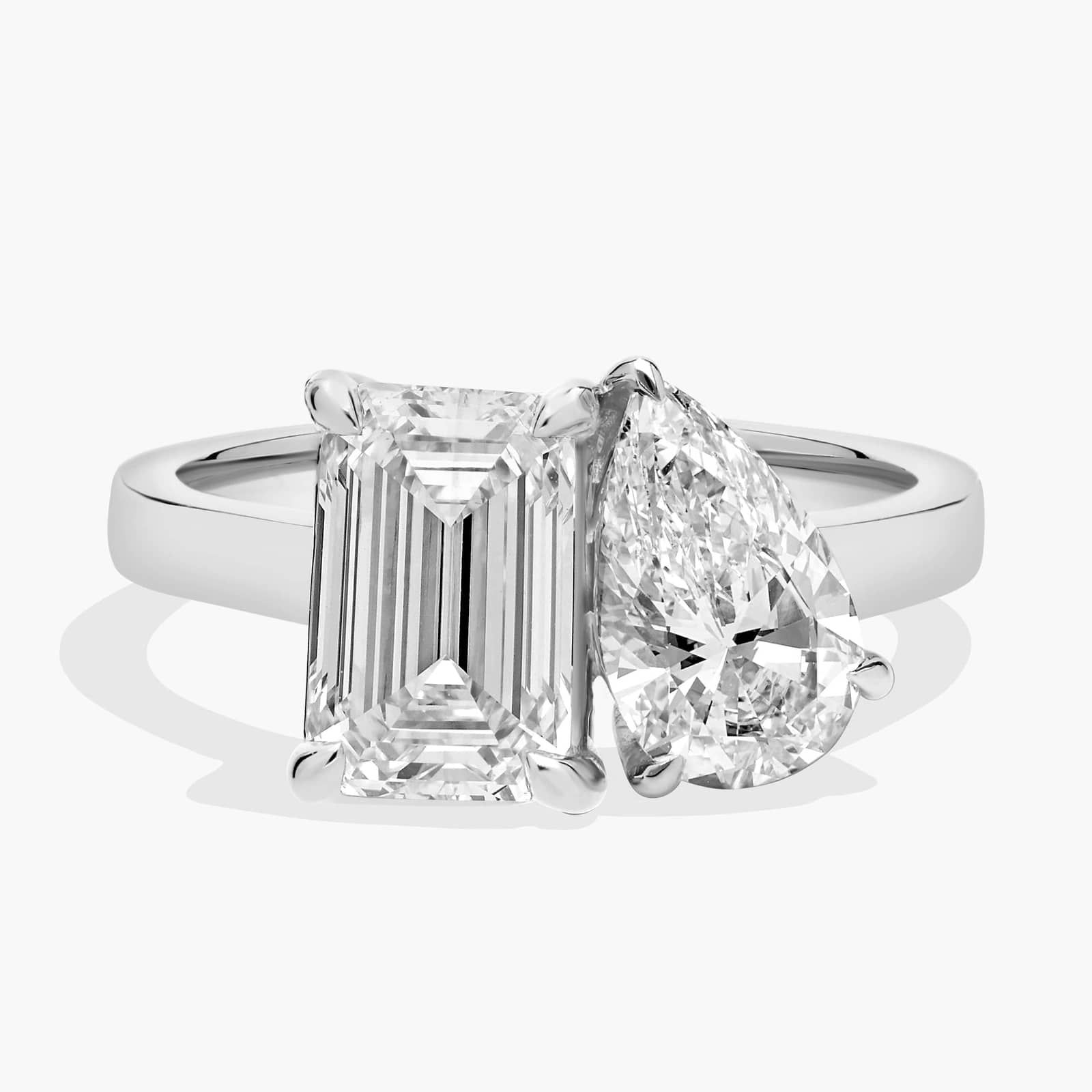
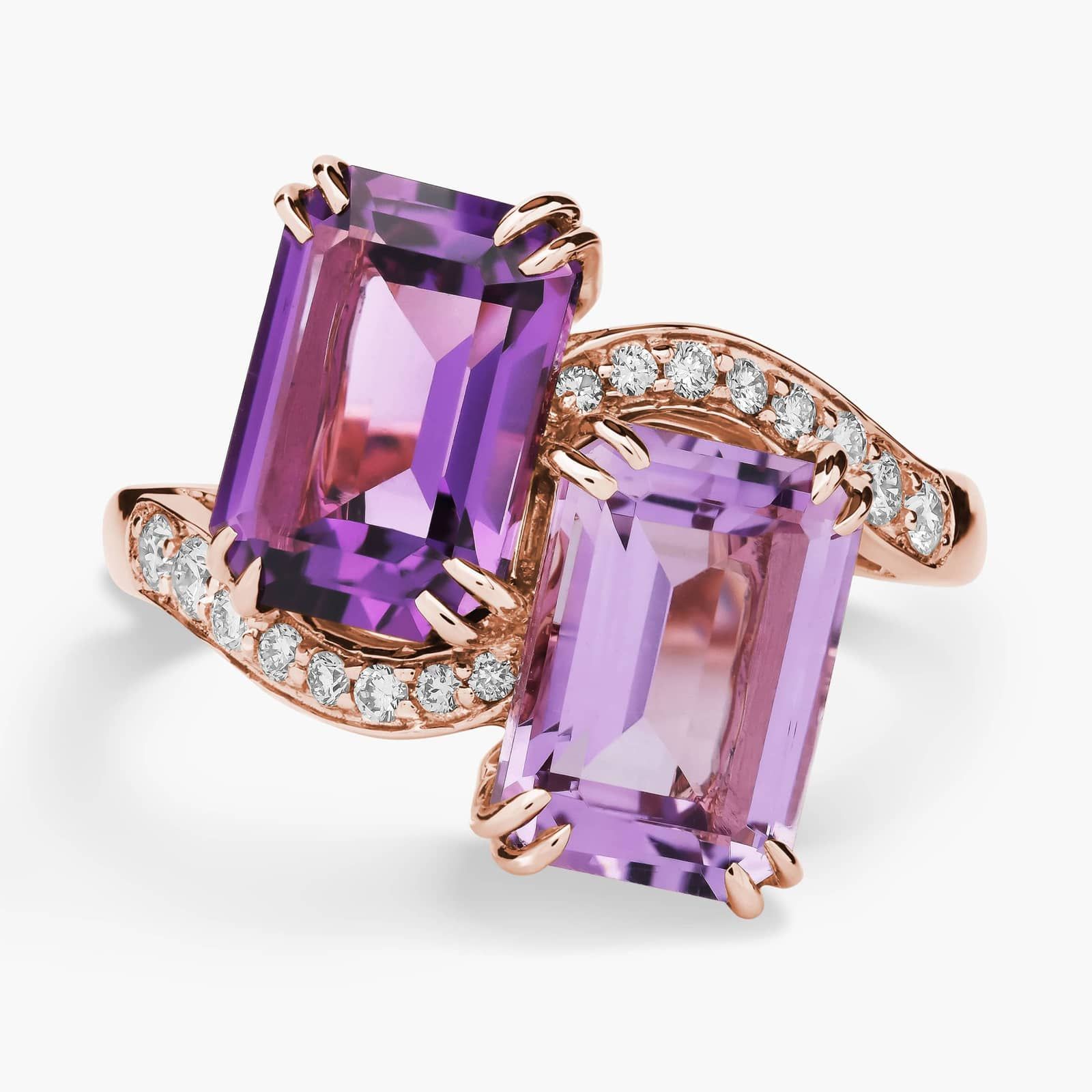
A toi et moi setting features two gemstones set side by side on one band, rather than a single center stone. The name translates to “you and me,” and the design often symbolizes two people coming together.
Shoppers can choose two matching stones or mix shapes and colors, like pairing a diamond with a colored gemstone, for a more personalized look.
This style stands apart from more traditional single-stone settings, which makes it a good fit for couples who want their ring to feel unique rather than conventional. It also works well with a simple band, since the two stones already create visual interest on their own.

11. Thick Band Engagement Ring
Best for: Shoppers who want a bolder, more substantial look
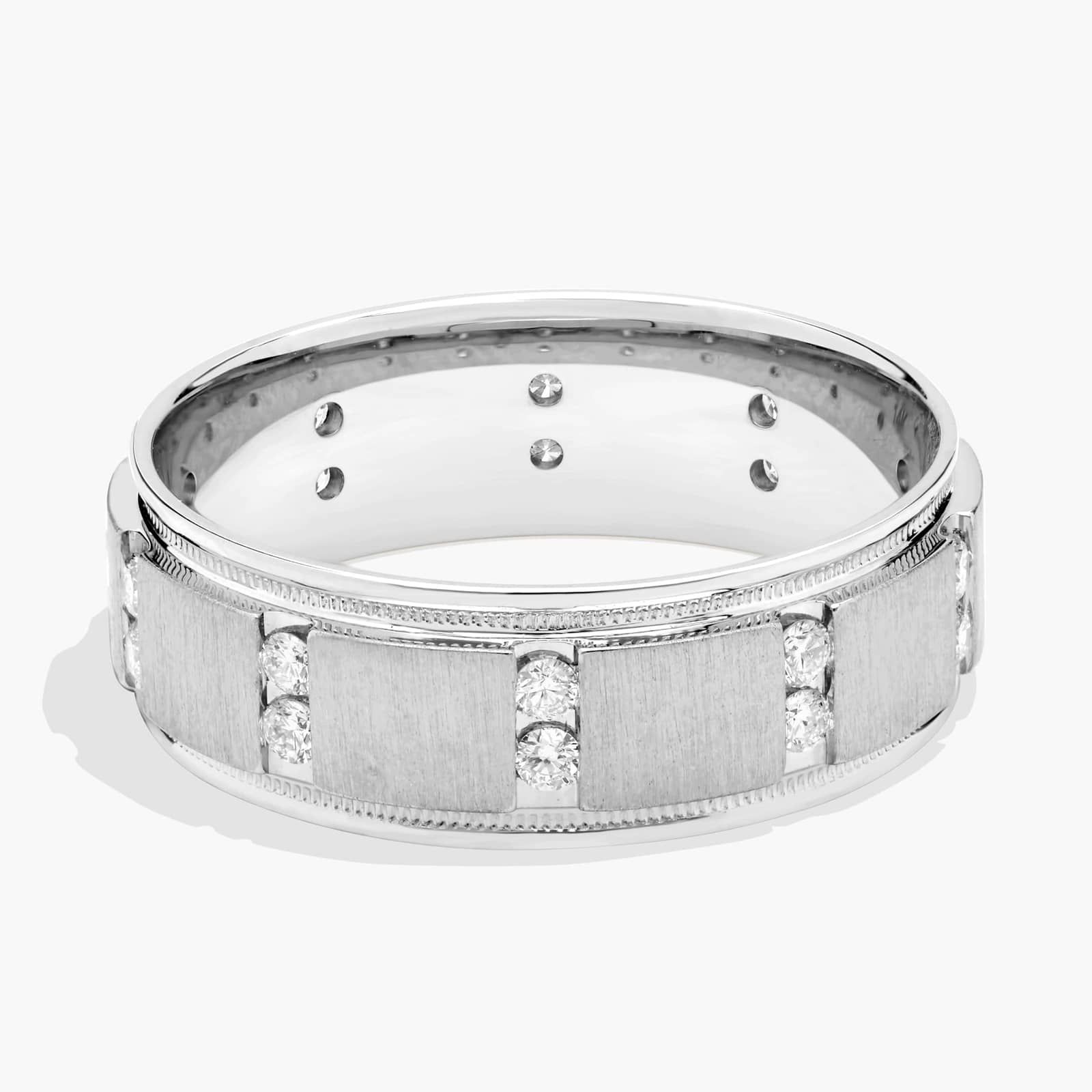
A thick or wide band setting swaps the typical thin shank for a wider one, giving the ring a more substantial presence on the hand. This added width can also make the setting more durable day to day, since there’s more metal supporting the stone. It’s a good fit for anyone who prefers a modern, statement-making profile over a delicate one.
Thick bands pair well with a range of center stone shapes and settings, from a simple solitaire to a bezel. Some shoppers also choose a thick band specifically for comfort, since the wider surface can feel more stable on the finger.
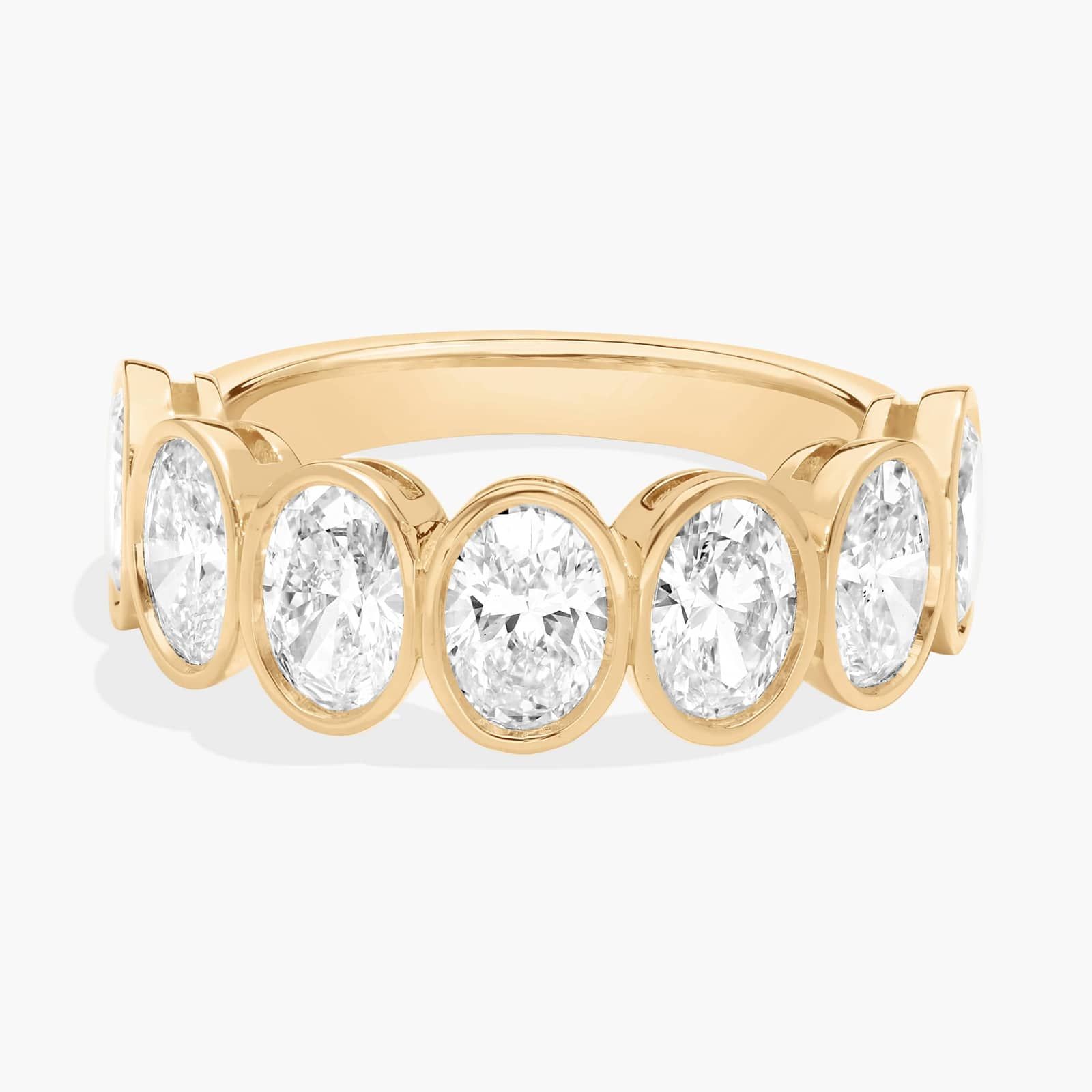
Seven Stone Bezel Anniversary Ring With 3 CTW Oval Cut Diamonds in 14K Yellow Gold (6.7mm)
Shop Thick Bands
Diagonal Lined with Pavé Diamond Edge Men's Wedding Ring in 14k White Gold (1/8 ct. tw.)
Shop Thick BandsHow to Choose an Engagement Ring: Trendy vs. Timeless
Beyond engagement ring style alone, a few practical factors can help narrow down the right ring for you. Here’s what’s worth thinking through before you buy:
- Personal style: Consider whether the wearer gravitates toward classic pieces or bolder, more contemporary designs.
- Budget: More intricate settings, like halos or pavé bands, typically cost more than a simple solitaire.
- Lifestyle: Active hands benefit from low-profile or bezel settings that withstand daily wear.
- Natural vs. lab-grown diamonds: Both offer the same brilliance and durability, so the choice usually comes down to budget and personal preference.
Trendy Engagement Rings
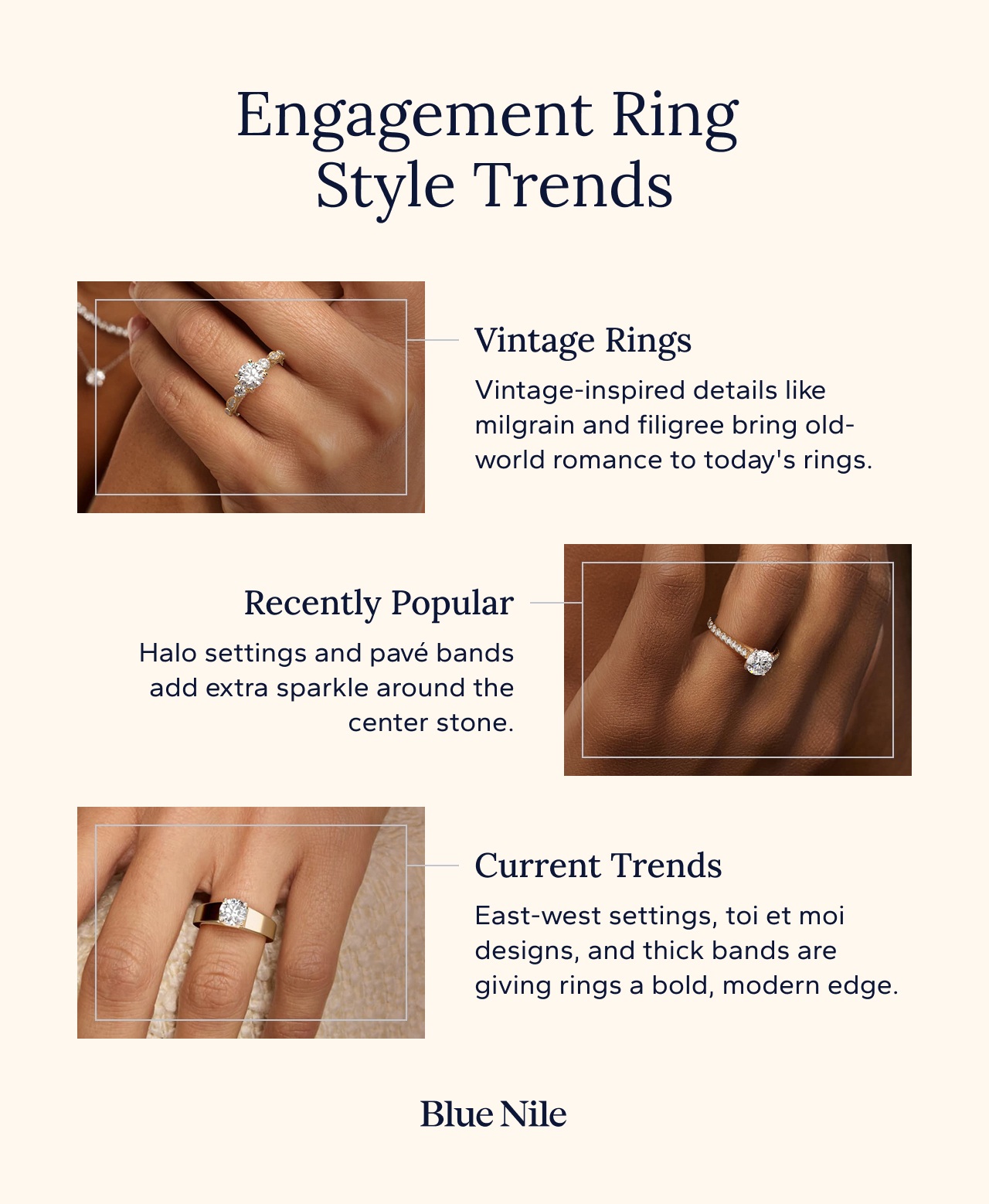
Trend cycles move quickly, but a few styles are currently having a moment. East-west settings, toi et moi designs and thick bands are all gaining popularity for their modern, less traditional take on the engagement ring. Colored gemstones and mixed-metal bands are also showing up more often as shoppers look for ways to personalize their rings.
Timeless Engagement Rings
Some engagement ring trends have stayed popular for decades, and it’s not hard to see why. Solitaire and three-stone settings remain the most enduring choices, thanks to their simplicity and versatility with any wedding band style. Pavé and cathedral settings also hold up well over time, offering extra detail without straying too far from tradition.
How Ring Settings Impact Appearance
The ring setting plays a big role in how a diamond looks and wears day to day. Here’s a closer look at some of the most common ring setting types.
Prong Setting
A prong setting uses four or six thin metal claws to hold the diamond in place, leaving most of the stone exposed. Because so little metal covers the diamond, this setting allows the maximum amount of light to enter and exit the stone. That extra light exposure is exactly what gives prong-set diamonds their signature brilliance.
Pavé and Bead Settings
Pavé is a setting where small diamonds sit closely together, held in place by tiny metal beads along the band. Since the beads are so small and the stones sit so close, the metal nearly disappears from view. The result is a continuous surface of diamonds rather than individual stones set one by one.
Channel and Cathedral Settings
A channel setting holds diamonds securely between two parallel metal walls, creating a smooth, flush line of stones along the band. Compared to a channel setting, a cathedral setting takes a different approach, using metal arches that rise to cradle the center stone.
The channel setting offers a sleek, low-profile look built for durability, while the cathedral setting adds height and architectural detail, making the diamond stand out.
Engagement Rings to Match Any Style, from Blue Nile
The best engagement ring style for you comes down to what feels right for your relationship, whether that’s a classic solitaire, a sparkling halo or a modern east-west setting. Each style offers its own balance of brilliance, durability and personality, so there’s no wrong choice as long as it reflects the wearer.
Blue Nile offers a wide range of engagement rings for every style. If you’re ready to get engaged, you can easily find a ring online or in person for a personalized shopping experience.
Frequently Asked Questions
One of the most popular engagement ring styles is the solitaire. Its single center stone and clean band make it a versatile choice that pairs easily with almost any wedding ring, which is part of why it’s remained a top pick for decades.
The most flattering engagement ring depends on the wearer’s hand shape and personal taste, though elongated cuts like oval and marquise tend to visually lengthen the finger. Settings like east-west or three-stone can further enhance an elongated shape.
Bezel and low-profile prong settings work best for an active lifestyle. Both styles keep the diamond secure and close to the band, reducing the risk of snagging or chipping during everyday activities.
Yes, most engagement ring styles can be customized in several ways. Shoppers can typically choose the metal type, center stone shape and setting details to build a ring that fits their exact preferences.
The setting refers to how the diamond is secured to the band, while the style refers to the ring’s overall aesthetic. For example, a solitaire style could use a prong, bezel or channel setting, depending on how the wearer wants the diamond held in place.


Share





 Live Chat
 +1‑800‑242‑2728
 Email Us

