Key takeaways
- Purity marks such as 14K, 750 and 925 indicate precious-metal content
- A maker’s mark identifies the maker or party associated with the piece rather than its metal purity
- Marks such as GP and GF can indicate that a piece isn’t solid gold
- A hallmark can provide useful evidence about a piece, but one stamp shouldn’t be treated as definitive proof of authenticity
A specific mark can increase the allure and mystery of a piece, telling its story to those who know how to read it.
This jewelry hallmark guide explains the symbols you may find tucked inside a ring, near a necklace clasp, at the back of a pendant or on any other discreet part of a piece. Some jewelry markings indicate metal purity, while others can point to a maker, assay office (testing organization for precious metals) or manufacturing method.
Though not a complete authenticity test, hallmarks are useful clues. Just as you might want to test a diamond, you might also examine a piece’s hallmarks carefully too.
What Are Jewelry Hallmarks and Why Are They Important?
Jewelry hallmarks are small marks applied to jewelry that can communicate information such as metal content, maker or origin, depending on the hallmarking system. They help you understand what you’re wearing, buying, gifting or perhaps rediscovering at the back of a jewelry box.
The symbols matter here. One may tell you the metal’s purity, while another identifies who made or submitted the piece for hallmarking.
In the UK, for example, a legally recognized hallmark is an independent verification that a precious-metal article meets required fineness standards. A complete UK hallmark includes:
- Sponsor’s or maker’s mark: Identifies who submitted the piece for certification
- Fineness mark: Describes the purity of the precious metal
- Assay office mark: Shows where the metal was tested and certified
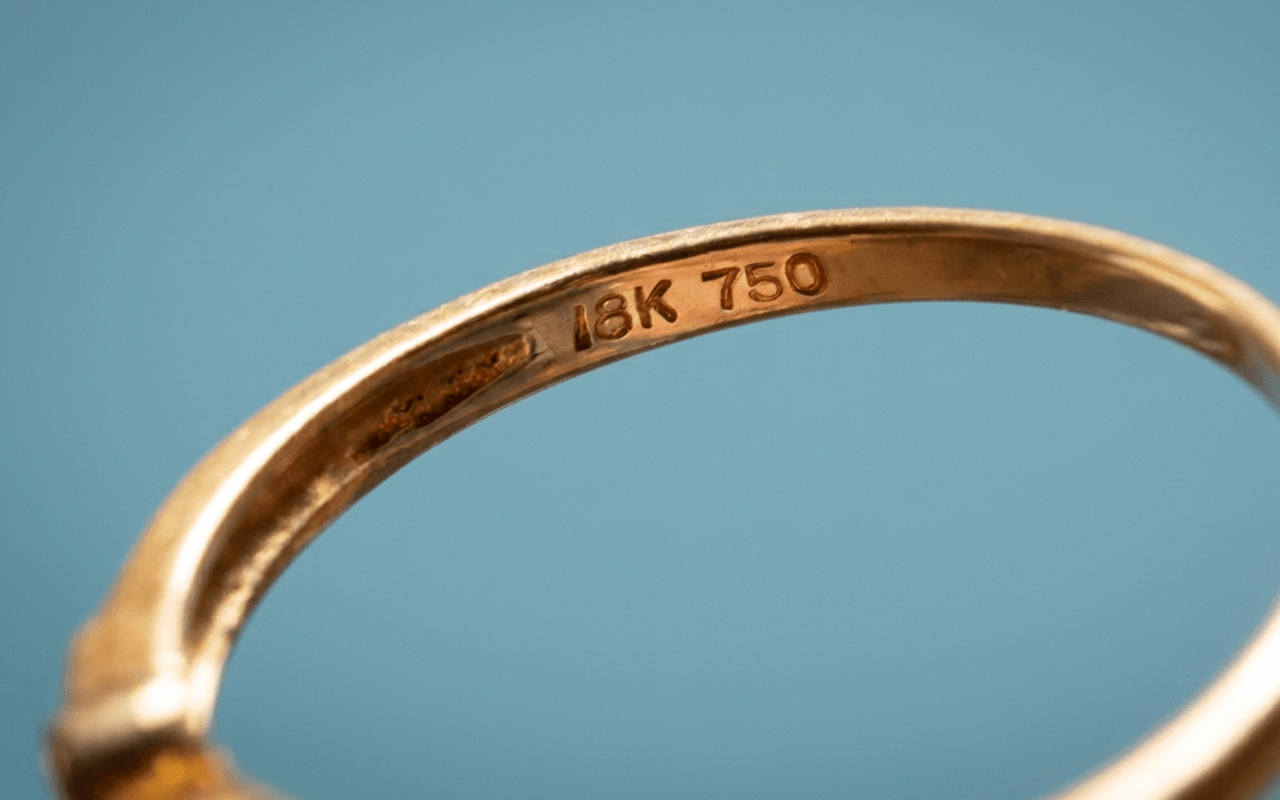
In the U.S., you’ll more commonly encounter quality marks such as 14K or 925 along with manufacturer or trademark information. FTC guidance explains that a 14K or 18K mark communicates gold content, while 925 means 925 parts per thousand of the item are pure silver.
These jewelry stamps can be especially useful when you’re evaluating an inherited piece of timeless jewelry.
Jewelry Hallmark Reference Chart
Jewelry hallmarks can show the karat of a piece of gold, the fineness of a silver or platinum piece or whether the gold is actually gold plating over another metal. Use this chart to learn more about your jewelry, but remember that hallmarks alone are not an authentication tool.
| Mark | What It Means | Metal |
| 10K / 417 | About 41.7% gold | Gold |
| 14K / 585 | About 58.5% gold | Gold |
| 18K / 750 | 75% gold | Gold |
| 22K / 916 | About 91.6% gold | Gold |
| 24K / 999 | About 99.9% gold | Gold |
| GP / GF | Gold plated or gold filled | Gold over another metal |
| 925 / .925 | 92.5% silver, commonly sterling silver | Silver |
| 800 | 80% silver | Silver |
| 958 | 95.8% silver, associated with Britannia silver | Silver |
| STER / STG | Sterling silver | Silver |
| PT / PLAT | Indicates platinum; check accompanying fineness information | Platinum |
| 950 / PT950 | 95% platinum | Platinum |
Standards and marking practices aren’t identical in every country. UK hallmarking, for example, uses millesimal fineness numbers (parts per thousand) along with other marks. Official UK standards include 925 and 958 silver, 950 platinum and multiple recognized gold finenesses.
Gold Markings: What Gold Stamps Mean
Gold stamps tell you the proportion of gold in an alloy or, in some cases, indicate that the gold has been applied over another metal. That’s why two pieces that both look gold can carry very different marks.
The familiar karat system expresses gold purity in parts out of 24, using the usual 14k gold stamps and markings. Millesimal marks express essentially the same information in parts per thousand. That’s why you’ll commonly see the pairings in the table above.
Not all gold marks mean solid-gold construction. GP generally indicates gold plating. GF refers to gold filled jewelry, which has a thicker layer of gold mechanically applied over a base metal compared to the thin coat of a gold plated piece. Vermeil is another important term: it means sterling silver coated or plated with gold.
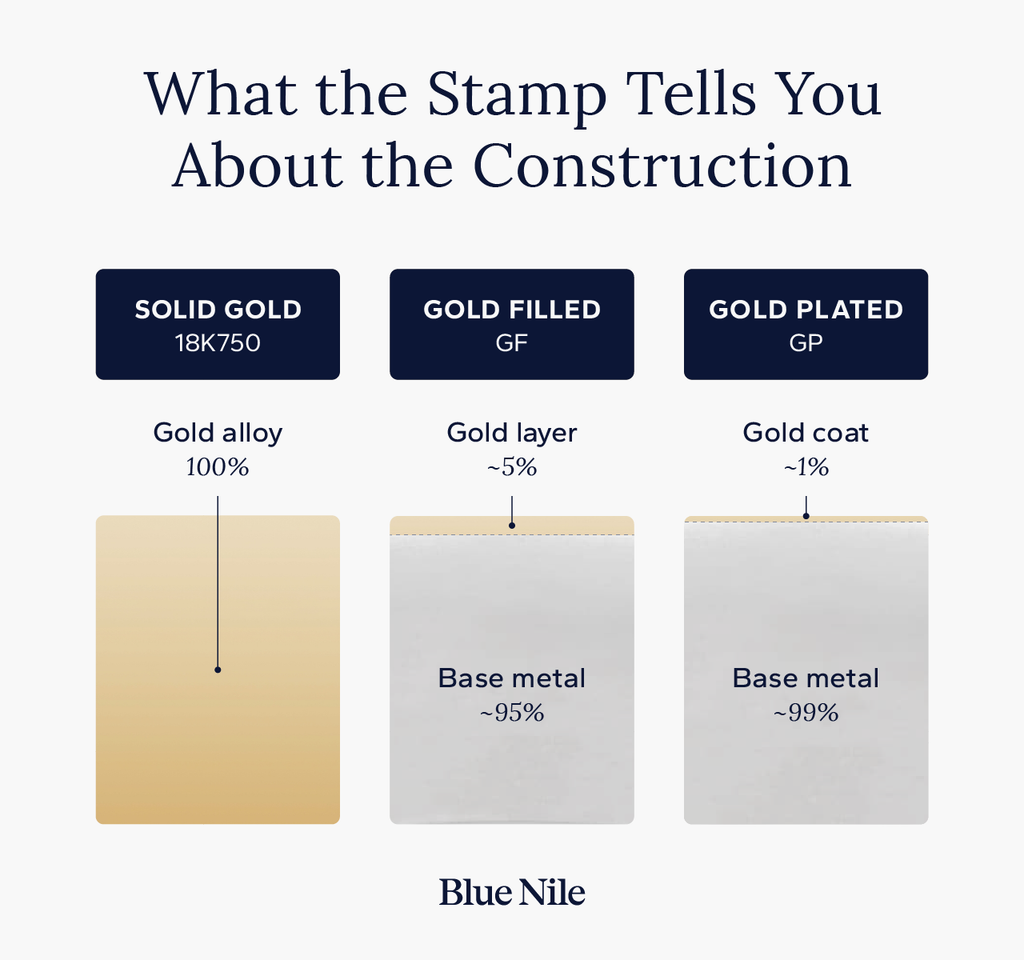
That’s an important distinction when you’re evaluating a piece for long-term wear. Plating can wear over time, so identifying the construction tells you more than color alone ever could.
Silver and Platinum Markings
Silver and platinum marks typically use numbers or abbreviations to identify the metal and, often, its fineness. Knowing a handful of common marks makes these pieces much easier to interpret.
For silver, 925 or .925 is one of the most familiar. It indicates 92.5% pure silver, the standard commonly associated with sterling silver. You may also encounter text marks such as STER, STG or Sterling.
Other systems include 800, indicating 800 parts silver per thousand, and 958, associated with the Britannia standard in UK hallmarking.
For platinum, you may see PT or PLAT (used interchangeably), often alongside a fineness number. 950 or PT950 indicates 950 parts platinum per thousand, or 95%. UK hallmarking standards also recognize platinum finenesses, including 900 and 950.
Maker’s Marks: How to Identify Who Made a Piece
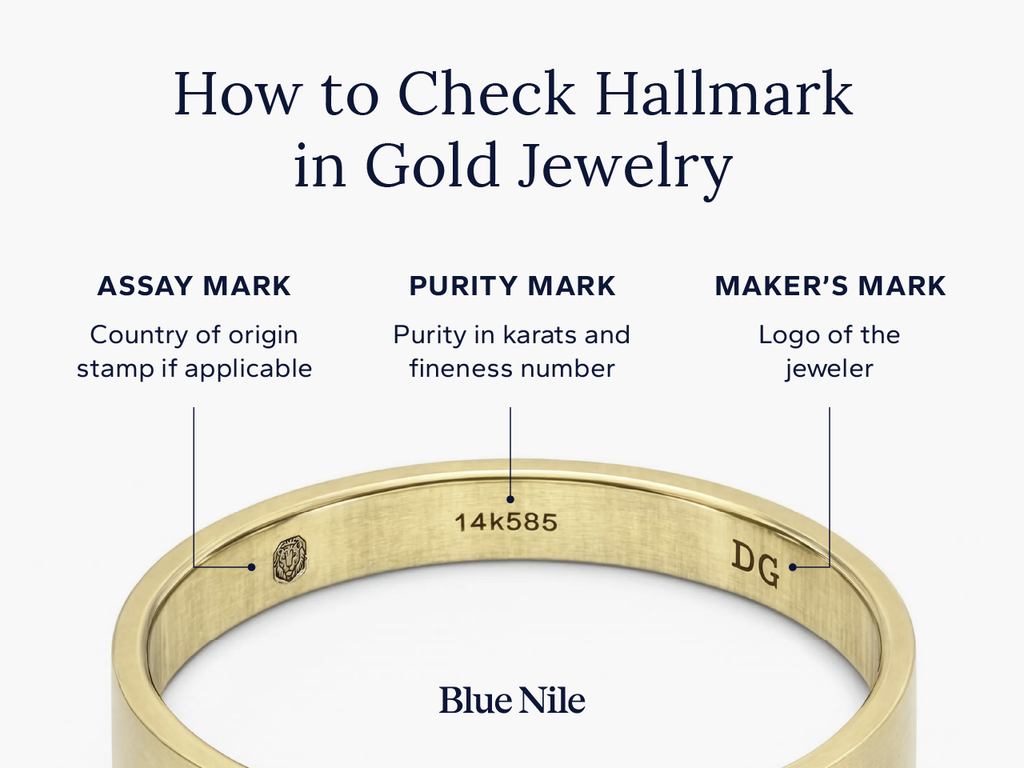
A maker’s mark identifies a maker, company or party associated with a piece, while a purity mark identifies precious-metal content. Seeing both marks together can therefore give you two different pieces of information.
Think of the maker’s mark as a signature. Depending on the country and marking system, it might appear as initials, a name, a brand or letters within a distinctive shape.
AA mark doesn’t necessarily identify the individual craftsperson who physically made the jewelry, though. In the UK hallmarking system, for example, the sponsor’s or maker’s mark identifies the registered person or company that submitted the piece for hallmarking.
If you’re working through maker’s mark identification symbols stamped on jewelry, use a methodical process:
- Inspect the mark with a loupe or magnifier: Note every letter, number, symbol and surrounding shape rather than guessing from a partially visible character.
- Compare it with a reputable reference: A maker’s mark database or reference book can help narrow the possibilities.
- Look for established brand signatures: Compare the complete mark, not just one initial that happens to match.
- Consult a qualified jeweler or appraiser. This is the safer route when makers’ marks remain unclear or the identification could affect an appraisal or purchase.
Appraisal is a safer method, since identifying a jewelry maker’s mark can become tricky. Different businesses, in different countries and during different eras may have been used similar symbols.
Antique vs. Vintage vs. Modern Jewelry Hallmarks
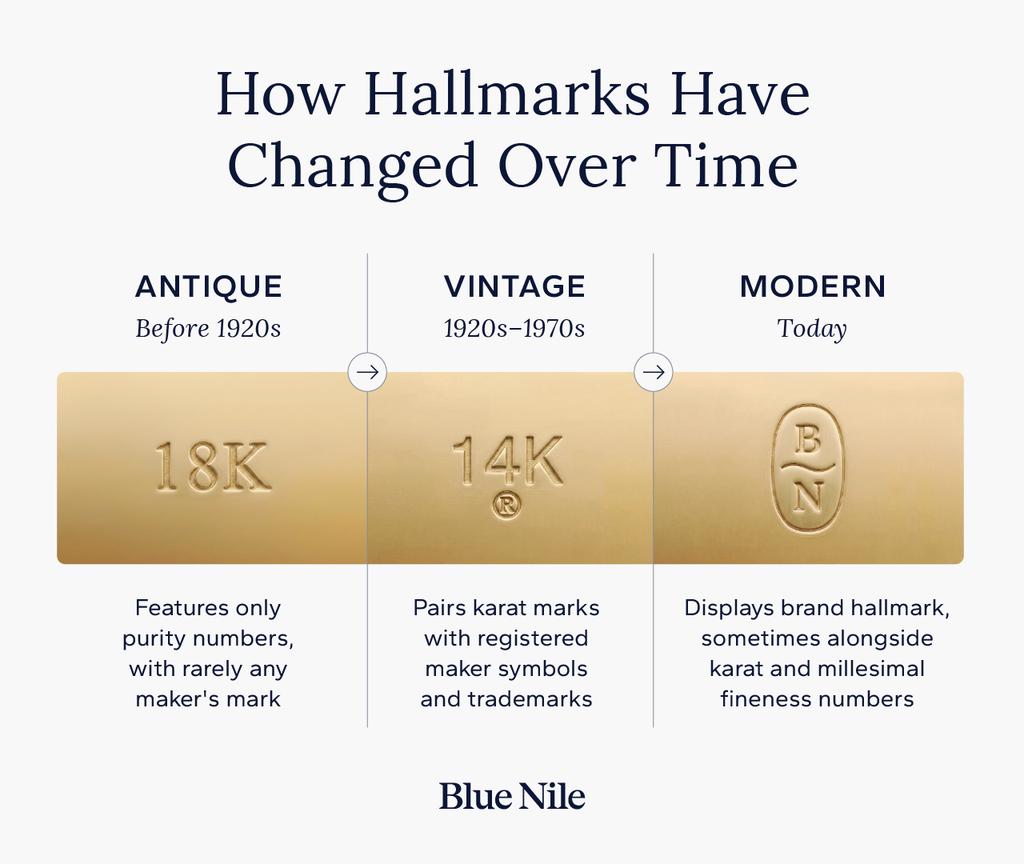
Antique, vintage and modern hallmarks can differ in appearance because marking technology and regulatory systems have changed over time. Older marks may look irregular or worn, while a contemporary mark may be extremely precise. However, appearance alone can’t reliably date a piece.
An antique stamp applied by hand may have differences in depth, alignment or clarity. Also, wear accumulated over many years can soften the edges further. That can make antique gold hallmarks harder to read than the crisp markings you might expect on newer jewelry.
Vintage jewelry spans across many eras and countries, so its markings vary considerably. Some pieces have standardized purity marks alongside manufacturer symbols, while others require more research to place in context. For some older pieces, you may find other useful clues, such as an assay office symbol or date letter.
Modern jewelry makers’ marks may be applied with highly precise equipment, including laser marking. A crisp stamp doesn’t automatically mean a piece is new, though, just as an uneven one doesn’t prove that it’s antique.
If the jewelry also contains diamonds, age and metal markings don’t establish diamond quality or authenticity. It’s best to appraise to determine the diamond’s characteristics, such as its inclusions.
Assay Office Marks and Letter Markings on Gold Jewelry
Assay office marks identify the office that independently tested and hallmarked a precious-metal piece, while date letters can help indicate when a piece was hallmarked. These marks are particularly relevant when researching British jewelry.
A complete current UK hallmark includes three compulsory elements: a sponsor’s mark, a metal and fineness mark and an assay office mark. The assay office symbol tells you which UK assay office tested the article.
Date letters require more care. In the UK, the date letter is now voluntary, so you shouldn’t expect every hallmarked piece to have one. The Sheffield Assay Office notes that the date letter became voluntary in 1999 and that its typography, case and surrounding shape help identify a particular year.
That means you shouldn’t interpret letter markings on gold jewelry in isolation. The same letter can mean very different things depending on its style, shape, assay office and historical context.
Where to Find Hallmarks on Your Jewelry Pieces
Jewelers usually place hallmarks in discreet areas where the mark won’t interrupt the jewelry’s design. The exact location varies by jewelry trends and type, so good lighting and magnification can make the search much easier.
| Piece | Where to Find Hallmarks |
| Ring | Inside the ring |
| Necklaces and Chains | Near the clasp, on a small tag or connecting component |
| Bracelets | Near the clasp or on an interior surface |
| Earrings | On the post, back or another small metal surface |
Jewelry Maker’s Marks Database: Where to Look Up a Mark
A jewelry maker’s marks database is a reference that catalogs known maker’s marks or sponsor marks, so you can compare the stamp on your jewelry with documented examples. These references may organize marks by initials, symbol, manufacturer, country or era.
A good search starts with observation, not assumptions. Write down the mark exactly as you see it. Note whether the letters are uppercase or lowercase, whether they’re enclosed in a geometric shape and which purity or assay marks appear beside them.
Then compare the entire group of clues. The same initials may belong to more than one maker, so a visual resemblance by itself isn’t enough to establish who made a piece.
Reference books, professional appraisers, gemological organizations and specialist jewelry resources may help with research. For potentially significant antique, inherited or valuable jewelry, professional examination can provide much stronger evidence than an online image match alone.
This distinction is worth remembering. A hallmark gives you evidence, but it doesn’t automatically give you the entire story.
Now You Know What to Look For
This jewelry hallmark guide gives you a practical starting point for uncovering your piece’s history. Hallmarks can help you understand what makes your jewelry special, particularly if it’s inherited.
And if you’re planning to buy a modern piece, check out our holiday jewelry gift guide for ideas. Our hallmarks are sure to tell each piece’s story.
Explore today’s jewelry deals at Blue Nile.
Frequently Asked Questions
A jewelry hallmark conveys details about its precious-metal content, its maker or sponsor and its testing location. The exact meaning of a hallmark depends on the country, era and individual marks, so use the complete set of symbols rather than interpreting one character alone.
A hallmark can verify information such as precious-metal fineness, while a maker’s mark identifies a maker, sponsor or company associated with the piece. In formal systems such as UK hallmarking, the sponsor’s or maker’s mark is one component of the complete hallmark.
A 925 mark means the piece contains 925 parts silver per thousand, or 92.5% silver. This is the purity associated with sterling silver, which may also be identified with wording such as “Sterling.”
14K and 18K indicate different proportions of gold: 14K is approximately 58.5% gold, while 18K is 75% gold. You may also encounter millesimal equivalents such as 585 for 14K and 750 for 18K.
Yes, unmarked jewelry can still have value, but the absence of a visible mark means you’ll need other evidence to identify its metal, maker and history. A mark can disappear through wear, resizing or repair and marking requirements vary by place and era. If you believe the piece may be valuable or significant, consider having it professionally evaluated rather than relying on a home test.


Share