


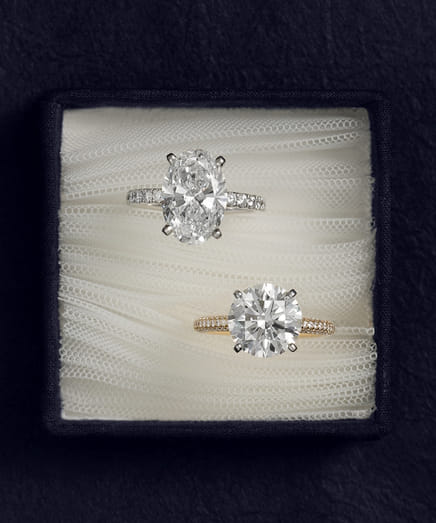
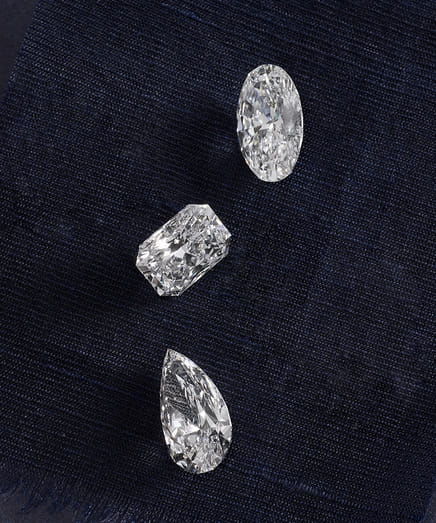


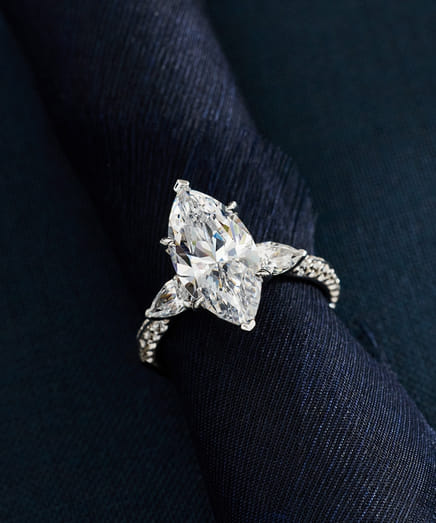
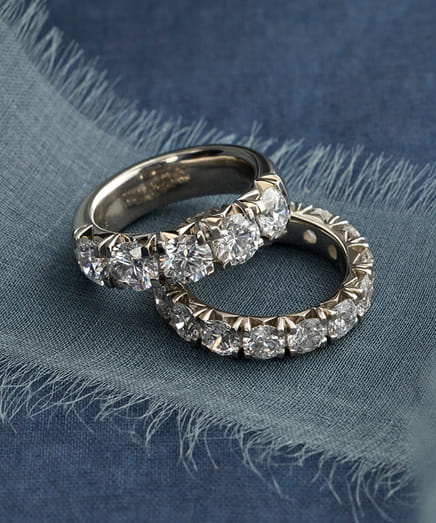
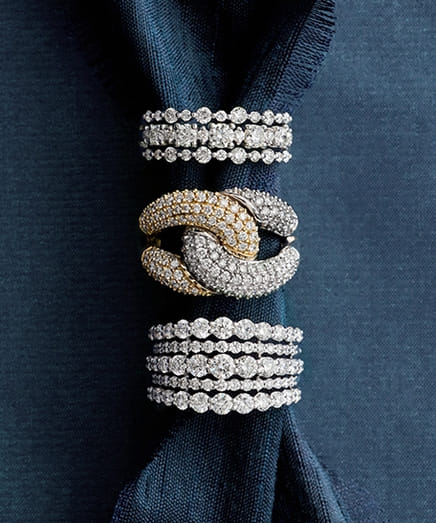
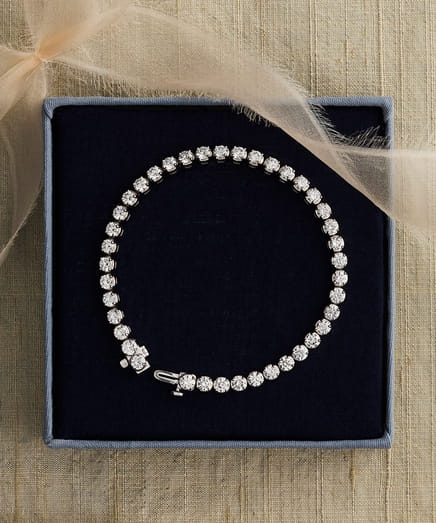


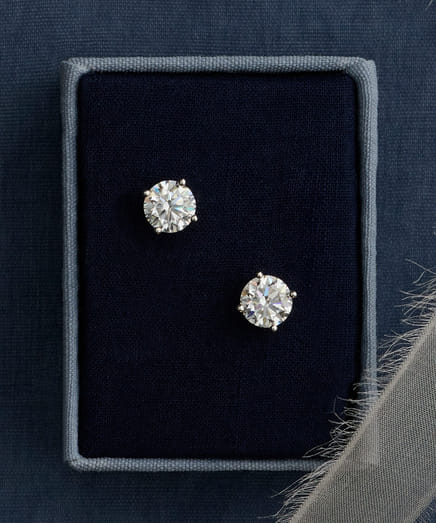


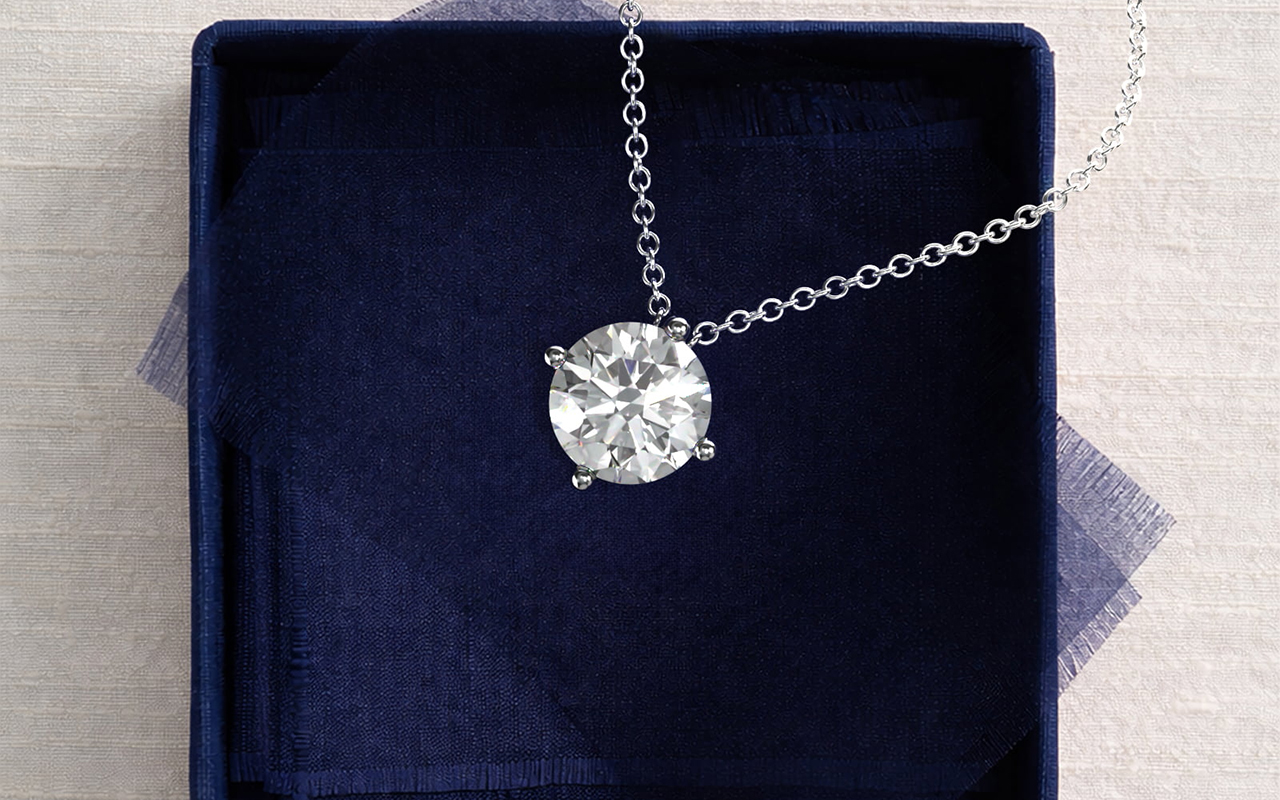
A brilliant cut diamond features a pattern of angled surfaces that direct light through the top of the stone. Cut describes how a diamond interacts with light, while shape refers to its outline, so brilliant cuts can appear in shapes including round, oval, cushion and radiant.
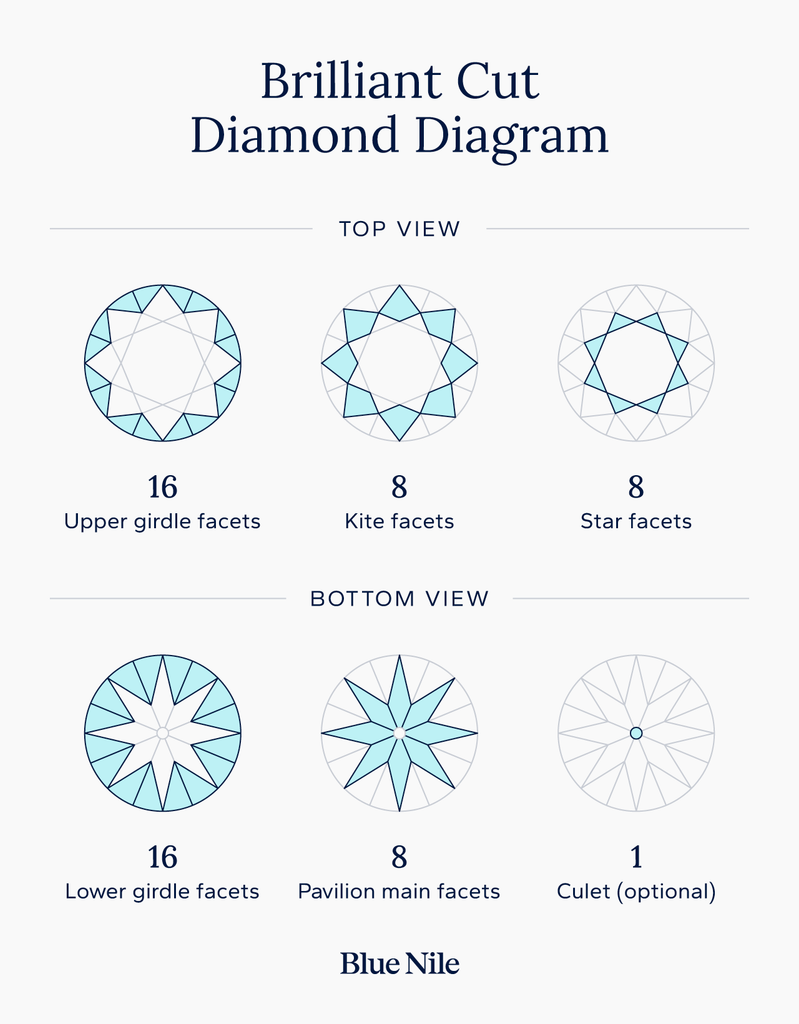
Brilliant cut diamonds make the most of every ray of light, creating bright flashes and contrast as the diamond moves. A traditional brilliant cut diamond has 57 or 58 facets, depending on whether you count the culet.
A diamond’s cut (one of the 4Cs) assesses how well-proportioned a diamond is based on factors like its facet arrangement, proportions and symmetry. Every diamond has facets—the small, flat, polished surfaces throughout a diamond that help it glow. These are also part of what makes cut an important consideration when you’re shopping for diamonds.
In this guide, we’ll walk you through what a brilliant cut is, which diamond shapes commonly use it and how brilliant cuts compare with step-cut diamonds.
What to Know about Brilliant Cut Diamonds
Triangular and kite-shaped facets work together in a brilliant cut diamond to maximize light return. Their specific angles direct light back through the stone, creating the visual effect associated with this style.
Brilliant cut includes eight diamond shapes, compared to two for step-cut. While the shapes vary, each uses numerous surfaces that interact with light from different angles.
Here are the 8 diamond shapes that jewelers commonly use with brilliant faceting:
- Round diamonds
- Princess diamonds
- Cushion diamonds
- Oval diamonds
- Pear diamonds
- Heart diamonds
- Radiant diamonds
- Marquise diamonds
Though these diamonds all have different shapes, their facets give them a similar style of light performance. Diamond proportions can further help you evaluate how a diamond’s facets work together.
Brilliant cut diamonds span several centuries of diamond-cutting history, and modern cutting technology allowed diamond cutters to create increasingly precise facet arrangements. The round brilliant and radiant are two distinct diamond cuts that use this faceting style, each with its own shape and facet arrangement.
Here’s a quick breakdown of how they relate to each other:
| Brilliant Cut | Round Brilliant | Radiant | |
| What it is | A faceting style | A round diamond cut | A rectangular or square diamond cut |
| Faceting | Triangular and kite-shaped facets | Brilliant faceting with 57 or 58 facets | Brilliant-style faceting with a rectangular outline |
| Introduced | Developed over centuries | 1919 | 1977 |
Brilliant Cut Diamond Facets and Structure
A brilliant cut diamond has 57 (or 58 when the diamond has a culet). These facets span the diamond’s crown, pavilion and girdle to help direct light through the stone. Here’s how each area contributes to the diamond’s light performance:
- Crown facets: Located above the girdle, these help reflect light through the top of the diamond.
- Pavilion facets: Located below the girdle, these help reflect light back toward the crown.
- Girdle facets: These facets form the diamond’s outer edge, separating the crown from the pavilion.
Facet arrangement is one part of a diamond’s overall cut. For a deeper look at how proportions, symmetry, polish and other factors contribute to a diamond’s cut grade, learn more about diamond cuts.
Brilliant Cut vs. Step-Cut Diamonds
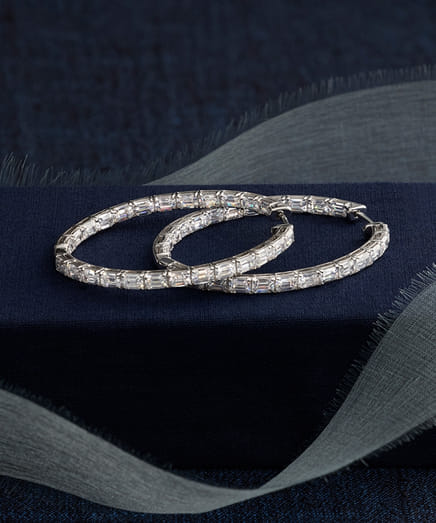
Step-cut diamonds feature long, narrow facets arranged in parallel rows. Brilliant cuts create a more dynamic pattern of bright flashes across the stone, while this more open arrangement gives step-cut diamonds a softer glow and broader flashes of light.
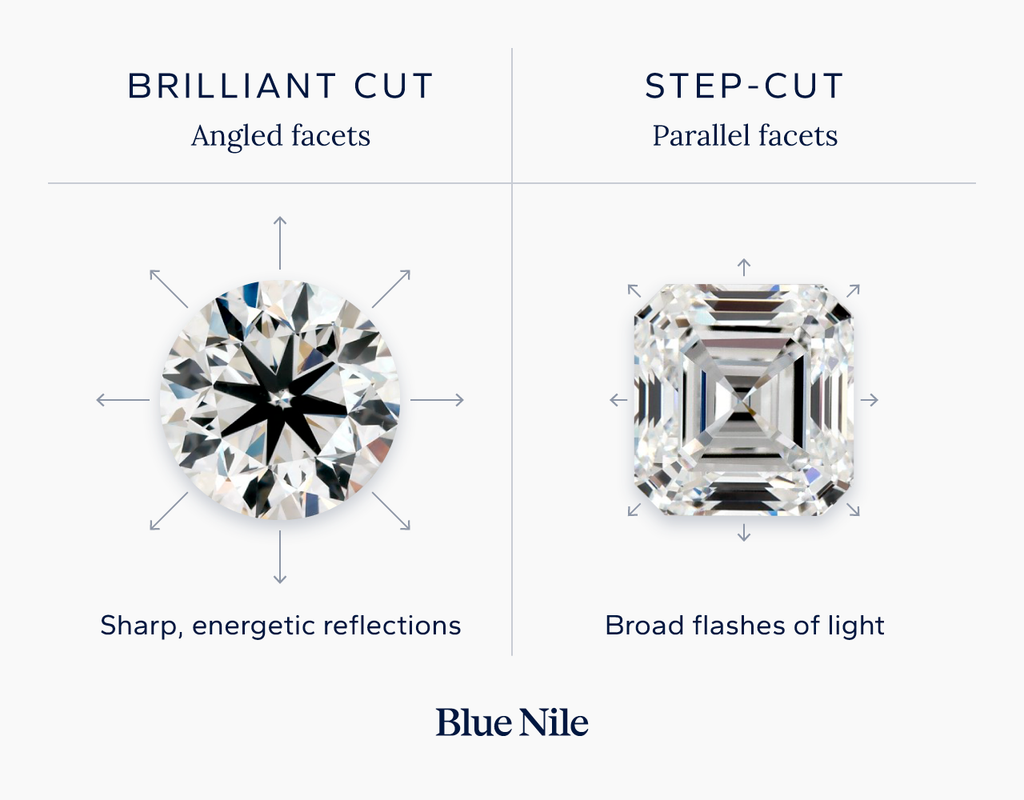
Step-cut refers to a faceting style rather than a single diamond shape. Several diamond shapes use this style, including:
- Emerald diamonds
- Asscher diamonds
- Baguette diamonds
- Carré diamonds
Step-cut faceting has a long history, with the emerald shape dating back to the 1500s and the Asscher shape introduced in 1902. As technology has improved, these step-cuts have become more precise.
Step-cut diamonds generally have fewer, larger facets and return less light than brilliant cut diamonds. That creates a more understated look and can also mean a lower price point compared to other diamonds with similar characteristics.
Use the chart below for a quick comparison of the two faceting styles:
| Brilliant Cut | Step-Cut | |
| Facet pattern | Triangular and kite-shaped | Narrow and parallel |
| Appearance | Bright, distinct flashes that shift as the diamond moves | Soft glow and “hall of mirrors” effect |
| Best for | A dynamic look with frequent flashes of light | Clean, understated look |
| Common shapes | Round, princess, cushion, oval, pear, heart, radiant, marquise | Emerald, Asscher, baguette, carré |
Find a Brilliant Cut Diamond that Fits Your Style
Brilliant cut diamonds use angled facets to direct light through the stone, creating distinct flashes that shift as the diamond moves. This faceting style appears across a range of shapes, including round, oval, cushion and radiant, giving you plenty of options to find a look that suits your style.
Explore how brilliant cuts appear across different designs by browsing. two-stone engagement rings, custom earrings or custom necklaces. View our full selection of jewelry online or stop by one of our local jewelry stores to learn more about brilliant cut diamonds.
Frequently Asked Questions
A traditional brilliant cut diamond has 57 or 58 facets, with 58 when the diamond has a culet. The exact count can vary by the specific brilliant cut and how the facets are counted.
No, round is not the only shape that can use brilliant faceting. Princess, cushion, oval, pear, heart, radiant and marquise diamonds can also use brilliant faceting, giving you plenty of options when exploring different diamond cuts.
Not necessarily. A brilliant cut diamond’s price depends on factors like carat weight, color, clarity and cut quality, along with the diamond’s shape and proportions. If you’re considering a diamond as part of your jewelry investment, you’ll want to evaluate the stone as a whole rather than focusing on its faceting style alone.
Brilliant cuts use many angled facets to reflect light through the top of the stone, while step-cuts use narrow, parallel facets to create a softer glow and “hall of mirrors” effect. When it comes to cut quality, learning more about ideal vs. excellent cut diamond grades will help you understand differences in light performance.
An old mine cut is a historic diamond cut with fewer, larger facets and a softer, more irregular appearance, while a modern brilliant cut uses a precise facet arrangement to create brighter, more defined flashes of light.


Share




 Live Chat
 +1‑800‑242‑2728
 Email Us

