










Key takeaways:
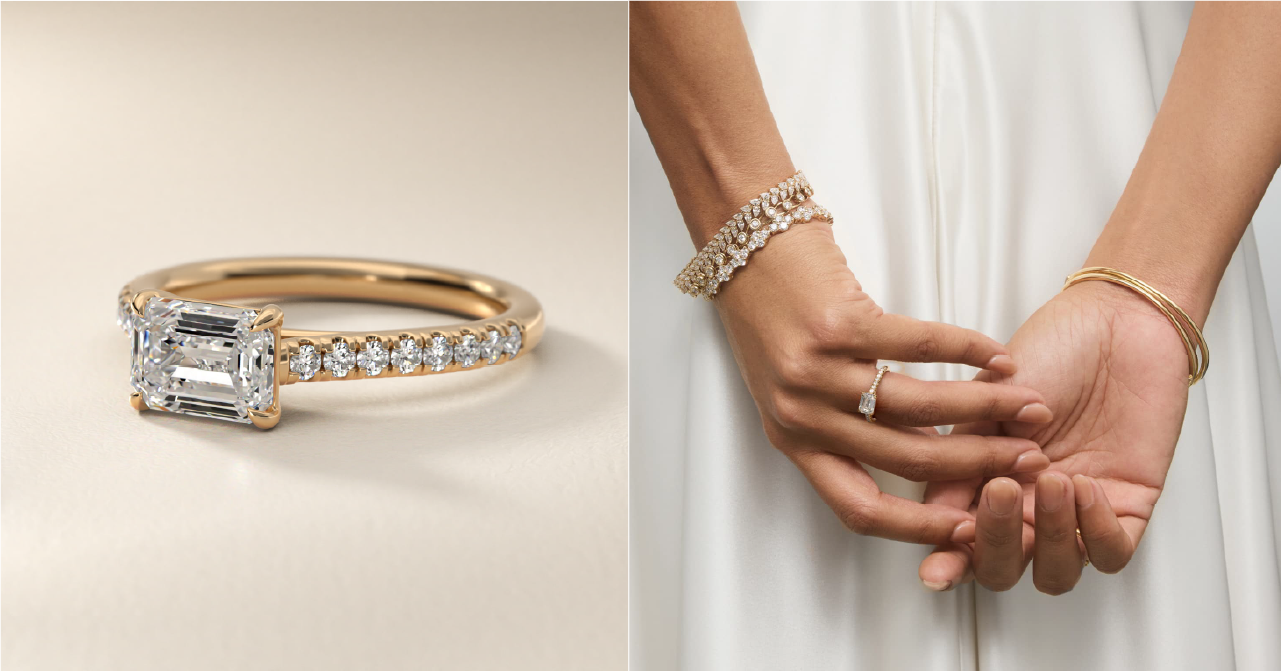
- East to west engagement rings feature elongated stones set horizontally across the finger rather than along it.
- Oval and emerald-cut stones make the horizontal orientation especially noticeable, in designs ranging from solitaires to multi-stone rings.
- Consider the gemstone’s care needs and how the setting protects vulnerable tips or corners when choosing a ring for everyday wear.
- Check the setting’s height and clearance if you want a wedding ring to sit flush beside your engagement ring.
East to west engagement rings turn tradition on its side. A familiar oval or emerald-cut diamond takes on a different character when set horizontally, giving even a simple solitaire an unexpected look.
If that sideways look appeals to you, we’ll compare diamond shapes, gemstones and settings to help you find your design. We’ll also cover everyday comfort and how the ring pairs with a wedding ring.
What Is an East-West Setting?
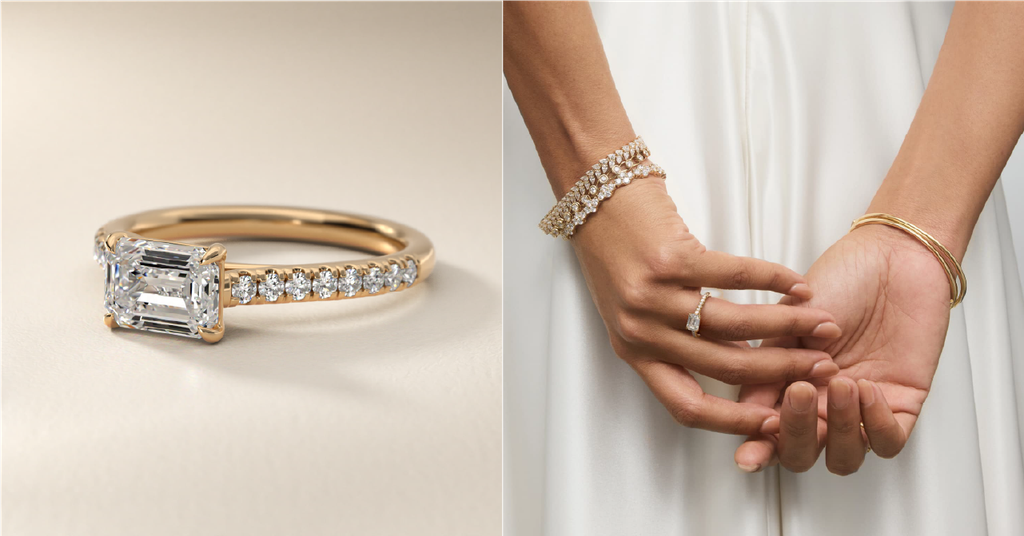
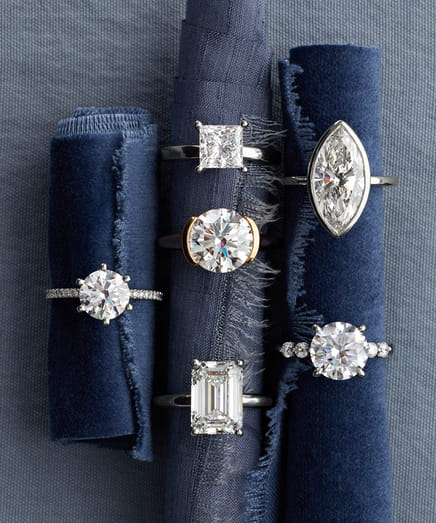
In contrast to a traditional north-south setting, an east to west ring features one or more elongated gemstones set horizontally across the finger. East to west describes the stones’ orientation rather than how they’re secured, so both prong and bezel settings can create this look.
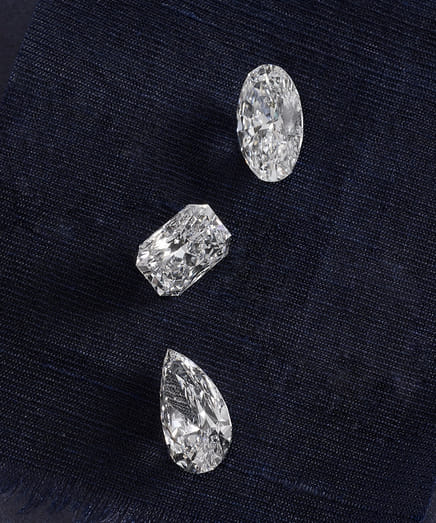
The shape determines the effect:
| Shape | How it looks in an east to west setting |
| Oval | Rounded ends create a soft, curved silhouette. |
| Emerald | Straight edges and clipped corners give a geometric outline, with broad flashes of light. |
| Radiant | A rectangular outline combines with facets that produce many smaller flashes of light. |
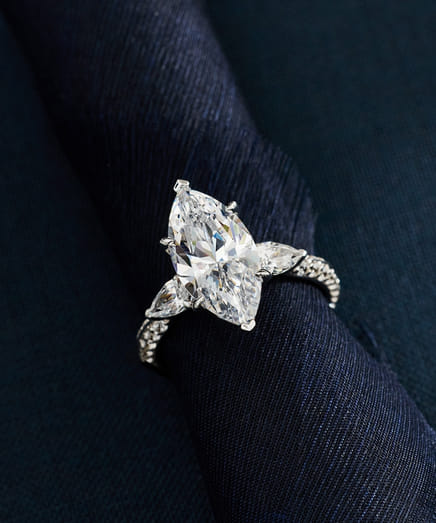
| Marquise | A slender silhouette tapers to a point at each end. |
| Pear | One rounded end and one pointed end create an asymmetric look. |
What Are the Best Gemstones for an East to West Engagement Ring?
The right gemstone depends on the color you want and how much care your ring will need. Here’s how some common options compare:
- Diamonds: Natural diamonds combine brilliance with excellent scratch resistance, making them a practical choice for daily wear.
- Lab-grown diamonds: Lab-grown diamonds have the same optical, chemical and physical properties as natural diamonds. They’re also available in elongated shapes that suit an east to west setting.
- Sapphire: Sapphires offer strong scratch resistance and colors beyond blue, including pink and yellow.
- Ruby: Ruby brings a rich red hue and durability suited for everyday wear. Yellow gold emphasizes its warm tones, while white metals offer contrast.
- Emerald: Emerald’s green color creates a distinctive focal point, but it requires more careful wear than ruby or sapphire. A protective setting is worth considering.
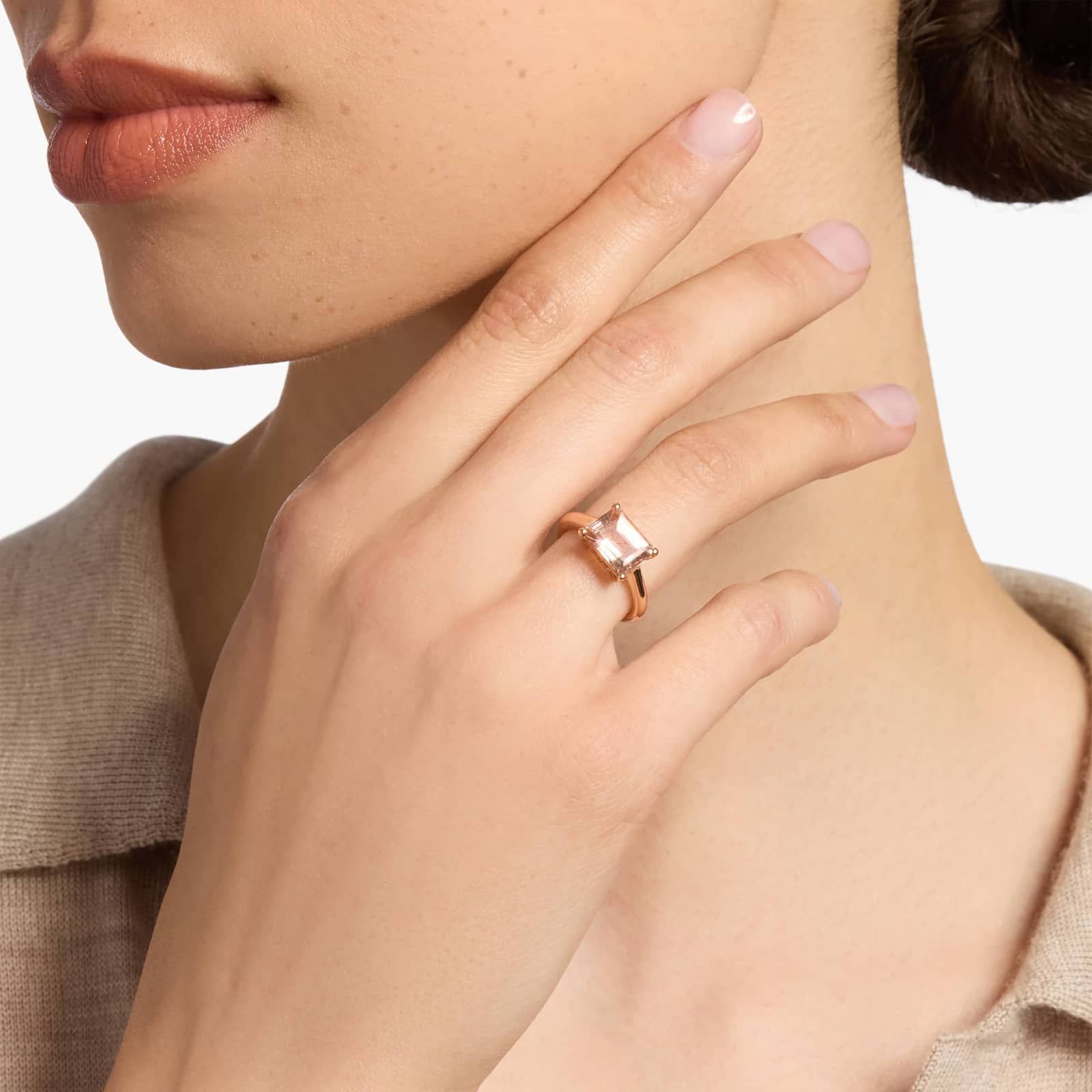
- Morganite: Morganite’s pink and peach hues complement rose gold. It needs protection from scratches and hard knocks.
How to Choose an East to West Engagement Ring
Once you have a gemstone in mind, consider how you’d like to wear it. These steps will help you choose the stone’s proportions, find a suitable setting and plan for a wedding ring:
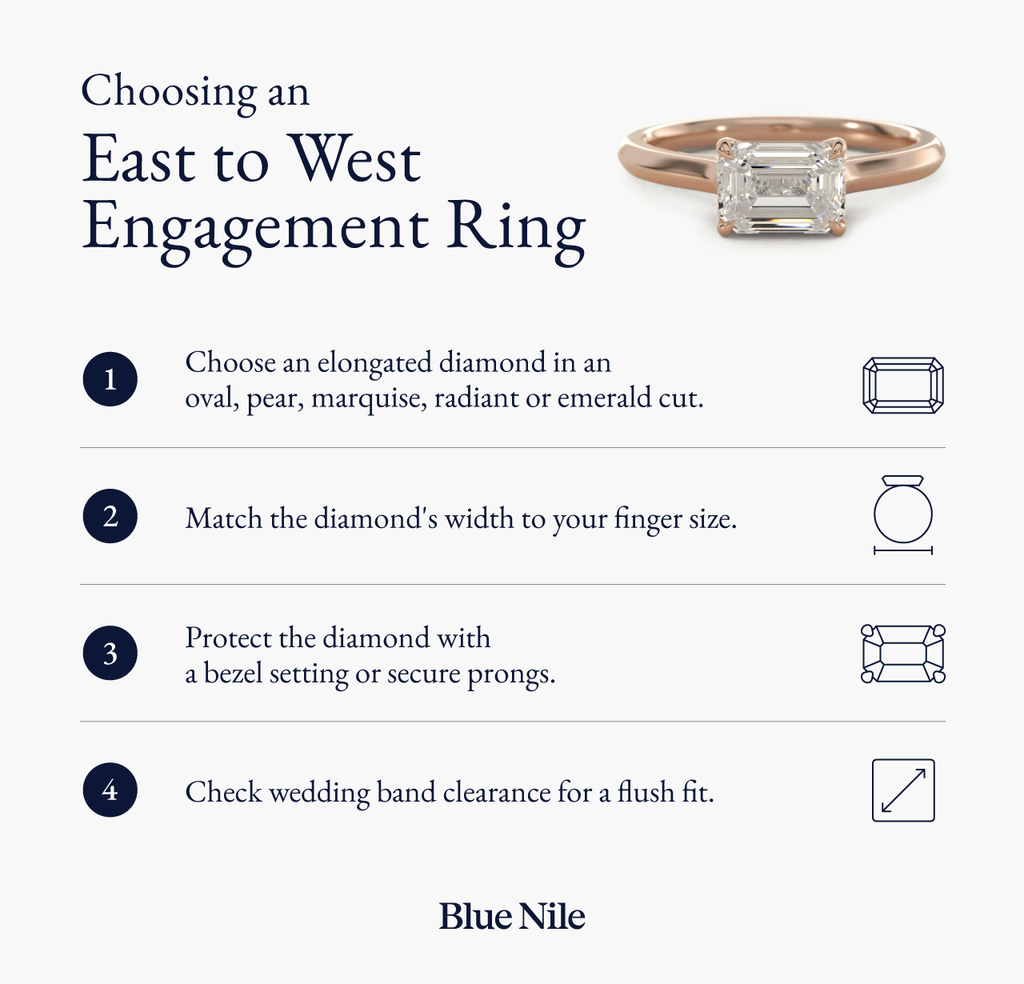
- Start with an elongated diamond shape: Ovals, pears and marquise shapes make the horizontal orientation clear. For a rectangular outline, compare radiant and emerald-cut diamonds.
- Match the stone’s width to your finger size: Check millimeter measurements alongside carat weight. When set horizontally, the stone’s length determines how far it extends across your finger.
- Choose a setting that protects the diamond’s sides: A bezel surrounds the stone with a metal rim, while well-positioned prongs can protect vulnerable tips and corners.
- Plan for a flush-fitting wedding ring: Check clearance beneath the stone if you plan on stacking wedding and engagement rings. A low setting may need a curved band, while a higher setting may accommodate a straight one.
- Design your own ring with Blue Nile: Start with an east to west setting, then select a compatible diamond shape and carat weight. Our diamond experts can help you confirm which combinations work well together.
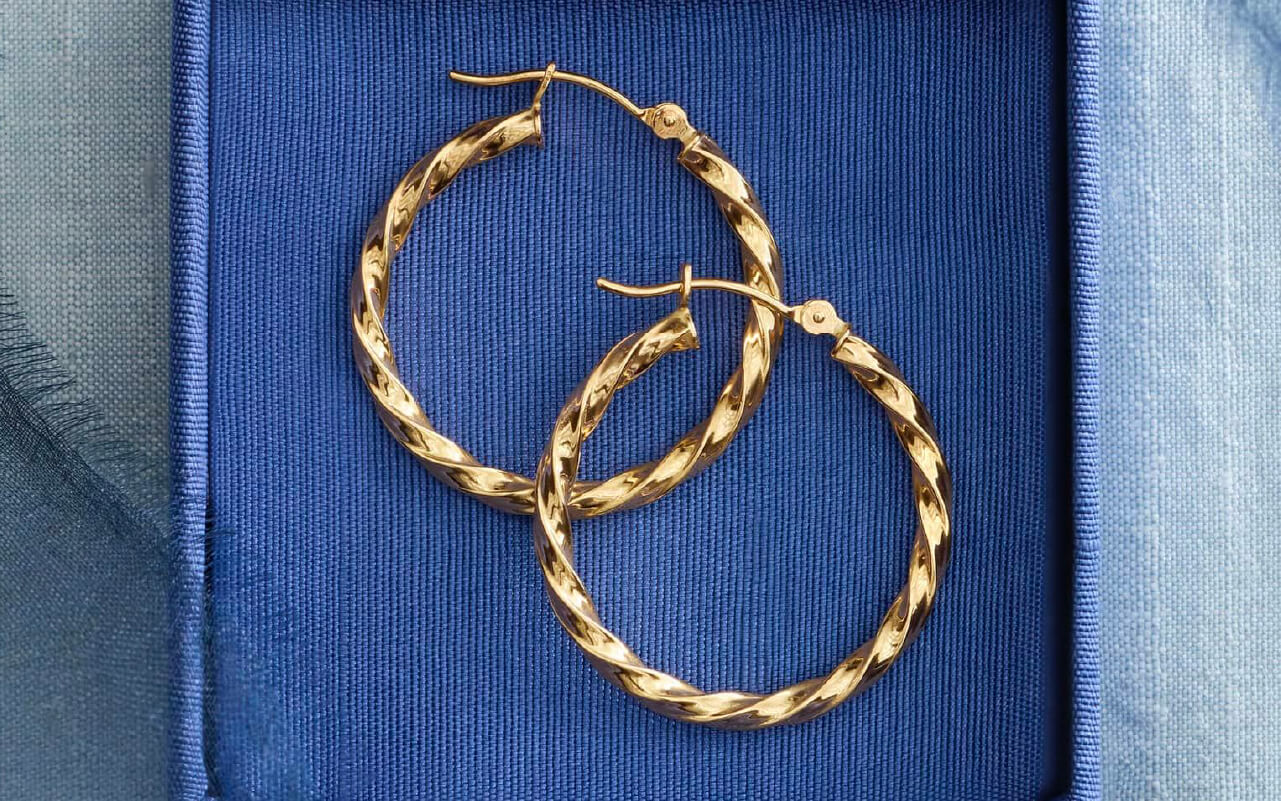
Whether you choose this east-west pendant or a set of earrings with horizontal-set gems, a piece of jewelry in this innovative style brings an instant refresh to any jewelry wardrobe.
Popular East to West Engagement Ring Designs
An east-west orientation works with several familiar ring designs. Compare these styles to find the balance of detail, color and simplicity you prefer:
East to West Halo Engagement Ring
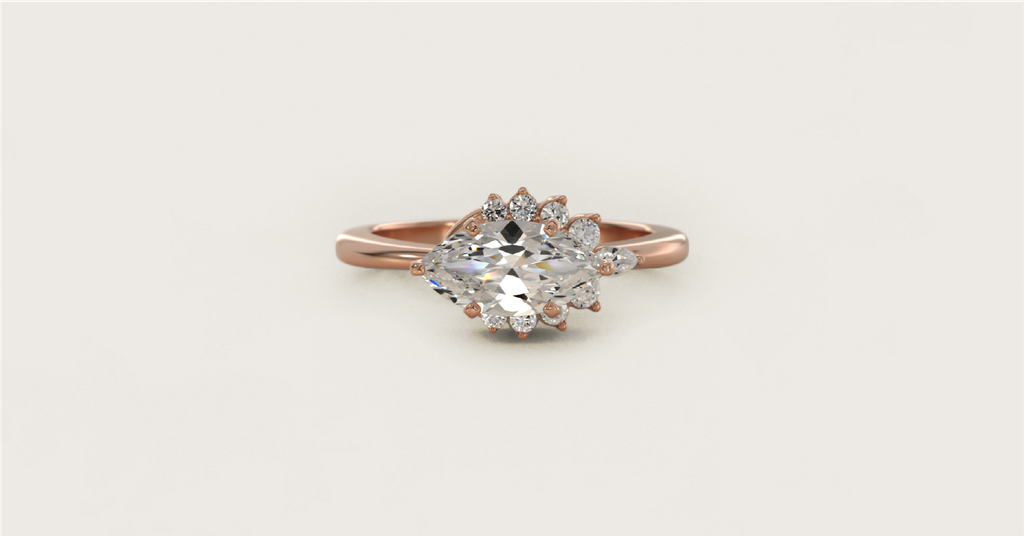
Smaller diamonds frame the horizontal center stone in a halo engagement ring. The border adds definition and brilliance while following the stone’s outline.
Two-Stone East to West Ring
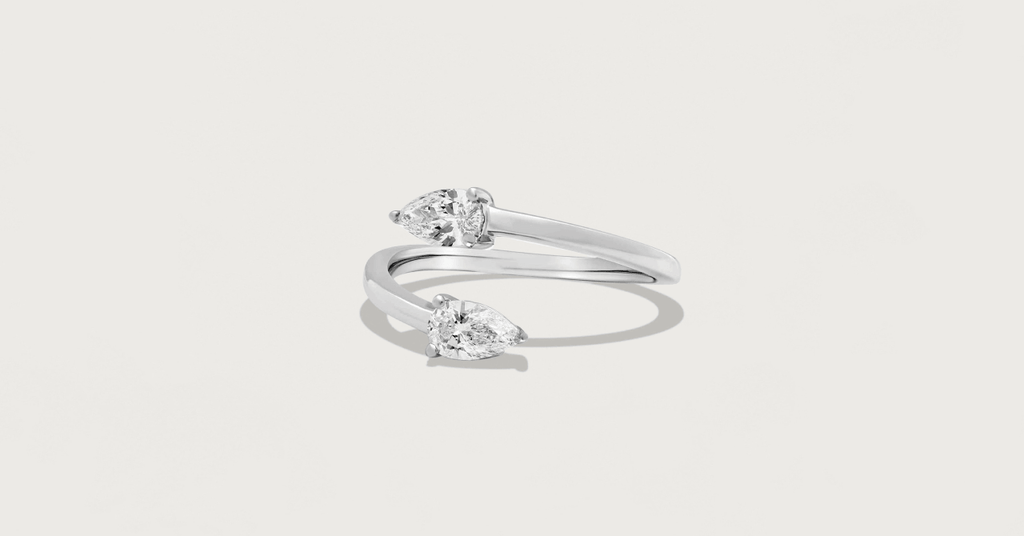
Two focal stones share the attention in two-stone rings. One or both can sit horizontally, with matching or contrasting shapes and colors.
East to West Solitaire
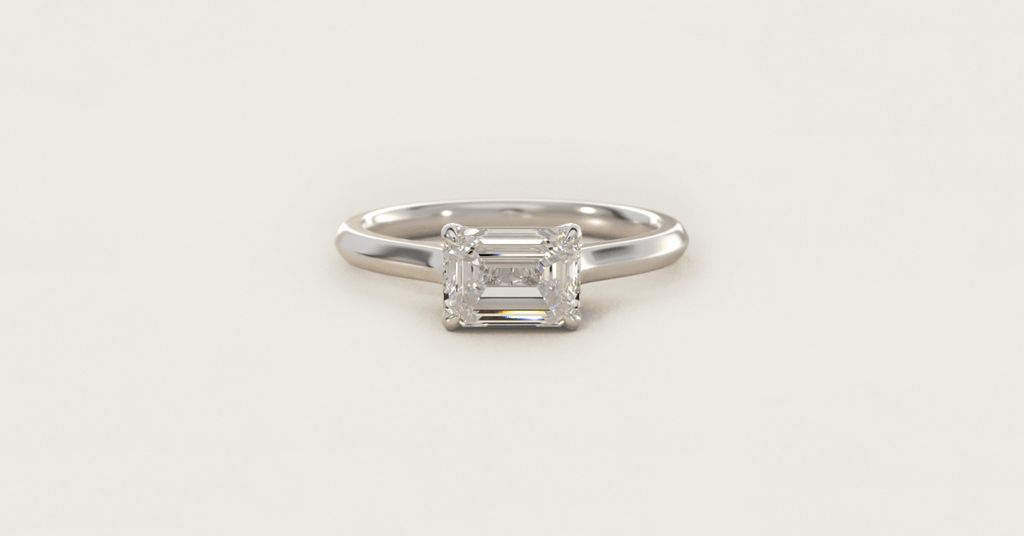
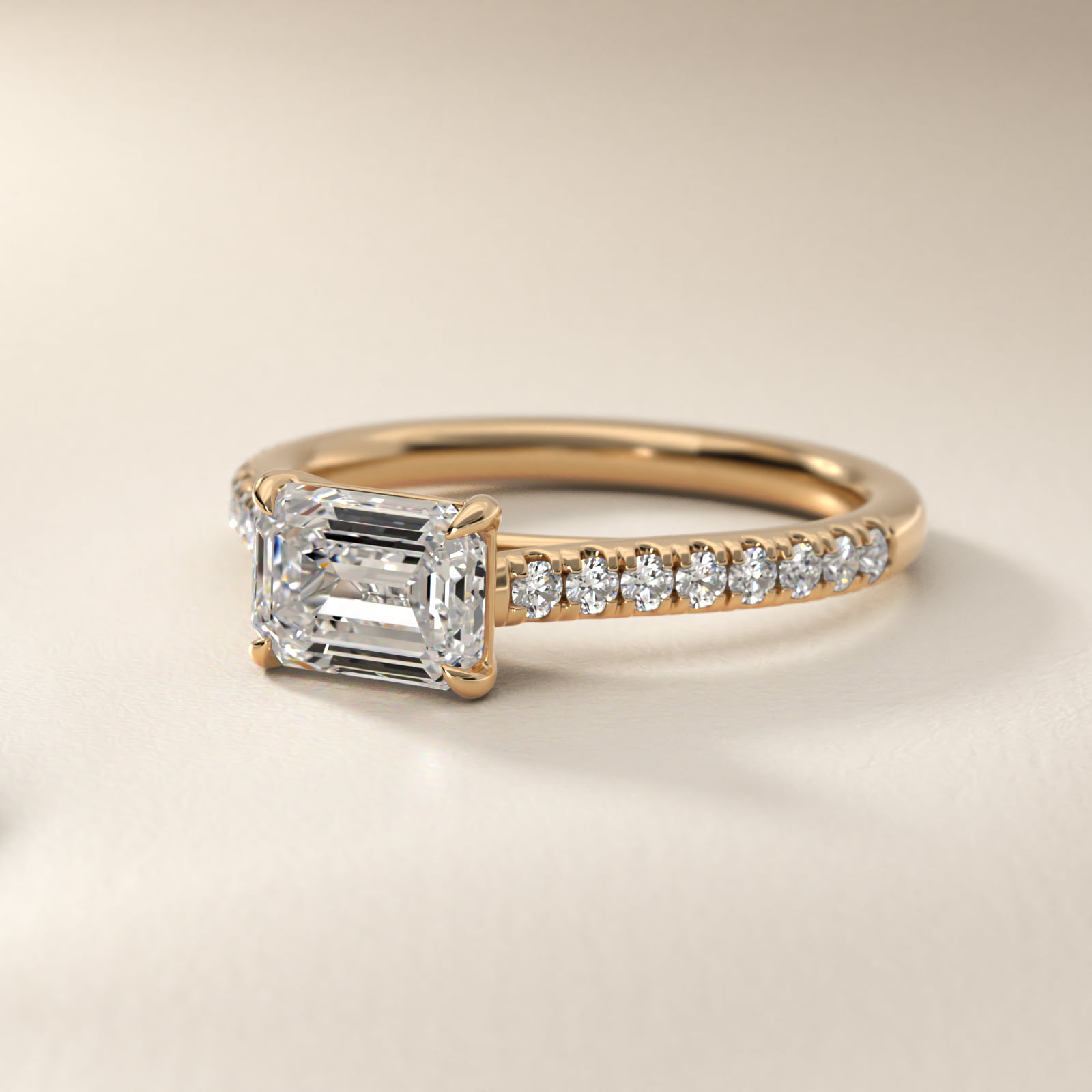
The center stone takes the focus in a solitaire engagement ring. A plain band keeps the design simple and draws attention to the diamond or gemstone’s horizontal outline.
East to West Sidestone Engagement Ring
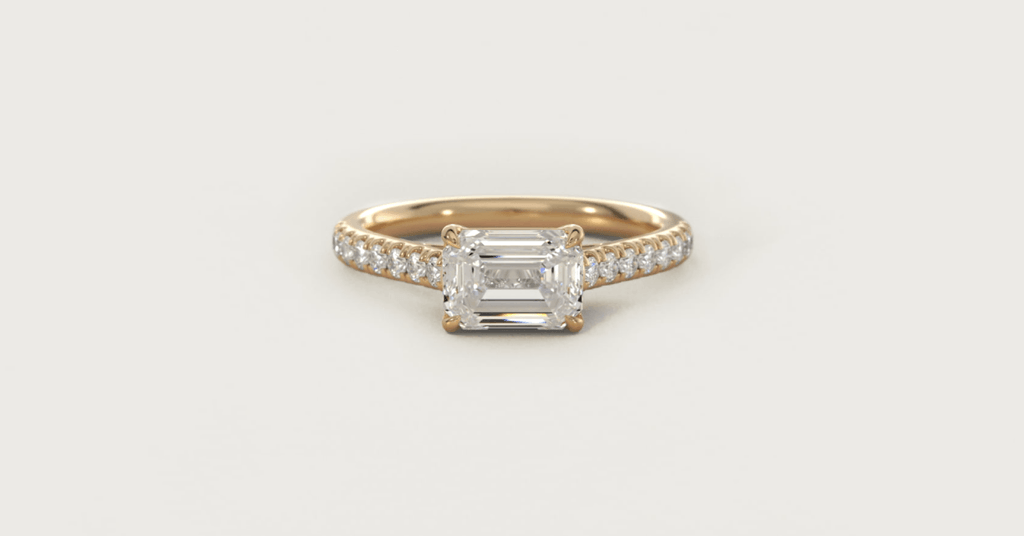
Smaller diamonds flank the horizontal center stone in sidestone engagement rings, adding detail along the band. The accents can echo the center stone’s shape or introduce a contrasting outline.
East to West Eternity Ring
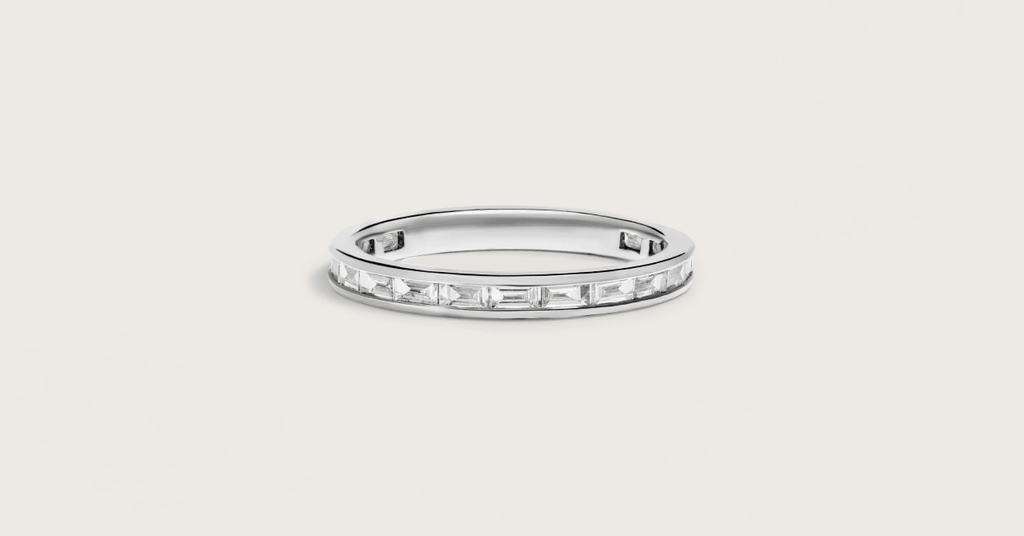
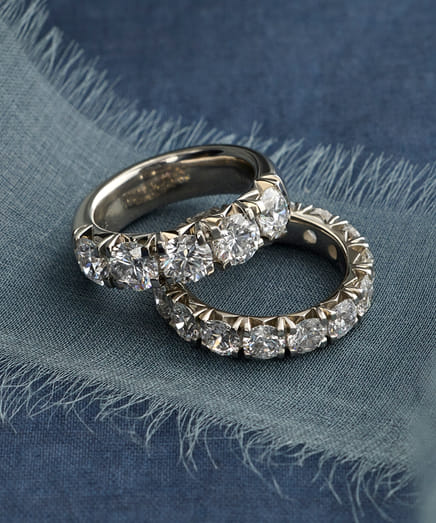
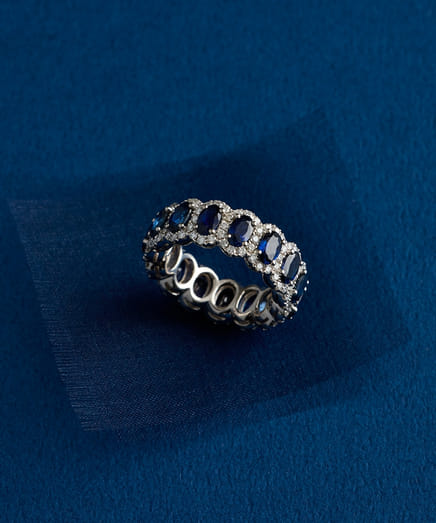
In the eternity ring style, elongated diamonds or gemstones repeat horizontally around the entire band. Oval shapes bring rounded contours, while emerald-cut stones give the design a more geometric appearance.
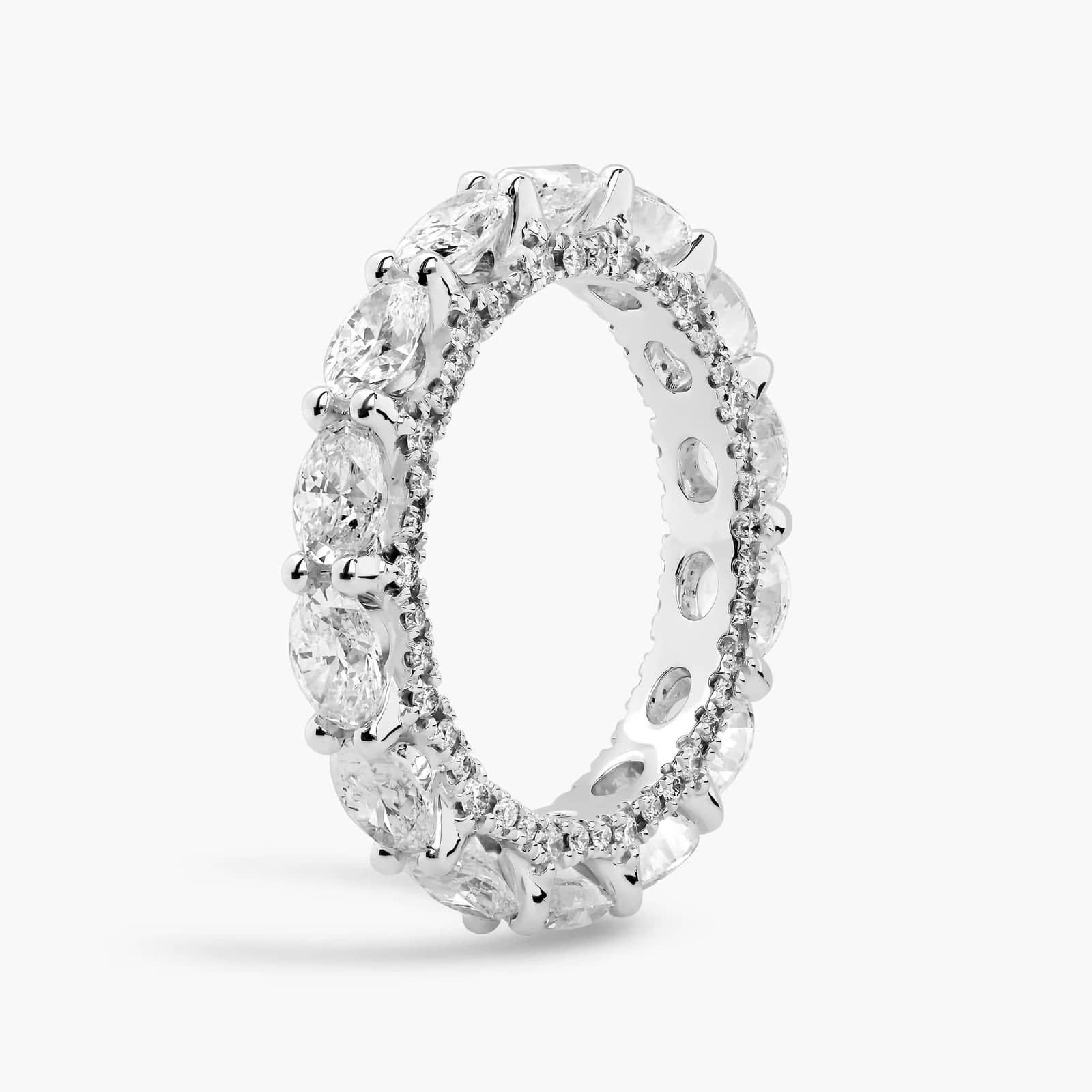
East-West Oval Diamond & Pavé Profile Eternity Ring in 14k White Gold (3 ct. tw.)
Shop East to West RingsThe Benefits of East to West Rings
A change in orientation gives familiar ring designs a different look. Depending on the stone and setting, east to west rings offer these benefits:
A Distinctive Look
An elongated stone set horizontally covers more of the finger’s width, making it appear more substantial. The orientation also emphasizes an oval’s curves or an emerald-cut diamond’s straight edges, giving familiar shapes a different look.
Everyday Comfort
Low-set designs can hold the stone close to the finger. The horizontal orientation also reduces the extent to which an elongated stone extends toward the knuckle.
Design Flexibility
East to west rings work with prong or bezel settings and a range of gemstones. You can also choose platinum or compare different gold karat options to find the metal you prefer.
Design Your East to West Ring With Blue Nile
The right ring might be a quarter turn away. As you compare east to west engagement rings, consider how your choice of diamond and setting fits your style, daily life and budget.
From your first shortlist to the final details, our diamond experts can help you make it yours. Shop our comprehensive collection of east to west engagement rings to find the shape and setting that catch your eye.
Frequently Asked Questions
An east to west engagement ring features one or more elongated gemstones set horizontally across the finger rather than pointing toward the fingertip.
The best diamond shape depends on your style and preferred setting. Oval, emerald, marquise, pear, and elongated radiant shapes make an east-west orientation especially noticeable.
Yes, east to west rings are popular and have featured in recent engagement ring trends. The horizontal orientation appeals to shoppers seeking a distinctive take on familiar designs.
An east to west engagement ring symbolizes commitment, with no fixed meaning attached to its orientation. Some couples choose it to express individuality or simply because they love the design.
They can make diamonds appear more substantial by covering more of the finger’s width. The effect depends on the stone’s dimensions, setting and the wearer’s finger size.
A round diamond can feature in an east to west design, but its circular outline looks the same when rotated. Horizontally set elongated side stones can create the east-west effect around a round center.


Share



 Live Chat
 +1‑800‑242‑2728
 Email Us


