




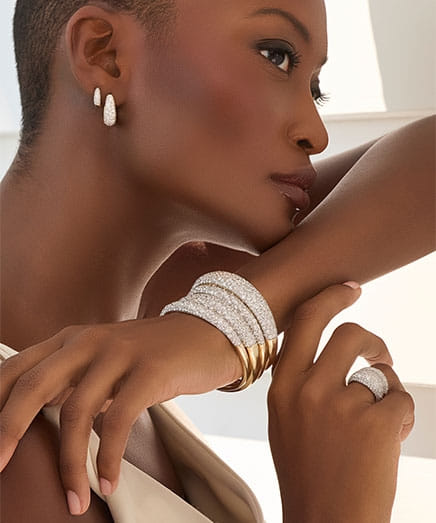
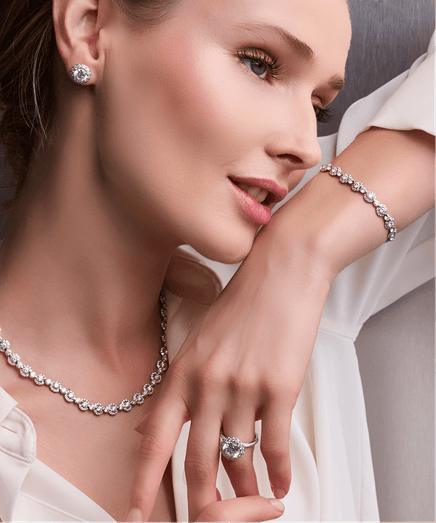


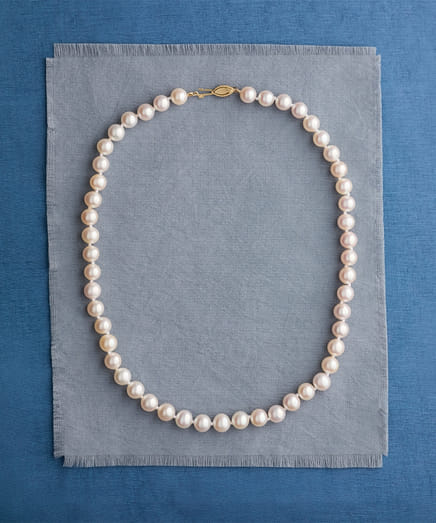

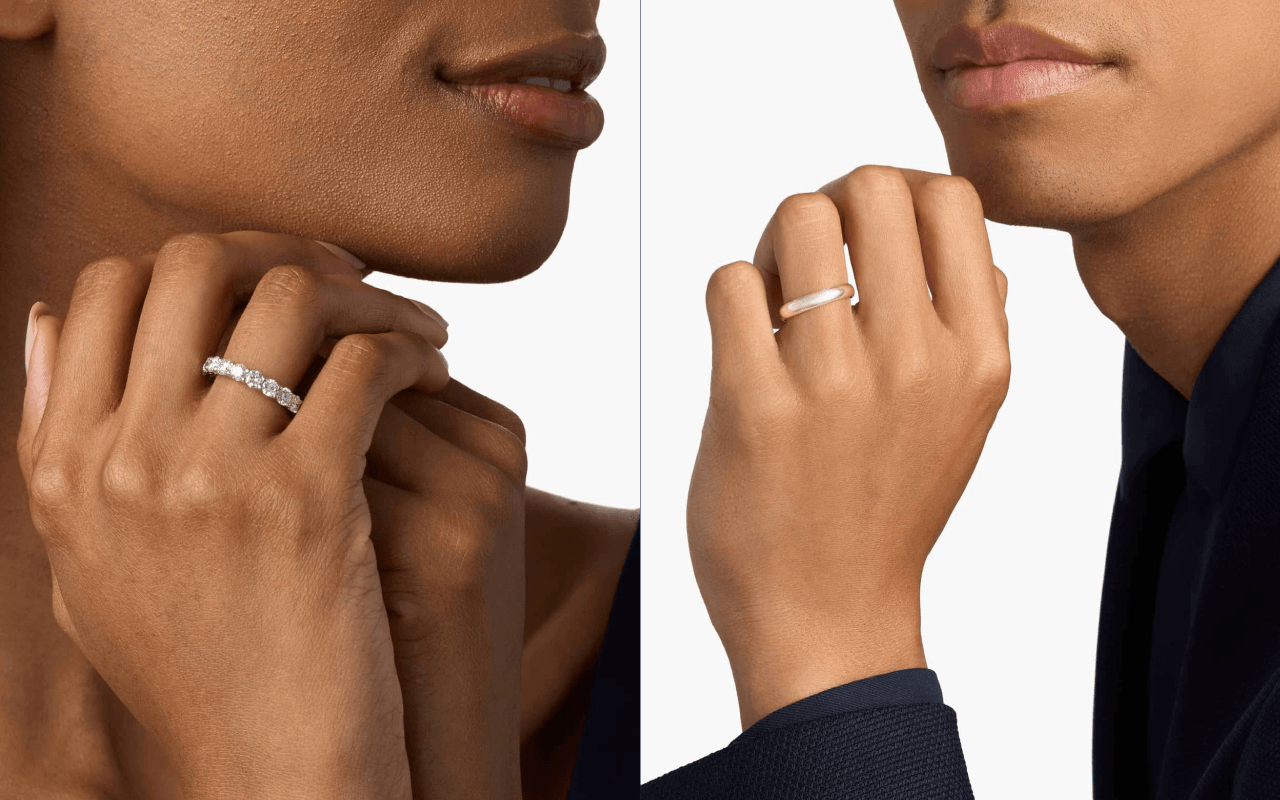
A wedding band is a ring exchanged during a wedding ceremony to symbolize marriage and lifelong commitment. From simple metal rings to diamond-accented and eternity styles, there’s a wedding band for just about every personal style.
A wedding band is the symbol you’ll wear every day — proof of the commitment you made.
Since you’ll likely wear it every day, choosing from the many wedding band styles is about finding a design that suits your style and lifestyle.
From classic metal rings to diamond-accented designs, we’ll cover the most popular styles and types of wedding bands, along with what to expect when it comes to cost and how to choose the right one for you.
Whether you’re comparing options for yourself or searching for the best wedding bands for your partner, we’ll help you narrow down your choices with confidence.
What Is a Wedding Band?
A wedding band is a ring exchanged during a wedding ceremony to symbolize a couple’s lifelong commitment. Unlike an engagement ring, which marks the proposal, a wedding band represents the marriage itself and is usually designed for everyday wear.
You may come across terms like wedding band vs. wedding ring, but these terms mean the same thing: the ring worn to show you’re married. It’s wise to plan to purchase yours a few months before the wedding so you have time to find the right style, confirm your size and make any customizations.
Wedding Band vs. Engagement Ring: What’s the Difference?
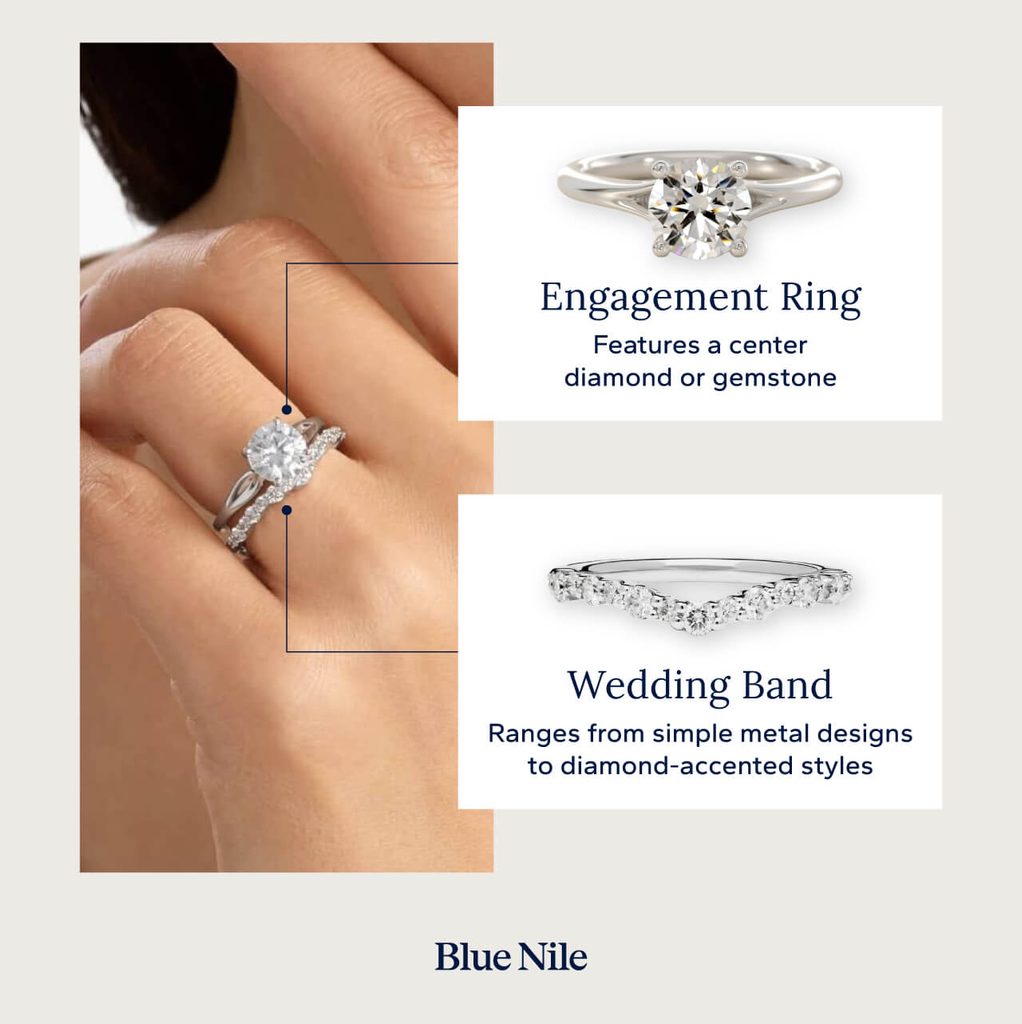
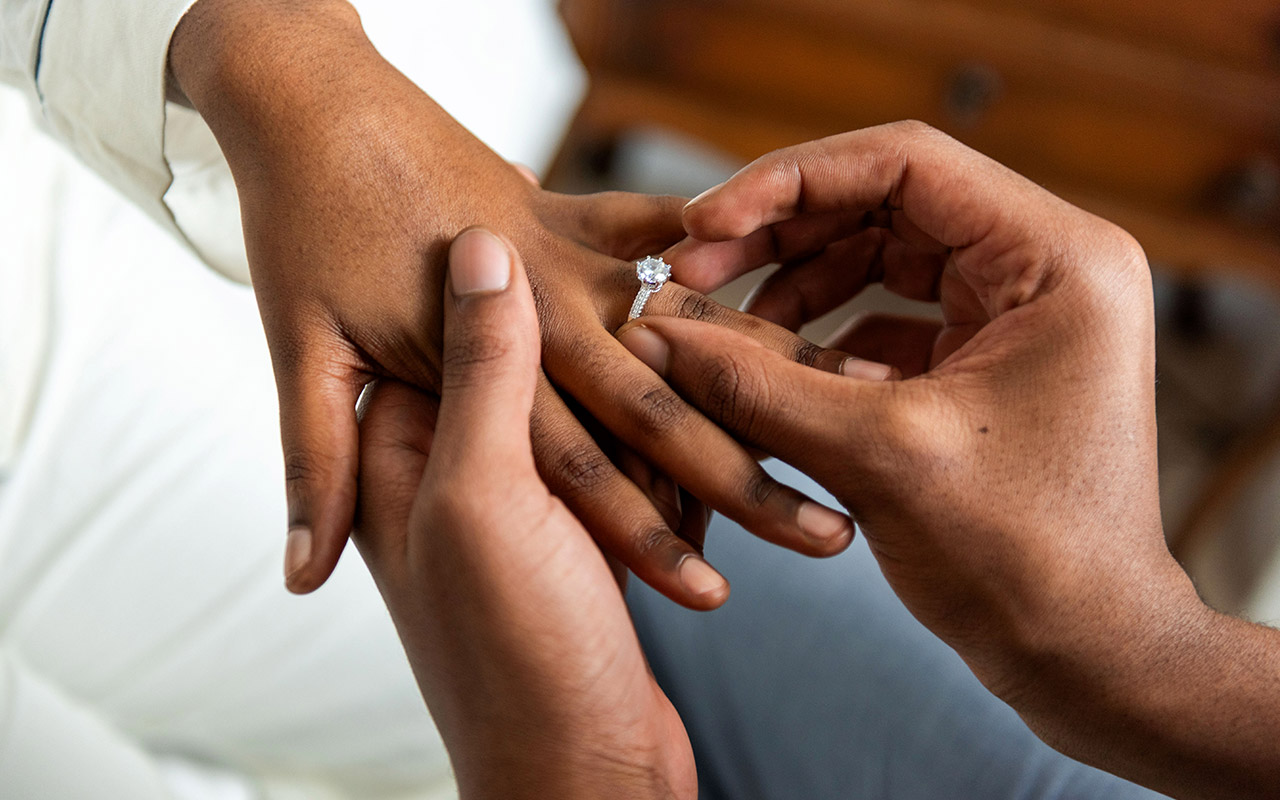
An engagement ring is typically given when you propose, while a wedding ring is exchanged during the wedding ceremony. The engagement ring symbolizes the promise to marry, while the wedding ring represents the commitment of marriage.
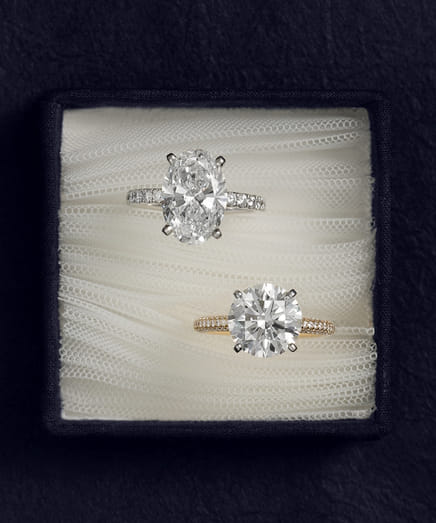
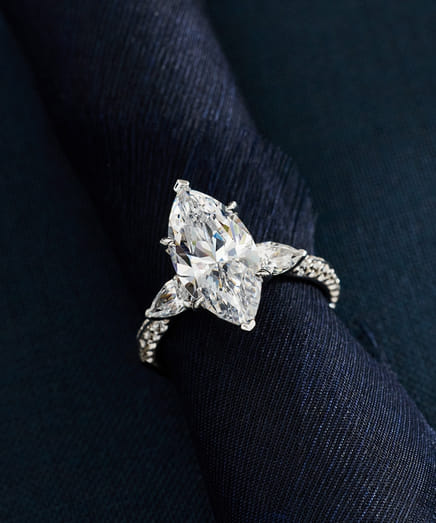
While engagement rings often feature a center diamond or gemstone, wedding rings can range from simple metal designs to diamond-accented styles.
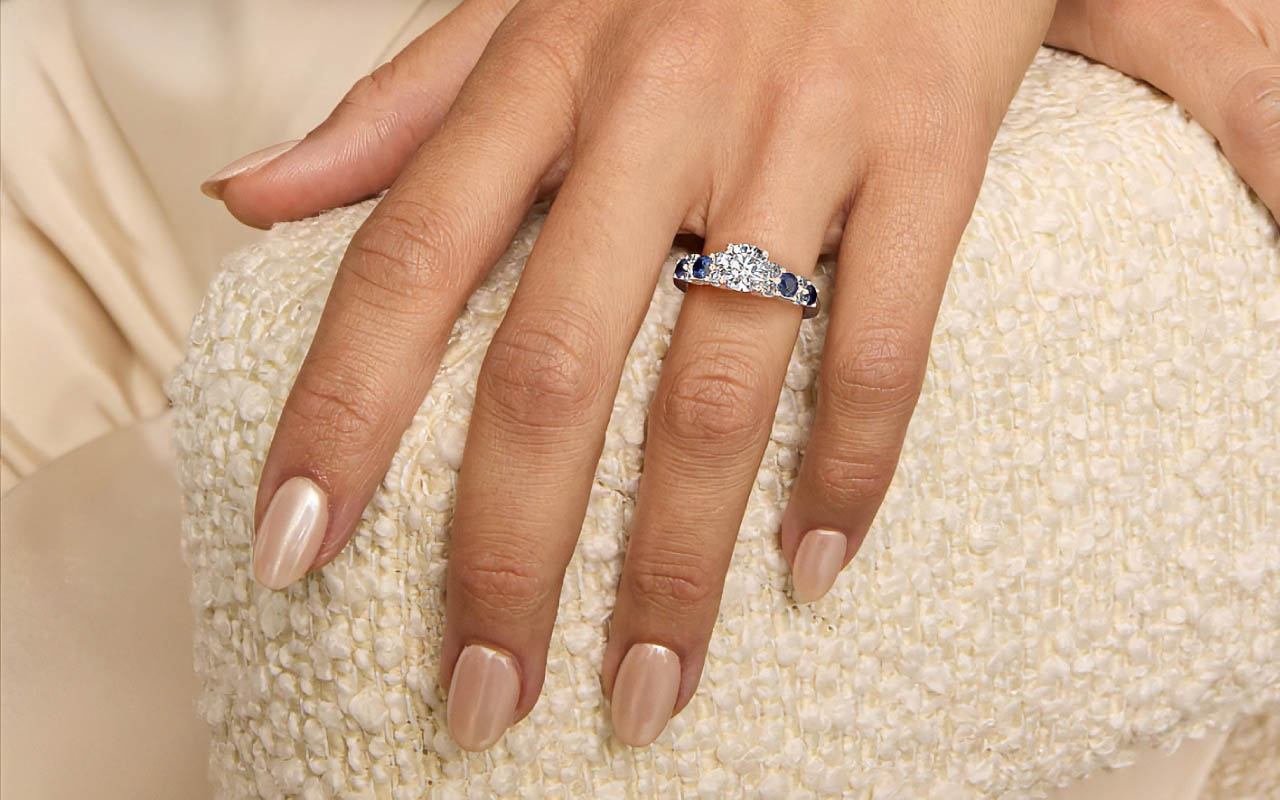
Exploring different engagement ring styles will help you find a ring that best suits your partner, and later, you can both choose a wedding ring that complements it or makes a statement on its own.
Types of Wedding Bands
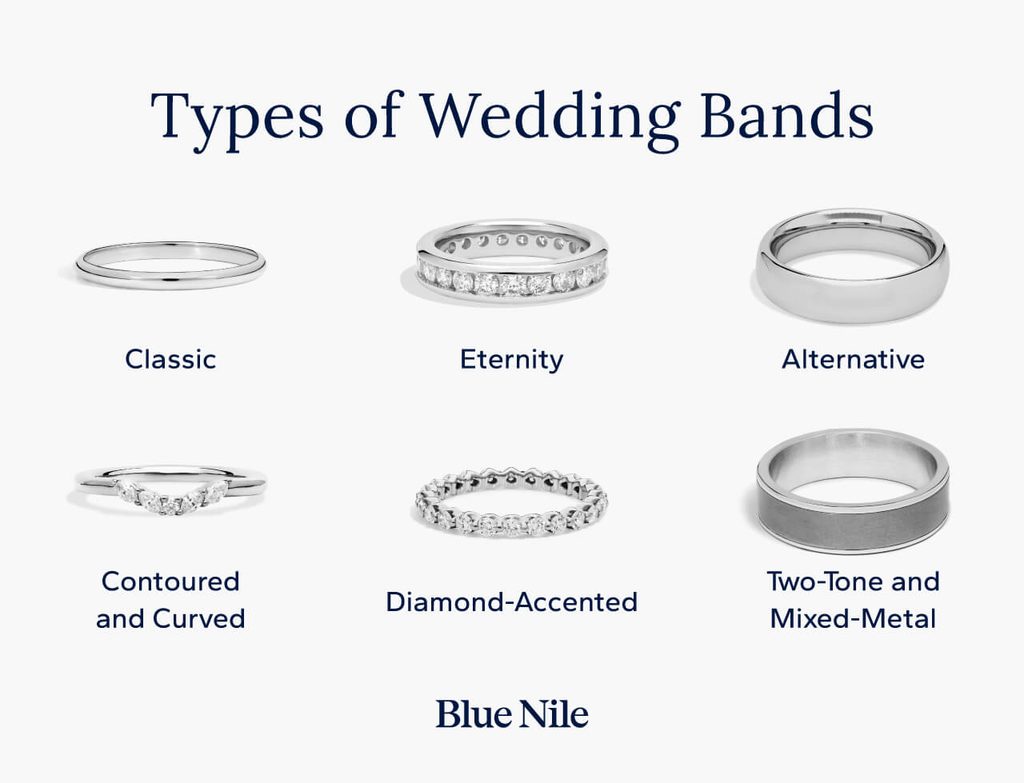
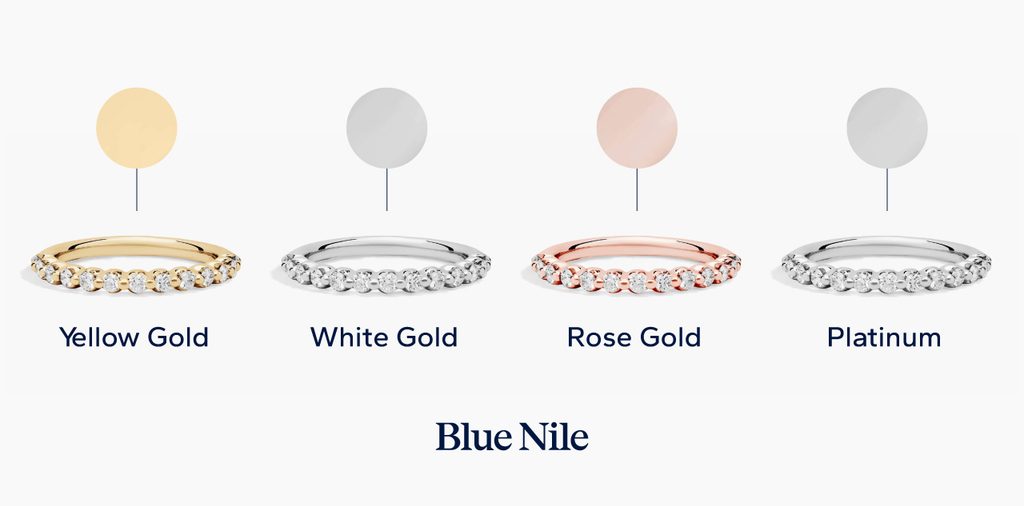
Wedding rings come in a range of designs, from classic and minimalist to more detailed styles. You’ll also want to consider the best metal for your wedding band, with options like yellow gold, white gold, rose gold and platinum offering different looks and feels.
Here are the wedding ring types and metals worth knowing, from classic to contemporary.
1. Classic Metal Bands
Classic metal rings are the simplest, most timeless choice. They feature a smooth band with no stones or extra detailing, letting the beauty of the metal speak for itself.
2. Diamond-Accented Bands
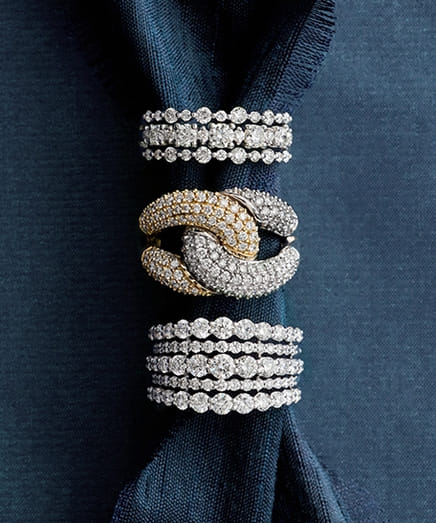
Diamond-accented rings feature a row of small diamonds set along part of the band, creating a touch of shine without covering the entire ring. Pavé settings create a delicate, glittering surface. Channel-set diamonds sit flush within the metal for a sleek look, and shared-prong settings give the stones more definition.
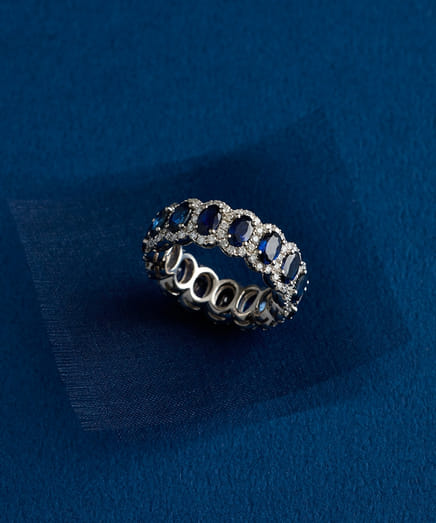
3. Eternity Bands
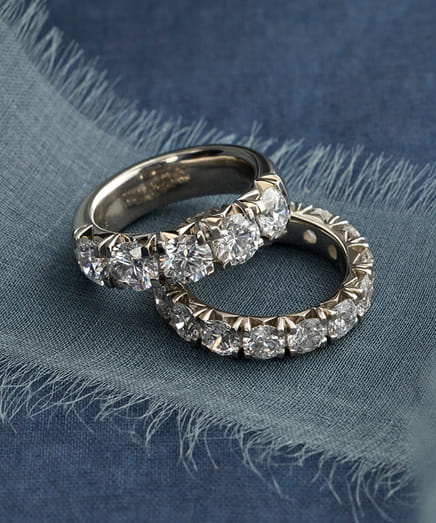
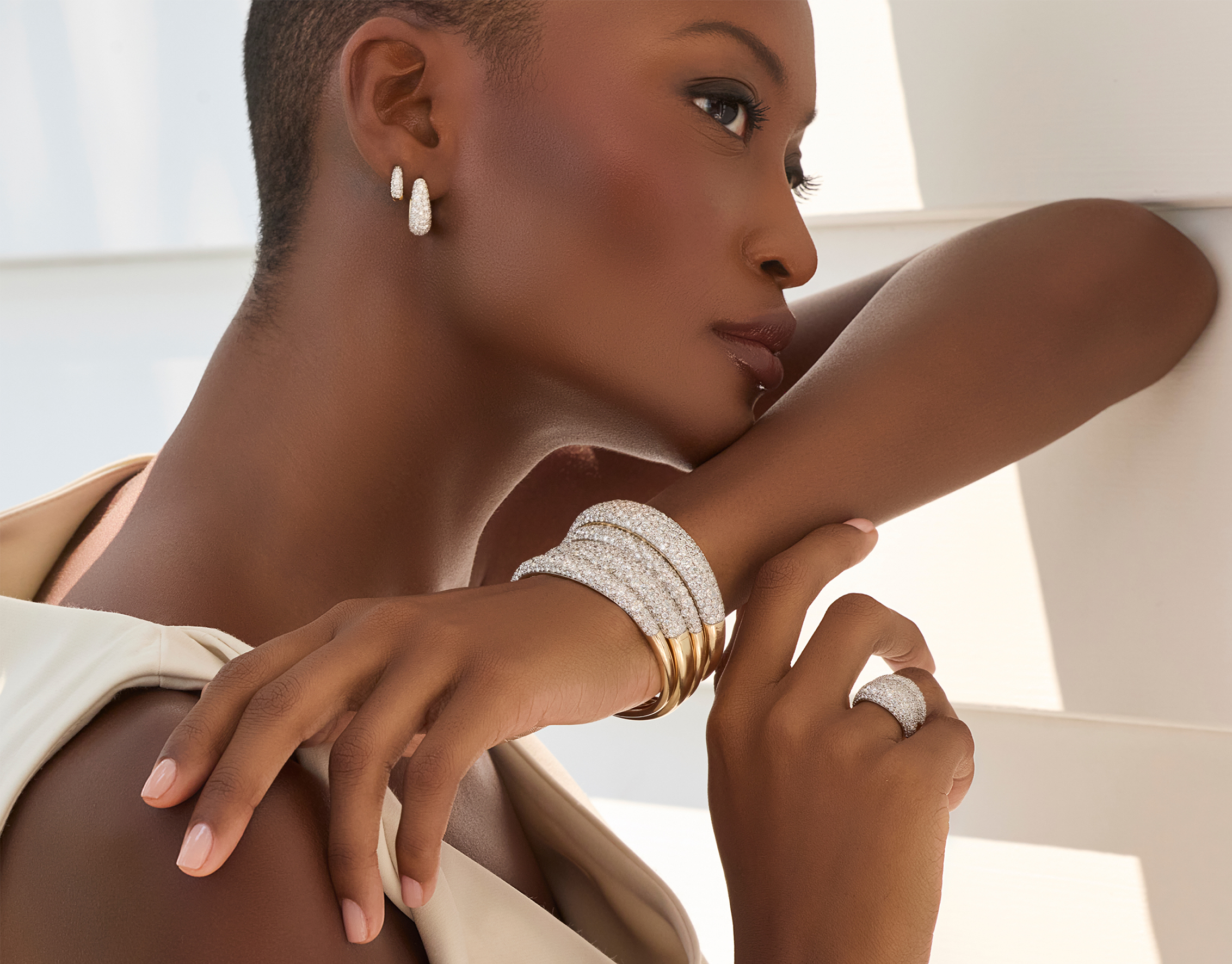
Eternity bands feature diamonds or gemstones set continuously around the ring for an eye-catching look. Half-eternity styles place stones around the front half of the ring, offering a similar look with less coverage.
4. Contoured and Curved Bands
Contoured and curved bands are shaped to fit neatly around the setting of a specific engagement ring. Their curved or notched design helps the two rings sit flush with each other for a cohesive look.
5. Precious Metal Types
Yellow gold has a warm, classic look, while white gold offers a bright, modern finish and rose gold adds a subtle pink hue. Platinum is naturally white and highly durable, while traditional gold is softer and can show more wear over time.
6. Two-Tone and Mixed-Metal Bands
Two-tone bands combine two metal colors, such as yellow and white gold, in one design for a dimensional look. This style is a fresh way to mix metals while adding visual interest to your wedding ring.
7. Alternative Metal Bands
Titanium, tungsten and tantalum offer durable, budget-friendly alternatives to traditional precious metals. These metals are especially popular for men’s wedding band styles thanks to their strength and understated look.
How Much Does a Wedding Band Cost?
So, how much are wedding bands? The answer depends on the metal, design, diamond or gemstone details and overall craftsmanship. Use the table below as a general guide to the cost of different wedding ring styles.
| Metal/Style Tier | Typical Price Range | What Drives the Cost |
| Affordable metals (tungsten, titanium, stainless steel) | $200–$600 | Metal type, band width, finish and detailing |
| Sterling silver | $50–$400 | Band width, craftsmanship and added detailing |
| Gold-filled or vermeil | $100–$500 | Metal thickness, design and craftsmanship |
| 10k–14k gold (yellow, white, rose) | $300–$5,000+ | Gold purity, band width, weight and design |
| 18k gold | $545–$3,100+ | Higher gold content, band weight, width and design |
| Platinum | $400–$60,000+ | Platinum content, band weight, width and craftsmanship |
| Bands with diamonds/gemstones | $500–$60,000+ | Stone type, quality, carat weight, setting style and coverage |
Who Buys the Wedding Bands?
There’s no longer a single rule about who buys the wedding bands. You and your partner may choose to shop for the rings together and split the cost, or you may prefer to purchase each other’s rings as a meaningful gesture. How you pay should reflect whatever feels right for you and your partner.
How to Choose the Right Wedding Band
Choosing a wedding ring comes down to finding a style that fits your life, budget and personal taste. Keep these tips in mind as you shop:
- Consider your lifestyle: Think about how you spend your days and choose a ring that can keep up. If you work with your hands or lead an active lifestyle, a durable metal design with a simple aesthetic may be the best fit.
- Set your budget: Decide how much you want to spend before you start shopping. Your budget can help narrow down your choices based on the metal, design and whether you want diamonds or gemstones.
- Choose your metal: Consider the look, durability and maintenance of each metal. Yellow gold, white gold, rose gold and platinum are classic options, while alternative metals can provide durability at a lower price point.
- Find the right width and fit: Your ring band width affects both the look and feel of your ring. Try different widths and fits to find one that feels comfortable for everyday wear and works well alongside your engagement ring.
Browse Popular Wedding Band Styles
Wedding rings are becoming more personal, with couples choosing everything from classic metal rings to diamond details and mixed-metal designs. If you’re investing in jewelry, take a look at Blue Nile’s wedding ring collection to compare styles and find one that fits your everyday look.
When you’re ready to find your ring, browse our wedding bands and rings to explore popular styles and find a ring you’ll love wearing for years to come.
Frequently Asked Questions
There’s generally no difference between a wedding ring and a wedding band—people often use the terms interchangeably. Both refer to the ring worn to symbolize marriage, though “wedding band” may be more common for simpler ring designs.
Wedding rings come in a range of styles, including classic metal rings, diamond-accented rings, eternity rings, contoured rings and mixed-metal designs. You can also choose from precious and alternative metals.
If you’re choosing a diamond-accented ring, understanding ideal diamond proportions can also help you compare the look of different designs.
No, your wedding band and engagement ring don’t need to match. Choose complementary metals, shapes or details for a coordinated look if you plan to wear them together or mix styles if you want to wear each ring individually.
Yes, you can use your engagement ring as a wedding band if you prefer to wear it on its own. Some engagement rings have a design that works well as a standalone wedding ring, while others are designed to be paired with a matching band.


Share






 Live Chat
 +1‑800‑242‑2728
 Email Us

