WHAT'S IN THIS GUIDE
What Is Moissanite?
Moissanite is a recently discovered gemstone, happened upon in 1893 by Henri Moissan when he was examining an Arizona crater left by a meteorite that carried the mineral to Earth. Henri thought he had found diamonds, but realized their chemical composition was very different upon closer inspection.
So, is moissanite a natural stone? Technically, yes, although natural moissanites from meteorites are very rare. They are more commonly made in labs. Nearly all moissanite engagement rings use lab-made stones, and they're a popular choice due to their sparkle, durability, lower price tag and likeness to diamonds.
What Is a Diamond?
A diamond is a precious stone made of crystalline carbon that has been through intense pressure. It's the hardest naturally occurring substance on Earth. Like moissanite, diamonds can also be made in a lab.
Diamonds have been the standard-bearer for expressions of love since at least 1477, when the Archduke Maximilian of Austria proposed to his love with the first recorded diamond engagement ring. They have remained the most popular choice for engagement and wedding rings. Diamonds are available in a variety of shapes, sizes and colors.
Origins and Rarity
Diamonds can be found naturally or created in a lab. Diamonds are made of pure carbon that has undergone intense heat and pressure. However, they are not the rarest gemstone—it is a particular diamond's color, clarity, carat and, eventually, cut, that makes it uniquely valuable.
Moissanite is very rare to find in nature, as it originates from outer space and is naturally found in meteorites that have landed on Earth. Therefore, most moissanite stones are lab-created and less rare.
Appearance
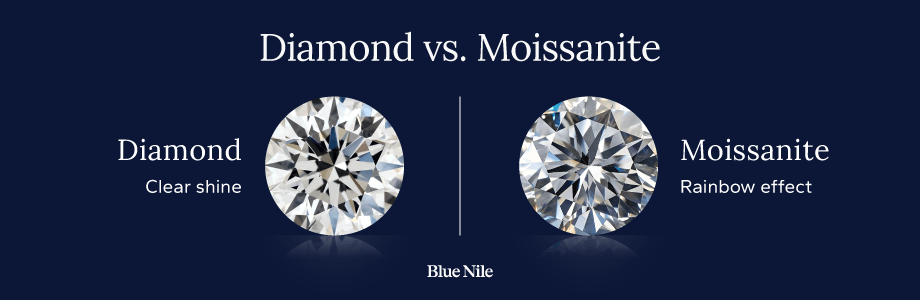
From a distance, diamonds and moissanites can look quite similar, but as you draw near, the differences become more apparent. One of the fastest ways to tell a diamond apart from a moissanite is to look at the color differences in the brilliance of the stones. Here's how to tell the difference between a moissanite vs. a diamond:
Diamonds will sparkle with white light inside the stone.
Moissanites will sparkle with rainbow flashes inside, known as "fire." Moissanites have around twice as much fire as diamonds. Known by many as a disco ball effect, some people prefer this moissanite feature while others do not.
Hardness and Wearability
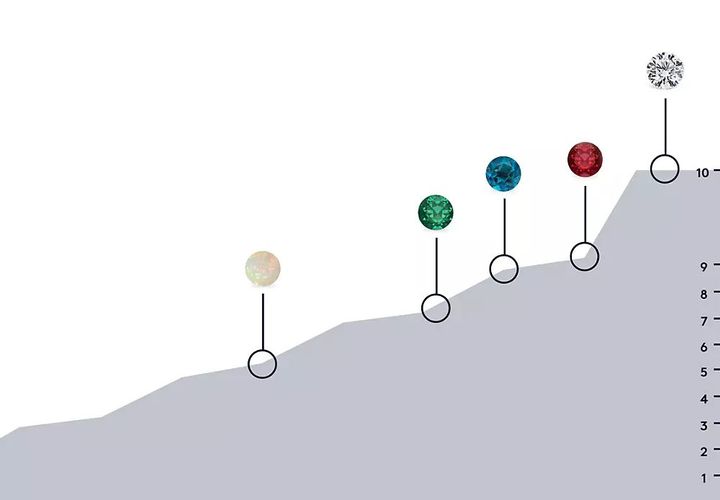
Diamonds are the hardest substance on Earth. Scoring an unparalleled 10 on the Mohs scale, they're an ideal choice for everyday wear, since they cannot be scratched except by another diamond.
Moissanite features a 9.25 on the Mohs scale, making it very hard and durable as well. It is also resistant to chipping or breaking, making it a fantastic stone for everyday wear.
Brilliance
Diamonds flaunt a famous sparkle that is widely known and loved, with plenty of fire and refraction to mesmerize. Known as brilliance, the diamond's sparkle is powered by its facets and cut. A quality cut allows a diamond to bounce and reflect light back to the eye.
Moissanite has a slightly higher brilliance than diamond, a result of its higher refractive index. This brings moissanite a dramatic rainbow of hues that make it an attention-grabbing stone.
The choice between the two stones is entirely dependent on the personality and preferences of the wearer.
Color
Diamonds are traditionally colorless, though fancy color diamonds are an increasingly popular choice. A colorless diamond will shine with a white sparkle. Moissanite, on the other hand, is not a true colorless stone. Moissanites can have a tinge of color, such as a gray hue, in certain lighting. Some moissanites may have a yellow hue that resembles a K color grade diamond.
Moissanite, on the other hand, is not a true colorless stone. Moissanites can have a tinge of color, such as a yellow or gray hue, in certain lighting. Some moissanites may have a yellow hue that resembles a K color grade diamond.
Clarity
Perfectly flawless diamonds are extremely rare and precious. However, many of the inclusions or blemishes in a diamond can be impossible to see without magnification and training. The Gemological Institute of America (GIA) clarity grading scale is used to sort diamonds according to their clarity.
Moissanites are nearly flawless due to their lab-created origin. An average moissanite stone would rank at a desirable "Very Slightly Included," or "VS" level, using the diamond's GIA clarity grading scale.
Measuring and Grading
Diamonds are measured by their carat weight. A diamond carat measures how large a diamond is by its weight.
Moissanites are most often measured by their millimeter size rather than their carat weight.
Weight is a quick way to differentiate between a diamond vs. a moissanite via a home diamond test. Moissanites are lighter than diamonds, with a moissanite stone weighing an average of 15% less than a comparable diamond.
HARDNESS & WEARABILITY
Diamonds are the hardest substance on earth. Scoring an unparalleled 10 on the Mohs Scale, they’re an ideal choice for everyday wear, since they cannot be scratched except by another diamond.
Moissanite features a 9.25 on the Mohs scale, making it very hard and durable as well. It is also resistant to chipping or breaking, making it a fantastic stone for everyday wear.
Enhancements
Gemstones on the market today often undergo one or more enhancements.
Diamonds can be treated to enhance or change their color or to improve the appearance of their clarity. HPHT (high-pressure, high-temperature) treatments, heat treatments, irradiation and coatings can give a diamond a new color or enhance its natural hue. Laser drilling can remove imperfections and fracture filling can fill in white fractures and make them less noticeable.
Moissanites are mostly made in labs, so they don't have many appearance flaws to treat with enhancements.
Moissanite vs. Diamond Price
Because they're weighed differently, it can be difficult to do a one-to-one comparison of moissanites and diamonds. However, because diamonds are heavier and more precious, they come with higher price tags.
Diamonds are the more expensive of the two. A 1-carat diamond, for example, may cost around $3,000 to $5,000.
Moissanite is less expensive than a diamond. A moissanite that's around 1 carat could cost around $500 to $600.
Meanings and Symbolism
Diamonds are a renowned symbol of love and faithfulness, and they have a long history of use in engagement rings. Colorless diamonds are a sign of purity, and the unparalleled hardness of the diamond makes it a natural symbol of power.
Moissanites feature exceptional hardness as well, making them symbolic of the strength of your bond and love. Because natural moissanites come from meteorites originating in space, they are also a sign of connectedness to the universe. They can also be a symbol of unlocking potential, which can bring ongoing meaning as your relationship grows.
Chemical Differences
When considering the moissanite vs. diamond debate from a molecular level, there are a lot of differences between these two stones.
Diamonds are comprised of carbon that has been exposed to immense pressure. Diamonds are created deep in the Earth's crust and can also be created in labs.
Moissanite, on the other hand, is made of silicon carbide. Naturally occurring moissanite is only found in meteorites, so the majority of moissanite gems for sale are made in a laboratory setting.
Eco-Consciousness
Many people in search of an eco-conscious stone opt for lab-made gems. Both stone types offer an environmentally conscious option.
Lab-grown diamonds are growing in popularity. They're produced in controlled laboratory settings and are chemically and visually identical to natural mined diamonds.
Moissanites are almost all lab-made. They're created through a process of pressure and heat in a controlled lab setting managed by professionals. It's very rare to find a natural moissanite because they come from meteorites.
Differences in Measuring Moissanite vs Diamonds
Diamonds and moissanites are both measured differently to determine their size. Diamonds are measured by their carat weight. A diamond carat measures how large a diamond is by its weight. Moissanites, on the other hand, are most often measured by their millimeter size rather than their carat weight.
Moissanite vs Diamond Weight
Weight is a quick way to tell a diamond vs a moissanite. Moissanites are lighter than diamonds, with a moissanite stone weighing an average of 15% less than a comparable diamond.
Is Moissanite a Good Diamond Alternative?
In general, yes, moissanite is a good diamond alternative. But it depends on what is most important to you or the jewelry wearer. Let's consider the pros and cons.
Pros of moissanite:
- Less expensive than diamonds
- More fire and brilliance with a distinct rainbow sparkle
Cons of moissanite:
- May have yellowish tints
Less valuable than diamonds
-Slightly less durable
Ultimately, it depends on what matters most to you when considering buying lab-grown diamonds, mined diamonds or moissanite.
Popular Ring Styles and Settings
Diamonds come in a wide range of cuts to showcase the beauty of the stone and suit the wearer's personality. The classic round cut, elegant square-shaped princess cut, sophisticated cushion cut and vintage-inspired emerald cut are popular for engagement rings. Diamonds sparkle beautifully in virtually any setting type, including three-stone diamond rings.
Moissanites, like diamonds, can feature a wide range of cuts, but round cuts best showcase their renowned fire and brilliance. The radiant cut is also dramatic, giving moissanite an alluring rectangular shape while maximizing its sparkle. The princess cut is a traditional option that showcases the fire of the stone.
A more contemporary trillion cut is also a stunning choice, as it enhances the dazzling quality but gives the ring an edgy, modern style. Because of its color differences, moissanite is best in a solitaire ring setting or alongside moissanite stones of similar characteristics.
With such a breathtaking array to choose from, selecting a cut is truly up to the personality and style of the wearer.
Blue Nile Promise
If you're still looking for the ring that is quintessentially you, we're here to offer our expert guidance and stellar services to ensure you find the ring that's beautifully suited to your taste. To ensure you feel as thrilled as you should be when making this special purchase, we offer free returns.
You can also count on us for complimentary ring sizing to ensure an ideal fit and complimentary cleaning to keep your diamonds sparkling like new. To learn about other gorgeous engagement ring stone options, read our comprehensive gemstone guide.
Moissanite Ring vs Diamond FAQs
Is moissanite a fake diamond?
No, moissanite is not a fake diamond—it's a chemically different gemstone with its own unique properties. Though moissanites look similar to diamonds, they are made of silicon carbide instead of carbon.
Can water ruin moissanite?
Though water itself won't hurt moissanite, repeated exposure to pool chemicals or shampoo and conditioner in the shower can cause a moissanite ring to lose its shine over time. Therefore, it's recommended to limit water exposure to your moissanite jewelry.
How long will a moissanite ring last?
Similar to a diamond, a moissanite ring should last a lifetime. With a 9.25 out of 10 on the hardness scale, moissanite is durable enough to last decades with proper care.
Is moissanite better than cubic zirconia?
Though moissanite is more expensive than cubic zirconia, it is typically considered better. That's because moissanite surpasses cubic zirconia on the hardness scale and refractive index.
Can you tell the difference between moissanite and a diamond?
Jewelers can quickly distinguish between a moissanite and a diamond by identifying the differences in structure, weight, light refraction and overall stone color. The average person can identify a diamond vs. moissanite by inspecting the brilliance. In general, a diamond will have a white sparkle while a moissanite will have a more colorful sparkle that can produce a disco ball effect.
How do I clean a moissanite ring?
Moissanite engagement rings are best cleaned with mild soaps or jewelry cleaners. A quick soak in a gentle cleaning solution can make cloudy moissanite rings shine again.
How is moissanite made?
Lab-made moissanite, which is the most commonly available version of this stone, is created by combining its base chemicals. Then, pressure and heat are applied to create the stone.