Common hoop earring sizes:
- Tiny (huggies): Sit close to the earlobe for a subtle, everyday look.
- Small: Slightly more visible while still polished and easy to wear.
- Medium: Balanced in size, offering noticeable presence without overpowering.
- Large: Designed for statement looks with bold visual impact.
When shopping for hoops, size is often the deciding factor between a pair you love and one you rarely wear. Hoop earring sizes affect everything from comfort and weight to how bold or understated they appear on the ear.
This guide helps compare sizes, understand measurements and confidently choose the right hoops for everyday wear, special occasions or statement styling.
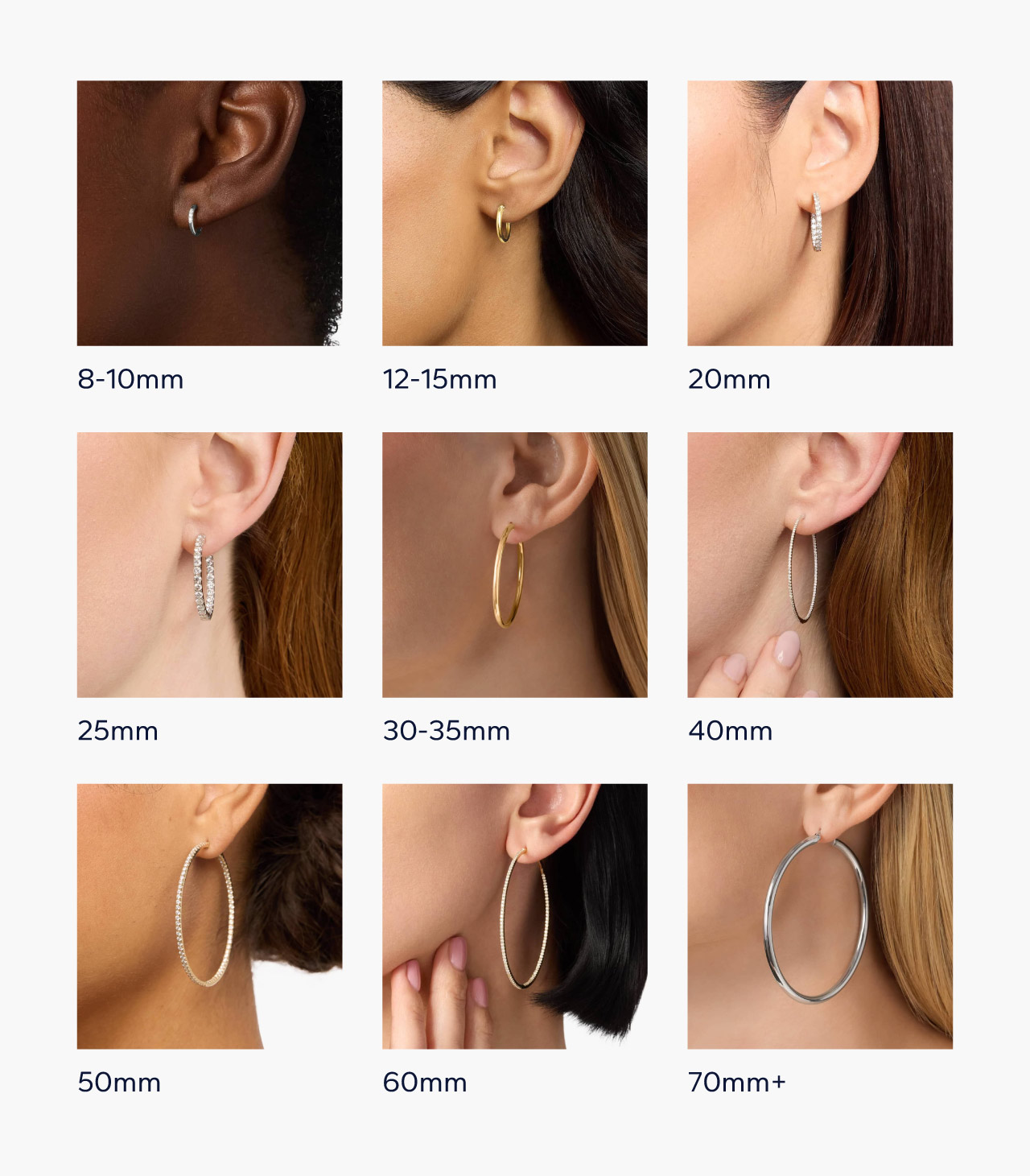
Hoop Earring Size Chart
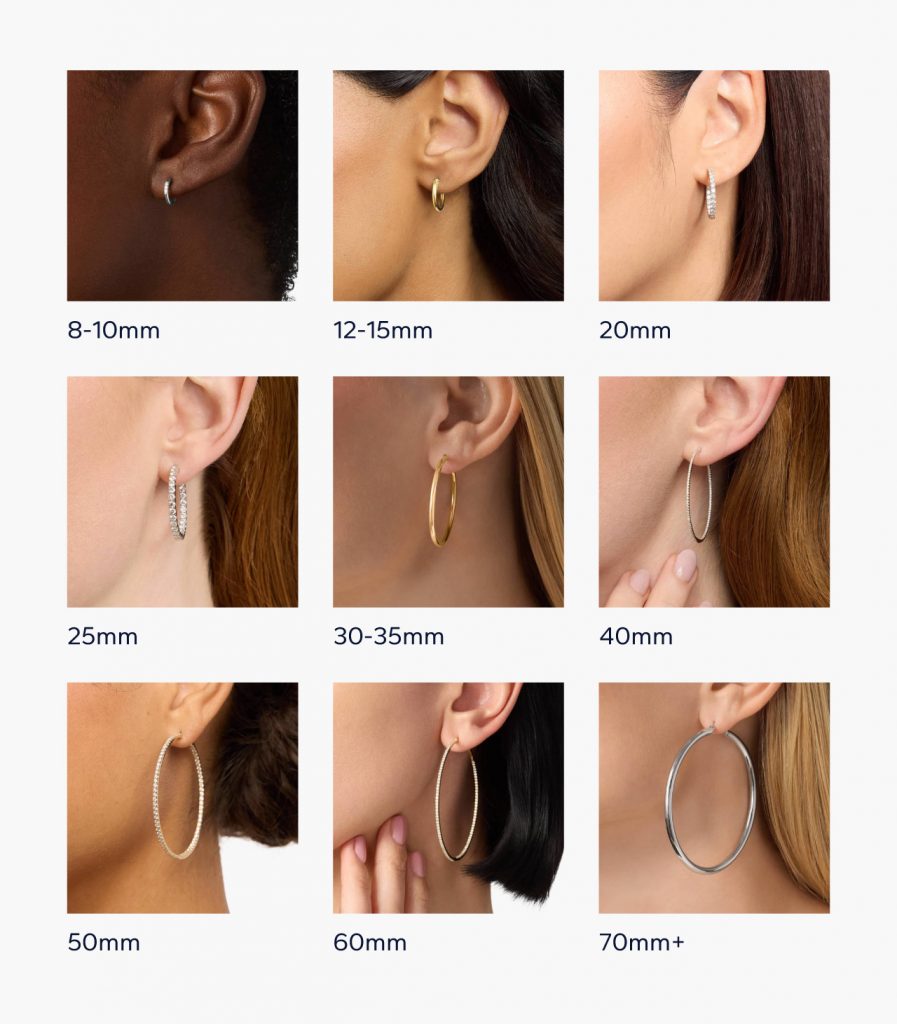
This earring size chart provides a side-by-side comparison of common sizes, helping you visualize how each option looks when worn. Use it to narrow down the size that fits how you plan to wear your hoops.
| Size (mm) | Size (inches) | Comparable to | Best for |
8-10mm | ~3/8 inch | Small shirt button | Subtle, everyday wear; huggie-style hoops |
| 12-15mm | ~1/2 inch | Standard pencil eraser | Polished daily wear; elevated, minimalist styling |
| 20mm | ~3/4 inch | Nickel | Versatile size for work or casual outfits |
| 25mm | ~1 inch | Quarter | Balanced statement; noticeable without feeling oversized |
30-35mm | ~1–1¼ inches | Half-dollar | Classic statement hoops; day-to-night wear |
| 40mm | ~1½ inches | Ping pong ball | Bold styling; events or standout looks |
| 50mm | ~2 inches | Camera lens cap | Dramatic statement hoops |
60mm | ~2⅓ inches | Tennis ball | Fashion-forward, high-impact looks |
| 70mm+ | ~2¾ inches | Baseball | Oversized statement, editorial styling |
Types of Hoop Earrings
Hoop earrings are commonly grouped based on earring hoop sizes. The main difference between sizes is how they sit on the ear and how much visual presence they create. Below is a quick breakdown to help you choose the hoop type that best fits your comfort, routine, and personal style.
Tiny or Huggies
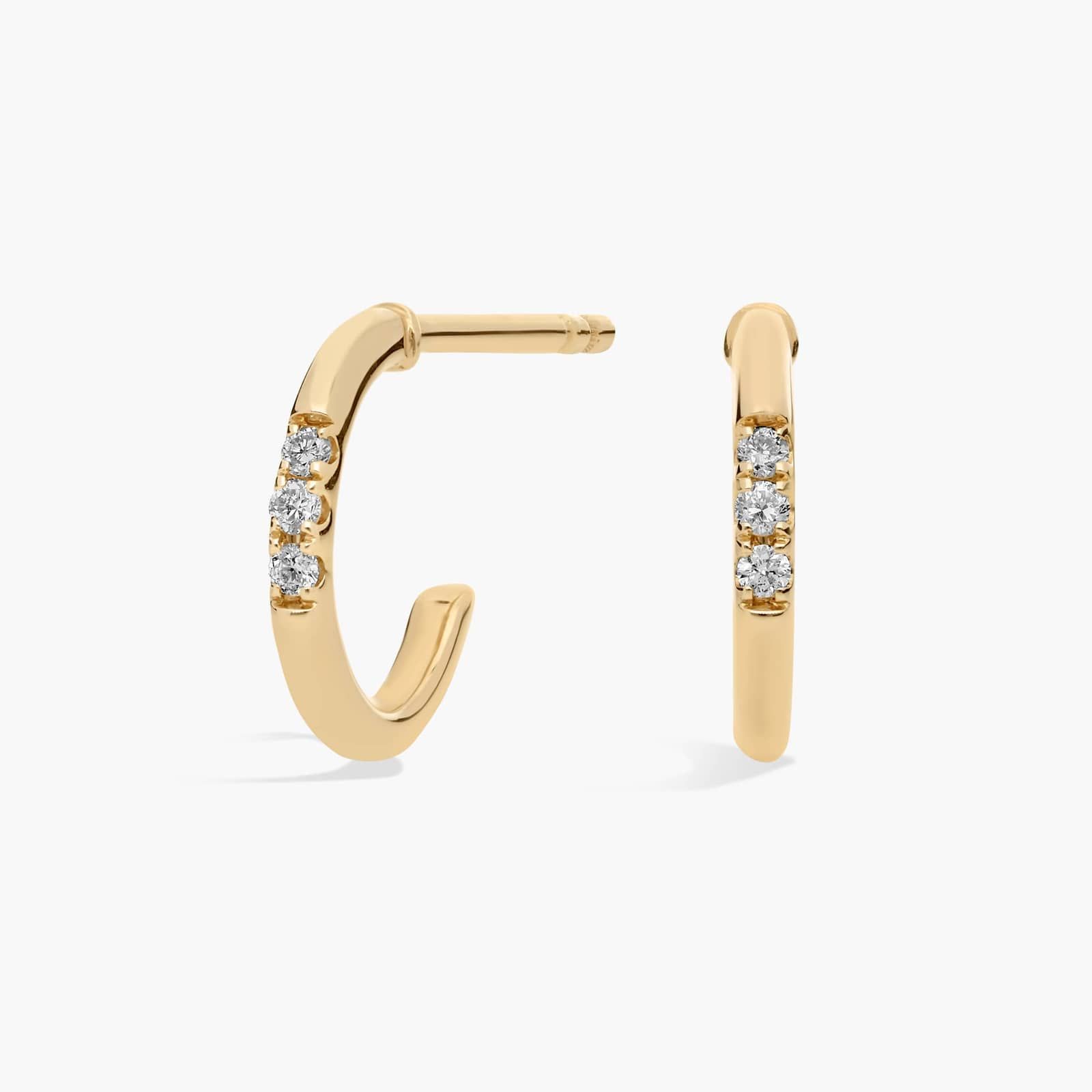
Tiny hoops, often called huggies, typically measure around 8-12 mm in diameter and sit close to the earlobe rather than hanging below it. Their close fit and lightweight feel make them a popular choice for everyday wear, especially if you prefer minimal jewelry.
Because of how they rest against the ear, many people find huggie-style hoops comfortable enough to wear throughout the day. Another reason you might choose huggies over hoop earrings is that they layer easily with additional piercings.
Small Hoops
For a slightly more noticeable look, small hoops generally fall in the 12-20 mm range and sit just below the earlobe. They offer a casual, polished look that feels slightly more noticeable than huggies without drawing too much attention.
This size is a popular everyday option for errands, casual outings and relaxed work settings, including video calls, where they add polish without overpowering your look on screen. They frame the face subtly while remaining lightweight and easy to wear.
Medium Hoops
Often considered the most versatile option, medium hoops typically measure 20-35 mm and extend farther below the ear. Their size creates a balanced look that works across both casual and more elevated settings.
These hoops work well for both daytime and evening looks and are often chosen for their ability to frame the face without feeling oversized. Medium hoops are a common go-to when you want a single pair that transitions easily from day to night.
Large Hoops
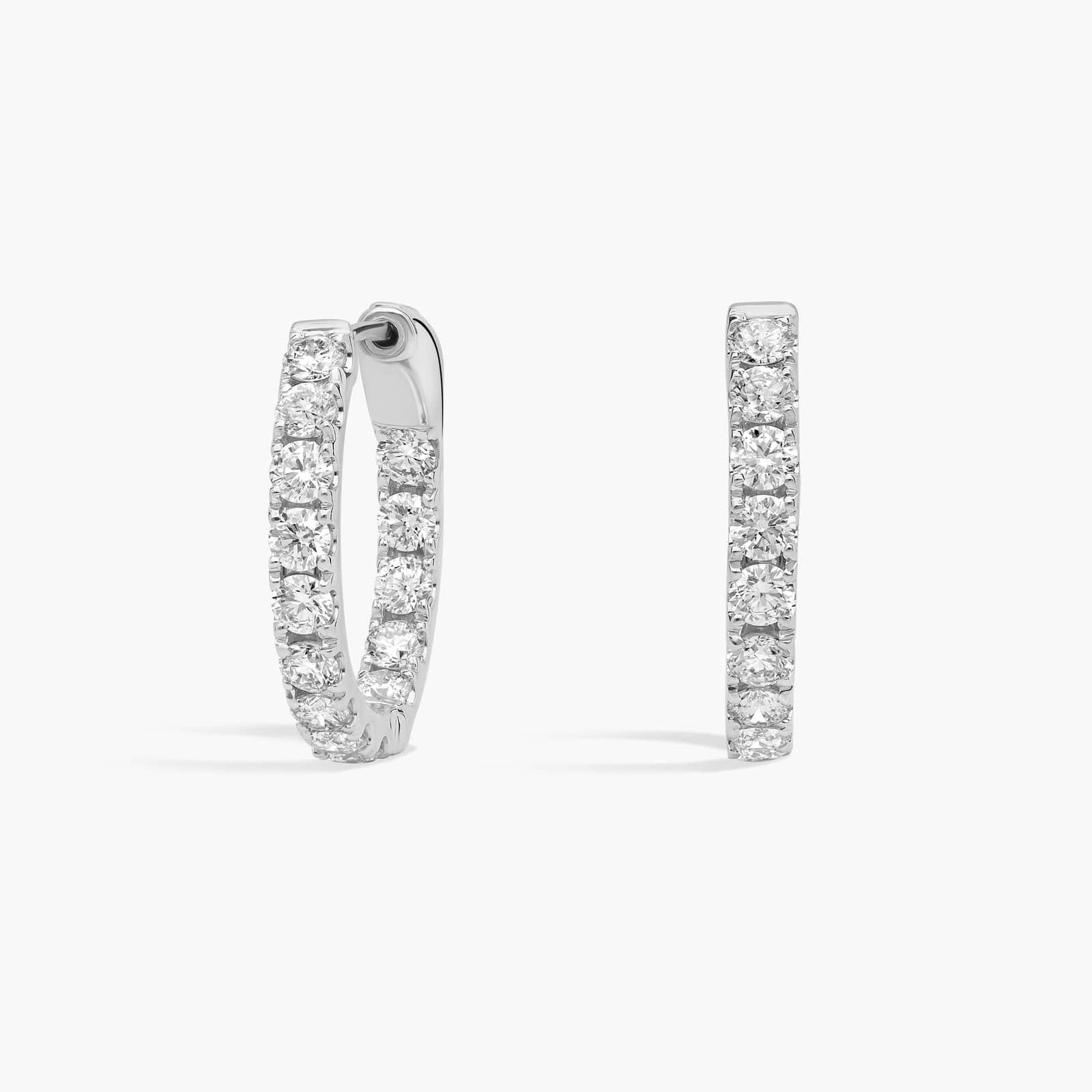
Large hoops usually start around 40 mm and above, hanging noticeably lower on the ear and creating a stronger visual presence. Their size gives them a more expressive, statement-oriented look than smaller styles.
This category is often chosen for evenings, events or outfits where jewelry plays a leading role. While they tend to feel bolder than other hoop sizes, large hoops stand out for their visual impact and ability to anchor a look.
How Do You Measure Hoop Earrings?
Hoop earrings are measured by their diameter, which is the distance across the widest part of the circle. You can measure hoop earrings by using a ruler or caliper and following these steps:
- Lay the hoop earring flat on a table or hard surface.
- Place your ruler across the widest part of the hoop, measuring straight across the center.
- Record the measurement in millimeters or inches.
- Take a second measurement from a slightly different angle to confirm the diameter.
Tip: Hoop sizes are most commonly listed in millimeters, which provides a more precise measurement than inches. As a general reference, 25 mm is about 1 inch.
How to Choose the Right Hoop Size
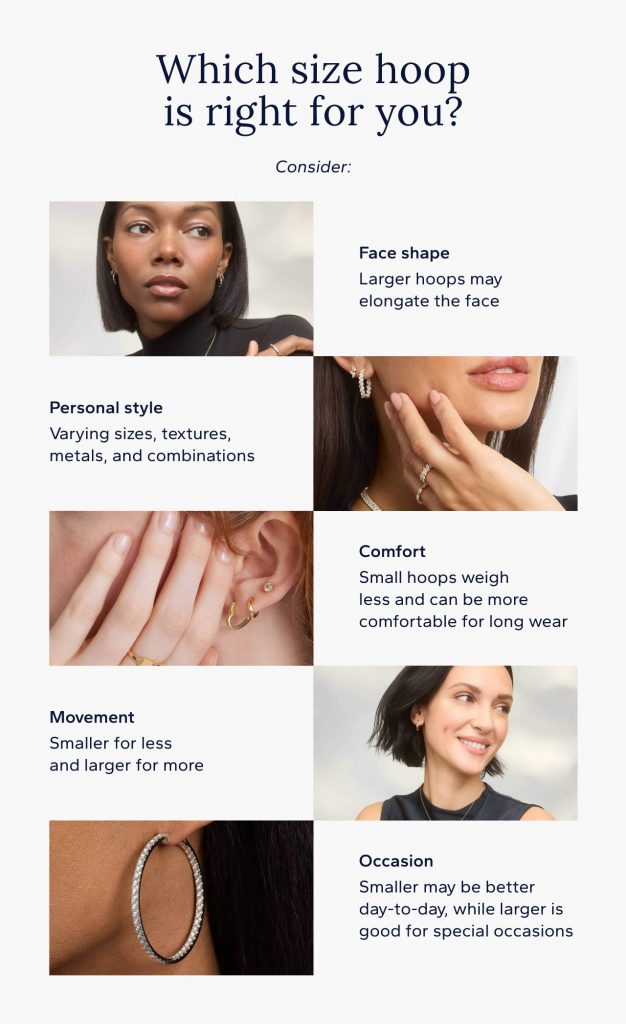
Choosing between different hoop earring sizes isn’t just about measurements—it’s about how the earrings fit your daily life and personal style. The considerations below can help you narrow down the right size with confidence.
Consider Face Shape
Different hoop sizes can interact with face shape in subtle ways. The examples below offer general guidance on balance and proportion for each shape.
- Round faces: Medium to larger hoops that extend downward can create a lengthening effect.
- Oval faces: Most hoop earring sizes work well, from small everyday styles to larger statements.
- Square faces: Rounded hoops in medium to larger sizes can help soften angular features.
- Heart-shaped faces: Medium to large hoops that add width lower on the ear help create balance at the jawline.
Factor in Your Personal Style
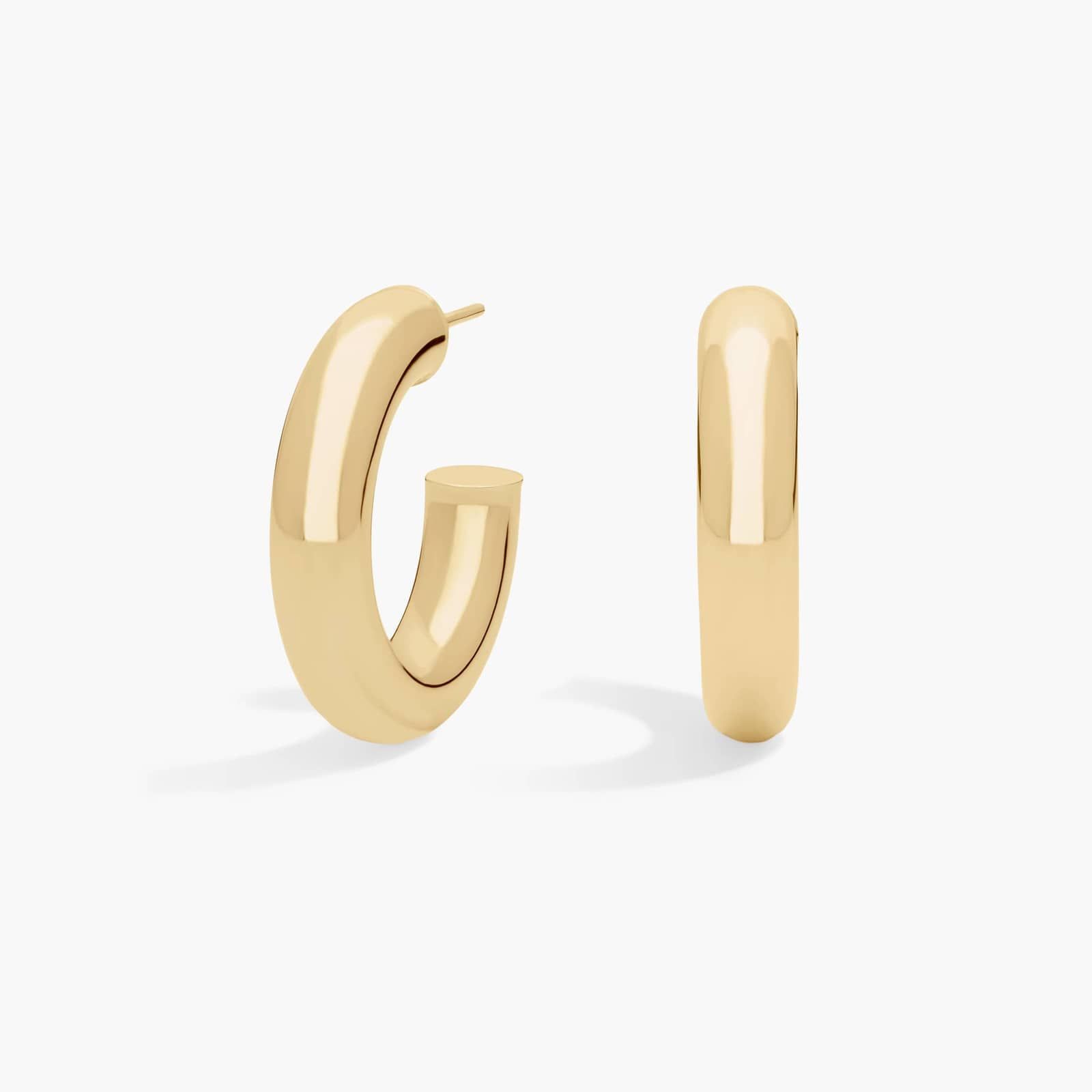
Design details can influence how a pair of hoops looks and feels just as much as size alone. Smooth, minimalist hoops tend to read more understated, while textured, twisted, chunky, or stone-set styles add visual weight and draw more attention.
If you enjoy mixing styles or have multiple piercings, smaller hoops are well suited for earring stacking and layered looks.
Balance Comfort and Wear Time
Hoop size and design both influence how comfortable earrings feel over time. Larger hoops or styles with thicker profiles tend to feel heavier, especially during extended wear. For longer wear, lighter styles are often easier on the ear.
Those with sensitive ears may prefer options made with hypoallergenic metals and lightweight designs that feature smooth finishes.
Think About Movement
How much movement hoop earrings have when worn is influenced by both design and size. Smaller hoops tend to stay close to the ear with minimal swing, while larger hoops move more and naturally draw attention. Designs with dangling elements or drop-style details can further increase movement and drama.
If you’re frequently on the go or working with headphones, scarves or layered clothing, styles with less swing often feel more comfortable throughout the day.
Weigh the Occasion
When choosing a hoop size, it helps to think about how and where you’ll be wearing the earrings. Pieces meant for long days and frequent wear benefit from a hoop size that balances visibility with comfort. Thinner or moderately thick profiles with simple designs tend to work best.
Hoops chosen for special events or occasional wear often prioritize visual impact and expressiveness. Larger diameters, bolder profiles and decorative details feel more appropriate in these settings than styles designed for all-day wear.
Earring Shapes and Sizes for Any Occasion
Understanding hoop earring sizes makes it easier to choose styles that feel right for different moments, from everyday wear to special events. From bold, modern silhouettes to retro jewelry trends, hoop earrings remain a versatile staple that adapts easily to changing looks.
Now that you know what to look for, the next step is finding hoops that match your preferences. Explore our selection of hoop earrings, with sizes and styles designed for everyday wear, statement looks and layered piercings.
Frequently Asked Questions
The right hoop earring size depends on when and how often you plan to wear them. From there, factors like face shape, hoop thickness and the level of visibility you prefer can help you choose a size that feels balanced and comfortable.
A 30 mm hoop earring measures about 1.2 inches in diameter (about the size of a half dollar). This size offers noticeable presence without being oversized and is often chosen for a balanced, statement-leaning look.
A 2 inch hoop earring measures approximately 50 mm in diameter (about the same size as a camera lens cap). Hoops of this size create a bold, statement look and are typically worn for shorter periods or special occasions.
A 10 mm hoop earring is larger than an 8 mm hoop earring. While the difference is subtle, 10 mm hoops tend to sit slightly farther from the ear and appear more visible when worn.

Share