











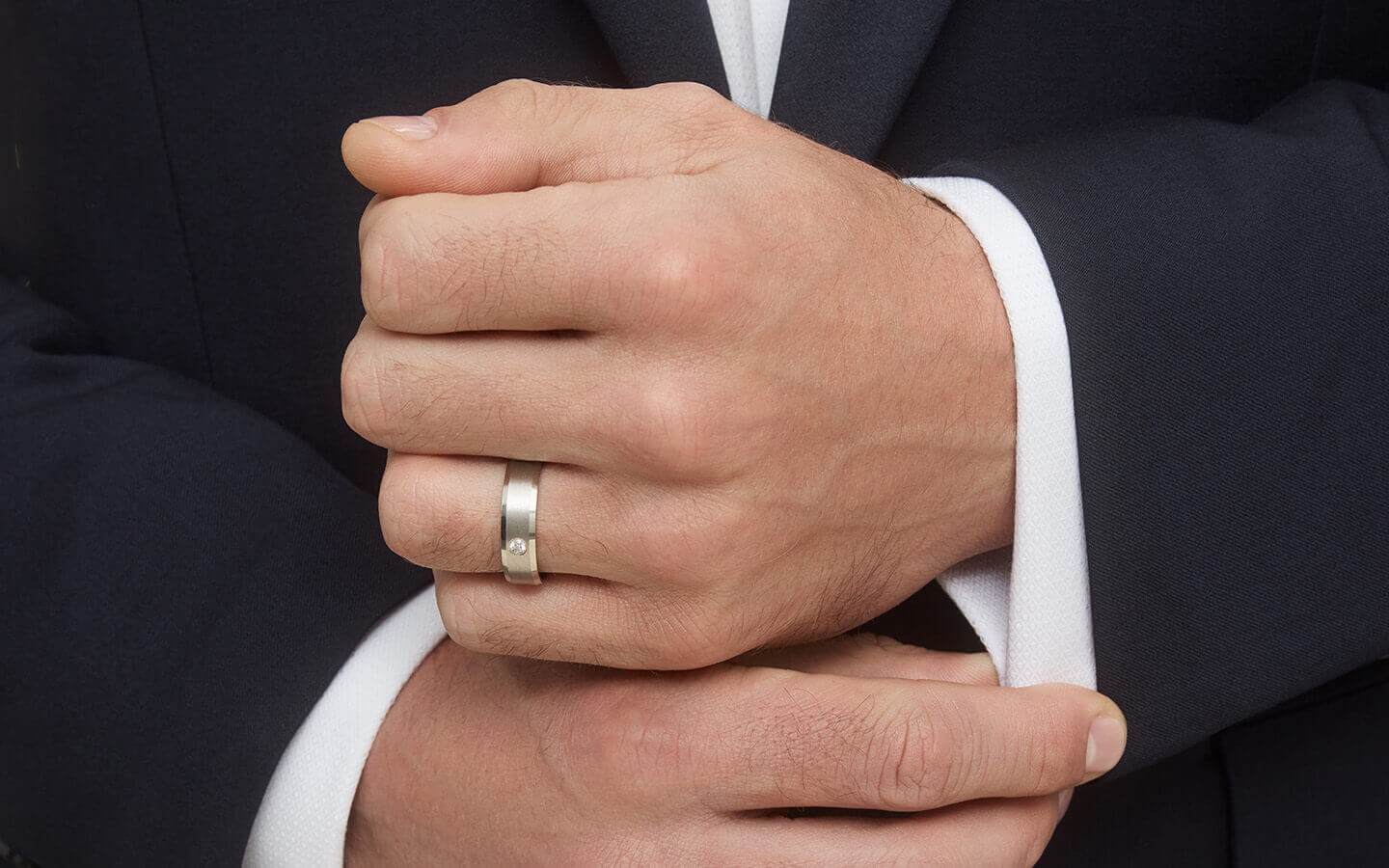
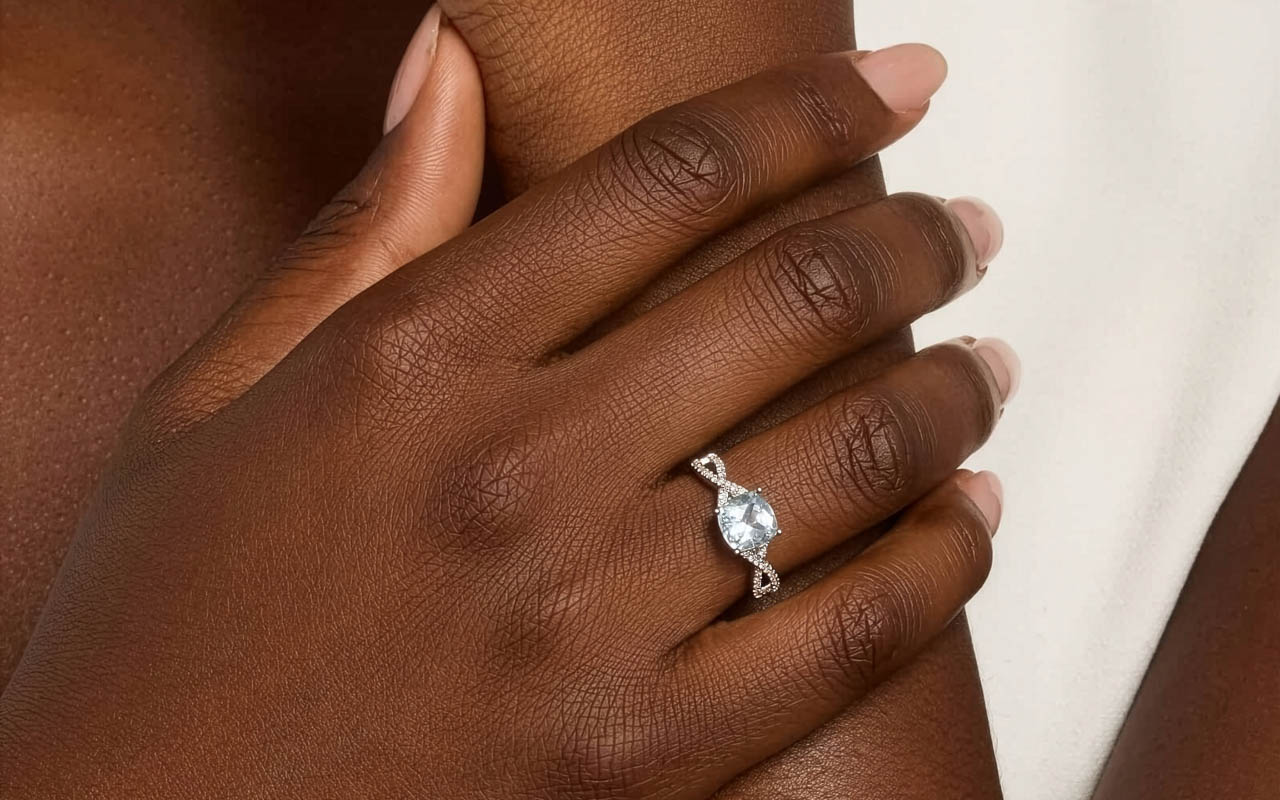
In Western traditions, a wedding ring is traditionally worn on the fourth finger of the left hand, commonly called the ring finger. In several countries, including Russia, Germany, Norway, Spain and India, the same finger on the right hand is customary.
Most people wear their wedding ring on the fourth finger, often called the ring finger.
What changes is the hand — left in some cultures, right in others — depending on where you’re from and what you believe. In Western cultures, the left hand is the more common tradition, which is why you’ll often see wedding rings worn there.
Below, we’ll cover where this tradition comes from, how it differs across countries and cultures, where an engagement ring fits into the picture and how to care for your ring once it’s on.
Wedding Ring Finger Traditions around the World
Beyond the more common left-hand and right-hand traditions, several cultures and religions have distinct customs regarding where and when a wedding ring is worn. Here’s a quick look at how ring placement varies by country and religion.
| Country/Region | Ring Placement | Reason/Tradition |
| India | Right hand | The left hand is traditionally considered impure. |
| China | Varies | Ring placement may differ based on gender and regional tradition, with some customs reflecting yin-yang balance. |
| Jewish ceremonies | Right index finger during ceremony; left ring finger afterward | The ring is placed on the right index finger during the ceremony, then moved to the left ring finger. |
| Latin America (e.g., Brazil, Colombia) | Right hand before marriage; left hand after | The ring moves to the left hand after marriage. |
| Middle East / Eastern Europe | Varies widely | Russia and Greece favor the right hand; customs vary across the Middle East. |
Which Hand Does an Engagement Ring Go On?
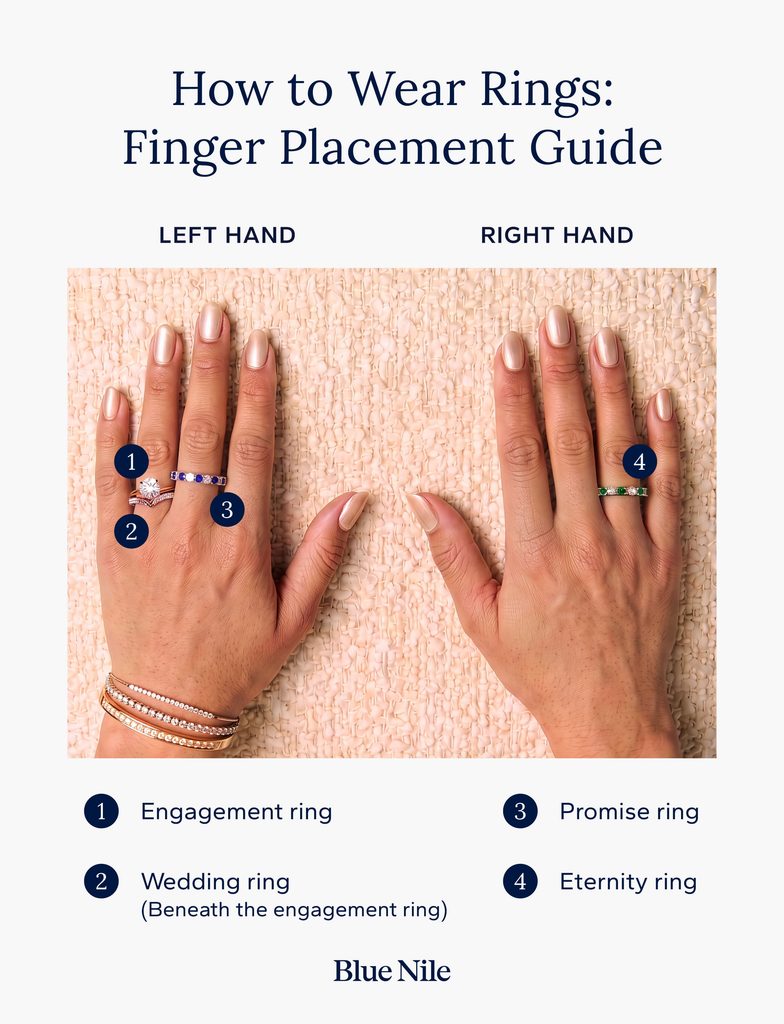
In most Western traditions, the engagement ring finger is the fourth finger of the left hand. Some people temporarily move their engagement ring to the right hand during the wedding ceremony so the wedding ring can slide on first, sitting closest to the heart.
After the ceremony, the engagement ring typically returns to the left hand, often stacked alongside the wedding ring.
How to Wear an Engagement Ring and Wedding Ring Together
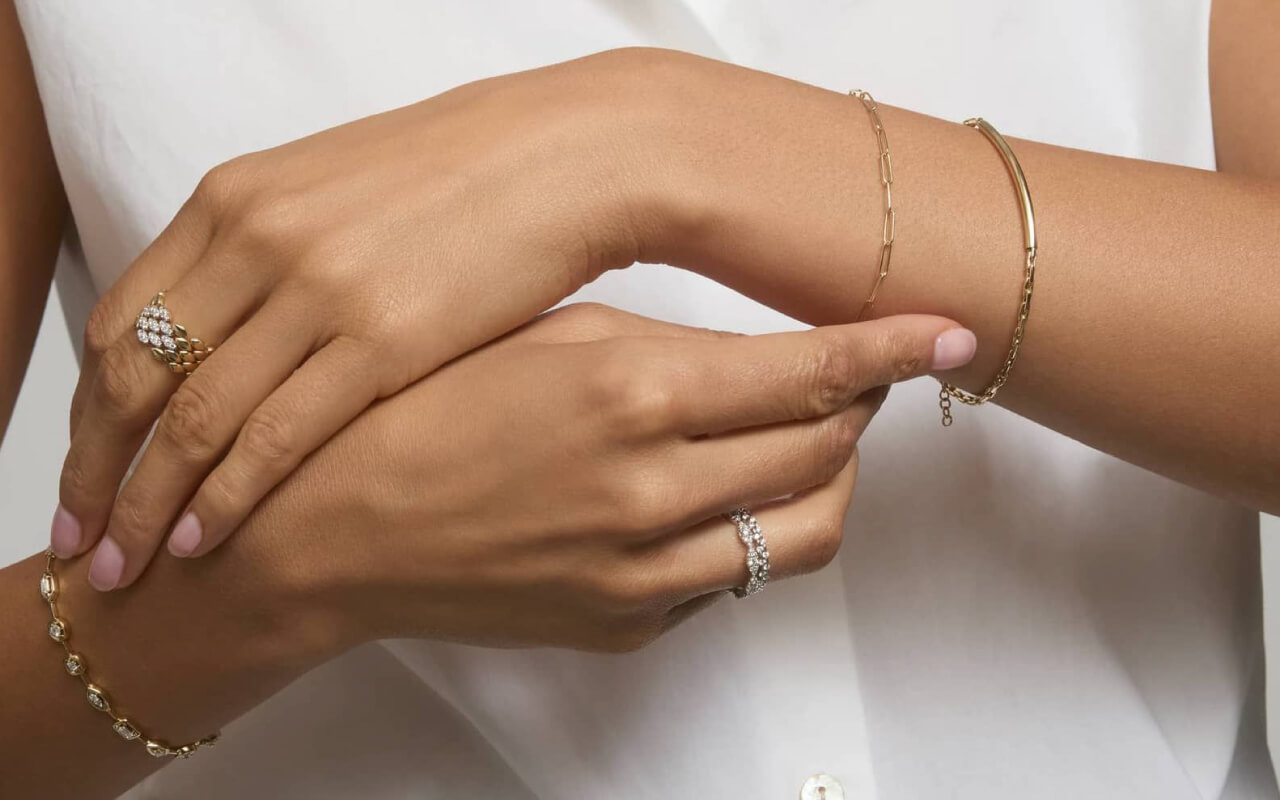
Once the wedding is over, most couples wear their engagement ring and wedding ring on the same finger, stacked together on the left hand.
Tradition places the wedding ring closest to the heart, so it typically sits below the engagement ring. However, some couples prefer to reverse the order or wear the rings on separate fingers.
Pro tip: If the bands don’t sit flush against each other, a ring spacer or curved wedding ring can help keep your rings stacked securely and comfortably throughout the day.
History of the Left Hand Ring Finger
The tradition of wearing wedding and engagement rings on the ring finger of the left hand dates back to around 3000 BCE, when ancient Egyptians first exchanged rings as a symbol of eternal love.
The custom carried into Ancient Rome, where scholars believed the fourth finger of the left hand held a special vein called the “vena amoris,” or “vein of love,” running straight to the heart.
The left-hand tradition became further cemented in the 16th century, when King Edward VI of England issued a decree formalizing it as part of the wedding ceremony.
History of the Right Hand Ring Finger
The tradition of wearing wedding rings on the fourth finger of the right hand is widely practiced today in countries including Russia, Germany, Norway, Austria, Spain, Poland, and Greece.
Wearing a wedding ring on this hand is also believed to reflect a commitment to these principles alongside one’s religious values. This tradition is largely associated with Orthodox Christianity.
How to Care for Your Wedding Ring
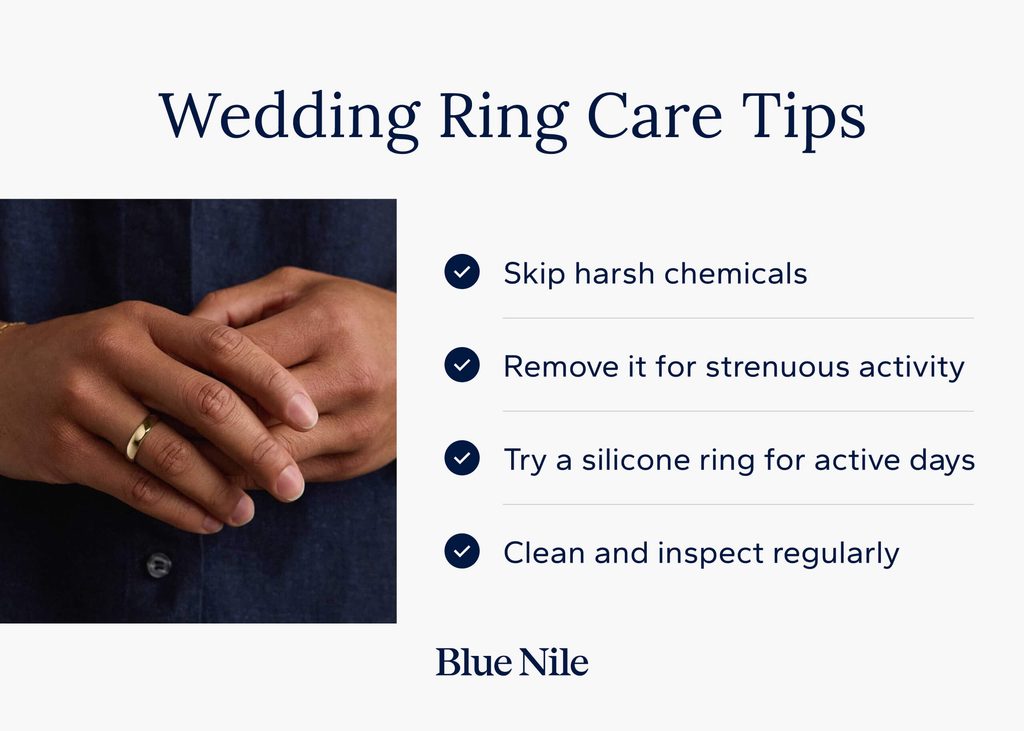
Daily wear can expose your wedding ring to chemicals and physical stress that may damage the metal, setting or stone. A few simple habits can help keep it looking its best:
- Remove it when using harsh chemicals. Cleaning products containing bleach or chlorine can damage certain metals and affect the ring’s finish over time.
- Take it off during strenuous activities. Pressure and impact can scratch or deform the band, loosen the setting, or damage the stone.
- Consider a silicone ring for active days. It offers a durable alternative when your wedding ring may be exposed to excessive friction or impact.
- Clean and inspect it regularly. Gentle cleaning can remove buildup, while checking the setting periodically can help you spot a loose stone or damaged prong before it becomes a bigger problem.
Celebrating Love with Blue Nile Wedding Rings
Left hand or right, fourth finger or another, a wedding ring symbolizes commitment, love and a story that belongs only to you. Wherever tradition takes you, the ring itself is worth choosing carefully.
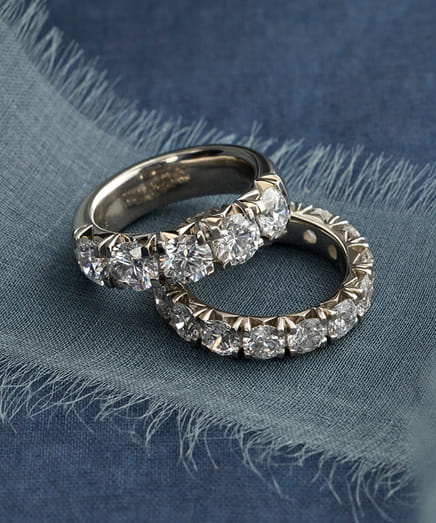
Our collection spans classic gold and platinum rings, diamond eternity styles and matching sets designed to be worn every day for decades.
Frequently Asked Questions
Wedding rings are most commonly worn on the fourth finger of either hand next to the pinky. Generally in Western culture, the wedding ring is worn on the ring finger of the left hand, whereas in many Eastern European countries it is worn on the fourth finger of the right hand.
Many people wear their wedding ring on their right hand to honor their religious or cultural traditions. As with all jewelry, some people simply choose to wear their wedding ring on a specific hand.
Generally, people in the same culture will wear on the same hand, regardless of gender. So, whether you wear gender-neutral, women’s or men’s wedding rings on the ring finger of your left hand, your partner will likely do the same.
In many Western cultures, promise rings are worn on the ring finger of the right hand to avoid confusion with wedding rings.
You can use our free sizers to find the right ring size. Slide the sizer onto your finger and adjust it until it feels snug but comfortable, then read the size indicated on the sizer. For the most accurate fit, measure your finger at different times of day and size up or down if you’re between sizes.
Yes, you can stack an anniversary ring with your wedding ring. These rings often showcase milestone anniversaries or other memorable moments in a marriage and are thus worn on the same finger as a wedding ring. Anniversary rings are often stacked alongside matching women’s wedding rings, men’s rings or gender-neutral designs.
In a traditional Jewish wedding ceremony, one partner places the ring on the other partner’s right index finger. The purpose is to make sure witnesses can see the ring as the couple exchanges their vows. Many couples move the ring to the left ring finger after the ceremony to match Western convention.
Ancient Romans believed the fourth finger of the left hand contained a vein called the “vena amoris” that ran directly to the heart. It is important to note that each finger has veins that connect to the heart. The tradition endures for its romantic symbolism rather than its anatomy.
Yes, anyone can wear any ring on any finger. However, keep in mind that many people read a ring on the ring finger as a sign of engagement or marriage. If you’d rather avoid the assumption, the right hand or a different finger is an easy alternative.


Share




 Live Chat
 +1‑800‑242‑2728
 Email Us

