Key takeaways:
- The best way to keep rings from spinning is to improve the fit at the base of your finger while still allowing the ring to slide over your knuckle.
- Temporary fixes include ring size adjusters, ring guards, ring wraps and jeweler’s tape.
- Long-term solutions include ring resizing, sizing beads, spring inserts, soldering a ring stack or adding a hinged shank.
A beautiful ring shouldn’t feel like it’s trying to make a slow escape every time you move your hand.
If you’re wondering how to keep rings from spinning, the right solution depends on why the ring is moving in the first place. Sometimes it happens because the ring is too big. On the other hand, it could be because the setting is top-heavy, the ring has a slim shank, or your knuckle is wider than the base of your finger.
No matter the reason, this guide covers at-home fixes, professional adjustments and ways to keep rings from spinning without changing the look of your jewelry.
| Solution | Best For | Permanence | Cost |
| Ring Size Adjusters | Quick, temporary fit fixes | Temporary | $ |
| Ring Guards | Daily wear without resizing | Temporary or permanent | $ – $$ |
| Ring Wrap | Subtle tightening for small gaps | Temporary or permanent | $ – $$ |
| Jeweler’s Tape | Short-term emergency use | Temporary | $ |
| Ring Resizing | Rings that are consistently too loose | Permanent | $$ |
| Counter-Balance | Top-heavy rings | Permanent | $$ – $$$ |
| Sizing Beads | Rings loose at the base but tight over the knuckle | Temporary or permanent | $$ – $$$ |
| Ring Guards and Sizing Bars | Firmer interior fit | Temporary or permanent | $$ – $$$ |
| Spring Inserts | Larger knuckles and slimmer finger bases | Temporary or permanent | $$ – $$$ |
| Soldering a Ring Stack | Stacked rings that shift separately | Temporary or permanent | $$ |
| Hinged Shank | Significant knuckle-to-finger size differences | Permanent | $$$ |
At-Home and Temporary Solutions
At-home and temporary solutions are the fastest ways to stop a ring from spinning when you need a low-cost fix, are between ring sizes or don’t want to alter the ring permanently. These options work well for occasional wear, seasonal finger-size changes or rings you want to test before choosing a jeweler-installed adjustment.
1. Ring Size Adjusters
- Best for: Quick, temporary fit fixes
These plastic or silicone coils wrap around the underside of the band to fill extra space between the ring and your finger. They’re easy to apply and are nearly invisible from the top of the hand. These can help keep rings from spinning by creating a more secure fit at the base of the finger.
2. Ring Guard
- Best for: Daily wear without resizing
Most ring guards fit along the inside or outside of the band, creating a closer fit against the skin. You can add some styles after the ring is already on your finger, which is helpful if your knuckle is wider than the base of your finger.
Liquid ring guards are another temporary option. They create a clear coating on the inside of the band to reduce movement. However, liquid ring guards aren’t ideal for fine jewelry, since they can trap moisture and oils underneath the resin layer and removing them may scratch the ring.
3. Ring Wrap
- Best for: Subtle tightening for small gaps
A ring wrap is a flexible material placed around the bottom of the ring to make the band fit more closely. It works by narrowing the gap between your finger and the ring’s interior, which helps reduce side-to-side movement. Ring wraps can be helpful for occasional wear or for testing whether a tighter fit solves the issue.
4. Jeweler’s Tape
- Best for: Short-term emergency use
A small piece of tape placed on the inside of the band can make a loose ring feel more secure for an event or a day when you need a quick solution. It isn’t an ideal long-term answer because moisture, handwashing and natural skin oils can affect how well the tape holds.
Long-Term and Permanent Solutions
Long-term, permanent solutions are the most reliable way to keep a ring centered because they address the root cause of the fit issue. This is especially important for engagement rings or heirloom jewelry.
A jeweler can assess your finger shape, ring design and setting structure to recommend an adjustment that improves security without compromising the ring’s integrity.
5. Ring Resizing
- Best for: Rings that are consistently too loose
During resizing, a jeweler adjusts the ring’s circumference to fit more comfortably and securely. If you’re trying to figure out how to keep an engagement ring from spinning, resizing a ring is often the first professional solution to consider when the entire ring is too large.
Most rings can be sized up or down within a limited range, often one to two sizes, depending on the metal, setting and design. However, resizing isn’t always the right option. Eternity rings, rings with intricate pavé detailing or rings with stones around the full band can be more complex to alter.
6. Counter-Balance
- Best for: Top-heavy rings
Some ring styles, including solitaire engagement rings or rings with elongated diamond shapes such as oval or marquise, may shift because the top of the ring carries more weight. A jeweler can add weight or structure to the lower part of the ring to help offset the setting and keep the center stone upright.
This solution can be helpful when the ring is technically the right size but still rotates throughout the day. Instead of making the entire ring tighter, a counter-balance improves how the ring distributes weight around your finger.
7. Sizing Beads
- Best for: Rings loose at the base but tight over the knuckle
Small metal beads are soldered to the inside of the shank, typically at the lower left and right corners. They reduce the interior space just enough to anchor the ring while still allowing it to slide over the knuckle.
Sizing beads are minimally invasive, discreet and highly effective for many top-heavy rings. They’re also a common lower-cost professional adjustment compared with more complex structural changes.
8. Ring Guards and Sizing Bars
- Best for: Firmer interior fit
A jeweler can solder a curved, flexible metal lining—often called a horseshoe insert or U-liner—to the inside of the band. This creates a broader area of contact than sizing beads and can provide a more secure fit for rings that need additional support.
9. Spring Inserts
- Best for: Larger knuckles and slimmer finger bases
A spring insert is a thin, flexible metal blade engineered from tempered gold or platinum. It compresses as the ring slides over the knuckle and expands once the ring reaches the base of the finger.
This option can help reduce spinning while keeping the ring comfortable to put on and remove. Spring inserts are often best for simpler ring designs with enough interior space to accommodate the mechanism. They require professional installation and may not be suitable for every setting or band style.
10. Soldering a Ring Stack
- Best for: Stacked rings that shift separately
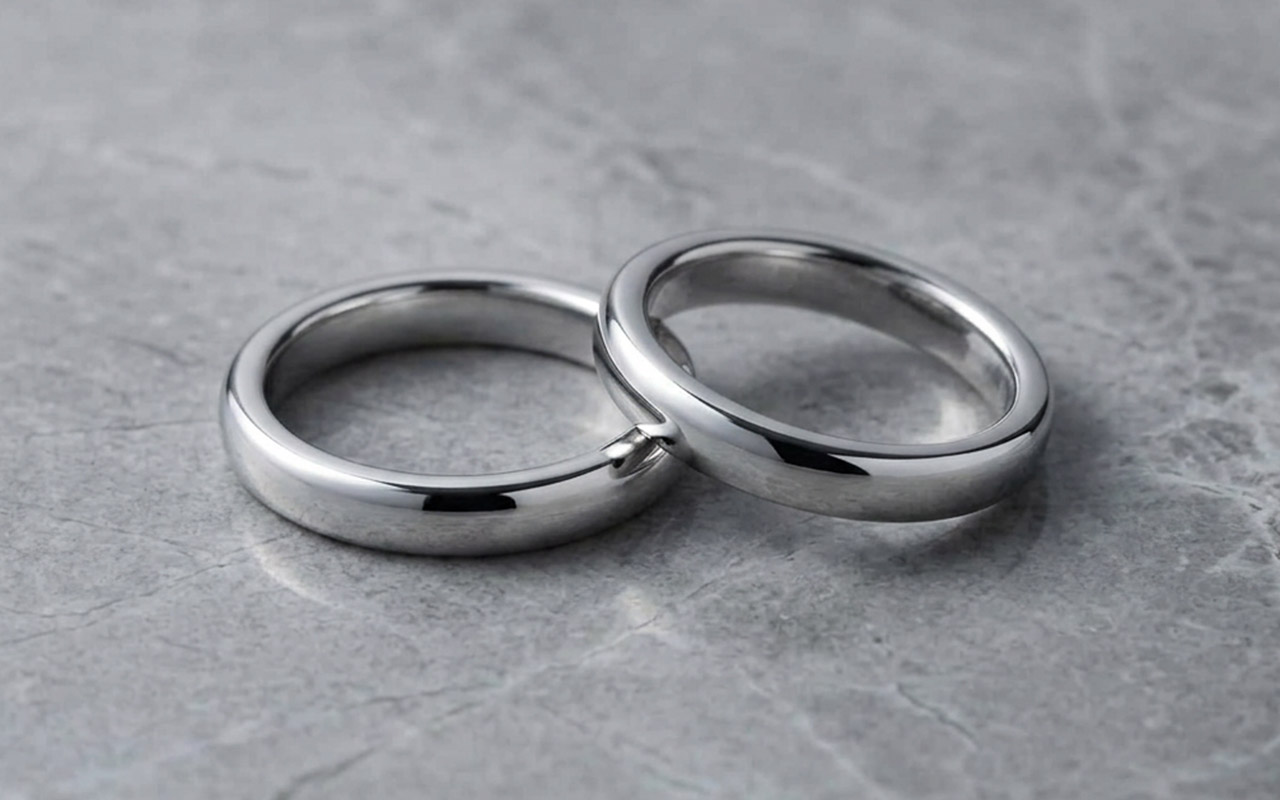
If you want to keep stacked rings from spinning, soldering can join multiple rings into one unit so they move together instead of shifting separately. This can help solve a spinning wedding band, a twisting engagement ring or a stack that never stays aligned.
While soldering creates a highly reliable bond for daily wear, the process is completely reversible. If you’d like to separate your rings later, bring them to your jeweler.
11. Hinged Shank
- Best for: Significant knuckle-to-finger size differences
This professional modification replaces part of the ring’s lower shank with a hinged mechanism that opens and closes. Instead of sliding the ring over the knuckle, open the shank, place the ring on your finger, and secure it at the base.
A hinged shank can dramatically improve fit and comfort for people whose rings spin because they need a larger size to pass over the knuckle. It’s one of the more involved options, and it may cost more than simpler adjustments.
How to Choose the Best Fix for a Loose Ring
The best fix for a loose ring depends on how much extra space you have, how complex the ring is, your budget and how permanent you want the solution to be. Consider the following:
- Small, temporary gap: Try a ring-size adjuster or a ring guard first.
- Consistently loose ring: Resizing may be the most straightforward solution.
- Ring that fits over the knuckle but spins at the base: Sizing beads or a hinged shank may be more effective.
- Pavé rings, eternity rings or high-value pieces: Consult a jeweler before making changes.
Blue Nile experts can assess your ring structure and finger shape to determine the most secure fit.
Why Do Rings Spin on Fingers? 3 Common Causes
Rings spin on fingers because the ring is too loose, the setting is top-heavy, or the finger shape creates a gap between the knuckle and the base of the finger. Even a properly sized ring can rotate if the stone setting is heavier than the lower band, or if the ring is large enough to pass over a prominent knuckle.
- Incorrect ring size: A ring that is too large will move more easily, especially when your hands are cold, or your fingers naturally fluctuate in size throughout the day. If the ring slides side to side or feels like it could come off, resizing may be worth discussing with a jeweler.
- Top-heavy settings: Rings with taller settings or elongated diamond shapes can rotate because more weight sits at the top of the ring. A counter-balance or sizing beads can help keep the ring upright.
- Knuckle size gap: If your knuckle is wider than the base of your finger, the ring may need to be large enough to slide on, which makes it fit loosely once in place. Spring inserts and hinged shanks are often designed for this exact issue.
Ring style also matters. Thin shanks tend to rotate more easily than wider rings, while asymmetrical settings may shift because the weight does not sit evenly around the finger.
If your ring spins regularly, the solution isn’t always to go down a size. The better answer is a fit that balances security and comfort.
Get A Secure Ring Fit From The Start With Blue Nile
The best way to avoid ring spinning is to start with an accurate ring size, choose a setting that suits your lifestyle and work with experts who understand how ring structure affects fit.
Blue Nile can help you find a secure fit that feels as considered as the ring itself. If you’re choosing rings for a wedding set, explore our unique engagement ring guide for more design inspiration.
And if you already know what you like and want to shop confidently, take a look at our collection of wedding rings.
Frequently Asked Questions
The best way to keep a ring from spinning on a finger is to correct the fit at the base of the finger. Temporary options like ring adjusters and ring guards can help, while professional solutions like resizing, sizing beads or spring inserts offer a more durable fit.
It’s common for rings to spin slightly, especially when your fingers change size throughout the day. However, frequent spinning may mean the ring is too loose, top-heavy or sized to fit a larger knuckle.
You can keep rings from spinning without soldering by using ring guards or ring wraps. These options can help you hold rings together without permanently connecting them.
You can put a silicone ring adjuster, ring guard, ring wrap or jeweler’s tape on the inside of the ring to help reduce spinning. For fine jewelry, choose temporary products carefully and avoid adhesives that may leave residue or affect the metal.
You can fix some spinning rings at home temporarily with ring size adjusters, ring guards, wraps or jeweler’s tape. If the ring is valuable, sentimental or worn daily, a jeweler can recommend a safer long-term solution.
The cost to add sizing beads varies by jeweler, metal type and ring design. Sizing beads are generally considered a common, lower-cost professional adjustment compared with more complex options like spring inserts or hinged shanks.
Sizing beads shouldn’t damage your ring when they are added by an experienced jeweler. They are small metal beads soldered to the inside of the ring to create a more secure fit, helping reduce spinning without altering the ring’s exterior appearance.
Some eternity rings, pavé rings, tension settings, engraved rings and rings made from certain alternative metals cannot be resized easily or at all. Rings with stones or detailing around the full band are more difficult to alter because resizing can disrupt the design or loosen stones. A jeweler can confirm whether resizing is safe or suggest alternatives like sizing beads, ring guards or a spring insert.
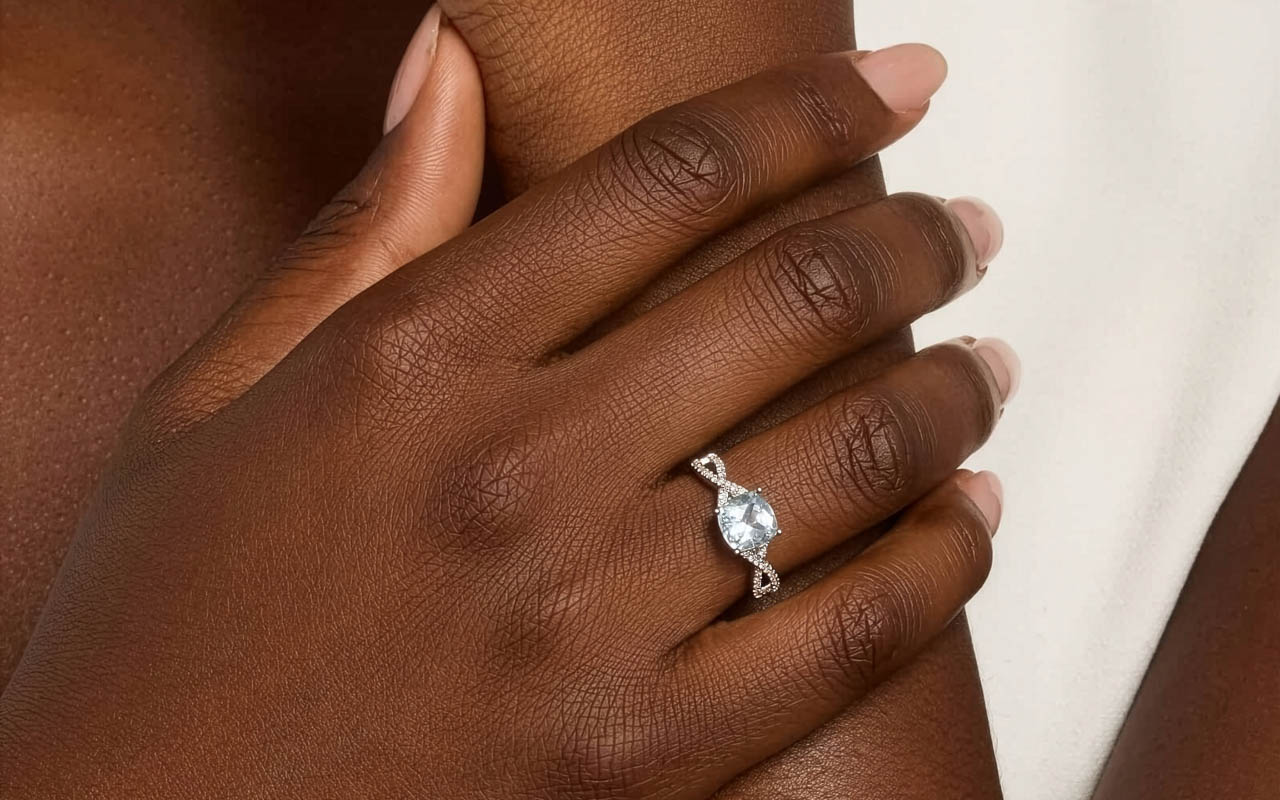
You can keep your engagement ring from spinning by improving the fit with a ring size adjuster, sizing beads, resizing or a spring insert. If the setting is top-heavy, a jeweler may recommend a counter-balance instead of simply making the ring smaller. The right fix depends on whether the ring is too loose overall or only spins once it passes over your knuckle.
You can prevent stacked rings from spinning by using temporary clip-on adjusters or by soldering the rings together. Temporary options are helpful when you want to wear the rings separately sometimes. Soldering is the more permanent solution if you always wear the stack together and want the rings to stay aligned. Also, consider using ring spacers to avoid scratches between rings.
You can keep your wedding band and engagement ring together with a temporary snap-on ring connector clip or soldering. Non-permanent options are best if you enjoy wearing each ring on its own. Soldering creates a single connected set, which can help reduce twisting, gaps and daily realigning. Also, consider using ring spacers to avoid the rings from rubbing against each other.


Share