Tennis bracelets are a timeless piece of jewelry that can be worn in a number of ways, from solo to stacked or paired with a watch. Here are some of the key tips experts suggest when wearing your piece:
- The right fit: You’ll want to ensure it’s not too loose or too snug; following the one-finger rule can provide guidance.
- Choose metals and stones carefully: The right materials can support the longevity of your piece while also suggesting ways to pair it.
- Schedule regular cleanings: For regular maintenance, wash gently at home. But also plan to take the bracelet to a professional once a year to keep it looking its best.
The key to wearing a tennis bracelet is making sure it’s snug enough against the skin that it won’t slip off while also leaving a little room for it to breathe.
A great rule of thumb is allowing enough space for one finger between the jewelry and your wrist. You may also want to wear the bracelet on your non-dominant hand, so it’s less likely to become damaged during daily tasks.
Beyond that, you can wear a tennis bracelet in myriad ways—all by itself, paired with a watch or a coordinating bracelet stack. Keep reading to learn how to wear a tennis bracelet, including how to style it, how to ensure a good fit and how to clean and store it so you can enjoy this timeless jewelry style for a lifetime.
How Should a Tennis Bracelet Fit?
There’s one simple guideline to know how a tennis bracelet should fit: It should always feel comfortable and secure. You want it tight enough that it won’t slide off your hand, but loose enough to move about naturally on your wrist.
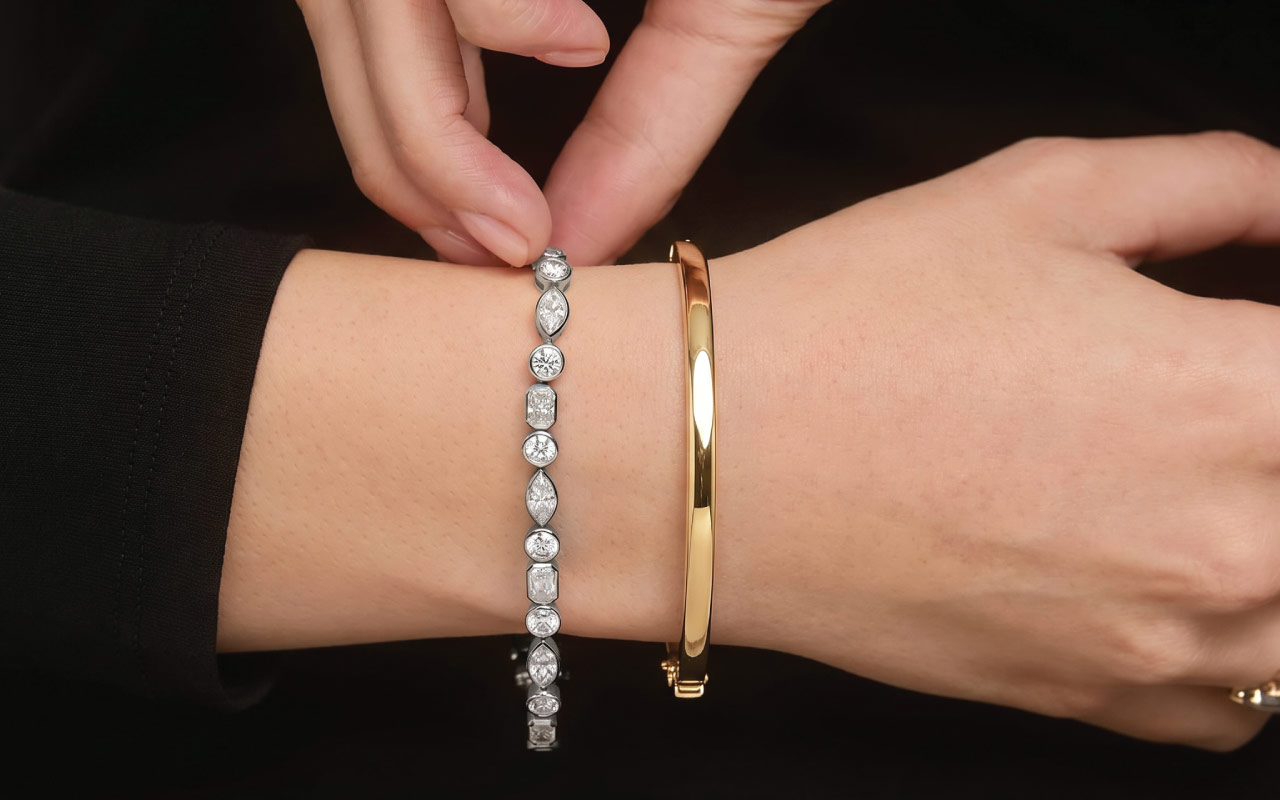
An easy way to check this balance is the one-finger rule: you can slide one finger between the bracelet and your wrist. If you can’t, it’s probably too tight. If more than one finger fits, it’s too loose and could be vulnerable to damage or snagging.
For the most flattering look, rest your tennis bracelet just below the wrist bone so it drapes gently around the wrist without slipping too far down onto your hand.
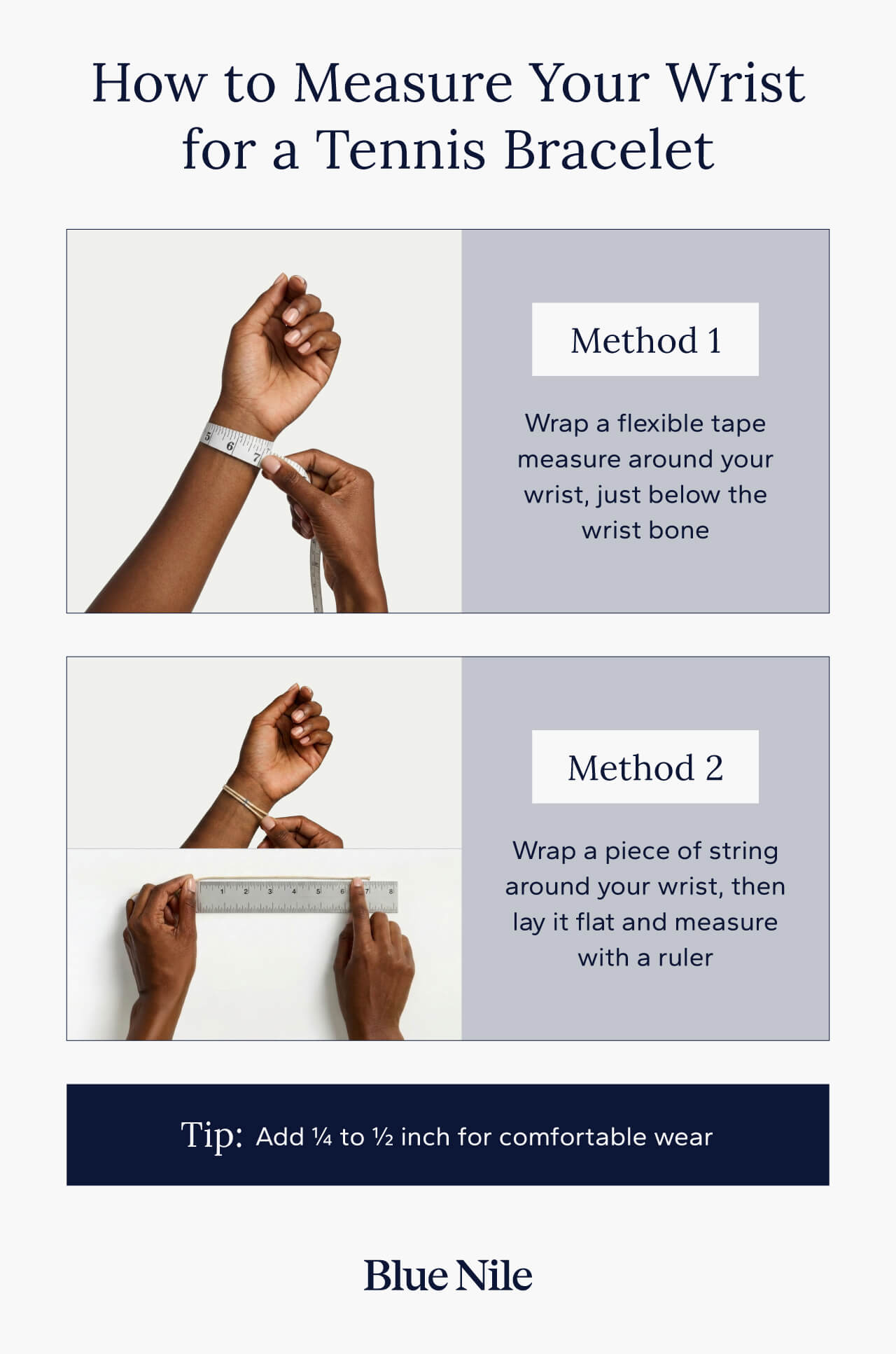
To find your ideal bracelet size, measure your wrist using a flexible tape measure or a piece of string. Wrap the tape measure snugly around your wrist just below the wrist bone to get an exact measurement.
If you’re using string, mark where the ends meet, then lay the string flat and measure the length with a ruler. Once you have the measurement, add approximately 1/4 to 1/2 inches more for a comfortable fit that allows for the one-finger rule.
Blue Nile offers a variety of tennis bracelets in lengths ranging from 6.5 to 8 inches, so you can always find your perfect fit.
Tennis Bracelet Styling 101
A tennis bracelet is one of the most versatile jewelry pieces you can own. It’s an easy way to dress up casual outfits or add the perfect finishing touch to a formal look. With its timeless design, a tennis bracelet is beautiful on its own, but it can also be paired with watches, bangles and a mix-and-match bracelet stack for a more distinctive look.
Whether you prefer a minimalist approach or a layered jewelry look, here are a few simple styling techniques that will make your tennis bracelet a winning piece every time.
How to Wear a Tennis Bracelet with a Watch
For a classic look, wear the tennis bracelet on the same wrist as the watch, positioning it slightly closer to your hand so it sits just below the timepiece. Or, tuck the bracelet behind the watch face for a more layered appearance.
For the most complete look, match the metals of the two pieces. For example, a stainless steel watch goes great with a platinum or white gold tennis bracelet, while yellow gold watches best complement yellow gold diamond bracelets. If you want more contrast, a watch with a leather strap can also provide a rich textural balance.
One final tip for how to wear a tennis bracelet with a watch: Minimize the risk of scratches by choosing a tennis bracelet with a slightly snugger fit so it doesn’t slide excessively against the watch.
How to Stack a Tennis Bracelet
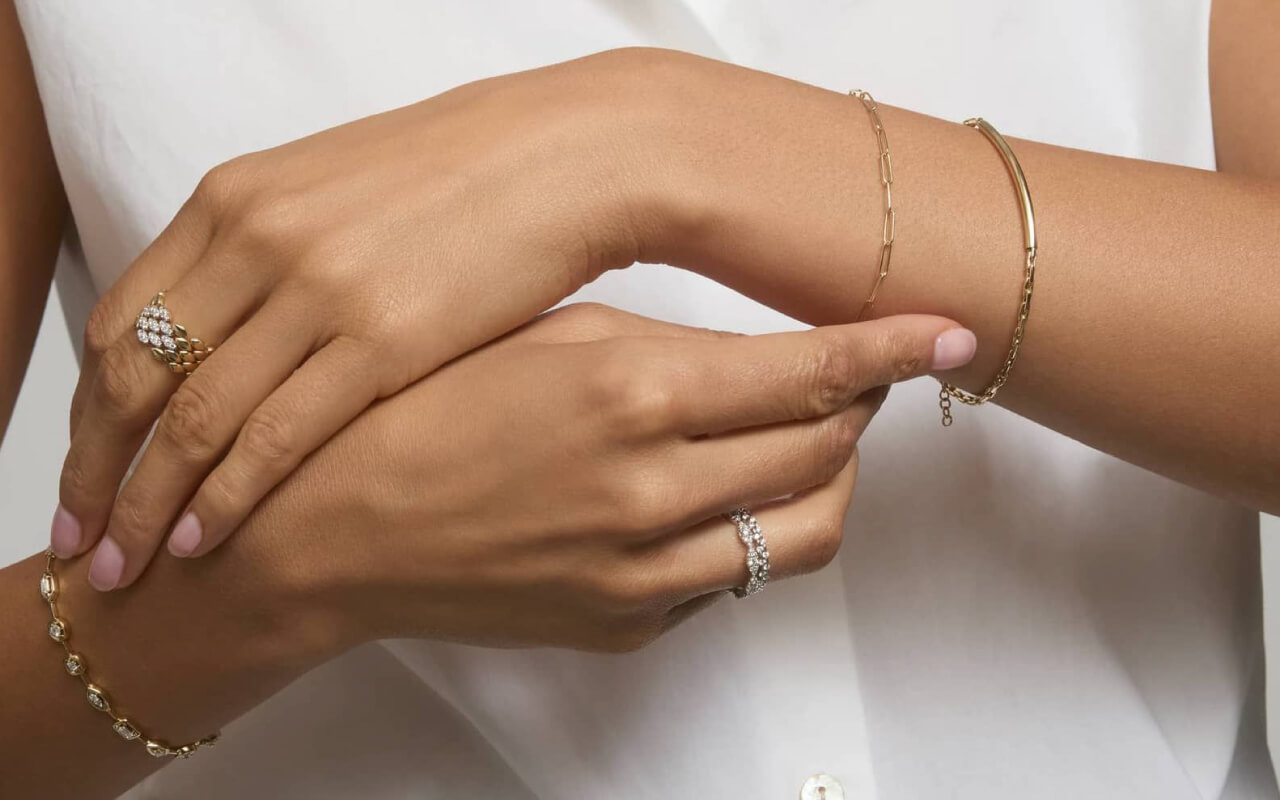
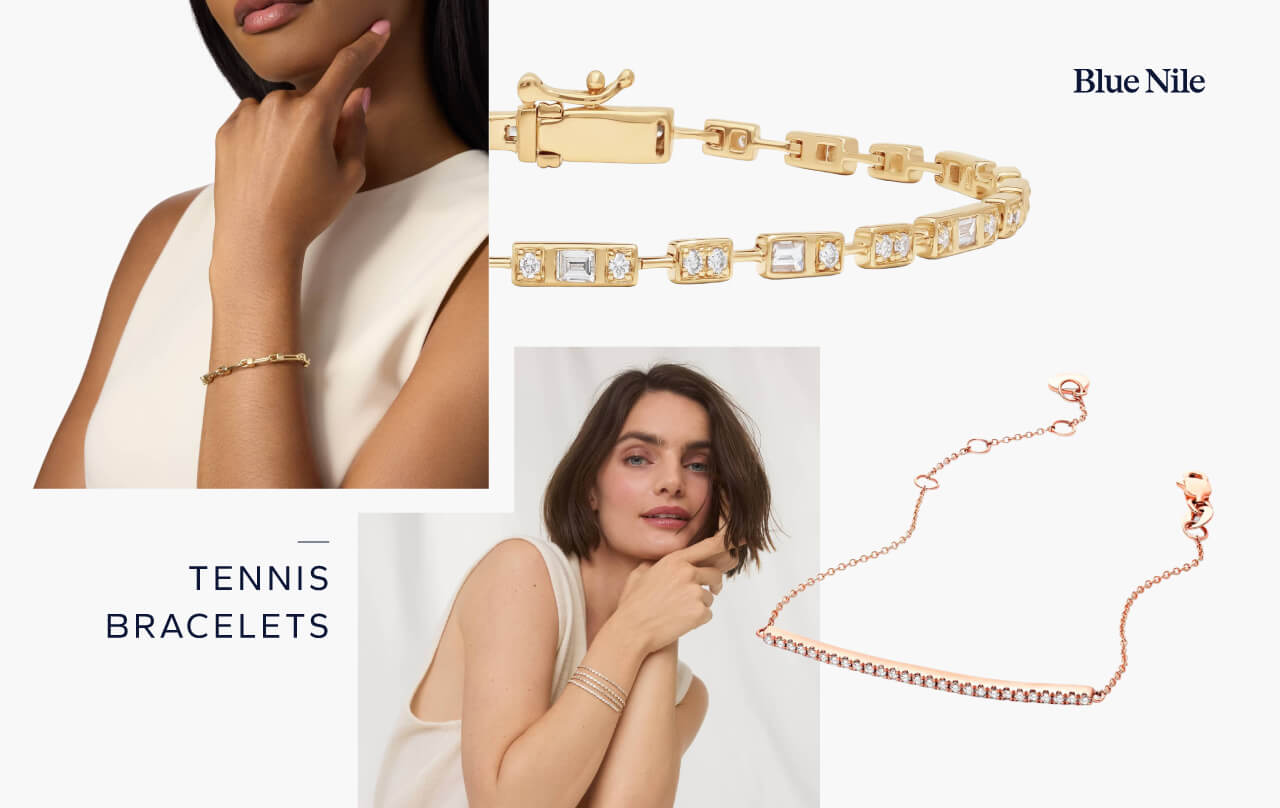
To build an appealing bracelet stack, start with your Blue Nile diamond tennis bracelet as the anchor piece to naturally draw the eye in and become the focal point. From there, layer complementary pieces around it, ensuring proportions are balanced so it looks intentional rather than randomly put together.
Don’t be afraid to mix metals and materials for a multi-dimensional effect. One great option is pairing 14k yellow gold, rose gold and white gold bracelets for a modern style. Or, add different textures, such as polished gold bangles, cuffs or chain-link bracelets. For even more depth, consider varying diamond carat weights.
Metal Considerations
There are many types of tennis bracelets made with different kinds of metals, and the metal you choose will be important for both the appearance and longevity of your jewelry.
Today, white gold and platinum are popular contemporary options that enhance the brilliance of diamonds. On the other hand, a warm yellow gold offers a timeless appeal, and platinum is a top choice for durability. If you want a more affordable design, white gold typically has a lower price point but may it require occasional replating over time.
Stone Considerations
When selecting the stones for your diamond tennis bracelet, you have the choice of natural or lab-grown diamonds. Lab-grown diamonds offer the same physical and visual properties as natural diamonds and usually have a more accessible price point, but some prefer the implied sentimentality of stones found in nature.
For a more distinctive style, tennis bracelets can also be made with colorful gemstones, such as sapphires, emeralds or rubies, all of which are becoming more popular over time.
Whether your tennis bracelet is set with diamonds or colored gemstones, quality is essential. Blue Nile maintains rigorous standards for stone selection, light performance and craftsmanship, helping ensure that each bracelet delivers exceptional beauty that will last a lifetime.
Lifestyle and Personal Style
Beyond metals and stones, another important consideration is how and when you plan to wear your bracelet. For everyday wear, a classic design with a moderate carat weight can provide the desired sparkle without feeling formal. If you plan to wear the tennis bracelet for special occasions, like celebrating a first anniversary, you may decide that larger diamonds offer a more dramatic effect.
Tennis bracelets are easy to adapt to your personal style. In casual settings, a single strand of diamonds can dress up staples like a denim jacket or a knit sweater. Tennis bracelets are also a great choice for professional settings. Plus, the design’s low profile and secure clasp mean it’s less prone to damage while doing work tasks like typing.
What Is a Tennis Bracelet?
A tennis bracelet features a continuous row of individually set gemstones (most often diamonds) that are linked together to create a seamless line of sparkle around the wrist. The individual links allow the bracelet to move comfortably while maintaining a polished appearance. With its elegant simplicity, a tennis bracelet is incredibly versatile and can be worn for everyday wear or special occasions.
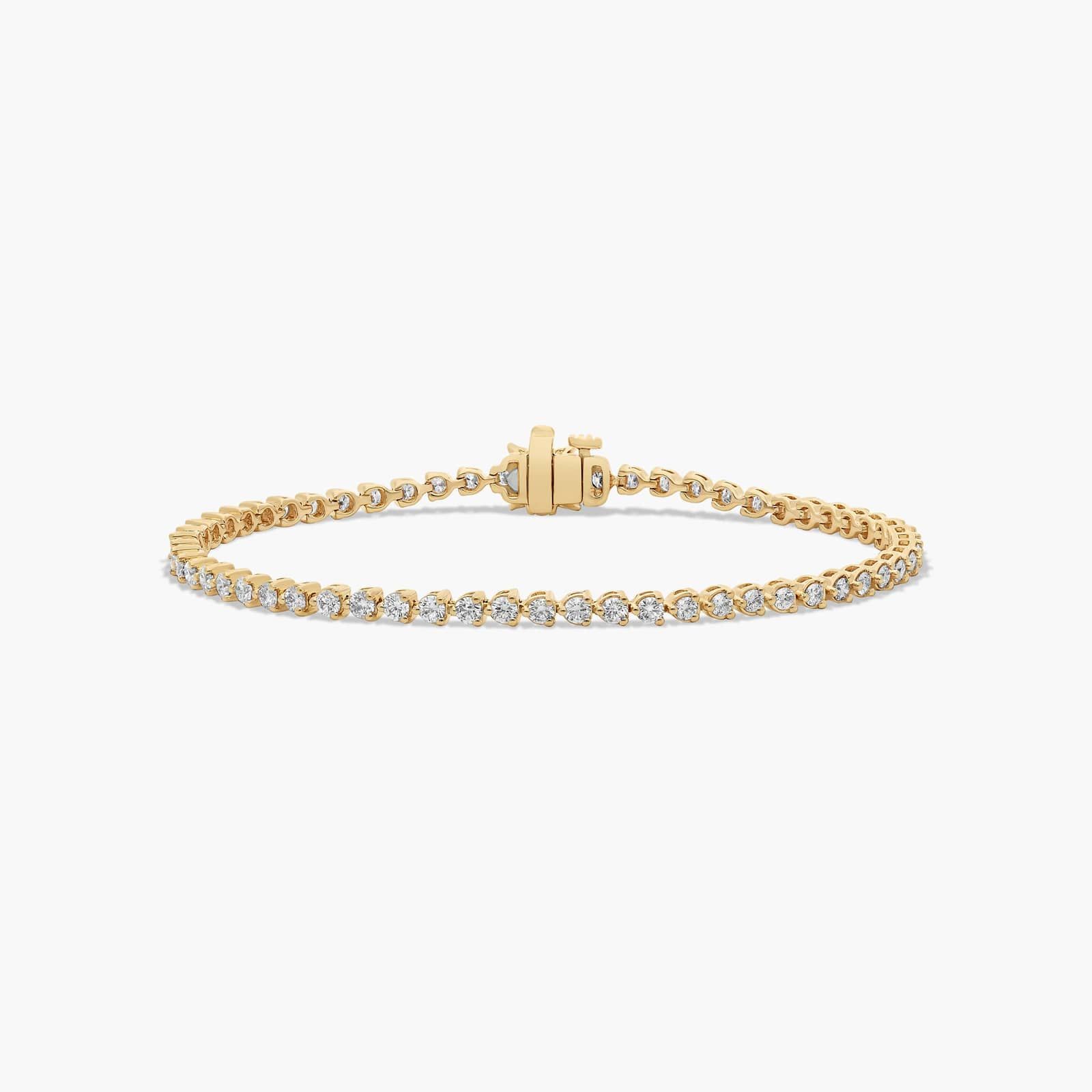
Flower Clasp Tennis Bracelet With 2 CTW Diamonds In 14K Yellow Gold By James Allen
Shop tennis bracelets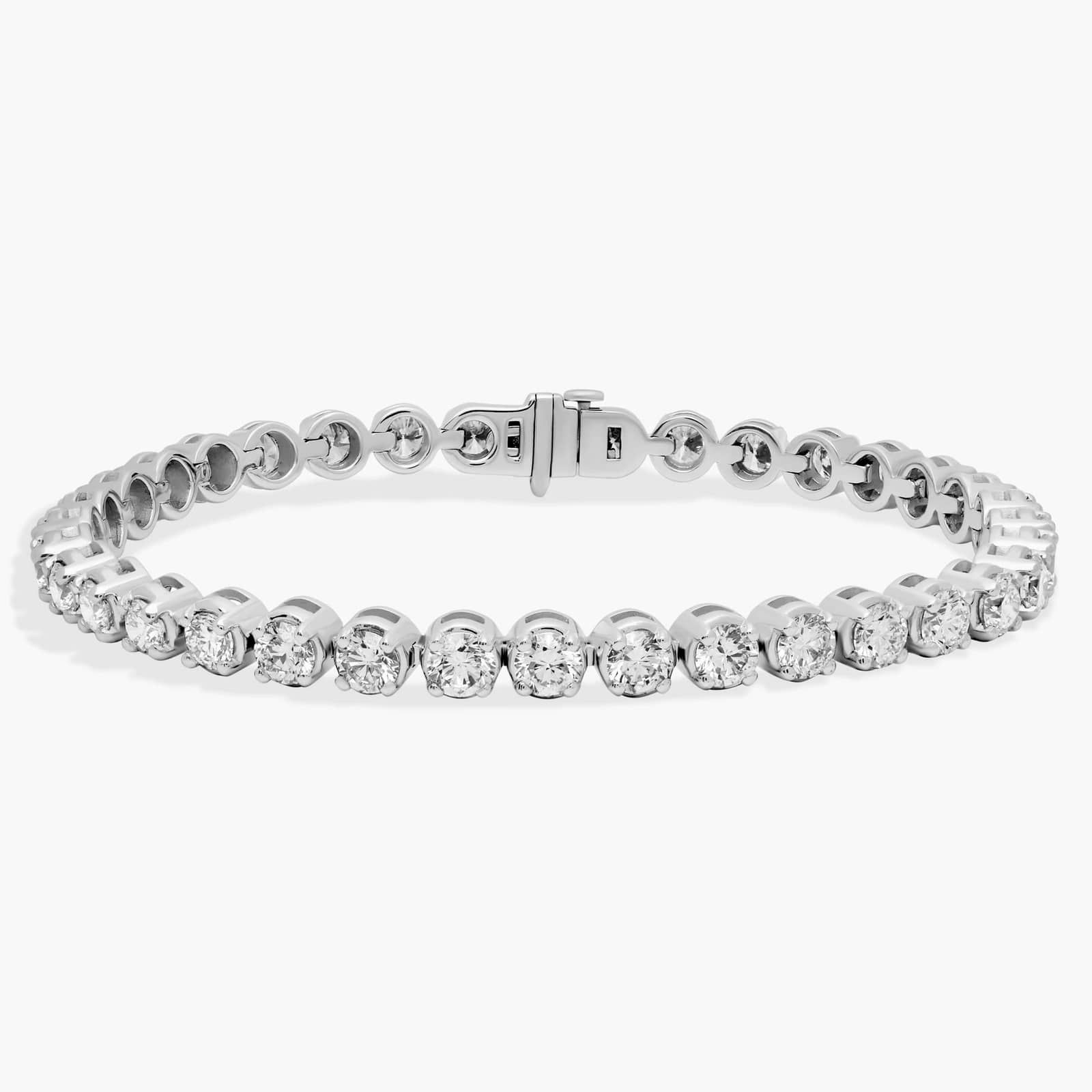
7 " Four Prong Lab-Grown Diamond Tennis Bracelet In 14k White Gold (8 Ct. – F-G / VS2-SI1)
Shop tennis bracelets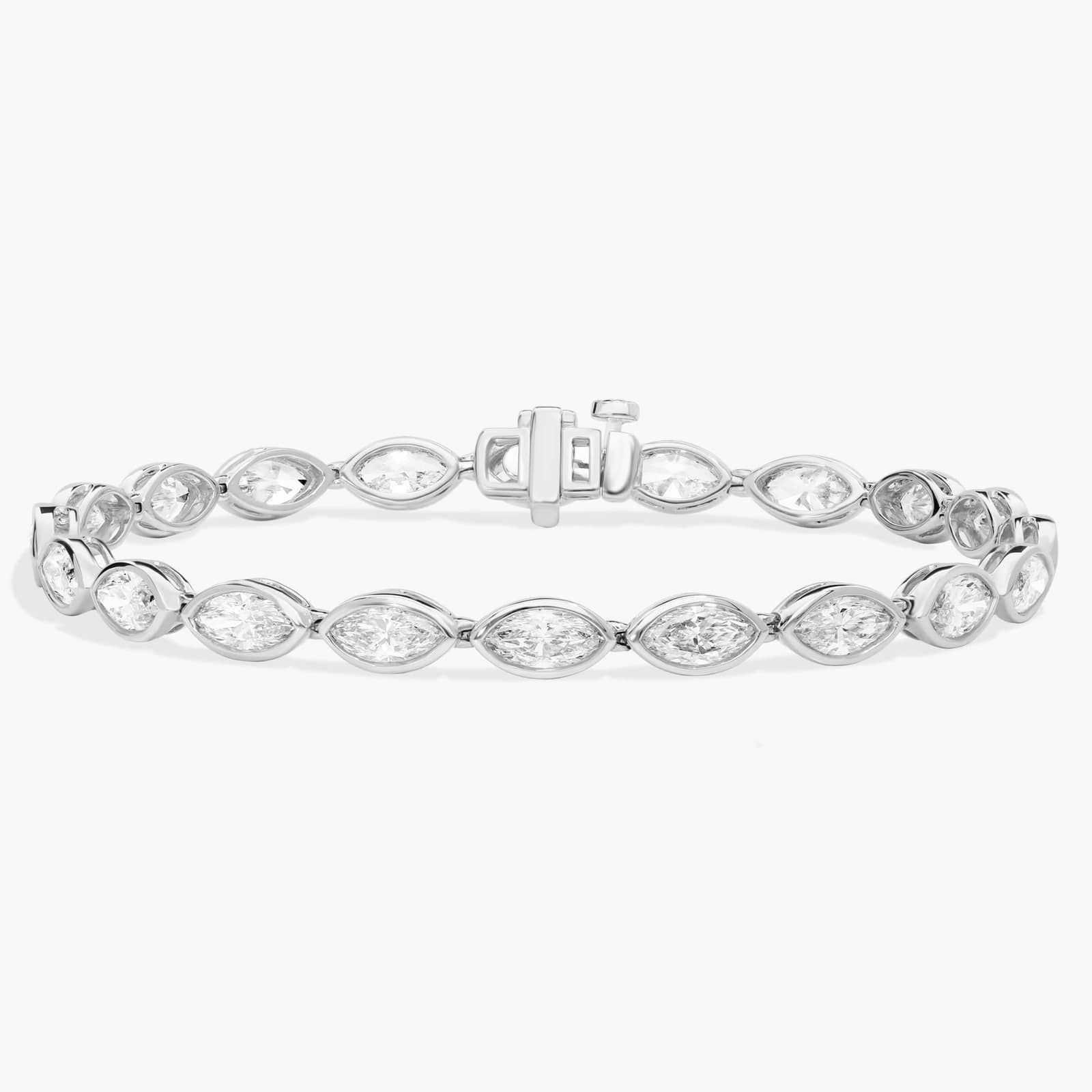
The History of the Tennis Bracelet
In a past life, tennis bracelets were actually called eternity bracelets, reflecting the long, continuous circle they make on the wrist. But that all changed in 1987 when famed tennis player Chris Evert was competing in a U.S. Open match and lost her bracelet on the court.
In a panic, Evert asked that the game be officially paused as she searched for the jewelry, creating an unforgettable moment in sports and fashion. Ever since, the unique jewelry name has stuck.
Today, though, tennis bracelets are more than a sports-related accessory; they are a timeless jewelry style. Sellers like Blue Nile offer the design in a variety of precious metals, including white gold, yellow gold, rose gold and platinum.
You can also choose from natural diamonds, lab-grown diamonds, or colorful gemstones, with so many options that the jewelry is one of the most versatile designs you can own.
How to Maintain a Tennis Bracelet
Proper care can help keep your tennis bracelet looking like new for years to come. Over time, lotions, oils, and everyday residue can reduce the brilliance of the diamonds and gemstones. But you can easily clean your bracelet at home by soaking it for a few minutes in a solution of mild dish soap and warm water. After, use a soft-bristled toothbrush to gently clean around the stones and settings. Then, rinse the jewelry thoroughly with clean water and pat dry with a lint-free cloth.
In addition to regular cleaning, it’s important to inspect the bracelet for signs of wear. Check that the clasp and safety latch are functioning properly and closing securely, especially if you wear it frequently.
It’s also recommended to schedule a professional inspection at least once a year so a jeweler can examine the prongs, links and settings for any signs of loosening or damage. This will help prevent stone loss and ensure your tennis bracelet remains secure and comfortable over time.
Wear Your Tennis Bracelet with Confidence with Blue Nile
Now that you know how to wear a tennis bracelet, from finding the right fit to styling it with different outfits, you can confidently choose the design that’s best for you.
Explore our collection of diamond tennis bracelets available in a range of metals, carat weights and stones. Whether you’re searching for an everyday essential or a meaningful gift, Blue Nile’s expertly crafted designs can be treasured for years to come.
Frequently Asked Questions
Yes, you can wear a tennis bracelet every day. The flexible design and secure clasp make it well-suited for daily wear, but it’s best to remove the bracelet during heavy manual labor, exercise or any activities that could increase the risk of damage.
It’s best to wear a tennis bracelet on your non-dominant wrist to reduce the likelihood of accidental bumps and scratches. But there are no strict rules—the best wrist is the one that feels most comfortable and complements your other jewelry. For example, if you regularly wear a watch, you may prefer to put both on the same wrist for a layered look.
A tennis bracelet should be snug enough to stay secure but loose enough to allow for movement. The one-finger rule is a simple guide stating that you should be able to fit one finger between the bracelet and your wrist without the jewelry feeling too tight or sliding down toward your hand.
The 2:1:1 rule is a styling guideline that helps create a balanced look without over-accessorizing. It means wearing two pieces in one jewelry category, one piece in a second category, and one standout piece in a third category. For example, you might pair two bracelets, one necklace and one pair of earrings.
The average carat weight of a tennis bracelet typically falls between 2 and 10 carats. More delicate styles start around 2 to 3 carats, while statement pieces can exceed 10 carats for more brilliance. As the carat weight increases, the size of the individual diamonds and the overall width of the bracelet will become more substantial, which also will impact the price.
Yes, tennis bracelets are in style in 2026 and continue to be a staple of fine jewelry. The clean and minimal design makes it a timeless piece that transcends trends.
Yes, men can absolutely wear tennis bracelets. While traditionally marketed toward women, tennis bracelets have become a gender-neutral staple thanks to the clean design and versatile appeal. When it comes to how to wear a men’s tennis bracelet, many choose thicker settings and larger stones and pair the bracelet with watches and chains.


Share