









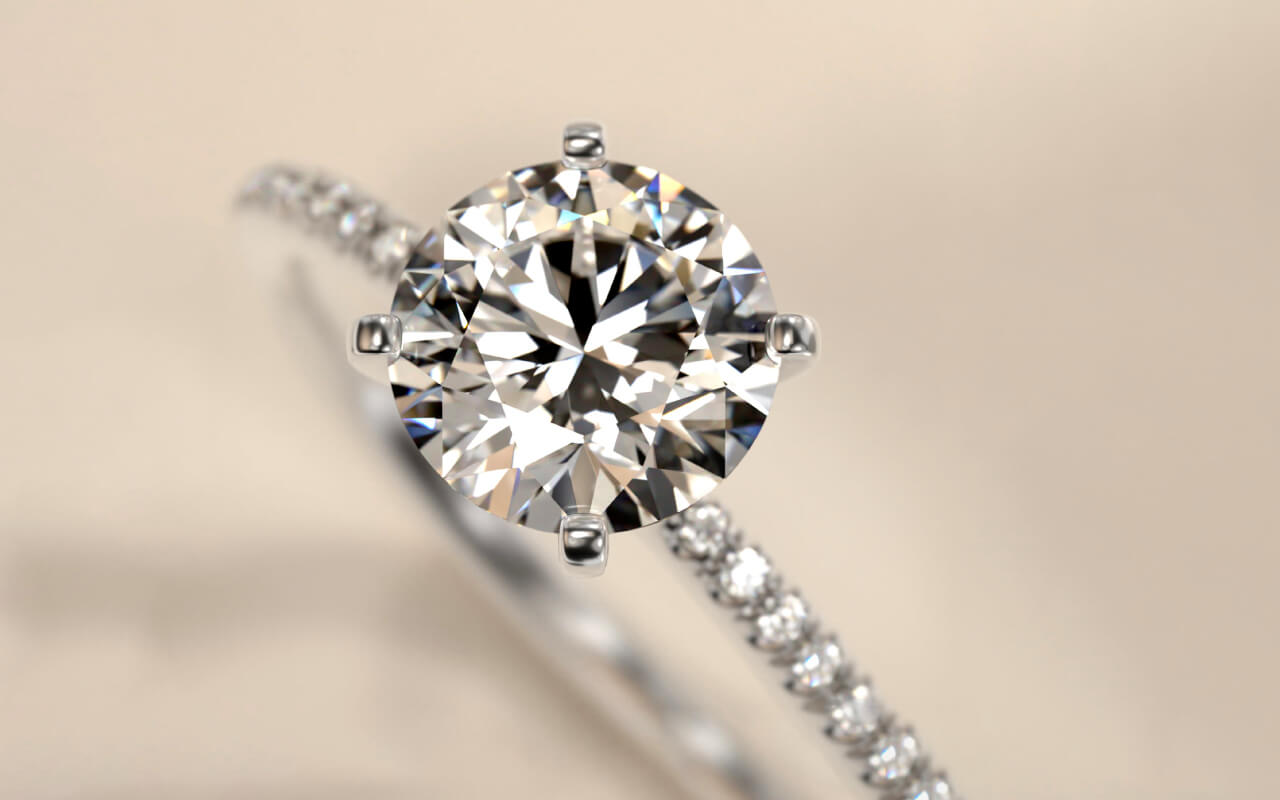
- Ideal is the highest cut grade on the AGS (American Gem Society) scale, while Excellent is the highest cut grade on the GIA (Gemological Institute of America) scale.
- AGS uses stricter standards for light performance and precision, while GIA uses broader proportion ranges that still produce exceptional sparkle.
- To the unaided eye, the visual differences between Ideal and Excellent cut diamonds are often minimal.
- The best choice depends on your priorities, budget and the specific diamond—not just its cut grade.
Diamonds can look similar in a grading report, but their cut changes everything you see in the light. If you’re evaluating a diamond’s brilliance, proportions and overall beauty, Ideal diamond cut vs. Excellent cut is an important comparison to make. Both grades sit at the top of the quality standards, but there are subtle differences worth knowing about.
Below, we break down how these cuts compare so you can choose a diamond that feels right for your moment.
What’s the Difference Between Ideal cut vs. Excellent cut Diamonds?
Ideal and Excellent cut diamonds mainly differ in precision and performance.
An Ideal cut diamond has been optimized to catch every bit of light possible—it looks very crisp, bright and “on fire” even when you move it slightly. An Excellent cut still looks beautiful and very sparkly, but the proportions are a little less tightly locked in.
This results in slightly less precise light performance, even though most people would still see it as a very high-quality, bright diamond.
| Ideal cut | Excellent cut | |
| Proportions | Tighter, more precise | Slightly broader range |
| Brilliance | Maximum light return | Very strong |
| Fire | Sharper color flashes | Softer fire |
| Scintillation | Crisp, consistent brilliance | Slightly less uniform shine |
| Precision | Stricter symmetry standards | High but more flexible |
| Price | Higher | More accessible |
What Is an Ideal cut Diamond?
An Ideal cut diamond is the highest grade in the AGS (American Gem Society) system, and you’re likely to come across the term in any diamond buying guide. It’s cut with very precise proportions, so it reflects as much light as possible.
The result is a stone that tends to look especially bright, crisp and evenly lit from almost any angle, with very little light “leakage” from the bottom or sides.
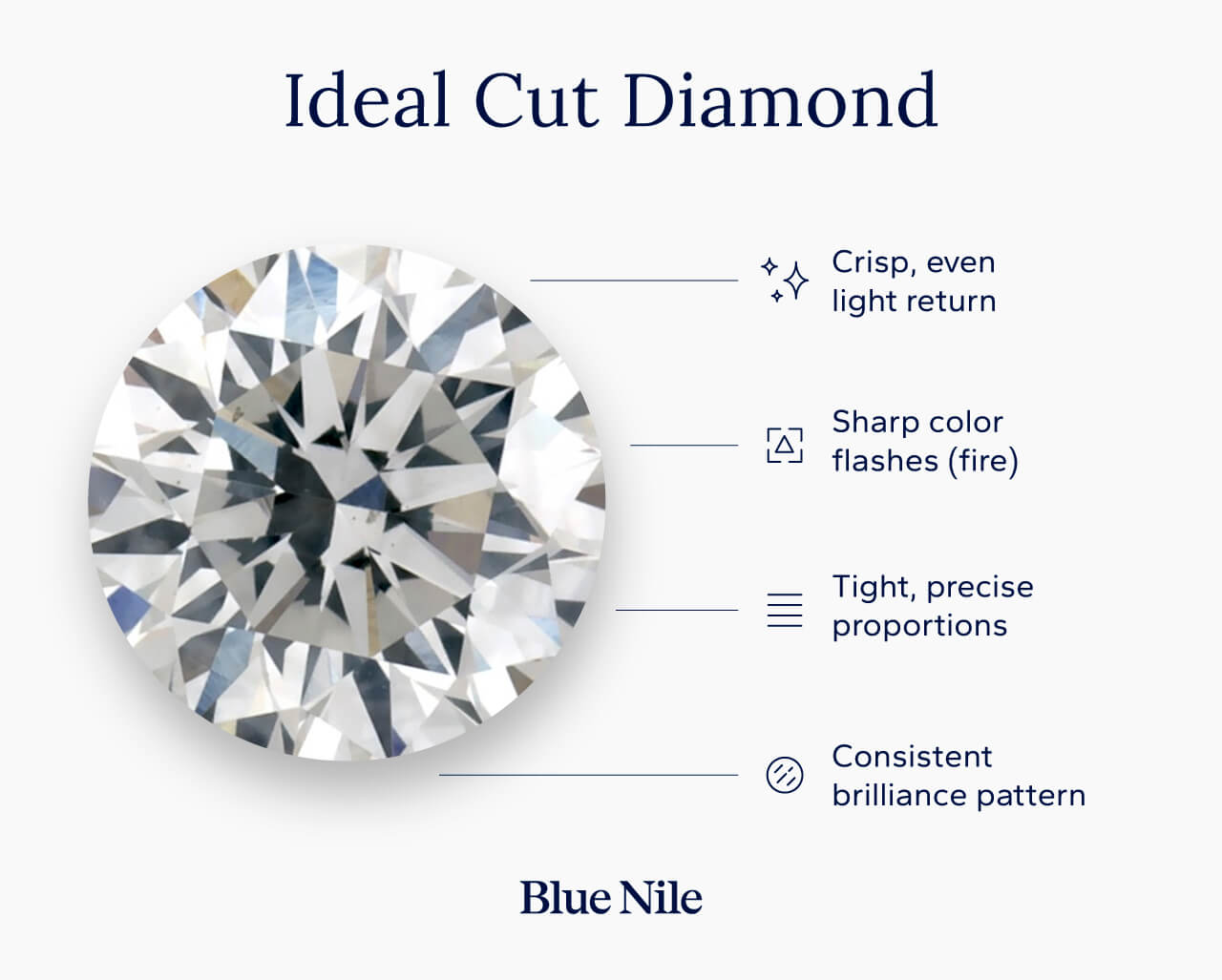
AGS uses ASET (Angular Spectrum Evaluation Technology) technology to actually measure how a diamond handles light, not just its measurements on paper. This technology evaluates how much light the diamond returns to your eye, where light leaks out and how balanced the sparkle pattern is.
What Is an Excellent cut Diamond?
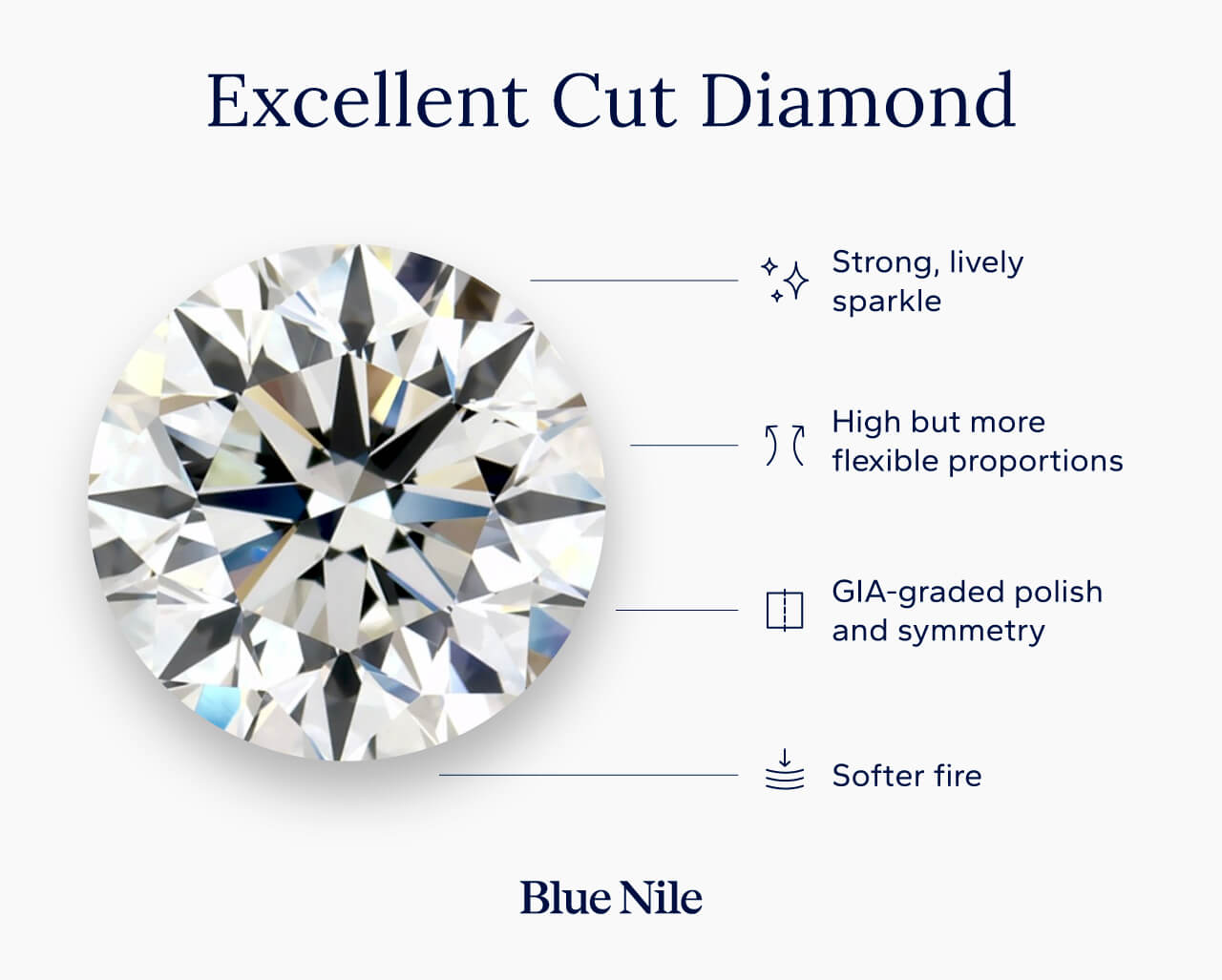
While the highest grade cut according to the AGS is Ideal, the GIA uses a different grading scale, with the highest grade being Excellent (so a GIA Ideal cut doesn’t exist). A GIA Excellent cut diamond is proportioned to return a high amount of light, so it looks bright, lively and full of sparkle in everyday lighting.
GIA skips ASET technology and instead grades a diamond based on its proportions (like table size, crown angle, pavilion angle), symmetry and polish. Based on decades of research, GIA knows that diamond cuts within certain proportion ranges consistently perform well, so it awards an Excellent grade accordingly.
What Is a Diamond Cut, and Why Is it Important?
A diamond cut refers to how well a diamond’s facets are shaped and aligned to reflect light, and is a huge consideration when choosing a loose diamond. The most common example is the brilliant cut diamond, which uses triangular and kite-shaped facets to maximize light return.
It’s graded on a scale from Excellent/Ideal down to lower grades and directly influences how bright and “alive” a diamond appears to the eye.
The diamond cut differs from the diamond shape and controls how light moves through the diamond. When it’s well-cut, light enters the top, bounces around inside and reflects back out, creating brightness you notice right away. A diamond cut grading scale breaks this concept down in more detail.
How Are Diamond Cuts Graded?
Independent gemological organizations assign diamond cut grades by evaluating how well a diamond is shaped, finished and able to interact with light. The two most prolific are the Gemological Institute of America (GIA) and the American Gem Society (AGS). GIA grades cut on a scale from Excellent to Poor, while AGS uses a numerical scale from 0 (Ideal) to 10 (Poor).
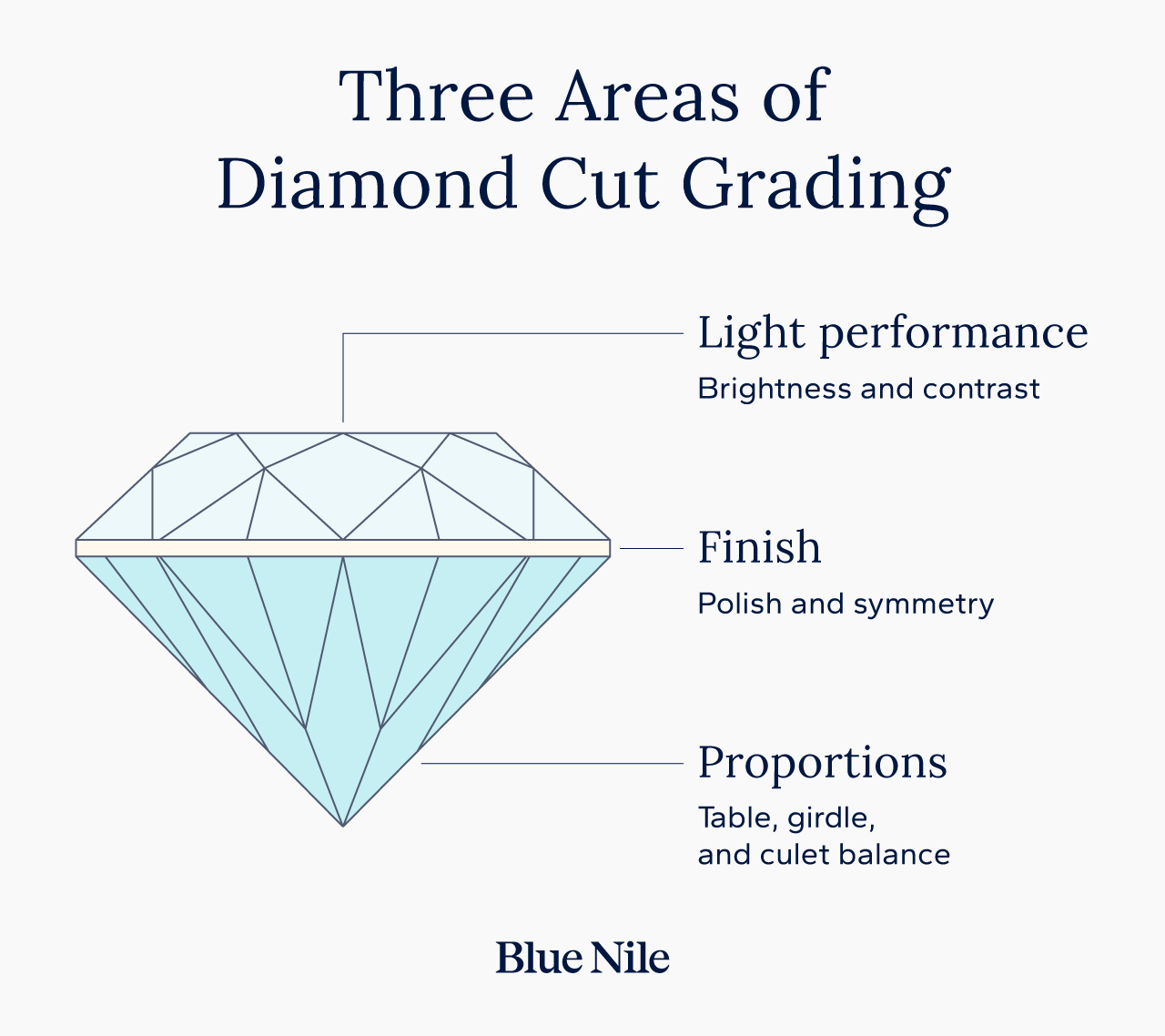
Three main areas are evaluated when grading a diamond’s cut: light performance, proportions and finish.
- Light performance measures factors such as brightness, contrast and whether light escapes through the bottom of the stone.
- Proportions evaluate how the different parts of the diamond are balanced, including the relationship between the top and bottom sections, the girdle (middle) thickness, and the culet.
- Finish includes the quality of a diamond’s polish and symmetry.
While cut is a major factor in a diamond’s appearance, it’s only one part of the full picture. Gemologists also evaluate other qualities, such as diamond color, carat weight and clarity, to determine a diamond’s overall beauty and value.
How to Choose Between Ideal cut and Excellent cut Diamonds
Ideal and Excellent cuts both represent the highest levels of cut quality within their respective grading systems. Both produce nearly flawless light performance, and the differences are virtually indistinguishable to the unaided eye.
That said, choose an Ideal cut if you’re looking for the most precisely cut diamond available. If you’d rather balance sparkle with cost, an Excellent cut can look identical to the unaided eye while leaving more room in your budget for other priorities, like carat size.
Find Your Dream Diamond at Blue Nile
The best diamond is the one that matches your style, preferences and budget, whether it’s graded Ideal or Excellent. When comparing Ideal cut diamonds vs. Excellent cut, you’ll find that both offer exceptional beauty, making either an excellent choice for an engagement ring or a meaningful gift. Explore our collection of expertly selected diamonds to compare your options side by side.
Frequently Asked Questions
Blue Nile is one of the best places to buy Ideal cut diamonds thanks to our curated selection and detailed grading information. You can compare diamond cut types side by side, review certification details and shop with confidence knowing each diamond has been evaluated by trusted grading laboratories.
Blue Nile is an excellent place to shop for GIA Excellent cut diamonds. Our extensive selection makes it easy to compare carat, color, clarity and cut so you can find a diamond that fits both your style and budget.
A well-cut diamond reflects light efficiently, creating exceptional brightness and flashes of color. It also has balanced proportions and a polished finish that work together to maximize its overall beauty. While cut has the greatest impact on sparkle, diamond color also influences a diamond’s overall appearance and brightness.
No, Ideal cut and Excellent cut are not the same; both represent the highest cut grades in different grading systems. Ideal is the top grade on the AGS scale, while Excellent is the highest cut grade awarded by GIA, and both produce beautiful, high-performing diamonds. Understanding GIA vs AGS grading standards can help you decide which cut best fits your preferences and budget.
An Ideal cut is technically better, as it requires greater precision to achieve a higher level of brilliance and fire than Excellent cuts. However, the difference is often unnoticeable to the unaided eye, and both can offer impressive brilliance, sparkle and beauty when properly graded.
Ideal cut diamonds are often more expensive because they meet stricter cut standards. GIA Excellent cut diamonds can offer a similar appearance at a more flexible price, making them a popular choice if you’re looking to maximize cost.
Among different diamond cuts, a super ideal cut is a diamond cut to even stricter standards than a traditional Ideal cut. They typically have exceptional symmetry, precise proportions and outstanding sparkle, though grading standards for “super ideal” can vary by retailer and organization.


Share





 Live Chat
 +1‑800‑242‑2728
 Email Us

