








At a glance:
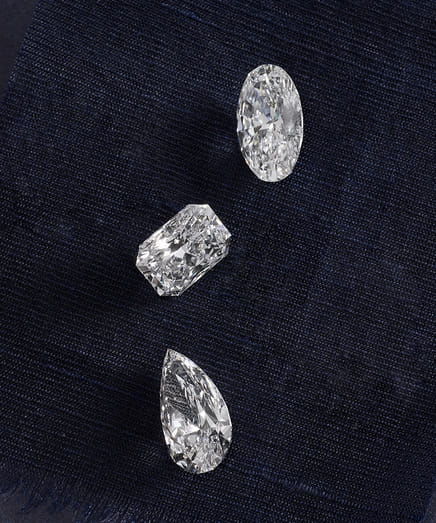
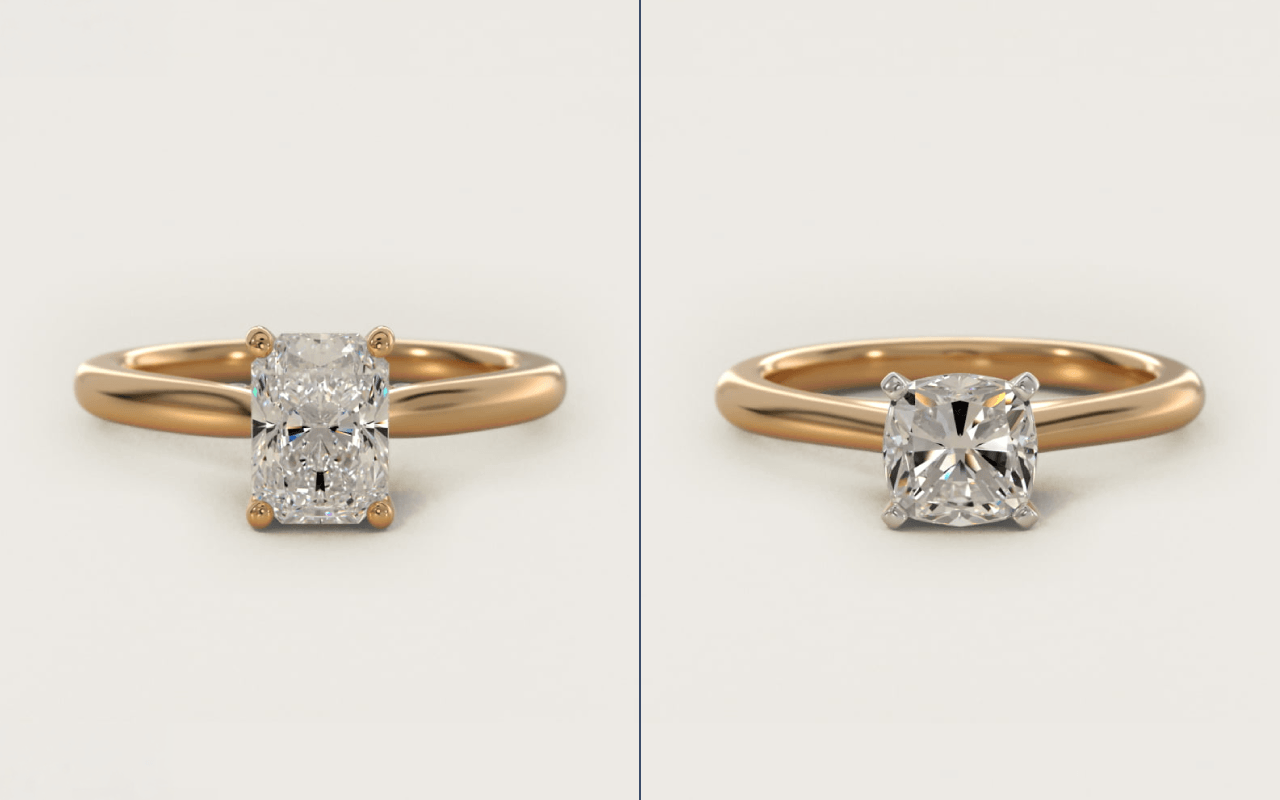
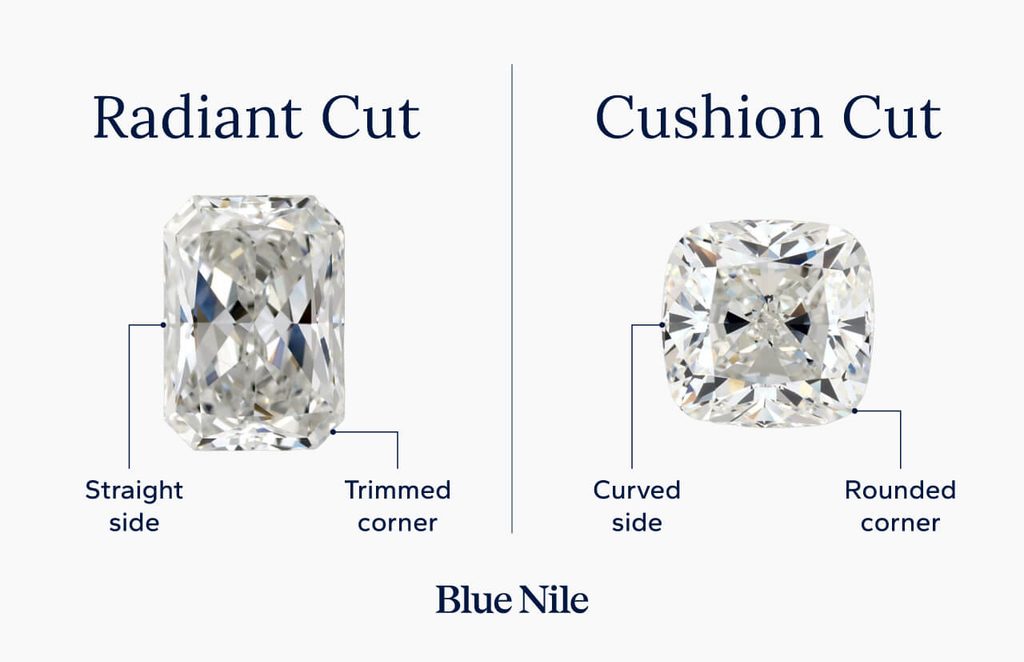
- Radiant cuts have straight sides and trimmed corners; cushions have softer, rounded edges.
- Both cuts’ brilliance varies with proportions and facet pattern.
- Face-up sizes are comparable, but individual measurements matter.
- Both come in elongated shapes, and prices often overlap for comparable diamonds.
A radiant’s crisp edges and a cushion’s soft curves come from a few key structural differences.
These small details can make a big difference in the diamond that catches your eye. Both cuts come in square or elongated shapes, but each has a distinct character.
Radiant cuts pair straight sides with beveled corners for an angular look, while cushion cuts feature rounded corners and gently curved sides.
This radiant vs cushion cut guide compares appearance, price and the 4Cs of diamonds, with practical tips on what to look for in each cut. You’ll see which differences matter most to you, so you can find a diamond that suits your style and budget.
What’s the Difference Between Radiant vs. Cushion Cut Diamonds?
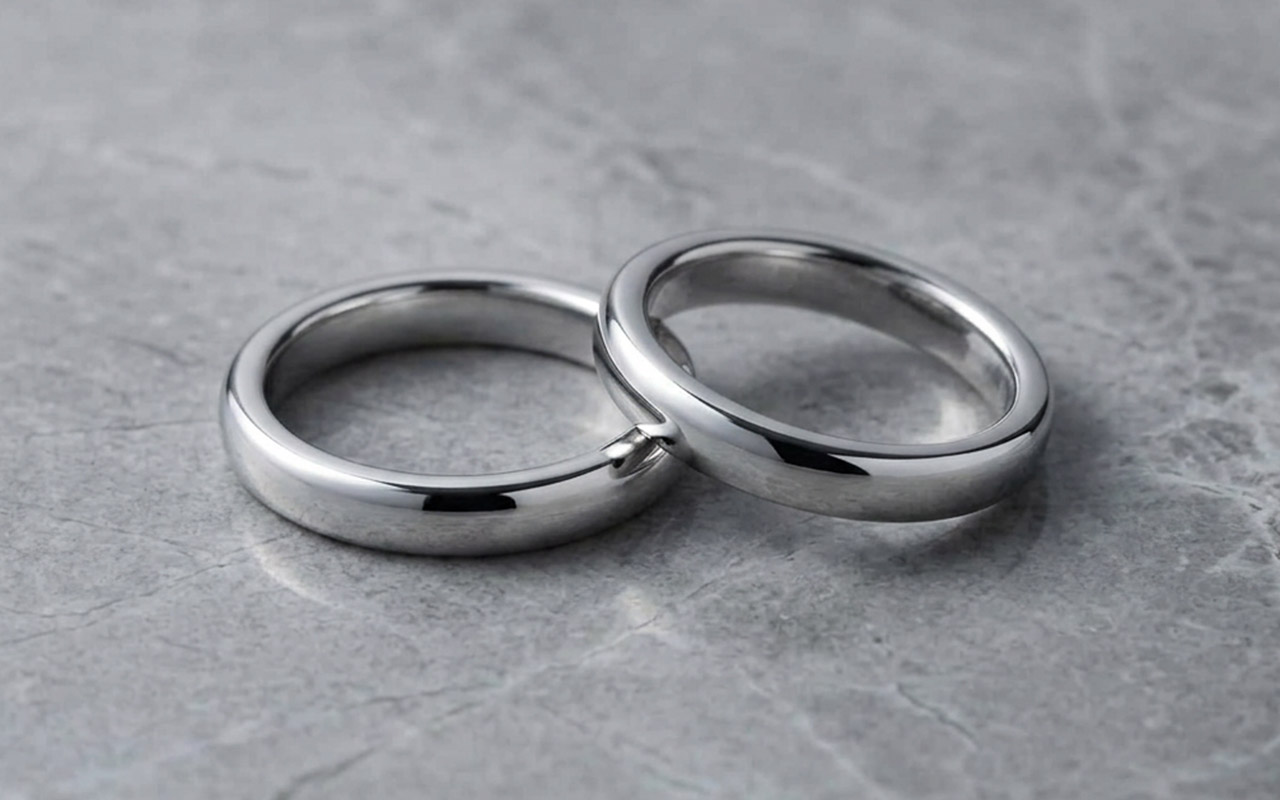
When radiant and cushion cut diamonds are viewed side by side, their differences become clearer. Compare their outlines, brilliance and face-up size, then consider how each would look alongside a gemstone wedding ring if you’re planning a set.
Since their prices often overlap, diamond origin, the 4Cs and individual proportions have more influence on cost than shape alone.
| Radiant Cut | Cushion Cut | |
|---|---|---|
| Corners / Shape | Square, rectangular or elongated with straight sides and trimmed corners | Square or elongated with curved sides and rounded corners |
| Facet Count | Typically 70 | Typically 58–70, depending on the faceting style |
| Brilliance Style | Modified brilliant; light return varies with proportions and faceting | Brilliant, modified brilliant or hybrid; ranges from broad flashes to a finer crushed-ice effect |
| Face-Up Size (Same Carat) | Varies with proportions; elongated stones may create more visual length | Often comparable to radiant; deeper stones may appear slightly smaller |
| Best-Paired Settings | Solitaire, halo, bezel, and three-stone designs | Halo, solitaire, pavé, and vintage-inspired designs |
| Price Considerations | Compare dimensions and depth at similar 4Cs; a deeper stone may provide less face-up size for the price | Facet patterns vary widely; shoppers should compare appearance at similar grades |
Neither shape has a consistent price advantage because origin, the 4Cs and individual quality affect cost. Both rank 10 on the Mohs Scale of Hardness. Cushions have less-exposed rounded corners, while radiants benefit from settings that protect their trimmed corners.
What Is a Radiant Cut?
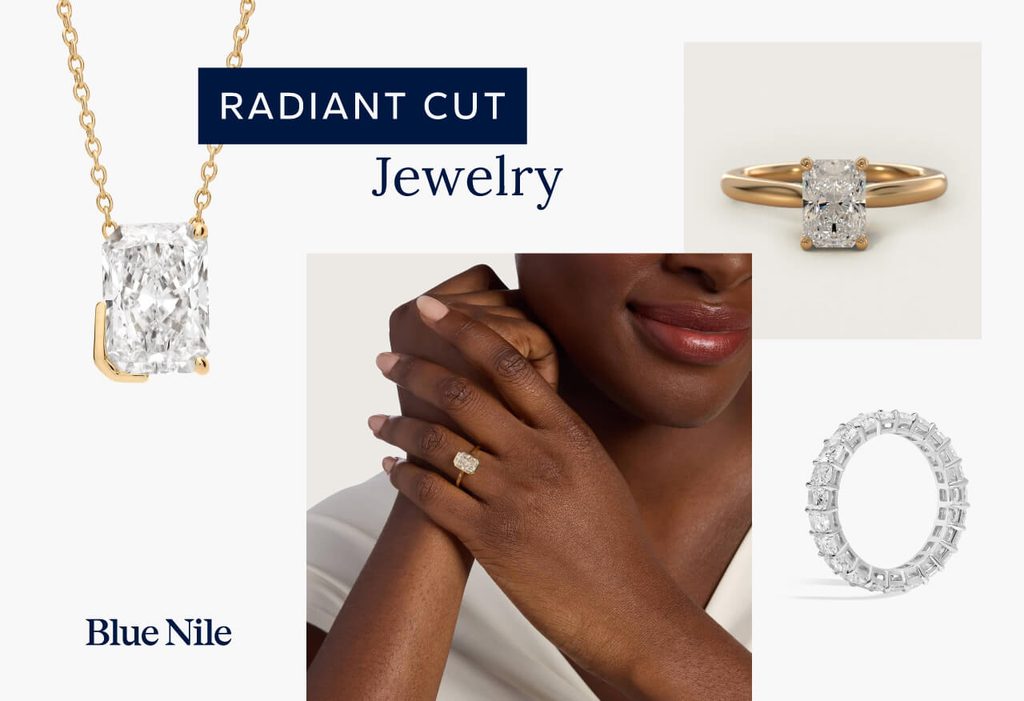
A radiant cut diamond is a square or rectangular modified brilliant cut with straight sides and trimmed corners. Its faceting produces lively light return within a clean, geometric outline.
What is a Cushion Cut?
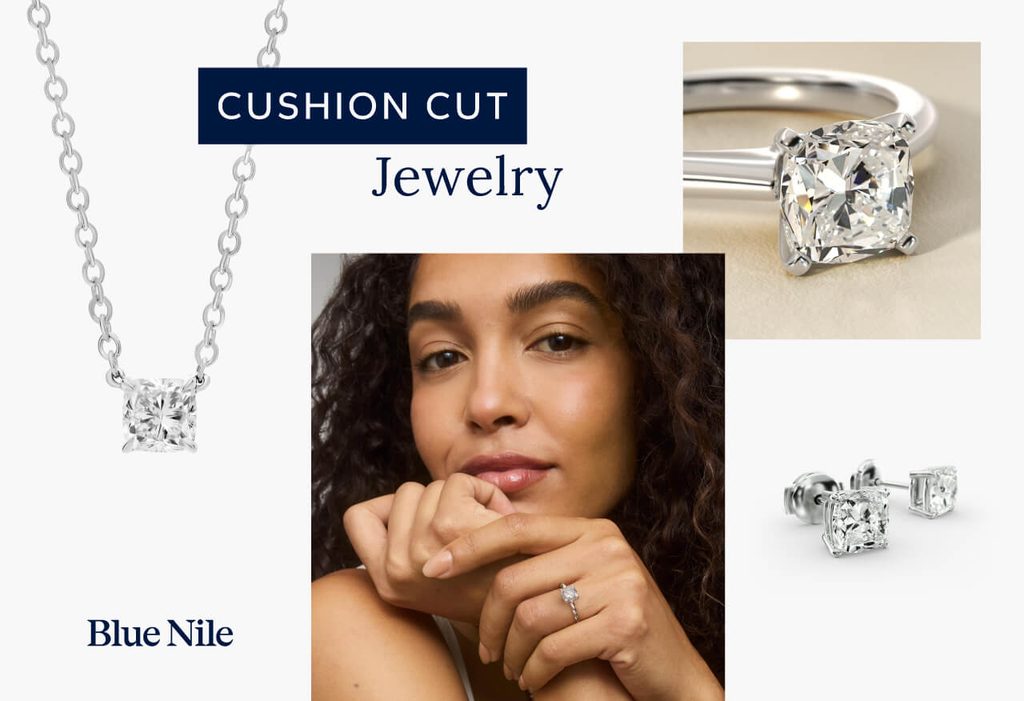
A cushion cut diamond combines a square or elongated shape with rounded corners and curved sides. Its facet pattern can produce broad flashes or a crushed-ice appearance.
Elongated Cushion vs. Radiant Cut
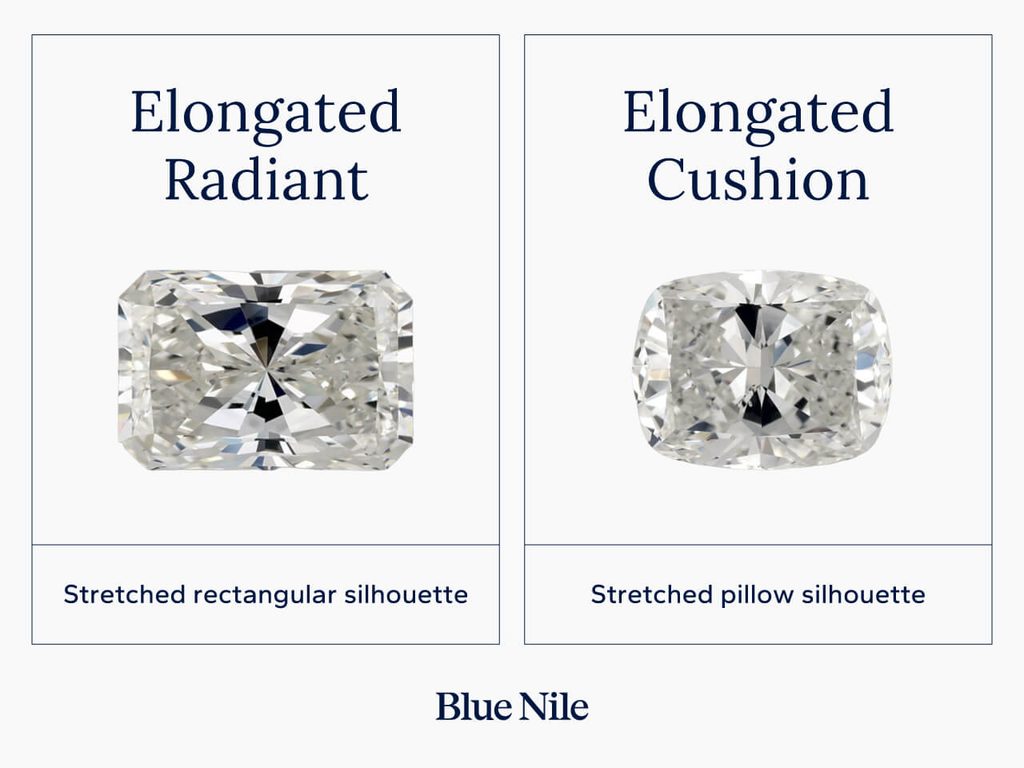
Elongated cushion and radiant cuts are worth comparing separately because their proportions influence how each looks on the hand. As the length-to-width ratio increases, both cuts move from a near-square outline toward a rectangular silhouette. The main differences:
- Elongated cushion cuts: Longer proportions stretch the pillow-like silhouette. Rounded corners and straighter sides distinguish an elongated cushion from an oval.
- Elongated radiant cuts: The diamond retains straight sides and trimmed corners. A longer silhouette lends crisp, geometric looks to elongated, radiant cut engagement rings.


How to Choose Between a Radiant and Cushion Cut Diamond
When comparing cushion vs radiant cut diamonds, there is no objectively better choice. Current engagement ring trends can provide inspiration, but personal preference should guide the decision.
Follow these steps to compare both cuts and find your preferred fit.
- Choose an outline. Cushions have softer curves, while radiants have straight sides and trimmed corners.
- Compare proportions on the hand. View square and elongated examples. Check face-up measurements instead of relying on carat weight alone.
- Consider the full ring. Make sure the setting highlights the shape and protects the diamond. Think ahead to choosing a wedding ring, since the setting can affect how closely the two rings sit.
- Compare similar diamonds. Keep origin and the 4Cs consistent. Then compare measurements, faceting and price.
| Cushion Cut | Radiant Cut | |
| Aesthetic preference | Soft outline with classic or vintage-inspired appeal | Crisp, geometric outline with a contemporary feel |
| Hand and finger shape | Softer appearance; compare square and elongated ratios on the hand | More defined appearance; compare square and elongated ratios on the hand |
| Best-paired settings | Solitaire, halo and vintage-inspired settings | Solitaire, pavé and three-stone settings with secure corner protection |
| Budget flexibility (4Cs) | Prices often overlap with radiants; compare origin and the 4Cs | Prices often overlap with cushions; compare origin and the 4Cs |
Two Shapes, One Confident Choice
The contrast between soft curves and crisp angles defines cushion vs. radiant cut diamonds, while each stone’s proportions and 4Cs influence its appearance and price. After selecting a center stone, details such as engagement ring engraving can add a personal touch.
Browse Blue Nile’s cushion cut engagement rings and radiant cut engagement rings to compare both shapes in different settings. Use filters to explore different metals, setting styles, diamond origins and prices. Blue Nile’s diamond experts are also available to help you evaluate individual options and find the perfect fit.
Frequently Asked Questions
The best place to buy diamonds is a reputable jeweler that provides independent grading reports, clear specifications and transparent customer policies. Blue Nile offers natural and lab-grown diamonds across many cuts and price points, including cushion shapes and radiant lab-grown diamond options.
No, when origin and the 4Cs are comparable, prices often overlap. Proportions, faceting and inventory can still affect cost.
Neither shape always has greater brilliance—the white light a diamond returns to your eye that contributes to what we perceive as “sparkle.”
Each stone’s proportions and facet pattern influence its brightness, and both cuts can display broad flashes or a finer crushed-ice effect. Compare videos under similar lighting before choosing.
Face-up appearance depends on length, width and depth. Compare millimeter measurements instead of carat weight alone.
No. In an elongated cushion cut vs radiant cut comparison, equal carat weight does not guarantee equal dimensions. Length, width and depth vary by stone, so compare face-up measurements and videos side by side.


Share




 Live Chat
 +1‑800‑242‑2728
 Email Us

