










Choosing a wedding ring is one of the few times you’ll be deciding on an accessory for everyday wear. Comfort, durability and personal taste matter more here than trends or first impressions.
But before getting into details, it helps to understand what a wedding ring is and how it differs from an engagement ring:
- Engagement rings typically mark a proposal and often feature a center stone.
- Wedding rings are exchanged during the ceremony and are designed for long-term, everyday wear.
Our guide details how to choose a wedding ring with clear steps to help you narrow your options—without overthinking the process.
1. Establish a Budget
Wedding rings often cost less than engagement rings, but pricing still varies widely. Metal choice, band width and diamond coverage all influence cost. A wider band uses more material. Full diamond bands cost more than partial ones.
Instead of chasing size or engagement ring trends, focus on longevity. A ring that fits your routine and feels good every day usually delivers more value than something chosen for impact alone. This approach makes it easier to confidently buy wedding ring styles you will still enjoy years later.
2. Consider Your Lifestyle
The best wedding ring designs for your lifestyle are influenced by your daily habits. For example, durability and low maintenance matter more than decorative details if your hands are often busy with workouts, childcare, tools or frequent hand washing. This is why many people who prefer engagement rings for active lifestyles also lean toward simpler wedding rings.
For hands-on routines, simpler wedding ring options, like ones with plain metal bands, bezel-set diamonds, or flatter profiles, tend to hold up better over time. The main reason is that they’re less likely to snag, scratch or need frequent repairs.
More intricate designs still have a place, but they work best when your day-to-day allows for a little extra care.
3. Assess Durability
A metal’s durability is how well it holds up to daily wear, pressure and exposure over time without losing its structural integrity over time. Wedding rings usually see more wear than engagement rings because they stay on during routine tasks.
Metals like platinum and 14k gold are popular because they balance longevity with comfort. Protective ring settings also play a role. Channels and bezels, for example, shield stones better than raised prongs. When comparing different wedding rings, these construction details often matter more than appearance alone.
4. Don’t Underestimate Comfort and Fit
Comfort-fit interiors are designed with long wear in mind. They reduce pressure and make wider bands easier to live with. The width also affects how a ring feels, with slimmer bands feeling lighter and wider bands sometimes needing time to adjust to.
Trying rings on matters more than measurements on paper. Two rings of the same size can feel completely different. This step often clarifies how to pick a wedding ring faster than a ring sizer and conversion chart.
5. Set Your Expectations for Maintenance and Care
All rings show wear eventually. Scratches, surface marks and patina are normal signs of use. White gold requires periodic maintenance to maintain its bright finish. Platinum keeps its color but develops a soft, matte surface over time.
Simple designs are often easier to care for. Fewer stones mean fewer cleanings and less risk of damage. Knowing this upfront helps you choose a wedding ring that fits both your taste and your tolerance for upkeep.
6. Choose the Right Metal
Metal affects appearance, weight, maintenance and longevity. Below is a high-level comparison to help narrow your choices.
| Best for | Durability | Color over time | Weight | |
| White Gold | Bright white look | Durable with care | Needs replating | Medium |
| Yellow Gold | Classic appeal | Durable | Stable | Medium |
| Rose Gold | Warm tone | Durable | Stable | Medium |
| Platinum | Daily wear | Extremely durable | Naturally white | Heavy |
| 14k Gold | Strength and value | Very durable | Stable | Medium |
| 18k Gold | Rich color | Softer | Stable | Medium |
| Sterling Silver | Occasional wear | Soft | Tarnishes | Light |
| Palladium | Platinum alternative | Durable | Naturally white | Light |
| Titanium | Active routines | Extremely durable | Stable | Very light |
When deciding between platinum vs. white gold, the choice often comes down to maintenance and weight. Platinum stays white without replating. White gold is lighter but needs periodic care.
7. Decide If You Want Diamonds
Some people know immediately they want diamonds or a plain band. The key question is how much maintenance you are comfortable with.
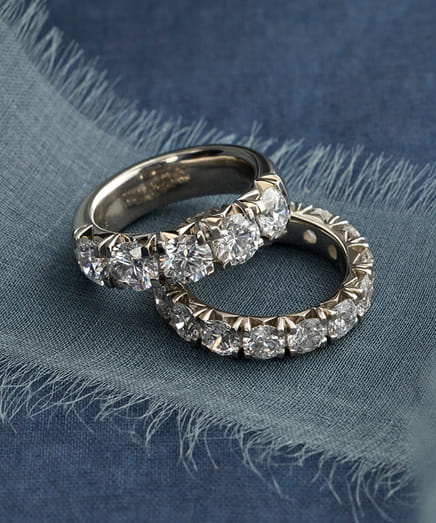
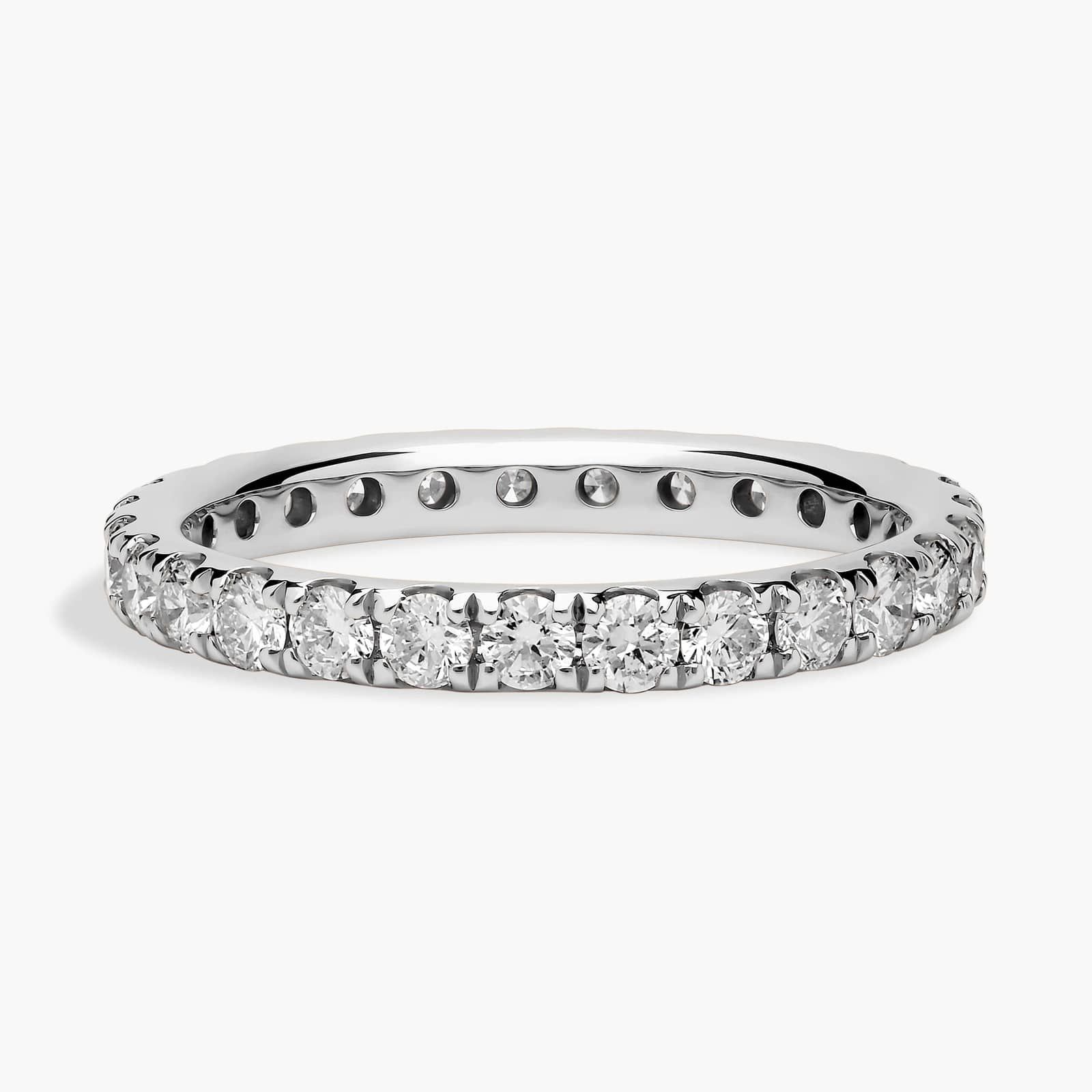
Diamond bands offer sparkle but require more care. Full eternity bands are non-resizable rings and cannot be adjusted later. Half-eternity bands leave room to resize a ring if needed. Both options work well when chosen with long-term wear in mind.
Diamond clarity is another factor worth understanding:
- VVS diamond: Has extremely small inclusions that are difficult to detect even under magnification. This clarity level is often chosen for those who want the highest visual purity, though the difference is rarely noticeable in smaller stones used in wedding bands.
- VS1 diamond: Contains very small inclusions that are hard to see under magnification and not visible to the naked eye. VS1 offers a strong balance between appearance and value and is a popular choice for diamond wedding rings.
- VS2 diamond: Has slightly more inclusions than VS1, but they are still typically eye-clean. VS2 diamonds are widely chosen for wedding bands because they look the same in everyday wear while offering better value.
Many people choose VS1 or VS2 clarity for wedding bands because the diamonds are smaller and clarity differences are rarely visible. These guidelines apply whether you are selecting a wedding band or evaluating the best stones for engagement rings.
8. Compare Stone Shapes
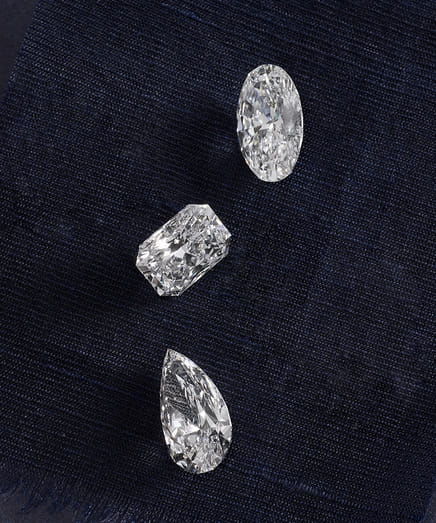
Stone selection affects how a ring looks on the hand, how exposed its edges are and how easily it pairs with a wedding band. Some stones feel softer and more forgiving for everyday wear. Others create a sharper, more architectural look that works best with specific band styles.
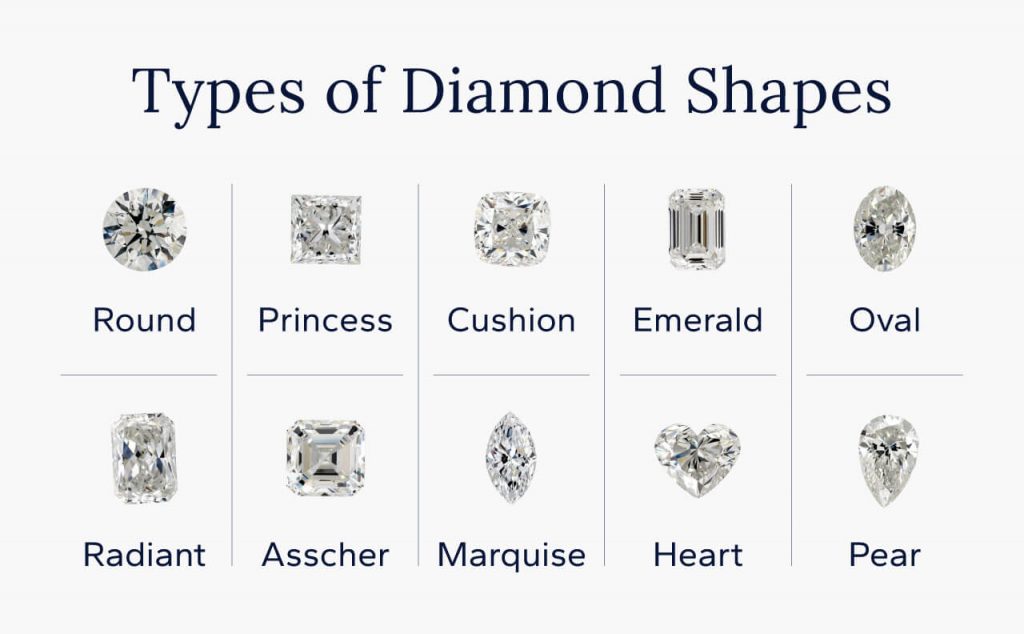
Use the table below to compare common stone options and see how they typically wear and pair.
| Look | Edge style | How it wears | Recommended pairing | |
| Round | Classic and balanced | Smooth edges | Even wear with fewer pressure points | Straight or slightly curved bands |
| Pear | Elongated and directional | One pointed end | Requires protection at the tip | V-style or contoured bands |
| Princess | Clean and modern | Sharp corners | Corners can show wear over time | Channel-set or protective bands |
| Asscher | Structured and bold | Step-cut edges | Heavier presence on the hand | Wider metal bands |
| Cushion | Soft and traditional | Rounded corners | Comfortable for daily wear | Bezel or low-profile bands |
| Heart | Symbolic and distinct | Curved with cleft | More visual presence | Slim, simple bands |
| Oval | Elongated and elegant | Smooth edges | Flattering and balanced | Curved or contoured bands |
| Radiant | Bright and modern | Angular edges | High light return, needs secure setting | Structured bands |
| Emerald | Sleek and minimal | Long step-cut edges | Emphasizes clarity over sparkle | Flat or cigar-style bands |
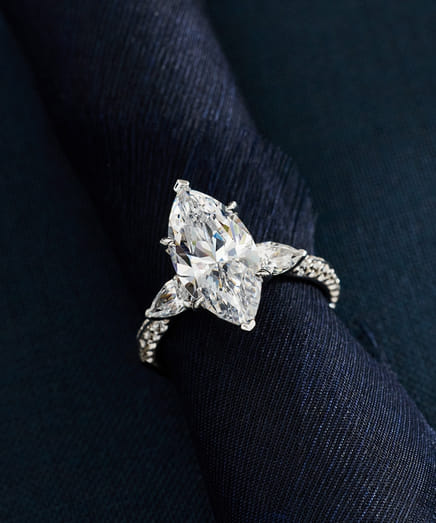
| Marquise | Dramatic and elongated | Two pointed ends | Tips need protection | Chevron or V-style bands |
This comparison is especially helpful when narrowing down the best stones for engagement rings and deciding how a wedding band will sit alongside them without gaps or friction.
9. Pick Your Profile, Width and Comfort
Profile refers to how a band is finished across its surface and interior. Flatter styles feel modern. Rounded interiors feel softer during wear. Comfort-fit designs are especially helpful for wider bands.
Common widths range from slim and understated to bold and substantial. The right balance depends on hand size, lifestyle and how noticeable you want the ring to feel. This decision plays a big role in defining your wedding ring style.
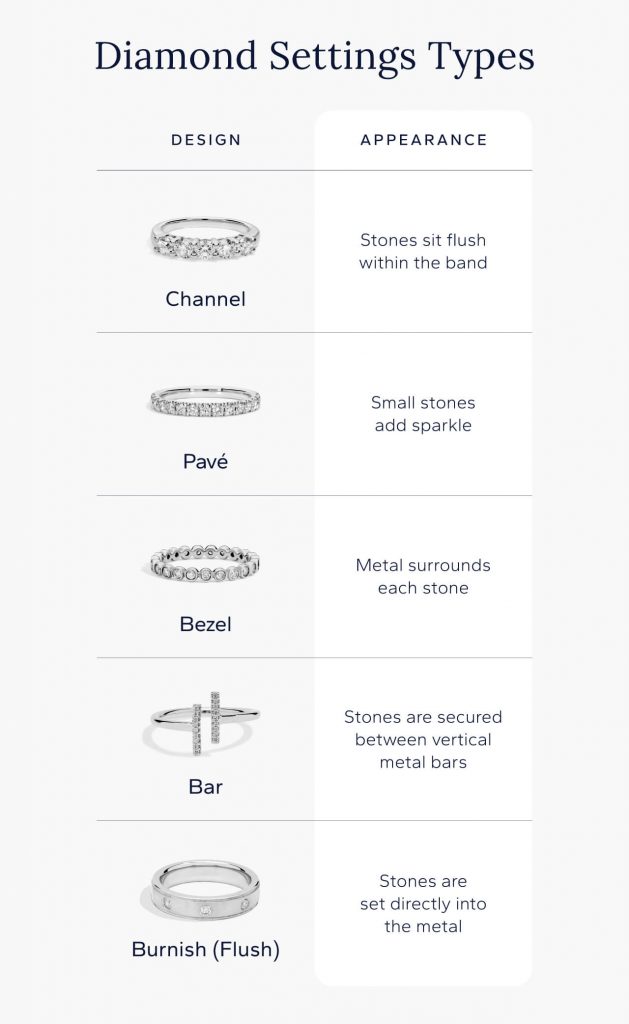
10. Determine Your Design and Stone Settings
Design affects durability and maintenance just as much as appearance. Secure settings protect stones and reduce long-term repairs.
- Channel: Stones sit flush within the band for protection and a smooth feel.
- Pavé: Small stones add sparkle but need more frequent checks.
- Bezel: Metal surrounds each stone for strong protection.
- Bar: Stones are secured between vertical metal bars instead of prongs. This creates a clean, structured look while offering more protection than traditional prongs.
- Burnish (Flush): Stones are set directly into the metal so the surface remains nearly even.
This is also where halo vs. hidden halo rings come into play. Halo rings surround the center stone with smaller diamonds to increase brilliance, while hidden halos add subtle detail without changing how the ring wears.
Types of Wedding Rings and Styles to Know
There are many kinds of wedding rings available today, each serving different preferences and needs. Understanding these wedding ring types makes comparison easier:
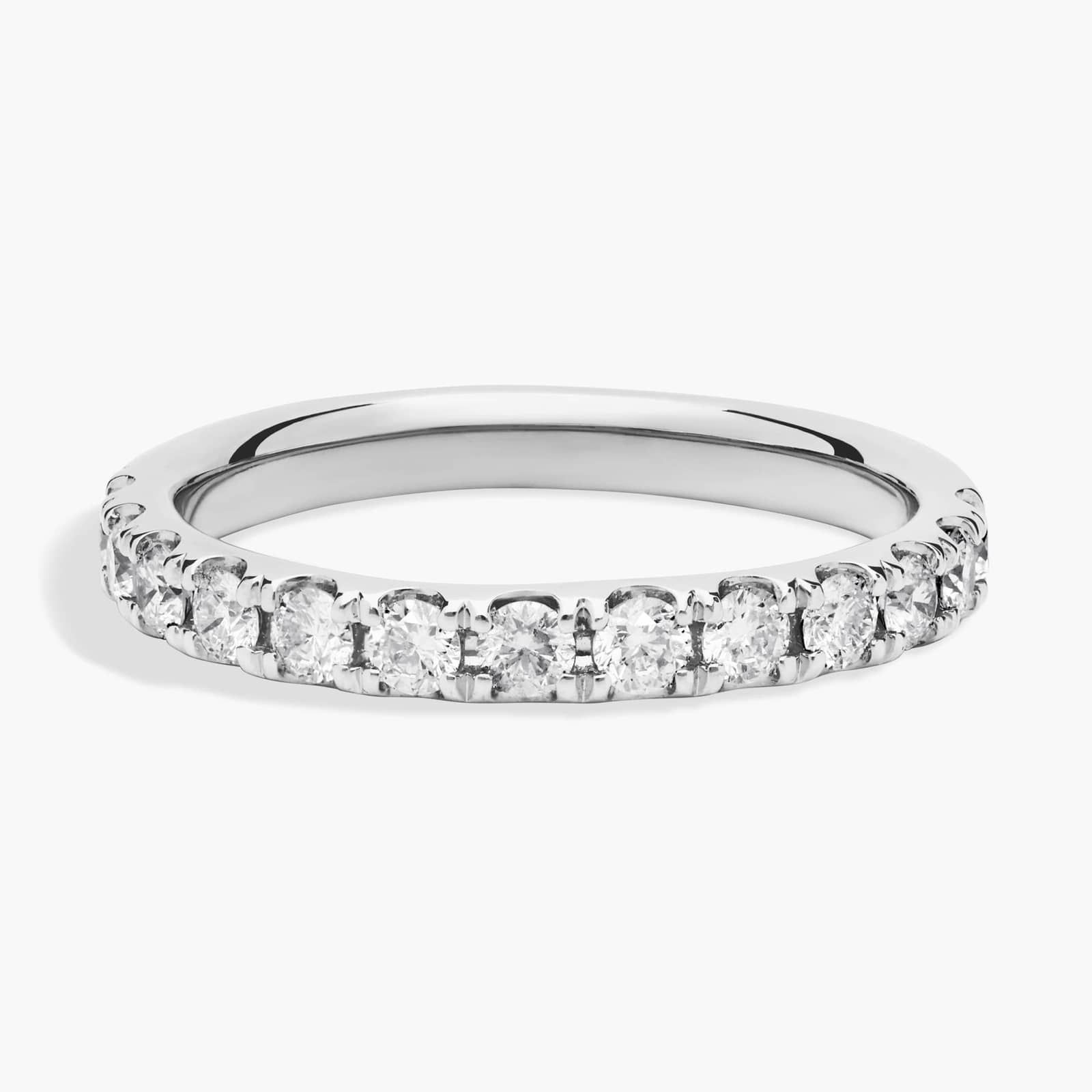
- Diamond: Accent diamonds across part or all of the band
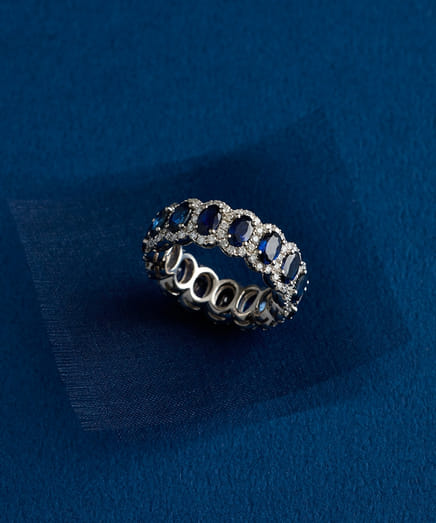
- Eternity: Stones around the full circumference
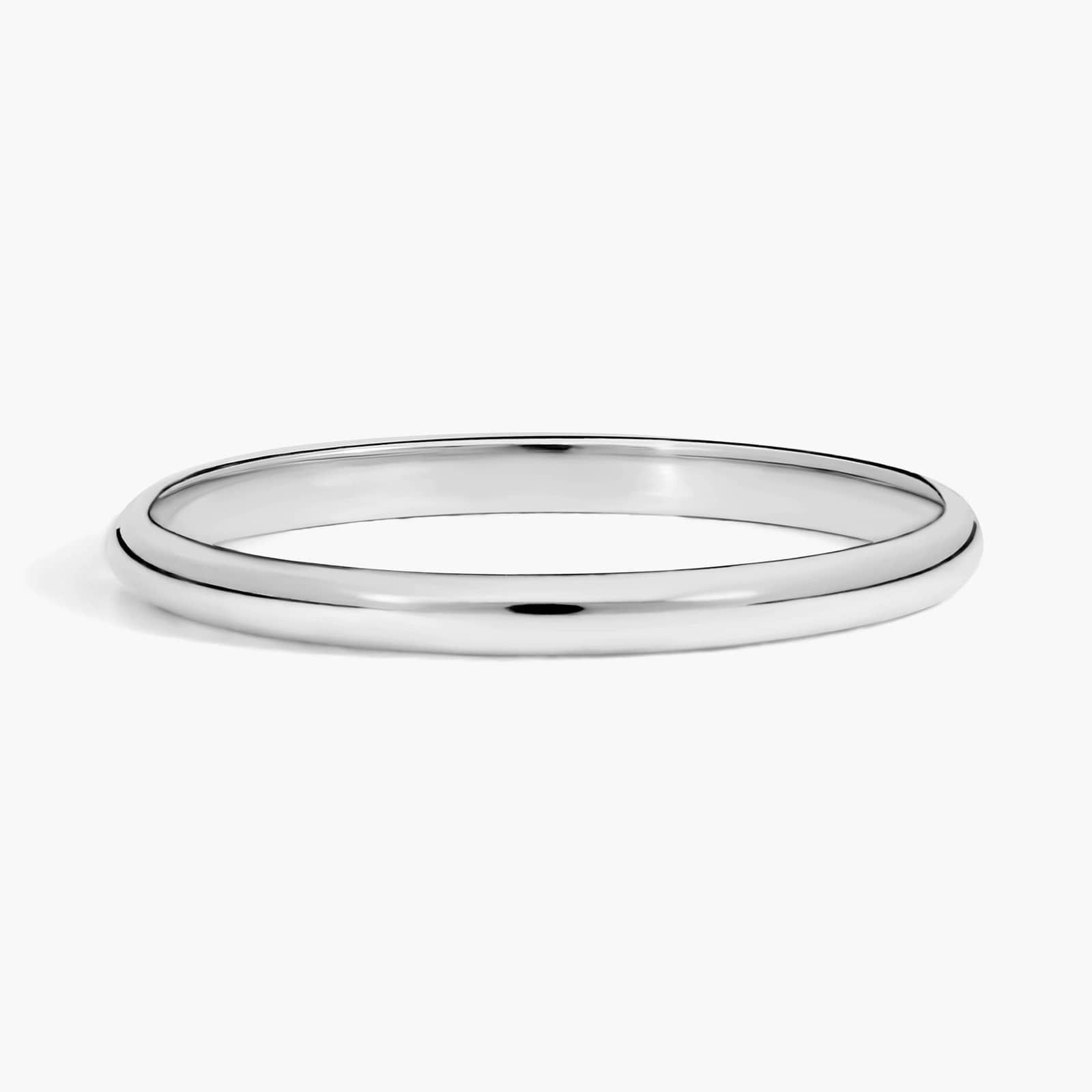
- Classic: Plain metal with timeless appeal
- Vintage-Inspired: Engraving and milgrain details
- Curved: Designed to sit flush with engagement rings
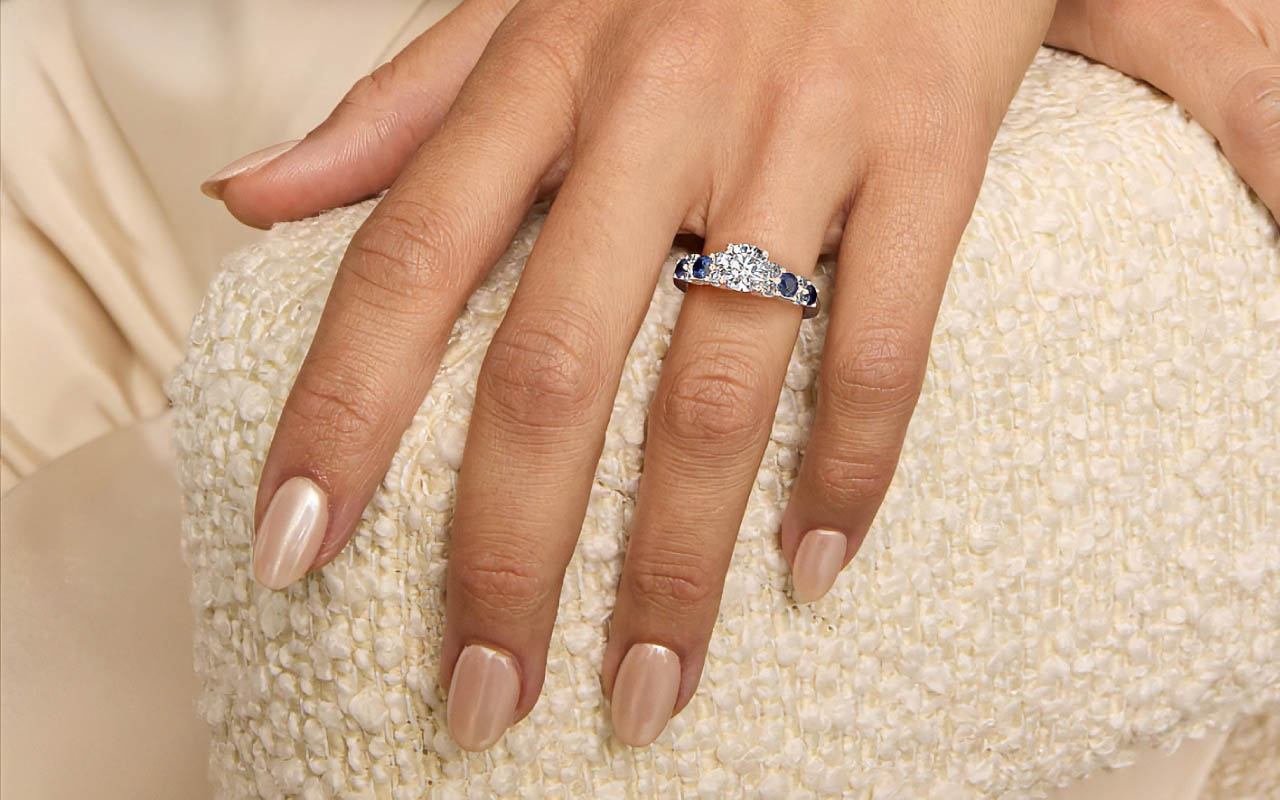
- Gemstone: Feature sapphires or alternative engagement stones
- Infinity: Interwoven designs with symbolic meaning
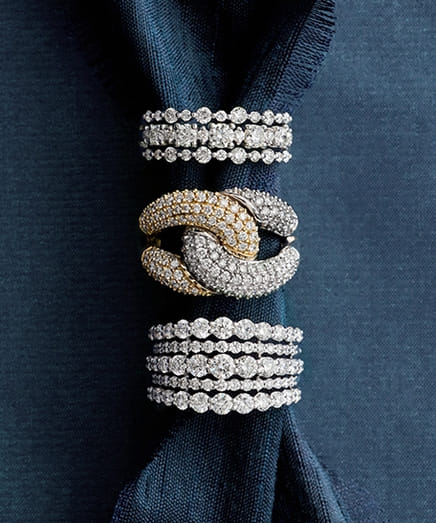
- Stackable: Slim bands meant for layering
- Five-Stone: Balanced sparkle with flexibility
These different types of wedding rings allow for personalization without sacrificing wearability.
How to Choose a Wedding Band That Works With an Engagement Ring
Fit matters more than visual matching. Some engagement rings allow a straight band to sit flush. Others require a contoured option to avoid gaps.
Metal consistency and band height affect comfort when you wear rings together. This practical approach simplifies how to choose a wedding band that works as a set.
When to Buy a Wedding Ring
Timing matters more than most people expect. Most couples start shopping three to four months before the ceremony. This allows time for production, delivery and adjustments.
Planning ahead reduces stress and helps avoid rushed decisions. This is the safest window for deciding when to buy wedding bands.
Buy a Wedding Ring You’ll Love at Blue Nile
Choosing a wedding ring is about finding something that feels right for everyday life, not just the ceremony. When you focus on comfort, durability and personal preference, the decision becomes clearer and far less overwhelming.
In addition to this wedding ring guide, Blue Nile offers a service that makes the shopping process easier. Flexible returns, virtual jewelry consultations and access to in-person showrooms give you multiple ways to explore styles, compare details and pick the wedding ring style that fits you best.
Frequently Asked Questions
Traditionally, a wedding ring is worn on the fourth finger of the left hand. Customs vary by culture and region, and some people choose to wear it on the right hand based on tradition or comfort.
You should spend an amount that fits your budget and priorities. Many people choose to spend less than they did on an engagement ring and focus instead on comfort and durability.
The three-month rule suggests purchasing rings at least three months before the wedding. This allows time for production, shipping, engraving and any necessary sizing changes.
The five Cs are color, carat, clarity, cut and certification. Certification verifies diamond quality and grading standards, which is especially important when evaluating clarity levels like a VVS diamond.
A two-carat diamond is considered large by many standards, but size is subjective. Hand size, setting and personal taste matter more than a number.
Start with lifestyle, comfort and metal preference. Then narrow options based on maintenance expectations and how the ring will be worn daily.


Share





 Live Chat
 +1‑800‑242‑2728
 Email Us

