Key Takeaways:
- To choose a loose diamond for an engagement ring, evaluate the 4Cs: cut, color, clarity and carat weight to balance appearance and value.
- Starting with a loose diamond allows you to compare stones side by side and see how small differences affect appearance and price.
- Certification and careful inspection help ensure you select a diamond with confidence.
An engagement ring marks one of life’s most meaningful milestones.
Many buyers start with a loose diamond so they can compare stones and choose the one that best fits their priorities before selecting a setting. With so many details to consider, learning how to choose a loose diamond for engagement ring designs can make the process easier to navigate.
This guide walks through the key steps, from setting a budget and choosing a shape to understanding the 4Cs, reviewing certification and inspecting a diamond before purchase.
What Is a Loose Diamond?
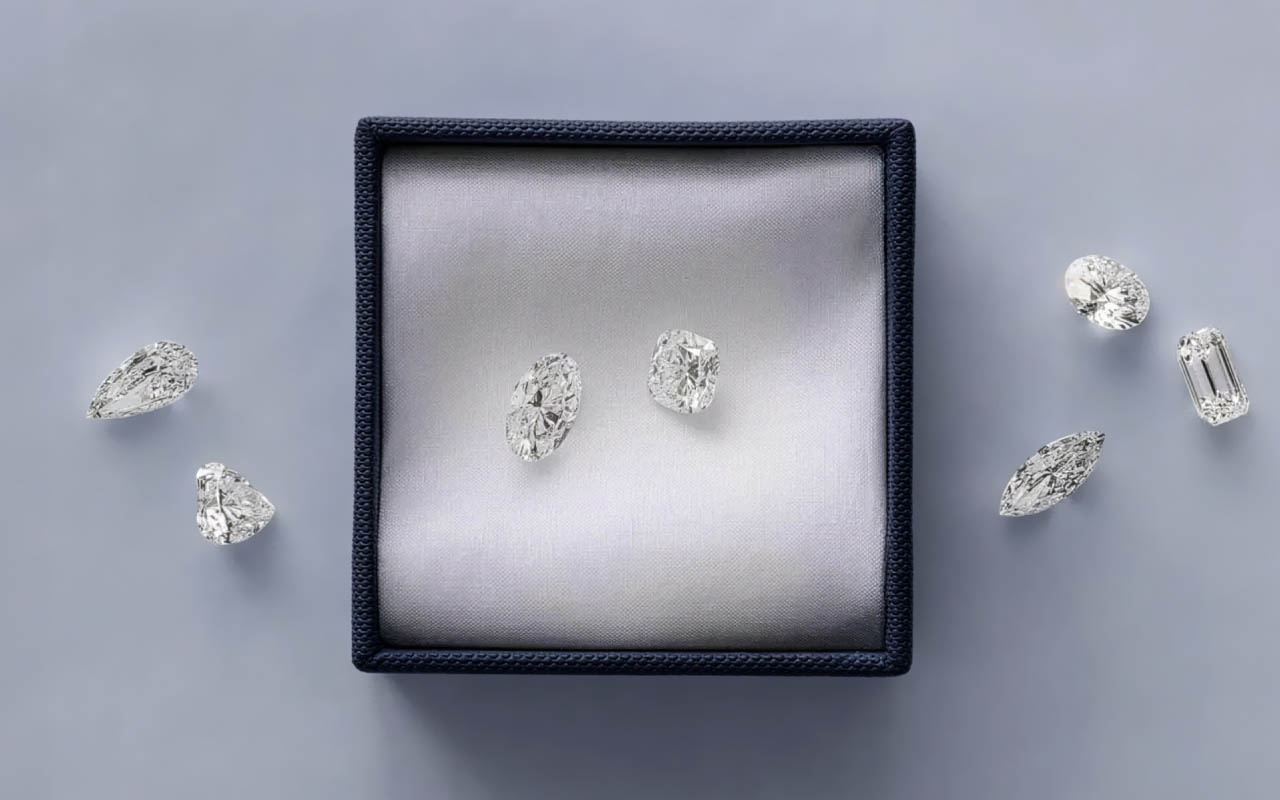
A loose diamond is a diamond that has been cut and polished but has not yet been mounted in a piece of jewelry. Many engagement rings begin with a loose diamond so buyers can evaluate the stone before choosing a setting.
Viewing loose diamonds makes it easier to compare different stones and see their full proportions without prongs or metal covering parts of the diamond. This approach also allows you to pair the stone with a setting that fits your style and budget.
| Loose Diamond | Preset Engagement Ring |
| Sold as an individual diamond | Diamond already mounted in a ring |
| Allows side-by-side comparison of cut, color, clarity and carat weight | Limited ability to compare individual stones |
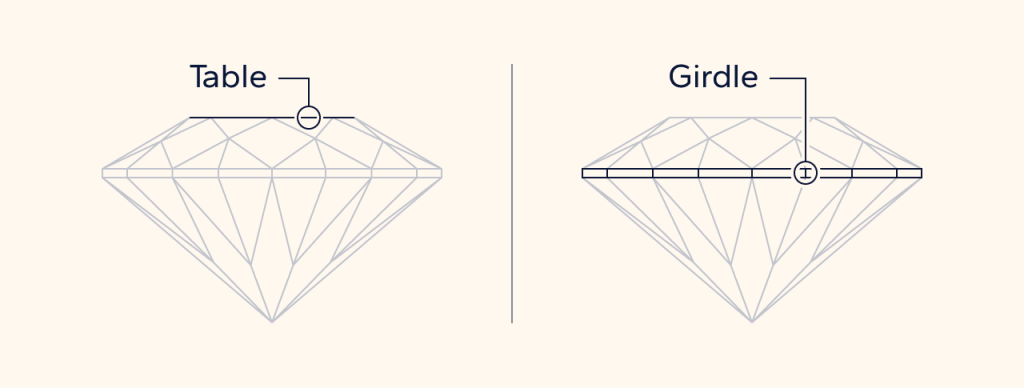
| Full visibility of the diamond’s table, girdle and pavilion | Some areas of the diamond may be hidden by prongs |
| Can be paired with a variety of ring settings | Design is predetermined |
Step 1. Set Your Budget
Before comparing loose diamonds, decide how much you want to spend on the engagement ring as a whole. Because the diamond is the centerpiece, it typically accounts for most of the cost. A common guideline suggests roughly 80% of the ring budget may go toward the center stone, with the remainder covering the setting and metal.
Settings vary widely depending on metal and design, ranging from a few hundred dollars for a simple solitaire to several thousand for intricate styles. While traditional advice once suggested spending several months’ income on an engagement ring, most buyers today choose a budget that reflects their priorities and financial comfort.
2. Choose a Shape
Choosing a diamond shape helps determine the engagement ring’s overall look. Shape affects how large a diamond appears, how much sparkle it produces and how it sits on the hand.
Although shape and cut are sometimes mistaken for the same thing, the two terms describe different characteristics. Shape refers to the outline of the diamond, while cut describes how its facets are arranged to reflect light. For example, both radiant and emerald cut diamonds are rectangular, but their facet patterns create very different visual effects.
Popular shapes include:
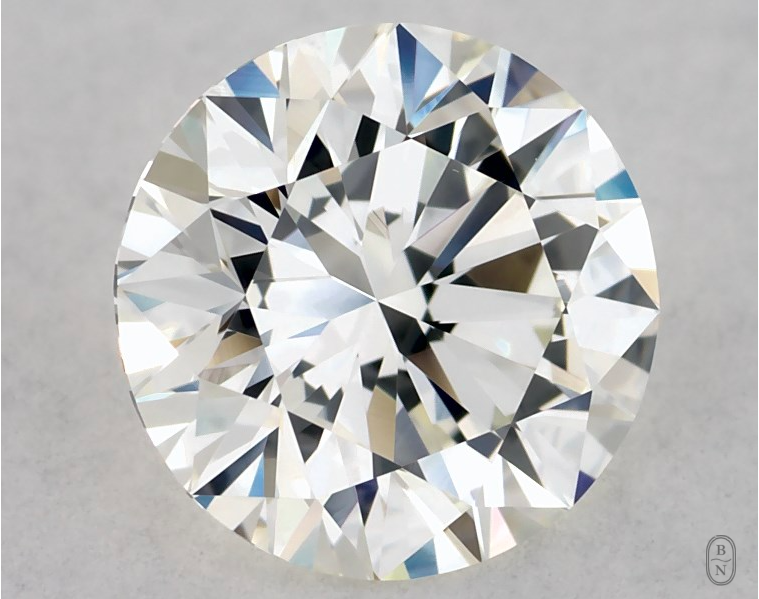
- Round: A perfectly circular outline that creates a classic, balanced look. Round diamonds typically use brilliant faceting designed to maximize light return and sparkle.
- Elongated shapes (oval, pear, marquise): Longer outlines that can create a slimming effect on the hand and may appear larger than other diamonds of the same carat weight. These shapes typically use brilliant-style faceting.
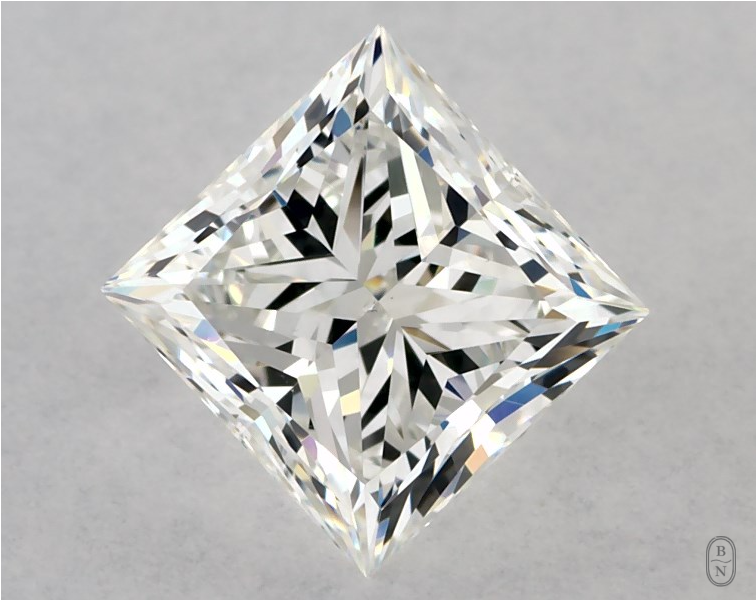
- Square or near square shapes (princess, cushion): These shapes create a balanced, geometric look. Princess diamonds typically use brilliant faceting, while cushion diamonds often feature modified brilliant facets and softly rounded corners, giving them a vintage look.
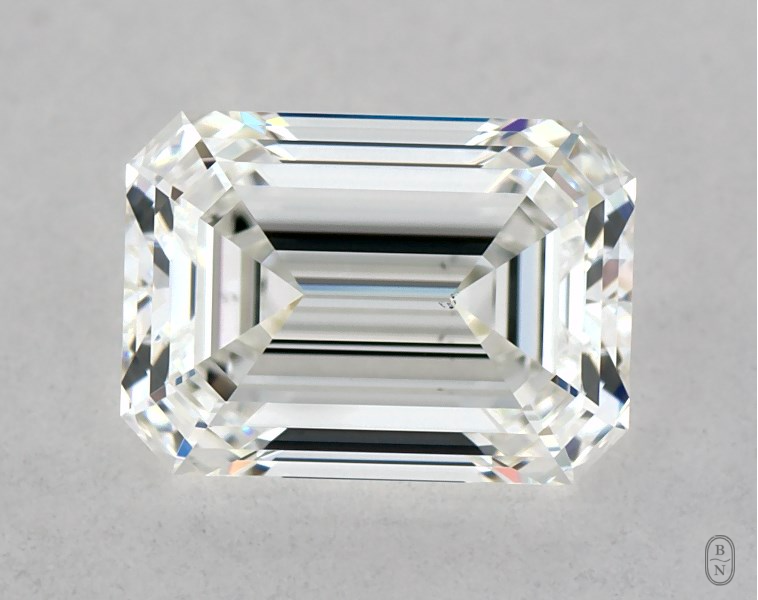
- Rectangular shapes (radiant, emerald): Clean, elongated outlines that create a structured look. Radiant diamonds use modified brilliant facets, while emerald diamonds use step-cut facets that create a distinctive hall-of-mirrors effect.
- Asscher: A square outline with clipped corners and step-cut facets that emphasize symmetry and clarity.
3. Familiarize Yourself With the 4Cs
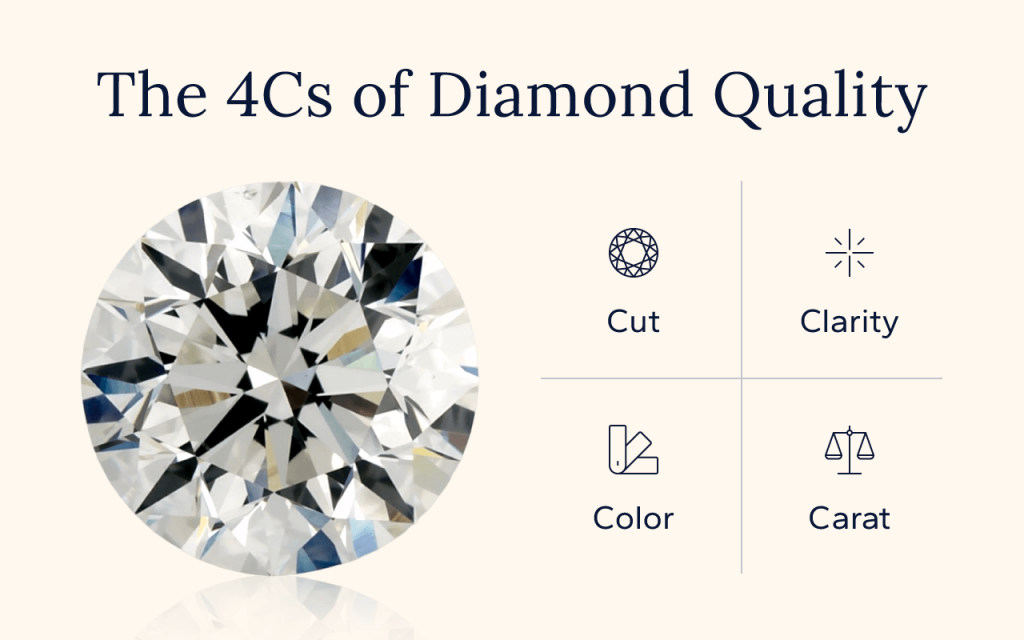
When choosing a loose diamond, you’ll evaluate cut, color, clarity, and carat weight, collectively known as the 4Cs. These grading factors are used to assess a diamond’s quality and overall appearance. Each of these factors plays a role in balancing size, sparkle and value when comparing diamonds:
- Cut: Describes how well a diamond’s facets interact with light. A well-cut diamond reflects light efficiently, creating the sparkle and brilliance many buyers look for in an engagement ring.
- Color: Refers to the degree of color a diamond shows when viewed under controlled lighting. Most diamonds fall within the near-colorless range, where small differences in color may be difficult to detect once the stone is set.
- Clarity: Measures the presence of natural inclusions and surface characteristics. Many inclusions are microscopic, and some diamonds can appear clean to the unaided eye even if they have minor clarity characteristics, such as the differences between VS1 and VS2 clarity grades.
- Carat: Refers to a diamond’s weight, not its physical size. While larger diamonds typically cost more, proportions and shape can influence how large a diamond appears once set in a ring.
4. Establish Your Priorities
Once you understand the 4Cs, the next step is deciding which characteristics matter most to you. Because the 4Cs work together to determine both appearance and price, improving one factor often means adjusting another.
Many buyers prioritize sparkle, size or overall value depending on their preferences and budget. The examples below use GIA diamond grading standards to illustrate how different priorities can influence the characteristics you focus on when comparing diamonds.
| Priority | Key Diamond Characteristics | Range to Aim for: |
| Sparkle | Cut quality and faceting style that maximize light performance | Excellent/ Very Good Cut Grade |
| Value | Balanced color and clarity grades | G-H Color, VS-SI Clarity |
| Size | Carat weight | Around 0.90 carat |
5. Ensure Certification and Grading
Before purchasing a loose diamond, confirm that it has been evaluated by an independent gemological laboratory. Diamond grading reports provide a standardized assessment of the 4Cs, along with measurements and other characteristics that help buyers compare stones accurately. They can also help confirm that the gemstone is a genuine diamond.
Many buyers look for diamonds graded by respected labs such as the Gemological Institute of America (GIA) or the International Gemological Institute (IGI). GIA is widely known for its strict grading standards, while IGI frequently certifies many lab-grown diamonds.
When reviewing a GIA or IGI report, confirm that the report number matches the diamond. Many diamonds have the report number laser-inscribed on the girdle so a jeweler can verify the stone against the grading report.
Once you’ve chosen and certified your diamond, it’s worth knowing how to insure your engagement ring so your investment is protected from day one.
6. Inspect Carefully
Before making a final decision, take time to examine the diamond closely. Whether viewing a stone in person or online, careful inspection can help you identify visible inclusions and confirm that the diamond matches its grading report.
- View under different lighting: Diamonds can look different under different lighting conditions. If possible, examine the stone under both natural and indoor lighting to assess its performance.
- Ask for videos or 360° views: When shopping online, high-resolution images and rotating videos can help you see the diamond from multiple angles and check for visible characteristics.
- Use a loupe: Jewelers often use a 10× loupe to examine diamonds. This magnification can reveal inclusions and surface characteristics that are not visible to the naked eye.
- Check the table: Look straight down through the top of the diamond. Large dark inclusions in the center of the table may be more noticeable.
- Check the girdle: Inspect the edge of the diamond. A girdle that is too thin may be more vulnerable to chipping, while a very thick girdle can hide excess weight without improving appearance.
Benefits of Buying a Loose Diamond
Choosing a loose diamond allows buyers to evaluate the stone before it is mounted in a setting. For many shoppers planning to buy loose diamonds, this approach can make it easier to compare quality characteristics, understand how the diamond looks on its own and select a design that fits your preferences.
Buying a loose diamond also offers several practical advantages when selecting an engagement ring:
- Control over priorities: Selecting a loose diamond allows you to focus on the 4Cs that matter most to you. Buyers can balance factors like cut quality, color and carat weight to stay within their budget.
- Full visibility: Viewing a diamond before it is mounted allows you to see the entire stone, including the girdle and pavilion. This can make it easier to identify visible inclusions or other characteristics that might be hidden by prongs in a finished ring.
- Design freedom: Starting with a loose diamond allows you to pair almost any diamond shape with a wide range of engagement ring settings. This flexibility can make it easier to create a ring that reflects your personal style.
- Assessment accuracy: Evaluating a loose diamond makes it easier to observe how the stone handles light and whether it shows noticeable color.
Find Your Dream Diamond With Ease
Knowing how to choose a loose diamond for an engagement ring helps you narrow your options and focus on the qualities that matter most. Once you’ve defined your priorities, the next step is deciding where to buy loose diamonds.
Blue Nile offers a wide selection of loose diamonds that allows buyers to compare stones using consistent grading information. Its online tools let you filter and evaluate diamonds by the 4Cs so you can select a stone that fits your preferences and budget.
Frequently Asked Questions
The four diamond rule typically refers to the 4Cs: cut, color, clarity and carat weight, which are the main factors used to evaluate a diamond’s quality. These grading characteristics help buyers compare diamonds and understand how different stones balance sparkle and overall appearance.
The three-month rule is a traditional guideline suggesting an engagement ring should cost about three months’ income. This idea originated in mid-20th-century marketing campaigns, and many modern buyers now set their budgets based on personal priorities and financial comfort rather than on the idea of a fixed budget.
When learning how to choose a loose diamond for an engagement ring, focus on the 4Cs, confirm the stone is certified by a reputable gemological lab, and choose a shape that suits your style.
Reviewing the grading report and viewing the diamond in different lighting can help you better understand its appearance before purchasing.
Yes, a 2-carat diamond is generally considered large for an engagement ring. However, how large a diamond appears also depends on its shape, proportions and setting, since elongated shapes and certain settings can make a diamond look larger on the hand.
Many buyers choose to prioritize size slightly over clarity, as long as the diamond appears clean to the unaided eye. Minor inclusions are often microscopic, meaning a diamond can still look clear while allowing you to select a slightly larger stone.
In many cases, cut quality has a greater impact on a diamond’s sparkle than carat weight. A well-cut diamond reflects light more effectively, making it appear brighter and sometimes even larger than a heavier stone with poor proportions.
Elongated diamond shapes such as oval, pear and marquise often appear larger than round diamonds of the same carat weight. Their longer outlines create more surface area across the finger, which can give the impression of a larger stone.


Share