Key Takeaways:
- Carat is a measure of weight, not size.
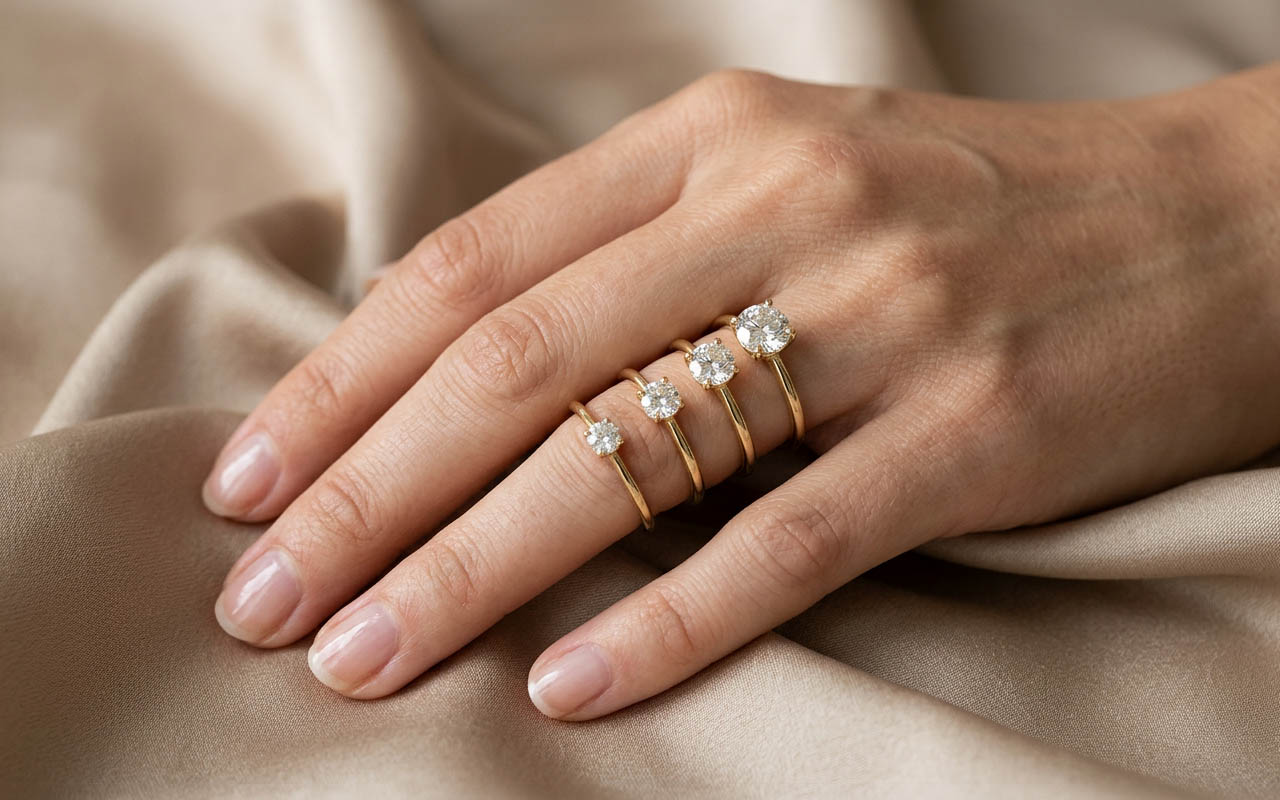
- On average-sized fingers, 0.5 to 1.5 carat diamonds generally appear smaller and balanced, while 2.0, 3.0 carat and up are larger statement pieces.
- Oval, pear, emerald and marquise diamond shapes provide the most finger coverage for the same carat weight.
- Cut quality matters most. A high-carat diamond with a Poor cut may look smaller than one with a Very Good cut.
To know what diamonds of different carats will look like on your hand, we need to go a little deeper than the numbers alone.
That’s because carat weight is often misunderstood. Carat is a measure of mass rather than physical dimensions. Looking at carat “sizes” on fingers helps visualize how this weight will affect the diamond’s appearance on your hand. But understanding how carat weight affects diamonds in other ways will help you make a more informed decision.
In this guide, we’ll cover finger sizes, diamond shapes, surface areas, carat vs. actual dimensions and tips for enhancing the size of your diamond. We’ll help you find a diamond size that balances weight with physical presence on your finger.
Diamond Carat “Sizes” Shown on Hands
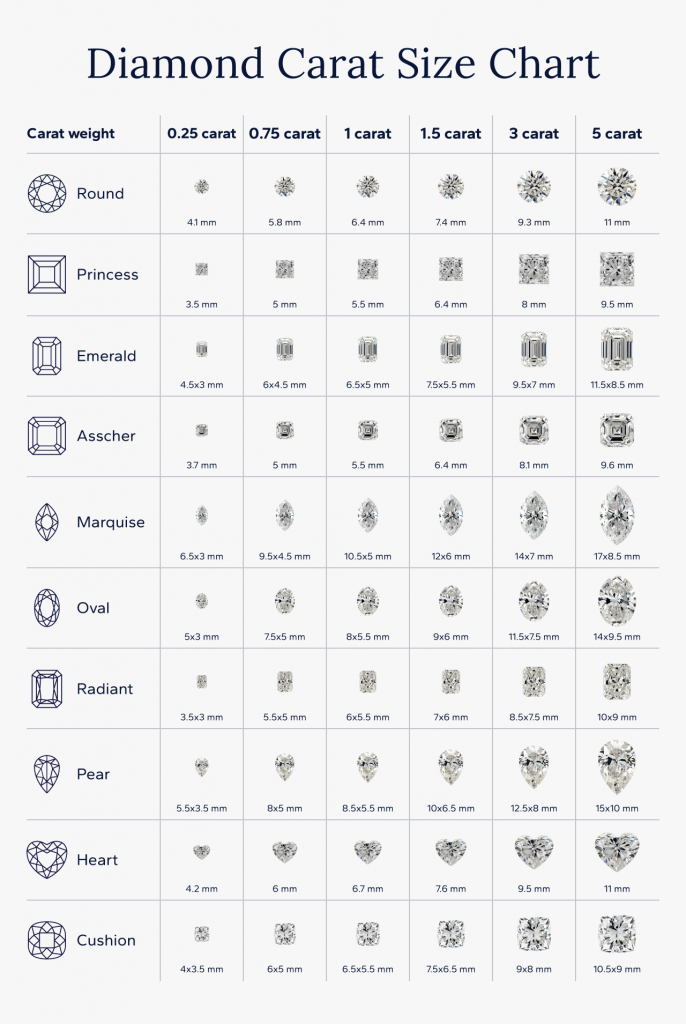
It’s extremely helpful to know your finger size and check out a carat-weight chart to have a realistic idea of what different carat weights may look like on you. Our diamond size chart below is a great place to start.
| Carat Weight | Diameter (Approx. Round) | Visual Impact |
| 0.50 ct | ~5.0 mm | Subtle and modest |
| 1.00 ct | ~6.4 mm | Standard and classic |
| 1.50 ct | ~7.4 mm | Balanced yet eye-catching |
| 2.00 ct | ~8.1 mm | Elegant and dramatic |
| 3.00 ct+ | ~9.3 mm+ | Luxurious and bold |
0.5 Carat Diamond
A 0.5-carat round diamond is about 5.0 mm in diameter. This size is delicate and understated, making it a sophisticated choice for minimalist aesthetics and stackable ring sets.
While a half-carat stone is on the smaller side, it offers a noticeable presence without being overwhelming. Therefore, it is well-suited for smaller hands.
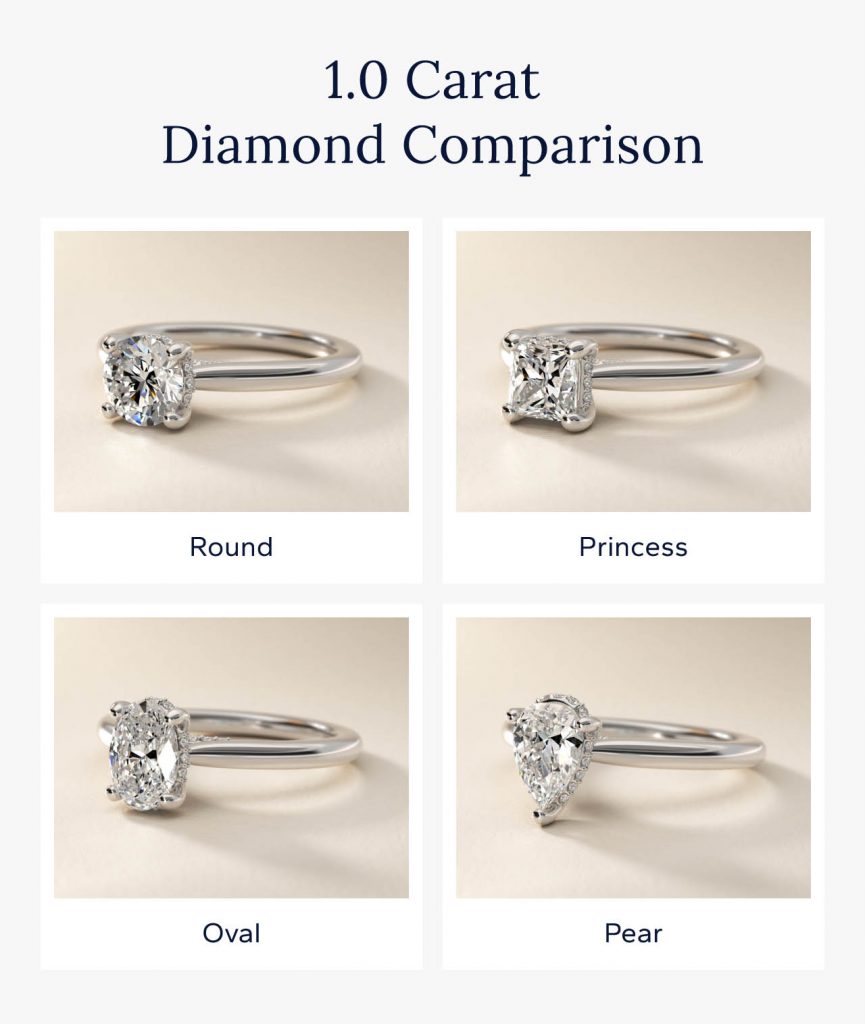
1.0 Carat Diamond
A 1.0-carat diamond, approximately 6.4 mm in diameter when round, is a standard benchmark for engagement rings. 1.0-carat diamonds offer elegance and subtlety.
On smaller fingers (sizes 4-5), 1.0-carat diamonds appear proportional. On average-sized to large fingers (sizes 6-7), a 1.0-carat diamond looks slightly smaller.
1.5 Carat Diamond
Though there’s only a half-carat difference, there’s a significant visual jump from 1.0 to 1.5 carats. At 7.4 mm in diameter, 1.5-carat round diamonds are popular choices for those seeking a significant presence without a 2.0-carat price point.
1.5 carats offer a middle ground between size and wearability, looking like larger statement pieces on smaller fingers and creating great balance on larger ones.
2.0 Carat Diamond
At around 8.1 mm in diameter, a round cut 2.0-carat diamond has a strong visual impact. On smaller fingers, a 2.0-carat is eye-catchingly large, while on larger fingers, it looks proportional while still delivering drama.
At this size, cut quality is even more important because inclusions become easier to see. A cut with a GIA ranking of Very Good to Excellent can help ensure this larger diamond looks bright and clear.
3.0 Carat Diamond and Larger
3.0-carat stones look dramatic on petite hands and proportional yet glamorous on larger ones. Any diamond larger than 3.0 carats is bound to look luxurious on all finger sizes and contributes to a confident style. Note that for larger stones, protective ring settings, like a six-prong or bezel, may matter more for everyday wear.


How Finger Size Impacts Diamond Appearance
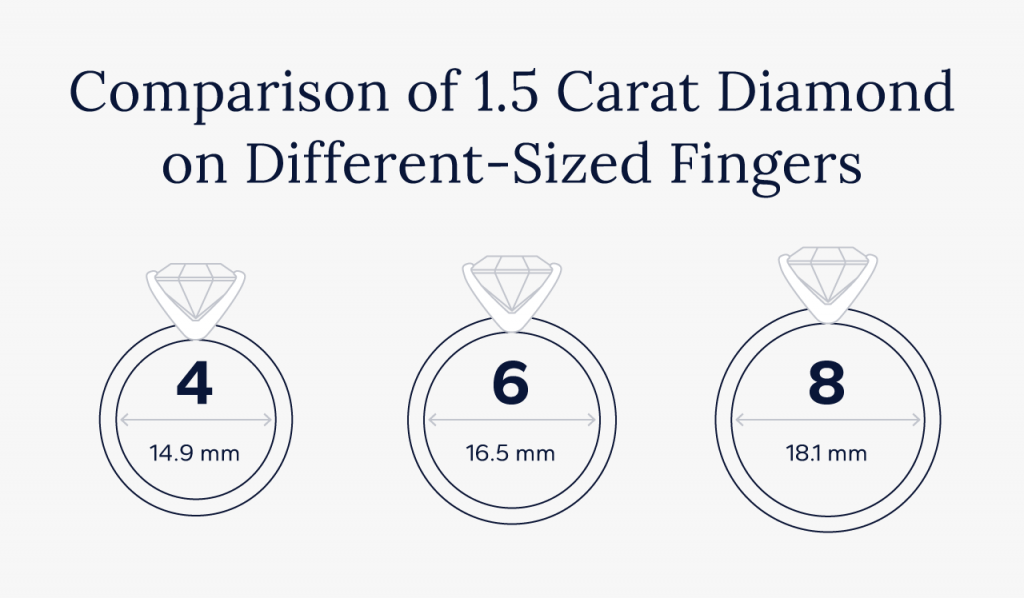
The width of a person’s finger acts as a frame for the diamond, influencing its visual proportions. Small fingers make diamonds look larger. A 1.0 carat diamond will appear much larger on a size 4 finger than on a size 9 finger.
Those with smaller fingers (sizes 3-5) may wish to avoid overwhelming the hand with overly large stones. They may find a balance between 0.5 and 1.75 carats.
Those with larger fingers (sizes 7-9) may want to ensure the diamond has a noticeable presence. If that’s the case for you, opt for 1.25 to 1.0 carats for size 6, and 1.50 or above for sizes 7 through 9.
Going up in carat weight comes with a real cost tradeoff too, since larger diamonds don’t just look bigger, they push the average engagement ring cost up disproportionately as size increases. Halo or hidden halo settings can also enhance the perceived size of a center diamond and make the ring more visually balanced on large fingers.
How Diamond Shape Affects Finger Coverage
Some diamond shapes distribute their weight across the finger in ways that make them appear smaller. For example, square shapes, like princess and cushion cuts, tend to carry more weight in depth and thus may appear smaller from the top. Round-cut diamonds prioritize brilliance over size.
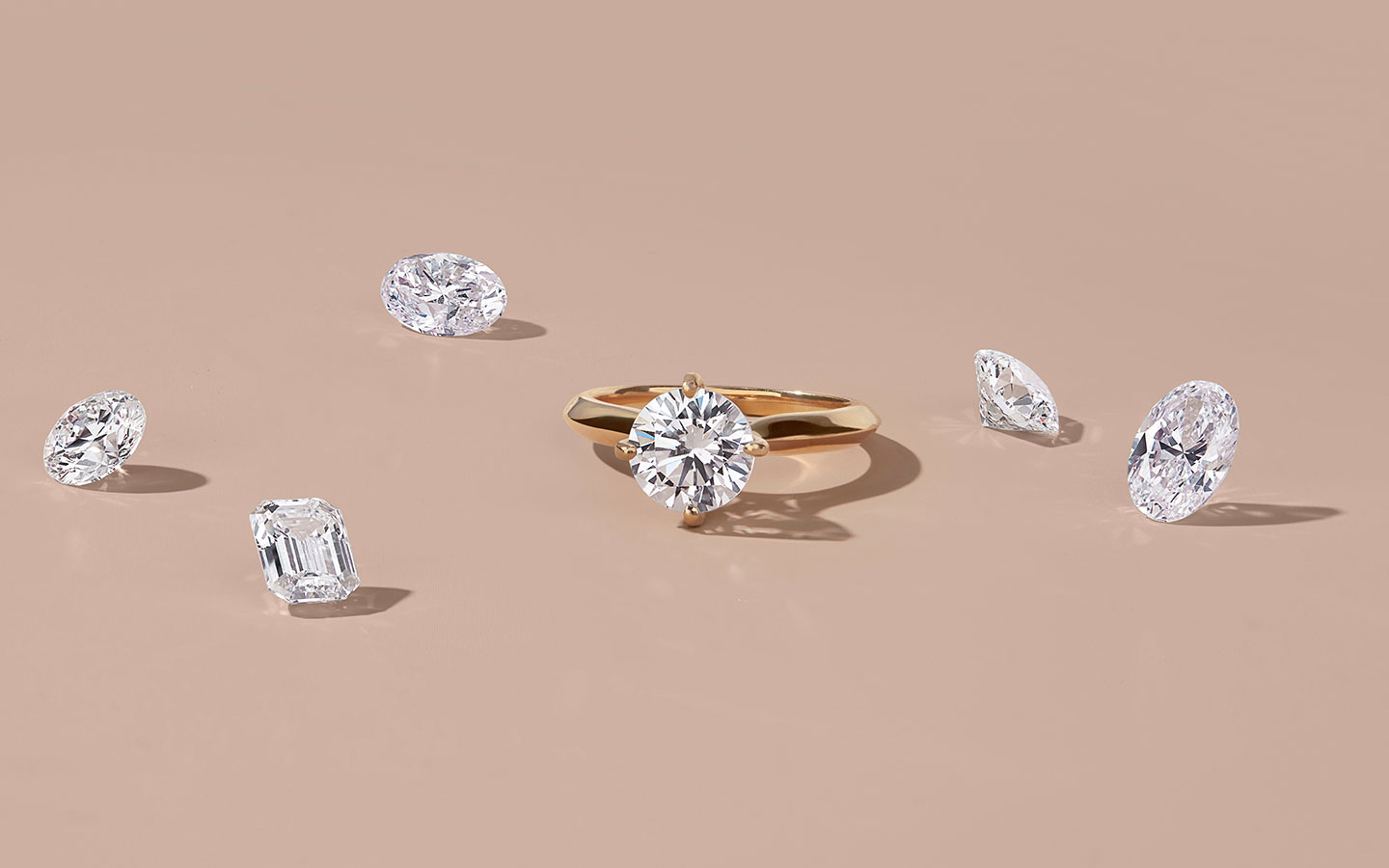
Elongated shapes, such as ovals, emeralds and pears, appear larger than rounded and square shapes. Emeralds look even larger than ovals and pears due to their long facets. Oval, pear, emerald and marquise shapes tend to provide the most finger coverage for the same carat weight and create a slimming effect on the finger.
Understanding Carat Weight vs. Actual Dimensions
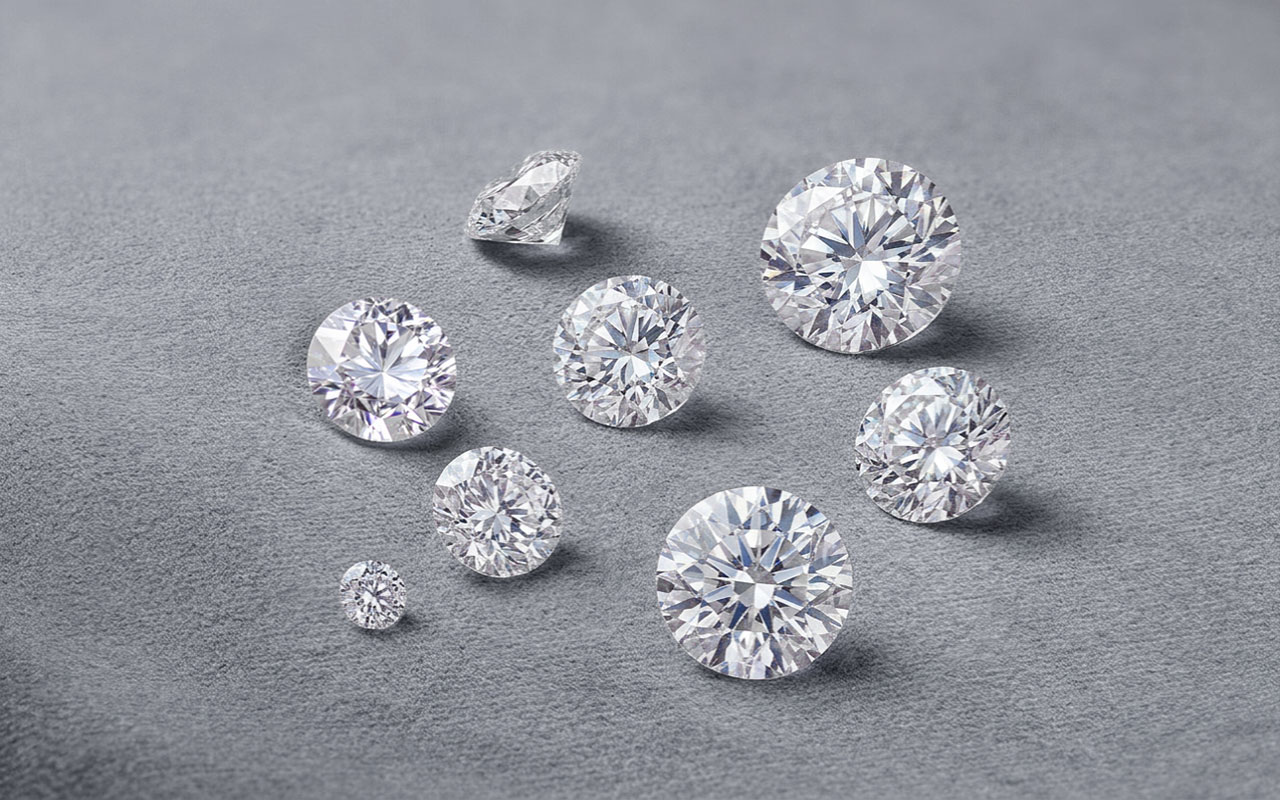
Contrary to popular belief, the term “carat” refers to a diamond’s weight, not its size. Millimeter measurements offer a more accurate representation of finger coverage than carat weight alone. Two diamonds with the same carat weight can have different millimeter measurements due to their depth, a phenomenon often referred to as “spread.”
A shallow-cut stone spreads weight across a wider surface, so it looks bigger from the top. A deep stone is cut taller, so more of its weight is hidden beneath the surface. This reduced surface area makes it appear smaller than its carat weight suggests, though it may sparkle better. The best choice is a well-proportioned cut that balances size and sparkle.
So it’s a misconception that a larger carat weight is always better than a smaller one. A high-carat-weight diamond with a Poor cut may look smaller than a diamond of a lower carat weight with a Very Good cut.
Tips on Enhancing Diamond Size Appearance
Aside from ring carat weight, surface area and cut, other ring design choices can dictate how large your diamond appears. Here are several options that could make your diamond look bigger:
- Consider a halo: A halo setting includes a ring of smaller accent diamonds, or diamond alternatives, around the larger center diamond. This setting enhances sparkle and thus the perceived size of your stone.
- Try a thinner ring: A slim ring band width emphasizes the diamond, helping it to appear larger. A ring anywhere from 1.5 to 4 mm can help achieve this look.
- Add cluster or side stones: A cluster ring features multiple small gemstones arranged closely together to create the illusion of a single larger stone. Alternatively, side stones flank the larger center stone to enhance its appearance.
- Put cut quality front and center: A high-quality cut helps ensure the diamond reflects light well, creating an eye-catching brightness that often makes it appear larger. Look for cut qualities of Good, Very Good, or Ideal. You may also want to choose lower clarity and color grades to allocate more budget to a good cut.
- Choose minimalist prongs: Prongs hold a diamond securely in place, and though they’re small, they can have a big visual impact. Opt for four-prong settings and claw prongs, which cover the diamond’s minimal surface area and cause it to stand out even more.
- Choose carat weights just below standard sizes: If your budget doesn’t allow for a 2.0-carat diamond, it may allow for a slightly more affordable 1.9-carat one. The difference may be visually negligible to the unaided eye.
How Blue Nile Approaches Diamond Scale
Understanding how carat “sizes” look on different fingers, as well as how carat weight interacts with stone shape and physical dimensions, will help you search for the right diamond and make an informed purchase.
At Blue Nile, we prioritize cut quality to ensure a diamond reflects light effectively and appears its full size, avoiding deep cuts that hide weight. Our experts use millimeters for physical measurements (length and width) to provide a true sense of scale.
Frequently Asked Questions
Yes, halo settings can make diamonds look larger. The “halo,” or ring of smaller diamonds surrounding the center stone, creates the illusion of a larger diamond surface area. The extra diamonds also help reflect more light and add shine that catches the eye.
Among diamond shapes, marquise diamonds often appear larger than their carat weight suggests. That’s because marquise diamonds have a boat-like shape with two pointed ends. This creates an elongation effect on the finger and a large surface area from a top-down viewpoint.
The cut of a diamond is the most important, as it determines how well it reflects light and sparkles. Carat measures the diamond’s weight, which is also important for visual impact. However, a high-carat diamond with a low-quality cut can appear smaller and duller than a lower-carat diamond with an excellent cut.
A round 1.0-carat diamond is around 6.4 mm in diameter. A round 2.0-carat diamond is about 8.1 mm in diameter.


Share