Key Takeaways:
- Six months before your proposal, discuss marriage openly, set a budget and research rings.
- Three months before: Purchase the ring, pick a location and book vendors.
- One month before: Practice your speech and plan a post-engagement celebration.
- The moment itself: Get down on one knee, look your partner in the eye, deliver your speech and present the ring.
The perfect marriage proposal may not exist, but you can get pretty close with a careful plan.
Learn how to propose with purpose and avoid scrambling to put it all together at the last minute. We’ve laid out a full checklist to follow in the months leading up to the day to help you bring your dream proposal idea to life.
In it, we cover picking a date, researching and purchasing the ring, booking vendors, rehearsing your speech and post-proposal celebrations to help organize a day you and your partner will never forget.
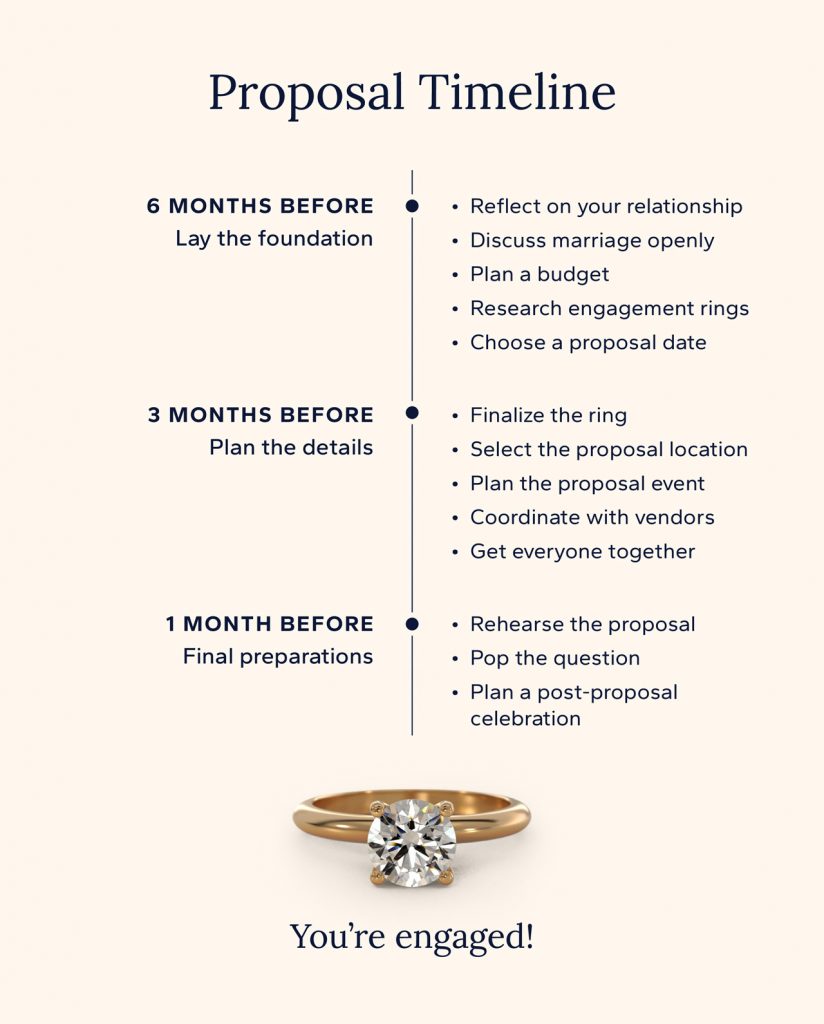
6 Months Before: Lay the Foundation
You’ll want to plant the seeds of your proposal plan around half a year before you get down on one knee. That gives you plenty of time to do the following:
- Reflect on your life goals with your partner
- Make sure you’re on the same page about marriage
- Set a budget for yourself
- Research rings
- Scout for proposal locations
1. Reflect on Your Relationship
If you’re feeling nervous, reflect on whether you’re nervous about creating the perfect proposal or if you’re feeling uncertain about your relationship. Have you had direct conversations about marriage, rather than assuming your partner wants to get engaged?
Surprises can be wonderful, but make sure that you are on the same page. To avoid proposing too soon, talk about whether your life goals are aligned and whether you are both ready for the commitment of marriage
Here are some signs that you’re ready for engagement:
- You’ve discussed marriage directly
- You’ve met each other’s families
- You’ve talked about shared finances and living arrangements
- You are aligned on children and other long-term life goals
2. Discuss Marriage Openly
Talking about marriage before proposing reduces risk and increases the chance of a confident yes.
Have meaningful conversations with your partner about marriage and make sure you understand each other’s expectations. On top of laying a good foundation, this can help lead to a more meaningful proposal. Discussing timelines, expectations and readiness won’t ruin a surprise proposal, but it can help ensure its success.
Here are some natural ways to bring up marriage in conversation without spoiling a surprise proposal:
- “Where do you see yourself in five to 10 years?”
- “Going to our friend’s wedding made me wonder what kind of wedding you would want to have one day.”
- “What do you think makes a relationship feel fully committed?”
- “Do you think getting married changes a relationship?”
Don’t ask them all at once, and try to keep the conversation casual.
3. Plan a Budget
The two main costs to plan for are the engagement ring and the proposal itself. Set a separate budget for each. Rings vary greatly in cost depending on design, gemstone size and more. Proposals can be completely free or may include costs for a private venue, photographer, travel, flowers and more.
Whether you are planning a more intimate proposal or considering a destination event, allocating enough funds with time to spare, especially for any last-minute costs, will keep stress low and help you make informed decisions later.
Here are several realistic engagement ideas for different budget ranges:
- Low-cost proposals (free to $300): This may include a personal setup at a meaningful spot like a park or overlook with a picnic blanket and candles at sunset.
- Mid-range proposals ($300 to $1,000): These may look like a private dinner proposal or a weekend getaway with a hired photographer.
- Higher-end proposals ($1,00 and up): These can include a hired proposal planner, fully styled setups, floral arches, photographers, videographers and live music.
4. Research Engagement Rings
Understand your partner’s ring style, find out their ring size and decide whether to shop for a ring alone or together. Understand your partner’s setting, metal color and gemstone preferences to find a ring they’ll love.
If you’re researching diamond engagement rings, start with the four Cs:
- Cut has the greatest impact on how a diamond looks because it directly affects how well it reflects light.
- Color grading is the second most important, since the less color a diamond has, the more valuable and expensive it is.
- Clarity impacts the number of blemishes (surface imperfections) and inclusions (inner imperfections) visible under magnification.
- Carat measures the diamond’s weight.
When planning your timing, keep in mind that most jewelers recommend allowing two to four weeks for custom or resized rings. However, it’s also increasingly common to propose with a placeholder ring or ring box, then shop together afterward.
Finally, make sure to buy from a reputable jeweler. If, despite your preparations, the sizing is a little off, don’t worry. Ring resizing is standard, and a good jeweler can help you resize it later.
5. Choose a Proposal Date
Give yourself plenty of time to get your proposal plans in order and make sure to select a date that works for both of you. If you’re including friends, family and/or a photographer, make sure to choose a date that works for them too.
Nearly half of all proposals happen between November and February, especially during the holidays. However, select a date that holds special significance or aligns with an anniversary or milestone to give your proposal a personal touch.

3 Months Before: Planning the Details
Start concretely planning the big day around three months ahead. This is when you’ll need to purchase the ring, set the location and communicate with any vendors you’ll need to execute your plans.
6. Finalize the Ring
Buying the ring now allows time for any customizations, resizing or shipping issues. Compare your main buying options and their benefits.
Local independent jewelers may offer personalized services and custom work. National chain jewelers offer warranties and financing options. Online retailers like Blue Nile have wider selections, detailed search tools and 360-degree viewing options.
If you’re trying to secretly find out your partner’s ring size, here are a few discreet methods:
- Borrow a ring they already wear and trace it, or take it to a jeweler.
- Ask a close friend or family member.
- Use a piece of string to measure their finger, then compare it to a ring size chart.
- Visit a jeweler together under a different pretense.
Once you have the ring, make sure to insure it and store it safely (and discreetly if you’re planning a surprise proposal) until the big day.
7. Select the Proposal Location
Match your proposal location to your partner’s personality. An introvert may prefer a private setting, while an extrovert might love a public moment.
Here are several proposal location ideas:
- A meaningful spot in the relationship
- A rooftop overlooking the sunset
- A private beach
- A favorite restaurant’s private dining room
- A national park
- A family home
- A rented cabin
- A spot overlooking the city
- A botanical garden
Make sure the space you want is available, consider privacy and crowd levels if that is important and obtain any permits you may need for photographers. Consider lighting conditions at different times of day, and make weather backup plans if the venue is outdoors.
Then, think about setting the scene (decorations, photographer, hiding friends and family). Visiting the location in advance and doing this beforehand will let you easily deal with any bumps that may pop up along the way.
8. Plan the Proposal Event
As you start planning the event, it’ll be helpful to have a proposal style in mind. Some options include:
- Completely private and intimate
- Semi-public with close friends and family present
- Fully public at a restaurant, stadium or popular landmark
- An exciting adventure based on hiking or travel
Pro tip: Avoid choosing a public proposal solely for the spectacle. Flash mob and jumbotron proposals can be fun, but they carry a higher risk if your partner is shy or private. The decision should be based solely on what you know your partner genuinely enjoys.
9. Coordinate with Vendors
If you’re hiring a proposal photographer, you can find one through local wedding photography directories, Instagram searches by location, or referrals from recently engaged friends.
Book at least four to six weeks in advance, especially for popular locations or peak engagement seasons like Christmas, Valentine’s Day and New Year’s Eve.
Next, brief the photographer on the following:
- The exact location
- The time of day
- Where to hide or position themselves
- A signal for when the proposal is starting
- A shot list with what shots are priorities, such as the question, your partner’s reaction, the embrace and a kiss
If you can, do a practice run of the location visit to check sightlines, lighting and where to stand. Create a backup plan for bad weather or other unexpected changes.
Communicate similarly with any other vendors you may want, like a florist, videographer or musician. If your location needs to be booked, do so well in advance.
10. Get Everyone Together
Coordinate with any family or friends involved, arranging transportation and confirming timing. If it’s a surprise, make sure they know not to let anything slip around your partner.
Some tips on how to gather your loved ones without arousing suspicion:
- Create a cover story get-together under the guise of a birthday party or casual dinner.
- Create a group chat with everyone attending, excluding your partner, to give detailed instructions and ensure everyone understands the plan.
- Tell your guests to arrive at the location earlier than you and your partner, and coordinate for them to be stationed somewhere close but out of sight.
- Designate a trusted “point person” to manage guests on the day of the proposal.
1 Month Before: Final Preparations
As the date draws closer, you’ll need to practice the moment itself and plan for what happens after the proposal. Here are the final touches to take care of one month before the big day.
11. Rehearse the Proposal
This is a big moment, and the nerves will hit, so think ahead about what to say when you propose. You don’t have to write the whole script, but having an idea of what you want to say and practicing it out loud will help ensure this moment goes as smoothly as possible.
Remember that it’s completely fine to get emotional or go off-script in the moment. Your proposal speech doesn’t need to be long or poetic or perfect, just personal and genuine.
12. Pop the Question
Here’s a traditional walk-through when it’s time for the moment itself:
- Get into position
- Make eye contact with your partner
- Deliver your speech
- Get down on one knee (this is traditional but certainly not required)
- Present the ring
Don’t rush through things just to get to the question. Pause and be present, since this is a once-in-a-lifetime moment you’ll want to cherish.
13. Plan a Post-Proposal Celebration
You asked, you got the enthusiastic “Yes!”, and now it’s time to celebrate. Immediately after the proposal, embrace and take photos or let the photographer capture it all. Later, call family if that’s part of the plan.
Plan a small celebration for after, such as a reservation at a favorite restaurant, champagne waiting at the hotel or a gathering with close family. Have it all set up ahead so you can seamlessly start to share the joy.
There’s no obligation to announce your proposal immediately. It’s perfectly okay to sit quietly and privately with the moment before posting on social media.

Make Choosing the Engagement Ring the Easiest Part of Your Proposal
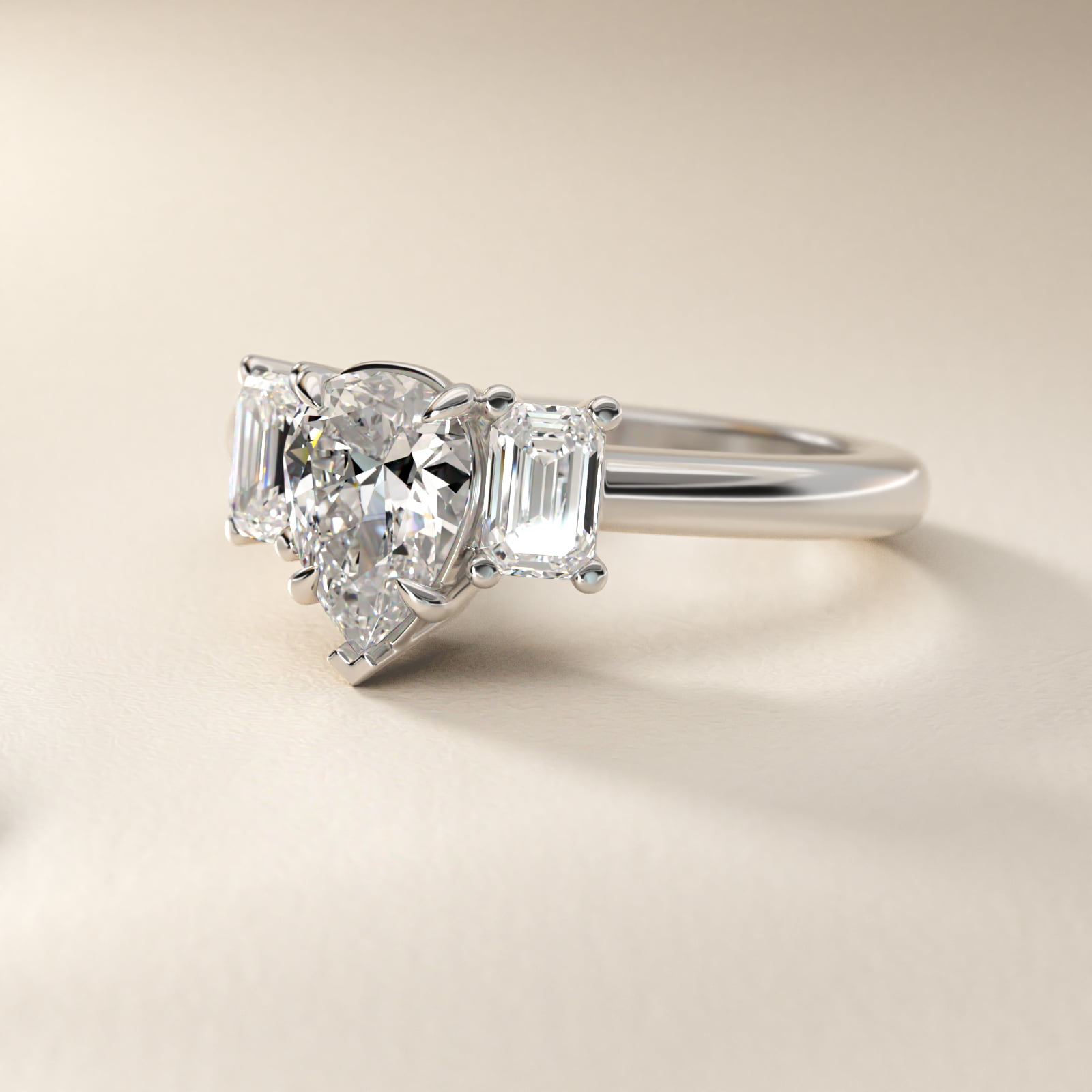
So much information goes into planning your dream engagement. When thinking about how to propose to your girlfriend or boyfriend, the ring should be the least overwhelming part of the big day. With a ring you know your partner will love in your pocket, you’ll get down on one knee with not only love but confidence in your heart.
At Blue Nile, our experts are here to help make the choice seamless and meaningful. Explore our curated selection of engagement rings for every price point.
Frequently Asked Questions
Traditionally, you kneel on your left knee when you propose. However, it’s completely fine to propose on your right knee instead.
Yes, a woman can propose to a man. Gender norms shouldn’t dictate how your proposal will go if you don’t want them to. Plan for what works for you and how you want to do things in your specific relationship.
Start planning your proposal three to six months ahead. This should give you enough time to purchase a ring, book any vendors and prepare your speech.
Though it’s traditional to propose with the ring in hand, it’s increasingly more common to propose with a placeholder ring or ring box, and then shop for your partner’s dream ring together afterward.
Practice and planning ahead will help lessen your nerves on the day you’ll propose. Practice what you want to say for a few weeks leading up to the big day and trust yourself to be genuine and heartfelt in the moment.
If your partner says no to your proposal, you will need to reevaluate your relationship and communicate clearly to discover your next steps as a couple. However, if you communicate clearly and ensure you’re on the same page well in advance of the proposal, you run a lower risk of a no.
The average cost of an engagement ring is somewhere around $6,504. However, the budget is entirely up to you to set. Start by browsing rings online to get a sense of styles and their price points.
Traditionally, you ask the parents’ permission before proposing, but it’s up to you and your partner to approach this however you think best. If you think it’s what your partner and their family would want, it can be a nice gesture to let their loved ones know that you’re going to propose in advance.
Choose a day that has personal significance to you, like a birthday, anniversary or holiday. The time of day is up to you, but it’s common to propose in the evening, with time to enjoy a celebration dinner afterward.


Share