






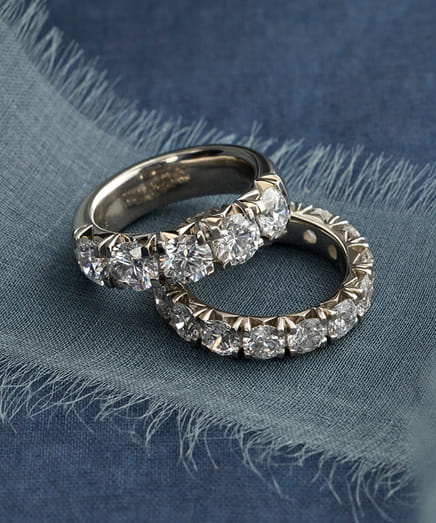




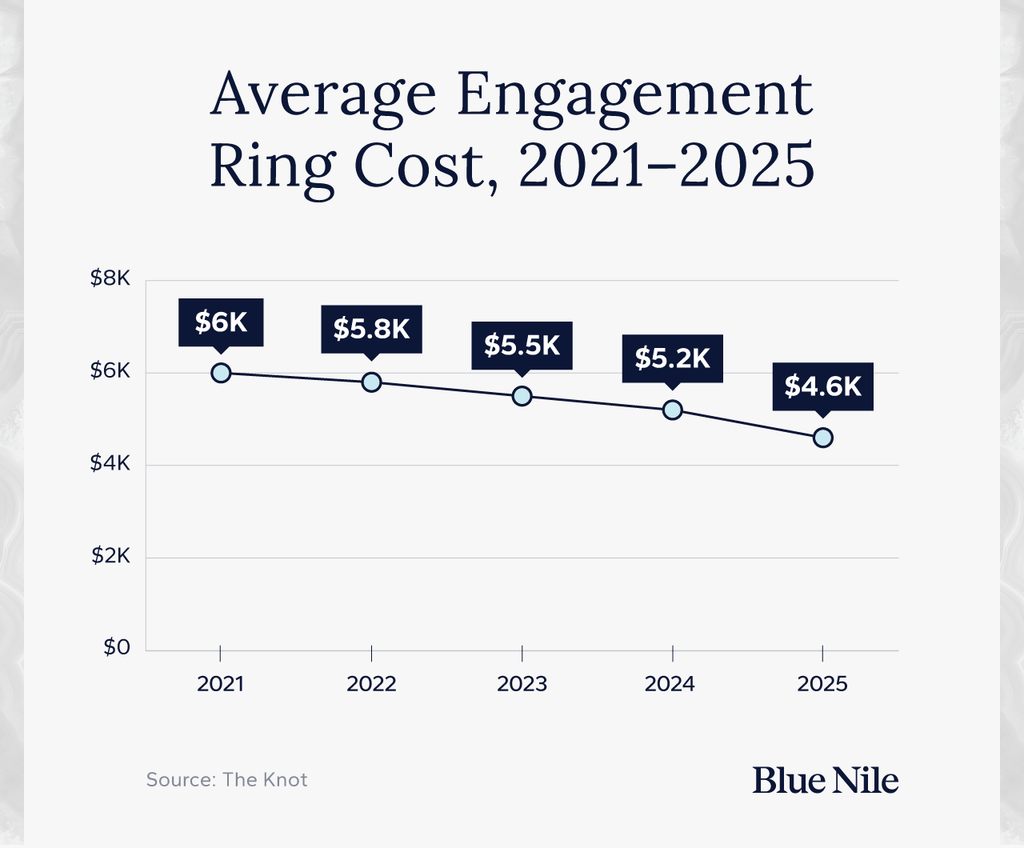
The average engagement ring cost typically falls between $4,600 and $5,200, with round diamonds remaining the most popular choice among couples.
Choosing an engagement ring involves more than finding a diamond you love. Before you start shopping, understanding key factors like average cost, carat size, diamond shape and current trends can help you set a realistic budget and find a style that matches your soon-to-be fiancé’s preferences.
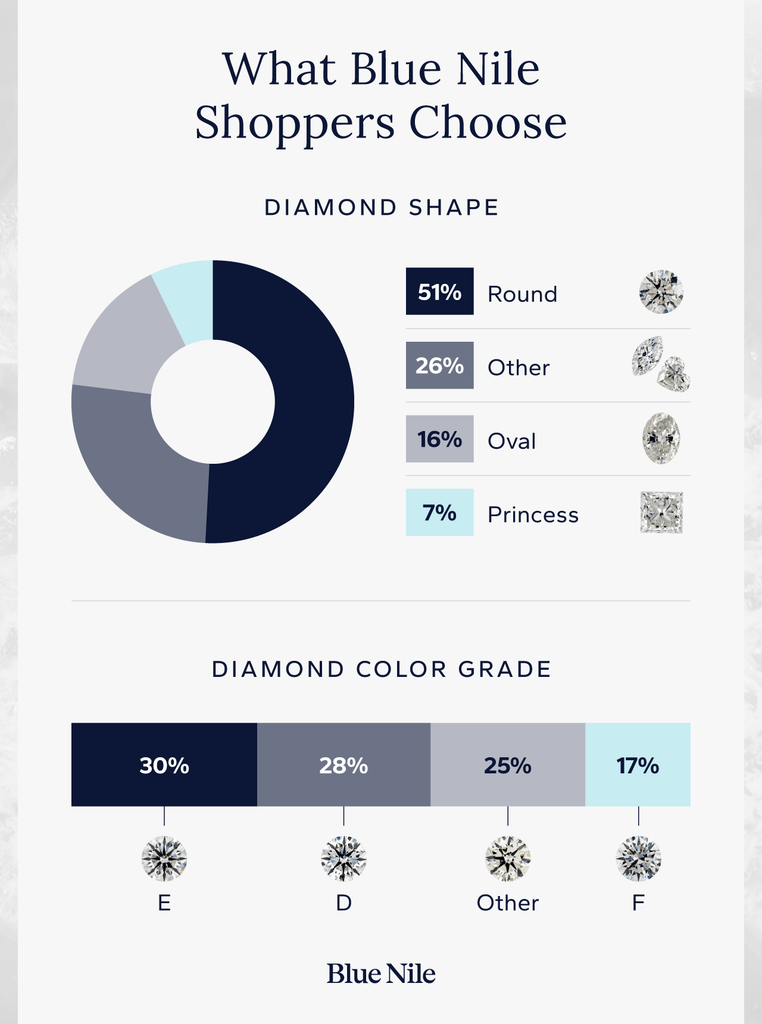
While average engagement ring spending has declined year over year, certain styles continue to stand out. Round diamonds remain the most popular choice, accounting for more than half of engagement ring purchases.
This guide breaks down the latest engagement ring trends, average prices and the factors that influence a ring’s value, so you can shop with confidence.
Key Engagement Ring Facts
- The average engagement ring costs about $4,600 in the US (The Knot)
- The average center-diamond carat weight is 1.7 carats, up from 1.6 the year before (The Knot).
- Lab-grown center stones now make up about 61% of engagement ring purchases (The Knot).
- Roughly a third of couples spend under $3,000 on a ring, while about 1 in 20 spend more than $15,000 (The Knot).
How Much Does An Engagement Ring Cost?
The average engagement ring costs $4,600. Today, many couples are moving away from traditional spending rules and focusing more on what fits their personal budget.
In fact, couples across the U.S. tend to spend closer to $6,000 on average. Spending still varies by location, however. Couples in the Northeast and Mid-Atlantic tend to spend more than the national average, while those in the Midwest and West generally spend less.
Keep in mind that an engagement ring’s total price typically includes both the center diamond and the setting. If a price seems unusually low, it may only reflect the setting or exclude upgrades like a larger center stone, higher diamond grades or premium metals such as platinum.
Engagement Ring Carat Size Statistics
The average engagement ring features a 1.5- to 1.9-carat center diamond. Center stone sizes have steadily increased in recent years, reaching an hitting 1.9 carats in 2025, according to The Knot.
| Average Carat Weight | |
| 2021 | 1.5 |
| 2024 | 1.7 |
| 2025 | 1.9 |
Keep in mind that carat measures weight, not size. It’s one of the GIA 4Cs used to grade a natural diamond, alongside cut, color and clarity. Because diamond shape and cut can affect how large a stone appears, two diamonds with the same carat weight may have very different visual impacts.
Engagement Ring Financing Statistics
Financing an engagement ring has become increasingly common. About a third of proposers (34%) financed their engagement ring purchase, according to The Knot.
Traditional jeweler financing, personal loans and 0% APR credit cards remain common ways to finance an engagement ring. Buy now, pay later (BNPL) services have also become a more common payment option, with Federal Reserve data showing that BNPL use increased from 10% of adults in 2021 to 16% in 2025.
Each financing option comes with different repayment terms, fees and interest rates, so it’s worth comparing your choices before committing. If you’re eligible for a promotional 0% APR offer or can pay off the balance quickly, financing may help make a larger purchase more manageable.
Otherwise, your best bet is to take the time to save for an engagement ring to avoid interest charges and reduce the overall cost.
Most Popular Engagement Ring Diamond Shapes and Styles
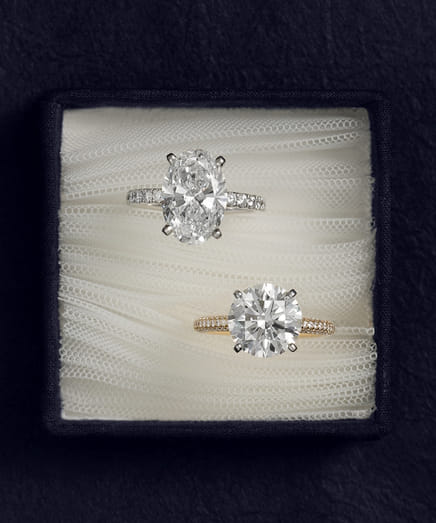
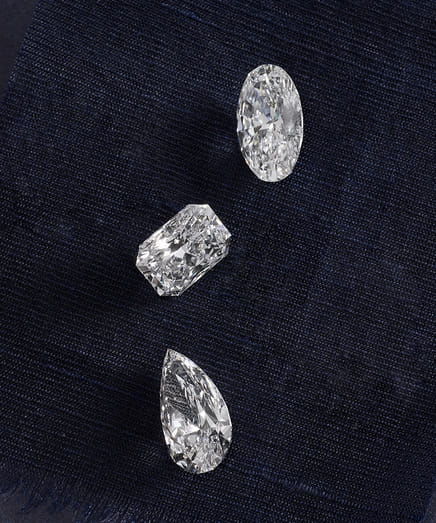
When it comes to engagement rings, Blue Nile shoppers show clear preferences across shape, setting, and metal. Round diamonds dominate, making up 51% of purchases, while oval (16%) and princess-cut (7%) diamonds trail well behind.
Setting style follows a similar pattern of one clear favorite: solitaire leads at 26%, followed by pavé (18%), sidestone (13%), and halo (8%).
Metal choice, meanwhile, is more evenly split. Platinum ranks highest at 17%, just ahead of 14k white gold (14%) and 14k yellow gold (12%), with 18k yellow gold rounding out the list at 6%.
Lab-Grown and Natural Diamond Engagement Ring Statistics
Average Cost of Lab-Grown Diamonds
The average cost of a loose lab-grown diamond is about $2,800 and with a setting around $3,000. Lab-grown diamonds have become an increasingly popular choice among engagement ring buyers. According to The Knot, lab-grown diamonds accounted for 61% of engagement ring purchases in 2025, representing a 239% increase since 2020.
Among couples who selected a lab-grown stone, 40% said choosing a lab-grown diamond was an important factor in their purchase decision.
Like natural diamonds, lab-grown diamond prices are influenced by the 4Cs: carat, cut, color and clarity. Larger stones with higher grades typically cost more, while factors like shape and certification can also affect the final price.
Average Cost of Natural Diamonds
Natural diamonds continue to be valued for their rarity, durability and formation over billions of years. The cost of a natural diamond can vary significantly depending on the 4Cs: carat weight, cut, color and clarity.
As a general benchmark, a 1-carat natural diamond can range from a few thousand dollars to more than $20,000, depending on its quality characteristics. Larger stones with higher color grades, stronger clarity ratings and excellent cuts typically command higher prices.
For engagement ring shoppers, the center diamond often accounts for the largest share of the overall cost. Many buyers prioritize factors with the greatest visual impact, such as cut quality and carat size, while choosing slightly lower color or clarity grades to stay within budget.
Diamond Grading Has Evolved for Lab-Grown Stones
In 2025, the Gemological Institute of America (GIA) introduced updated terminology for lab-grown diamonds, replacing the traditional color-and-clarity grading scale used for natural diamonds with descriptive terms such as “premium” and “standard.” Natural diamonds continue to be graded according to the traditional 4Cs: cut, color, clarity and carat weight.
Engagement Ring Trends to Know
Engagement ring trends are evolving beyond diamond shape, with couples exploring new ways to personalize their rings. While classic round and oval diamonds remain among the most popular choices, metal preferences are shifting.
Yellow gold has emerged as a standout trend, with about 4 in 10 couples choosing the metal today, compared with less than half that share five years ago, according to The Knot.
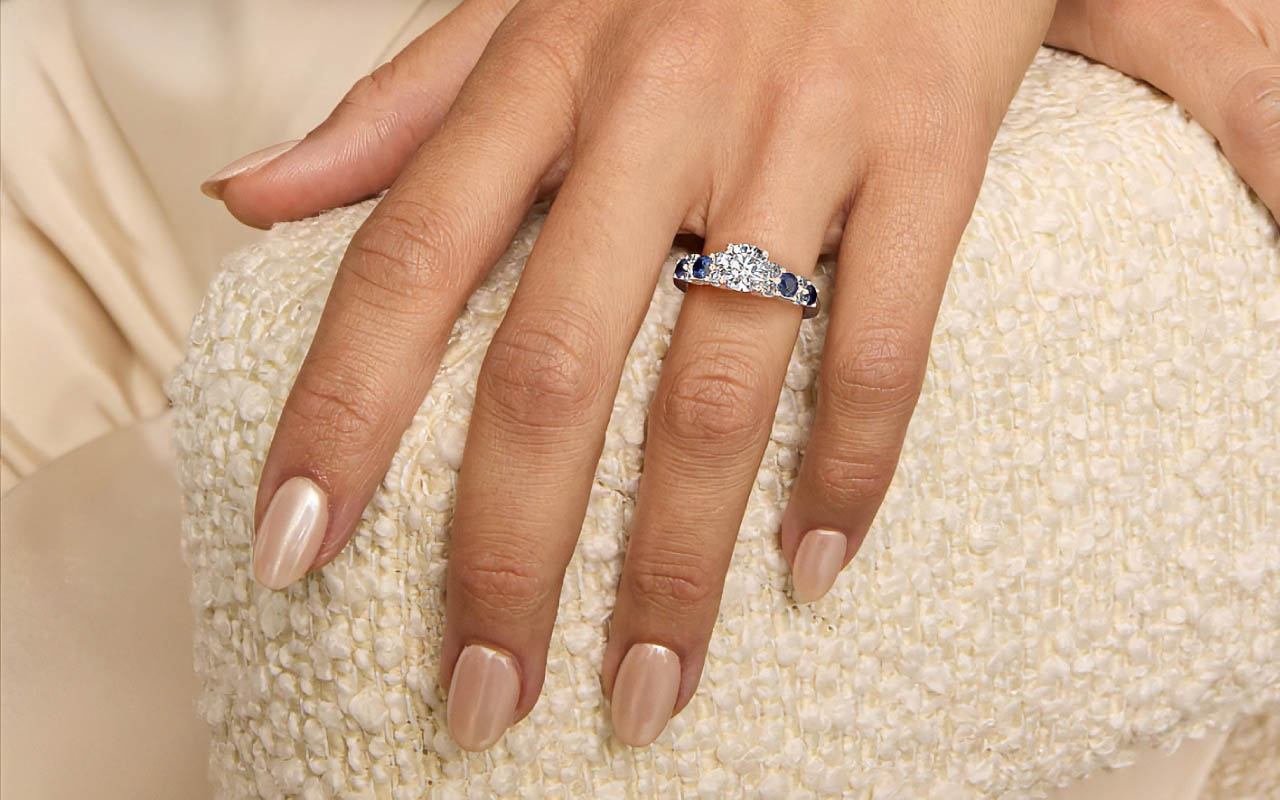
Ring setting is just as important as the ring size. It plays a major role in an engagement ring’s overall look and feel because the right setting can enhance the center stone and complement personal style.
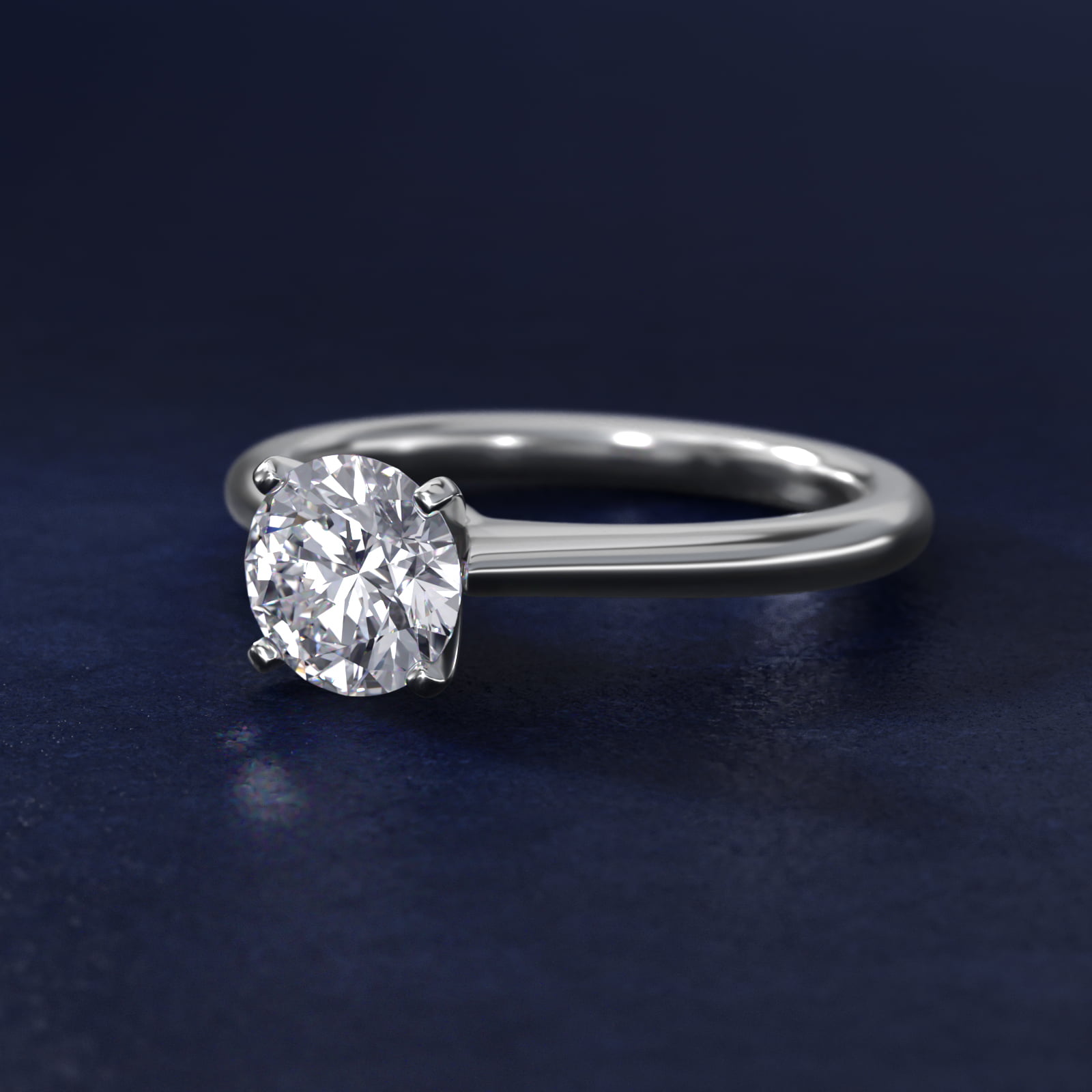
Round 1.5 CT Certified Diamond Petite Solitaire Engagement Ring In 14K White Gold
Shop Round Solitaire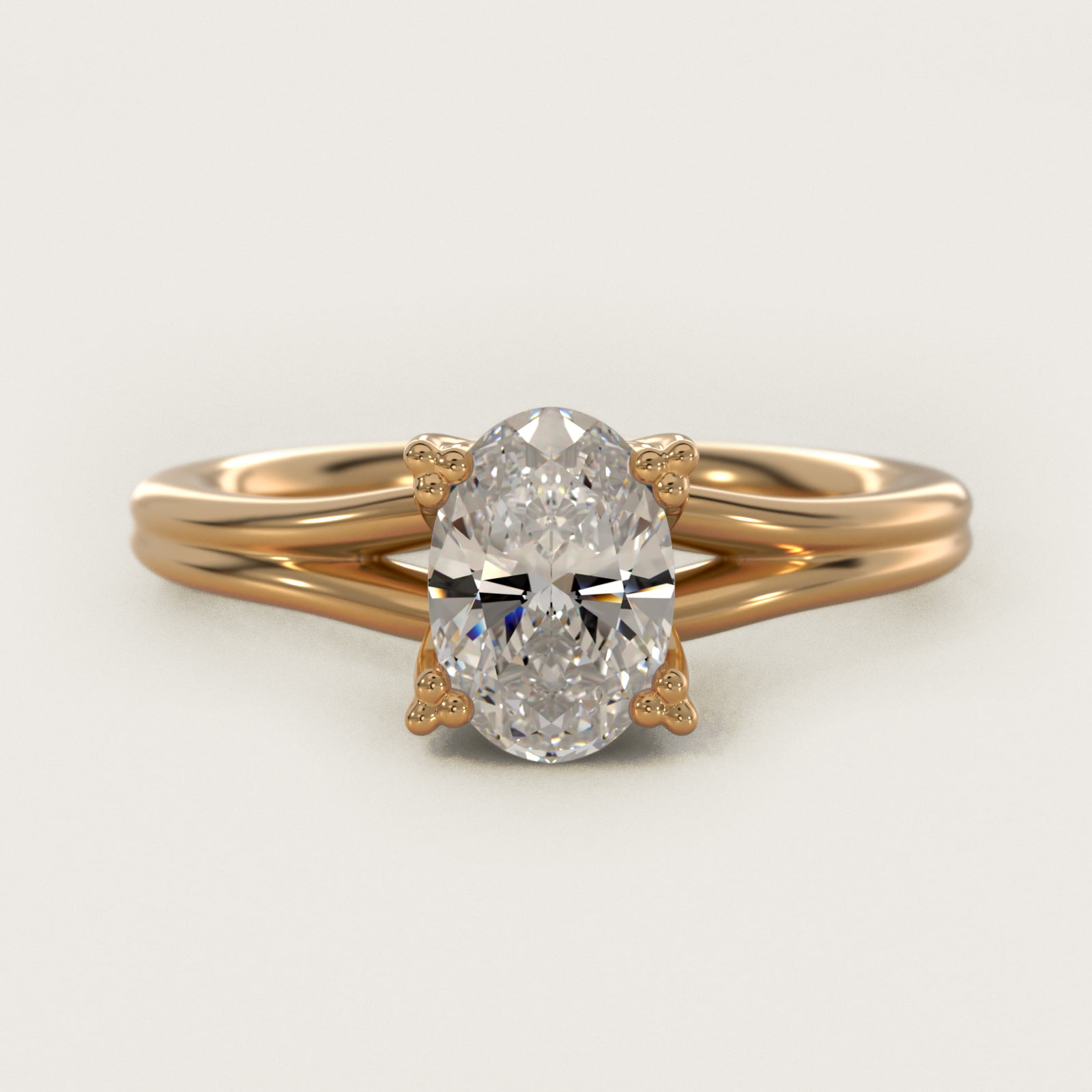
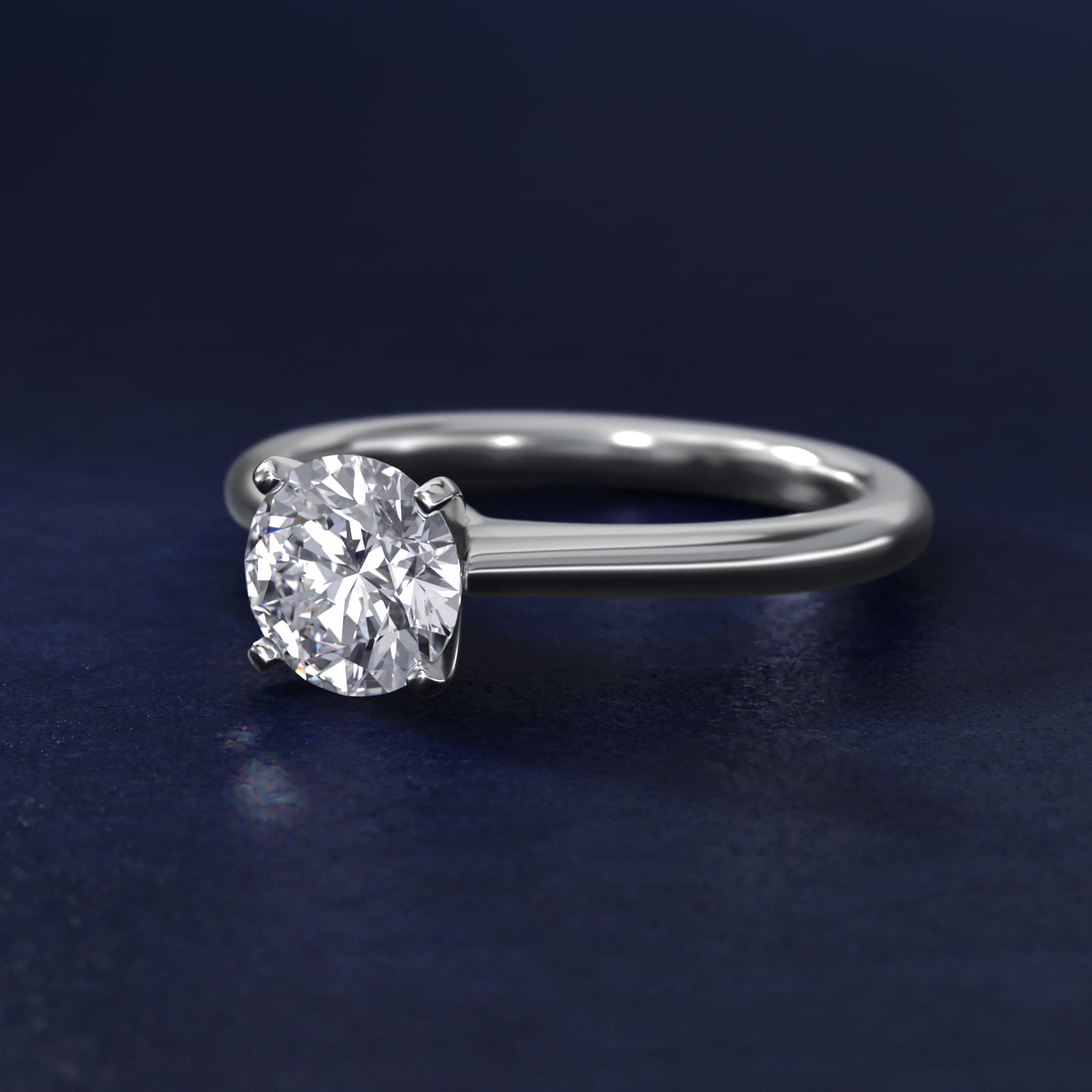
Round 1.5 CT Certified Lab-Grown Diamond Petite Solitaire Engagement Ring In 14K White Gold
Shop Lab-Grown RoundFind the Right Engagement Ring for You
Average engagement ring costs, popular diamond shapes and current trends can provide a helpful starting point, but there is no one-size-fits-all choice. The right ring balances your budget with your partner’s personal style, preferences and the details that make it unique.
Ready to start shopping? Explore engagement rings by diamond shape, metal, setting style or budget to find options that fit your vision.
Frequently Asked Questions
Round is the most popular engagement ring diamond shape, both among Blue Nile shoppers. Oval has been gaining ground in recent years as buyers look for a shape that appears larger for its carat weight.
The average engagement ring costs about $4,600 in the US, according to The Knot.
The average center-diamond carat weight is about 1.5 carats. That number has climbed steadily alongside the growth of lab-grown diamonds, which cost less per carat than natural stones and let buyers size up within the same budget.
No, most financial and bridal experts now consider the three months’ salary rule outdated. The recommendation today is to set a budget based on personal finances and priorities rather than a fixed percentage of income.
Blue Nile offers a wide selection of natural and lab-grown diamond engagement rings with transparent pricing and detailed grading information, making it easier to compare options and shop confidently within your budget.
Methodology
This article uses a combination of industry research and Blue Nile internal sales data. Engagement ring spending averages are based on the Knot’s Real Weddings and Jewelry & Engagement Studies. Diamond shopping insights, including center stone preferences, are based on Blue Nile internal sales data.


Share






 Live Chat
 +1‑800‑242‑2728
 Email Us

