












A diamond takes billions of years to form underground, while a lab can grow one in a controlled setting in a fraction of that time. The lab-grown diamond process uses advanced equipment to build a precious stone atom by atom from a small seed. The result shares optical, chemical and similar physical properties to a natural diamond.
From seed preparation to final grading, follow the steps that turn a rough crystal into a finished diamond. Discover how lab diamonds are made and how each growth method works before you purchase one as your next holiday jewelry gift.
The Lab-Grown Diamond Process at a Glance
Lab-grown diamonds begin as small seeds and move through several production stages before they become a finished stone. Here’s a quick look at each stage to give you a better idea of how diamonds are grown in a lab:
- Seed preparation: Specialists select and prepare a diamond seed for growth.
- Diamond growth: High pressure, high temperature (HPHT) or chemical vapor deposition (CVD) technology adds carbon to the seed to form a rough crystal.
- Post-growth treatment: Some crystals receive additional treatment to adjust their color.
- Cutting and grading: Experts cut and polish the crystal, then assess and document its qualities.
First, let’s see how specialists choose and prepare the seed for growth.
How Diamond Seeds Are Prepared
A diamond seed serves as the base for a lab-grown crystal. Specialists prepare it before growth because carbon needs a clean surface to form a new crystal structure. The process typically involves these steps:
- Selection: Specialists choose a diamond seed that meets the needs of the growth process.
- Slicing: They cut the seed into thin plates that provide a surface for crystal growth.
- Cleaning: They remove residue and contaminants that could interfere with crystal formation.
The seed’s quality can influence how evenly a diamond crystal develops. A seed with a clean, consistent surface gives carbon atoms a more uniform foundation to build on. Inclusions or surface irregularities may affect the crystal’s growth pattern and the rough diamond’s features.
Once specialists select and prepare the right seed, they use HPHT or CVD technology to grow the diamond crystal.
How the HPHT Process Works
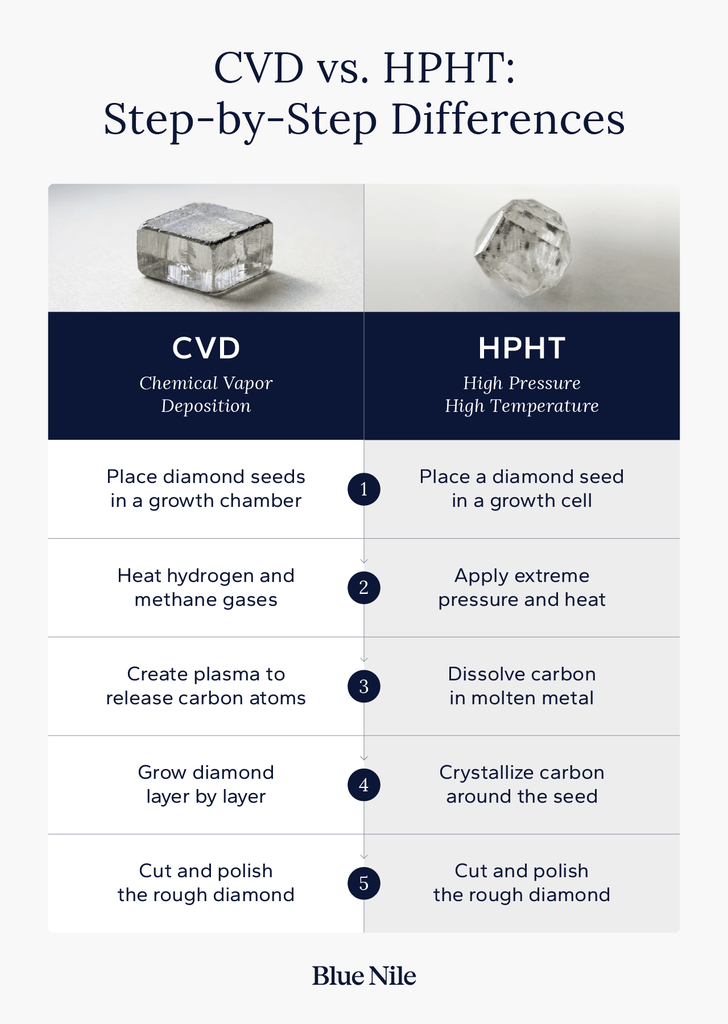
HPHT stands for high pressure, high temperature. This method uses specialized equipment to recreate the intense conditions found deep in the Earth’s mantle, where natural diamonds form over long periods. Inside the press, heat and pressure help carbon crystallize around a diamond seed.
Here’s a step-by-step look at the HPHT lab-grown diamond process:
- Technicians load a growth cell with a diamond seed, a carbon source and a metal catalyst.
- A press applies about 5 to 6 GPa of pressure and heats the cell to roughly 1,300 to 1,600°C.
- The metal catalyst melts and dissolves the carbon source.
- Carbon moves through the molten metal and crystallizes on the cooler seed.
- Technicians gradually cool the cell before removing the rough diamond crystal.
Types of HPHT Presses
HPHT facilities can use more than one press design. Each press arranges its anvils differently, which changes how it applies pressure to the growth cell. Common press types include:
- Belt: Two opposing anvils compress a cylindrical growth cell, while steel bands contain pressure around its sides. This older design suits industrial production and high-volume growth of smaller diamonds.
- Cubic: Six anvils press on a cube-shaped cell from every side, distributing pressure across the growth area. Manufacturers use this design to grow larger single crystals and produce gem-quality diamonds.
- Split-sphere (BARS): This two-stage design uses outer anvils to compress inner anvils around the growth capsule. Its compact system uses less machine mass and suits controlled production of high-clarity, near-colorless diamonds.
How HPHT Growth Shows Up in the Finished Diamond
HPHT growth can leave internal clues that differ from patterns commonly found in natural diamonds. Gemologists use these features alongside other tests to tell if a diamond is real or lab-made.
For example, a stone may contain tiny metallic inclusions from the catalyst used during the lab-grown diamond manufacturing process. Natural diamonds also have inclusions, but metallic particles can point gemologists toward an HPHT origin.
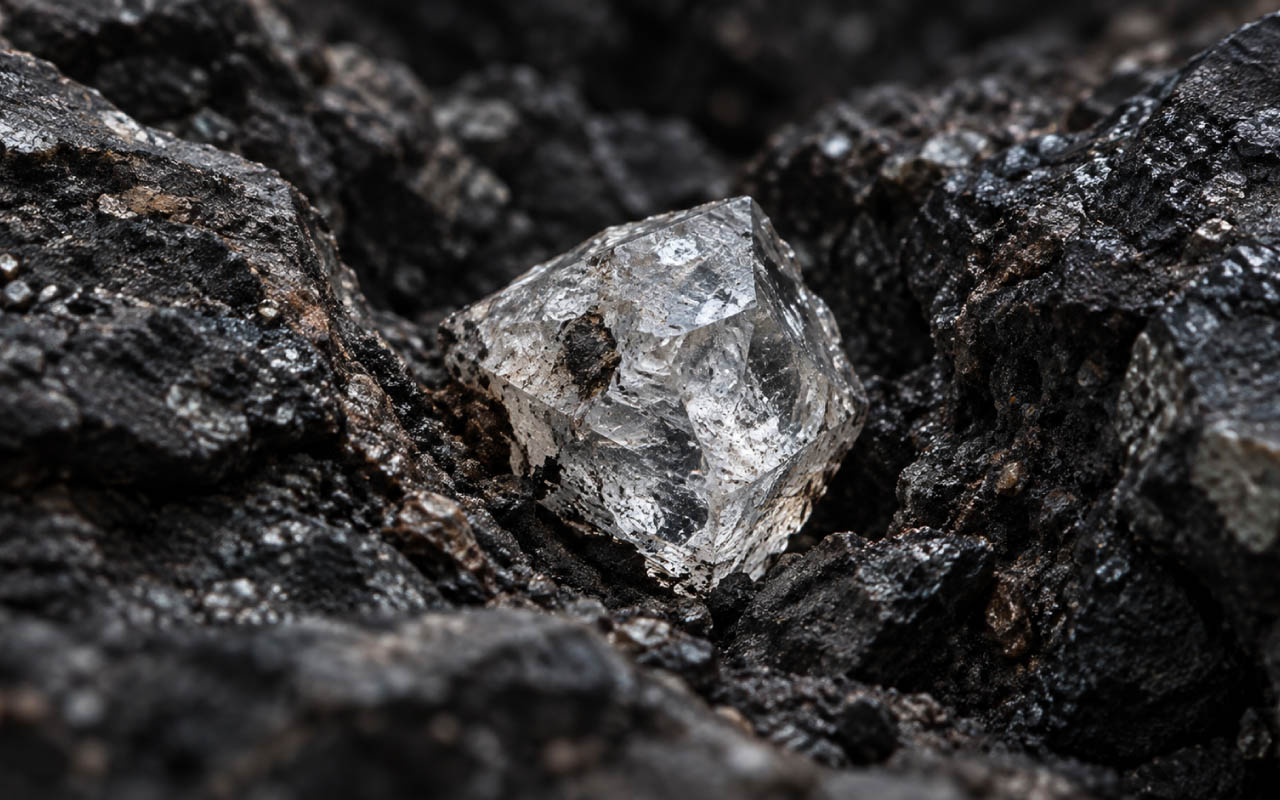
The crystal may also show a cuboctahedral structure, with both cubic and octahedral growth faces. Natural diamond crystals typically form as octahedrons, which creates different growth patterns.
How the CVD Process Works
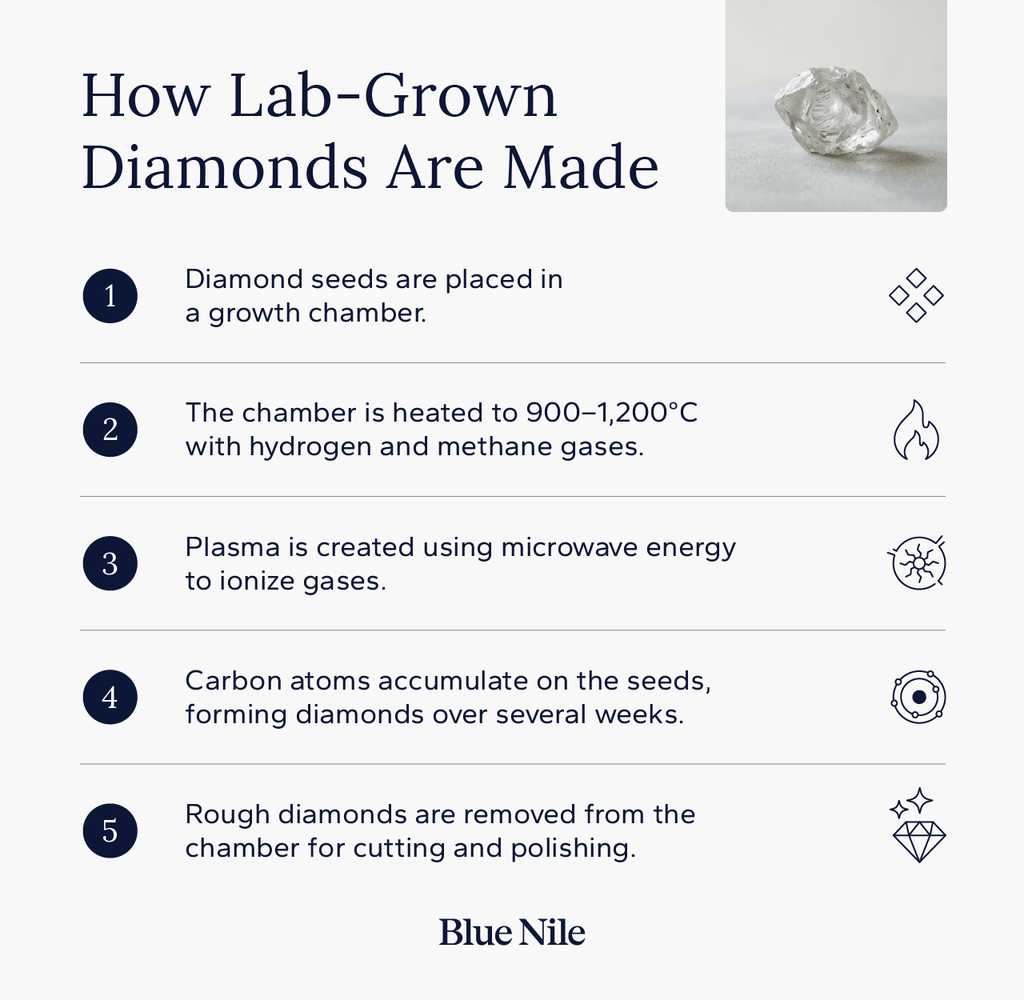
CVD stands for chemical vapor deposition and grows a diamond inside a sealed vacuum chamber. The process uses carbon-rich gas and energy from microwaves to build the crystal in thin layers on diamond seed plates.
These are the main steps in the CVD lab-grown diamond process:
- Technicians place thin diamond seed plates inside the chamber and seal it.
- They add a gas mixture, usually methane and hydrogen, and reduce the chamber’s pressure.
- Microwaves heat the gas to around 800°C and ionize it into plasma.
- Carbon atoms separate and settle onto the seed, building the crystal layer by layer
- Technicians stop growth periodically to remove non-diamond carbon from the edges before restarting the process.
Why Some CVD Diamonds Are Treated After Growth
A CVD diamond may show a brown tint after growth. In some cases, specialists use HPHT annealing with controlled heat-and-pressure treatment to alter color-related inclusions in the crystal. The treatment can help produce a more colorless look and improve the stone’s appearance.
Grading reports disclose post-growth treatment so you can understand the diamond’s history and how it reached its final color. Note that if a report lists HPHT treatment, it describes an additional step after CVD growth, not a different diamond-growing method.
HPHT vs. CVD Lab-Grown Diamonds
The choice between HPHT and CVD depends on a manufacturer’s equipment, production goals, target diamond characteristics, and treatment requirements. Each lab-grown diamond manufacturing process has distinct growth conditions and characteristics.
Here’s a comparison of the two methods across key criteria:
| Comparison criteria | HPHT | CVD |
| Growth conditions | Extreme heat and pressure | Heated carbon gas in a vacuum |
| Growth time | Several days to weeks | Three or four weeks |
| Crystal shape | Cubic and octahedral | Flat and tabular |
| Typical inclusions | Dark metallic flux inclusions | Dark graphite or other mineral inclusions |
| Post-growth treatment | Some colored diamonds may be irradiated and heated | Often HPHT-annealed to reduce brown coloration |
How Long Does It Take to Make a Lab-Grown Diamond?
The lab-grown diamond process timeline can differ based on several factors, including:
- Growth method: HPHT diamonds typically grow over several days to weeks. CVD growth takes about three to four weeks, often across several cycles, as technicians periodically remove and polish the crystals before restarting growth.
- Carat weight: Larger diamonds generally need longer to grow because they require more crystal material to build up.
- Cutting: The cutting and polishing stage adds several days or weeks to the process. Larger rough crystals and intricate cuts can require more time.
- Grading: Laboratory grading can take a few days to several weeks. Turnaround depends on the lab’s workload and shipping time.
What Happens After a Lab-Grown Diamond Is Grown
Growth produces a rough crystal, and a skilled professional must refine the diamond before setting it in jewelry. They assess the rough stone, plan its shape and complete several steps to prepare and document the finished diamond.
The process typically involves these steps:
- Planning and cutting the rough crystal: A cutter studies the crystal’s shape and internal features, then selects a design that makes the best use of the rough diamond. They cut away excess material and form the stone’s outline, aiming to preserve weight while improving its appearance.
- Polishing facets for brilliance: The cutter shapes the diamond’s facets and polishes each surface to a smooth finish. They also check symmetry and proportions to ensure the stone reflects light effectively and produces the brilliance buyers expect from a finished diamond.
- Grading and certification: An independent gemological laboratory assesses the diamond and records its characteristics in a grading report. The report includes clarity, which may be graded VS1, VS2 or another level, along with color, cut and carat weight.
- Laser inscription on the girdle to identify origin: The manufacturer or grading laboratory adds a small laser inscription to the diamond’s girdle, the narrow edge between its upper and lower portions. The inscription can identify the stone as lab-grown and may include a report number for verification.
Find the Right Diamond for You
While natural diamonds remain the timeless option, the lab-grown diamond process creates comparable stones at a more accessible price range. If you’re ready to explore these gemstones and buy your first round or cushion cut diamond, Blue Nile has the collection for you.
We offer certified lab-created diamonds in various cuts, colors, clarity grades, and carat weights for every style and budget. Browse our collection today and shop lab-grown diamonds that mimic the look of earth-formed stones.
Frequently Asked Questions
A lab-grown diamond is a real diamond created in a controlled environment using advanced methods like HPHT or CVD growth. It has the same crystalline carbon structure and the same physical, chemical and optical properties as a natural diamond. The two differ in origin, and gemologists can identify that difference with specialized equipment.
Lab-grown diamonds can last for generations because they share the durability of natural diamonds. Their origin doesn’t make them less durable. As with any fine jewelry, you must avoid rough impacts and schedule occasional setting checks to help protect the stone and keep it secure.
Lab-grown diamonds are made in specialized facilities using controlled environments and advanced technology. Each begins with a diamond seed, then grows through either high-pressure, high-temperature (HPHT) or chemical vapor deposition (CVD). Both methods build a diamond crystal from carbon over several weeks.
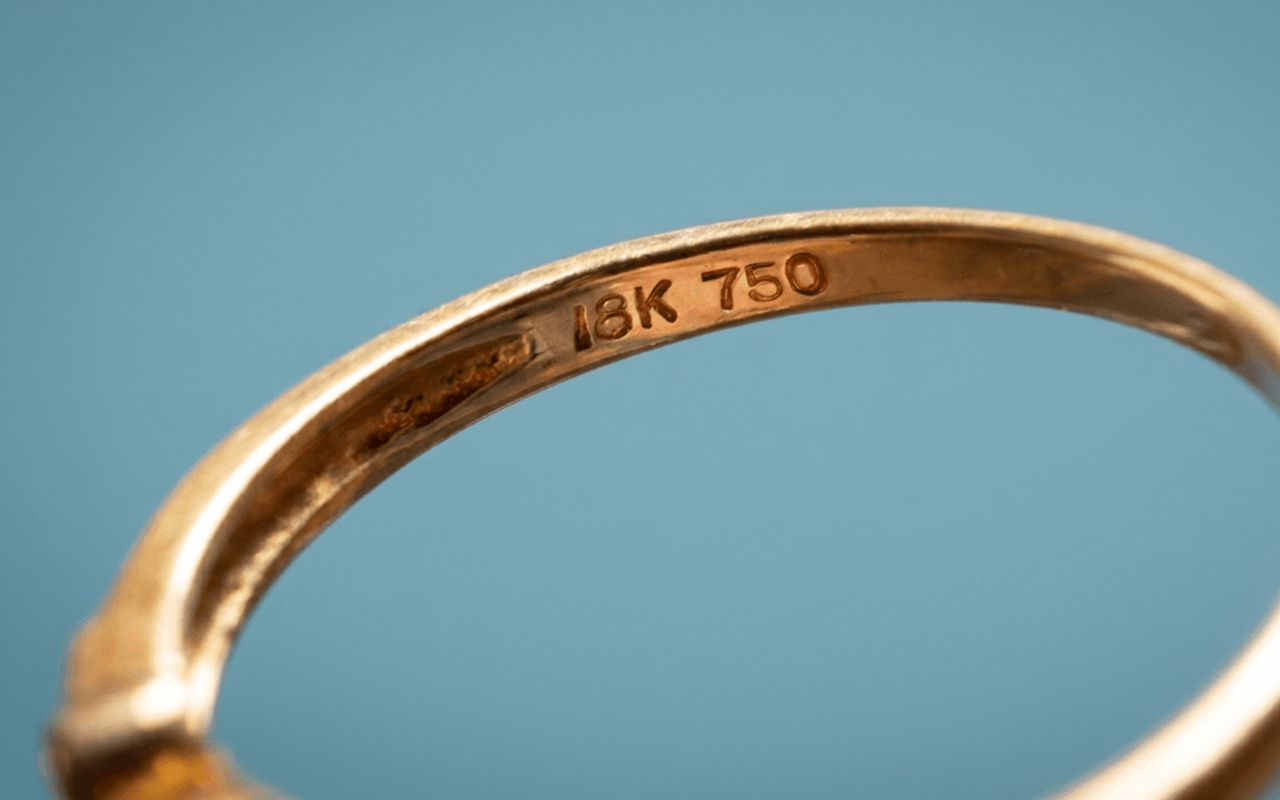
You can buy lab-grown diamonds online at Blue Nile. We offer a wide selection of loose lab-created diamonds and high-quality jewelry in 10k, 14k, 18k, or 24k gold settings. If you need help finding the right piece, our diamond experts can answer any questions and provide assistance.


Share



 Live Chat
 +1‑800‑242‑2728
 Email Us


