No, diamonds do not glow on their own in complete darkness. Some diamonds can glow under ultraviolet (UV) light, while a rare effect called phosphorescence can cause a diamond to continue glowing briefly after the UV light is removed.
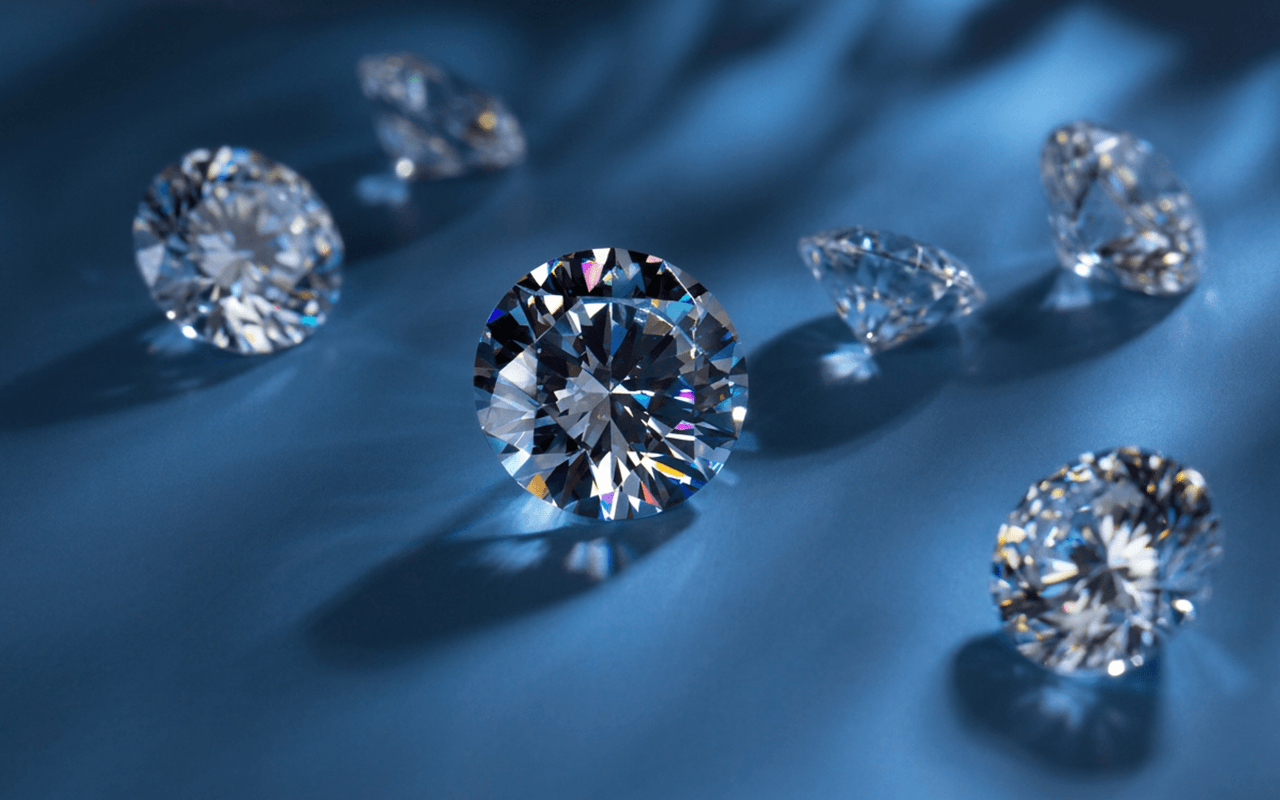
A diamond can charm and captivate when it glimmers in the light. Because of their innate brilliance, it’s possible to confuse the light diamonds reflect for a light they carry.
But think about how your diamond looks when the lights are out. Do diamonds glow in the dark? Not in the way a glow-in-the-dark object does, though they may glow when exposed to UV light.
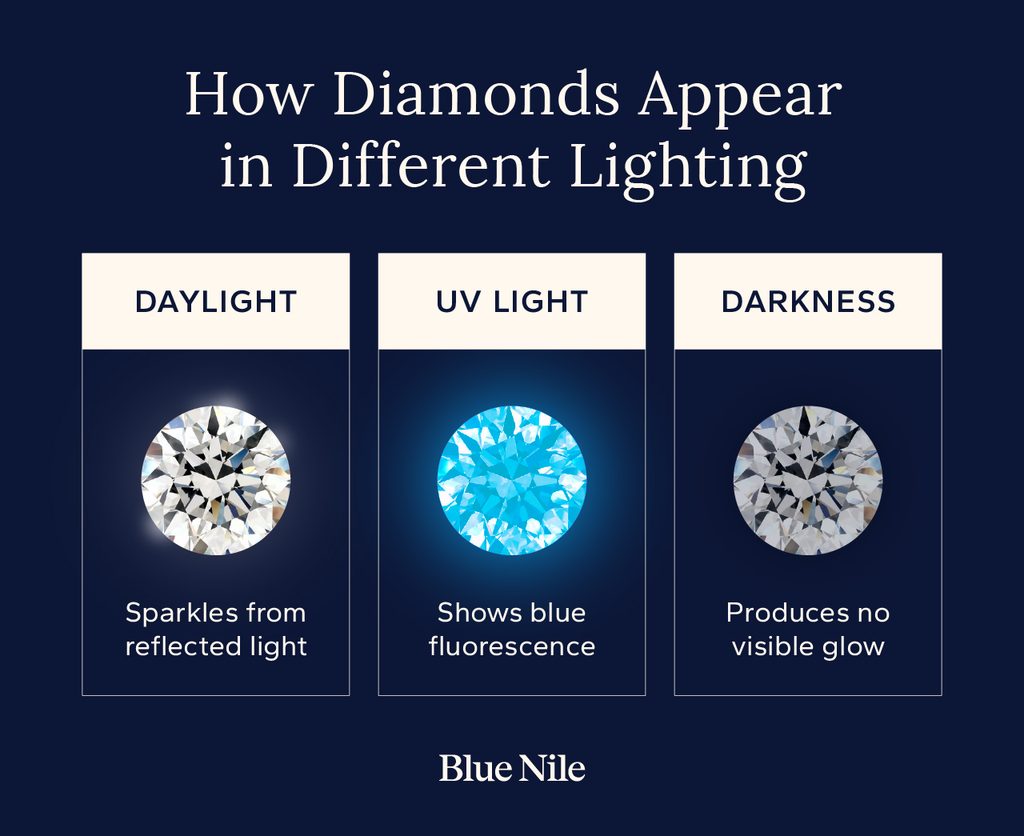
The shining light you see from a diamond depends on light hitting and reflecting off the stone. Some diamonds also react to UV light through fluorescence, which can create a visible glow, usually blue.
The distinction is useful whether you’re researching a diamond before buying or simply curious about one you already own. We’ll explain fluorescence, phosphorescence and what these effects can tell you about a real diamond.
Do Diamonds Glow in the Dark?
Natural diamonds don’t glow in complete darkness without an external source of energy. Light enters the stone, reflects internally and returns to your eye.
Without light, there’s no familiar glint to see. A diamond may fluoresce when exposed to UV light, but that glow generally stops when the UV source is removed.
A small number of diamonds behave differently. They can continue to emit light for a short time after exposure to UV, a rarer effect is phosphorescence.
This distinction also matters when comparing diamonds with cubic zirconia or other look-alike materials, since some fake diamonds may glow in the dark. However, a stone’s behavior in darkness isn’t a reliable authenticity test.
What Does Fluorescence Mean in Diamonds?
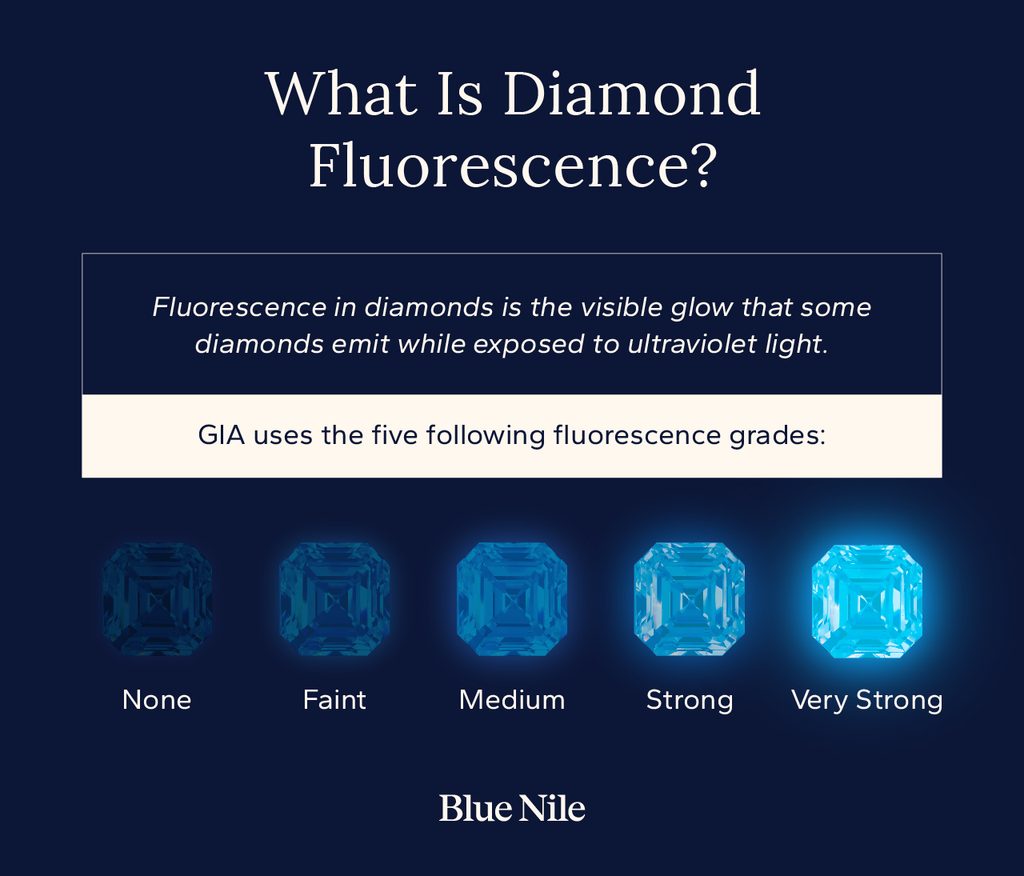
Fluorescence in diamonds is the visible glow some diamonds emit while exposed to ultraviolet light. To better understand what fluorescent means, it’s important to note that fluorescence is a reaction to a UV source.
According to the Gemological Institute of America (GIA), about 25% to 35% of diamonds examined show some degree of fluorescence. More than 95% of those fluorescent diamonds emit blue light, though other colors can occur. And natural diamonds are more likely to exhibit the type of fluorescence commonly seen under long-wave UV than lab-grown diamonds.
Like natural diamonds, lab-grown diamonds also need a UV light source to glow in the dark. Some may react to UV light, but it’s more common for lab-grown diamonds to exhibit phosphorescence after UV exposure rather than fluorescence.
And fluorescence isn’t an effect you might see indoors alone. Sunlight contains UV radiation, so a highly fluorescent diamond in sunlight may look slightly different from how it does under some indoor lighting. This effect isn’t part of the brilliance of the diamond, since it’s an internal, usually blue-tinged glow.
Fluorescence isn’t good or bad. It is simply another characteristic to understand before deciding what you prefer.
How Is Fluorescence Measured?
Diamond fluorescence is graded by how strongly a diamond reacts when exposed to UV light. It isn’t one of the 4Cs, but gemological laboratories sometimes include it as part of a diamond grading report.
GIA uses five fluorescence grades:
- None: No observable fluorescence
- Faint: A slight fluorescent reaction
- Medium: A noticeable fluorescent reaction
- Strong: A pronounced fluorescent reaction
- Very Strong: A highly pronounced fluorescent reaction
International Gemological Institute (IGI) also reports fluorescence, although its terminology differs. Their scale starts from none, very slight, slight, strong and very strong, respectively.
A fluorescence grade tells you how strongly the diamond reacted under testing conditions. It doesn’t tell you by itself whether you’ll prefer the diamond or whether the effect will be obvious during everyday wear.
Does Fluorescence Affect Diamond Pricing and Value?
Fluorescence can affect a diamond’s price, but the effect depends on its strength, color grade and overall appearance.
Blue fluorescence can sometimes make a diamond with a warmer color appear whiter under lighting that contains UV. In other diamonds, particularly those with stronger fluorescence, the effect may have little noticeable impact.
On the other hand, very strong fluorescence can occasionally be associated with a hazy or oily appearance. GIA notes that this is rare, however. Fluorescence has no readily noticeable effect on the appearance of most diamonds.
For that reason, an informed comparison matters more than a rule of thumb here. A fluorescence grade should be considered alongside the 4Cs rather than used as a shortcut for deciding whether a diamond is desirable. For example, the relationship between color and clarity and how it interacts with fluorescence may affect the diamond’s price.
Yet, fluorescence is highly unlikely to determine a diamond’s long-term value on its own. It’s one characteristic among many, and the diamond’s overall quality and value should remain the focus.
What Is Phosphorescence in Diamonds?
Phosphorescence is the rare ability of a diamond to continue emitting visible light for a short time after the UV source has been removed, creating an afterglow.
Fluorescence and phosphorescence shouldn’t be used interchangeably:
- Fluorescence: The diamond glows while exposed to UV light.
- Phosphorescence: The diamond continues to glow after the UV light is removed.
The diamond isn’t generating light indefinitely. Instead, it releases stored energy after exposure to UV light, creating a temporary glow.
This effect is exceedingly rare in natural diamonds. Lab-grown diamonds are more likely to exhibit phosphorescence, although not every lab-grown diamond does.
One should not treat either effect as a simple test to determine if a diamond is natural or lab-grown. The presence or absence of a glow is only one observation. If you’re curious, however, it’s easy to see whether your diamond shows an obvious reaction.
How Can You Check if Your Diamond Is Fluorescent or Phosphorescent?
You can check for visible fluorescence and phosphorescence by exposing your diamond to UV light, watching for a glow and then observing what happens when the UV light is switched off.
Here’s what to do:
- Shine a UV light on the diamond: Move to a dim setting so a fluorescent response is easier to see.
- Look for a glow: Blue is the most common fluorescence color, but fluorescent diamonds can also show other colors, such as yellow, orange and green.
- Turn off the UV light: The fluorescent glow usually disappears when the source of UV is removed.
- Look for an afterglow: If the diamond continues glowing for a short period, you’re observing phosphorescence rather than fluorescence.
Diamonds that glow under UV light can show a noticeable colored luminosity, depending on the individual stone. This is an interesting at-home observation, but it isn’t a substitute for professional diamond identification.
Find Your Ideal Diamond at Blue Nile
When choosing a diamond, fluorescence is worth understanding, but as part of the complete diamond rather than in isolation. Cut, color, clarity, and carat weight remain the 4Cs used to describe diamond quality, while fluorescence provides additional information about how a stone reacts to UV light.
The more useful approach is to compare diamonds thoughtfully and decide which characteristics matter to you. If you’re still exploring your options, our guide to engagement ring diamond types can help you find your ideal piece.
Blue Nile makes it easy to explore diamonds. Move from curious to confident and explore our diamond jewelry catalog.
Frequently Asked Questions
The best place to buy diamonds is a trusted jeweler that offers clear diamond information, reputable grading reports and enough choice to compare stones confidently. Blue Nile has helped customers shop for diamonds online since 1999, with extensive diamond education and tools designed to make comparing the 4Cs and other characteristics more straightforward.
Some diamonds glow under UV light, while others show no visible reaction. This response is called diamond fluorescence. GIA reports that about 25% to 35% of the diamonds it examines fluoresce to some degree, with blue accounting for more than 95% of those fluorescent reactions.
Diamonds shine when they interact with light rather than producing their own everyday glow. A well-cut diamond reflects and refracts light to create brilliance and fire, which is different from the fluorescence that UV exposure causes in diamonds.
Sunlight can make a diamond shine and may also activate fluorescence in a diamond that has this characteristic. Because sunlight contains UV radiation, a fluorescent diamond may show a visible reaction outdoors. A real diamond in sunlight doesn’t have to fluoresce, however, and the absence of fluorescence doesn’t indicate that anything is wrong with the stone.
You can’t reliably tell whether a diamond is real with a flashlight alone. Visible-light observations may tell you something about how a stone reflects light, but they can’t confirm its identity. If authenticity matters, use a reputable grading report or have the stone evaluated by a qualified professional rather than relying on a flashlight test.
Blue is by far the most common fluorescence color in diamonds, but yellow, orange, green and other colors can occur. GIA reports that more than 95% of the fluorescent diamonds it observes emit blue light.


Share