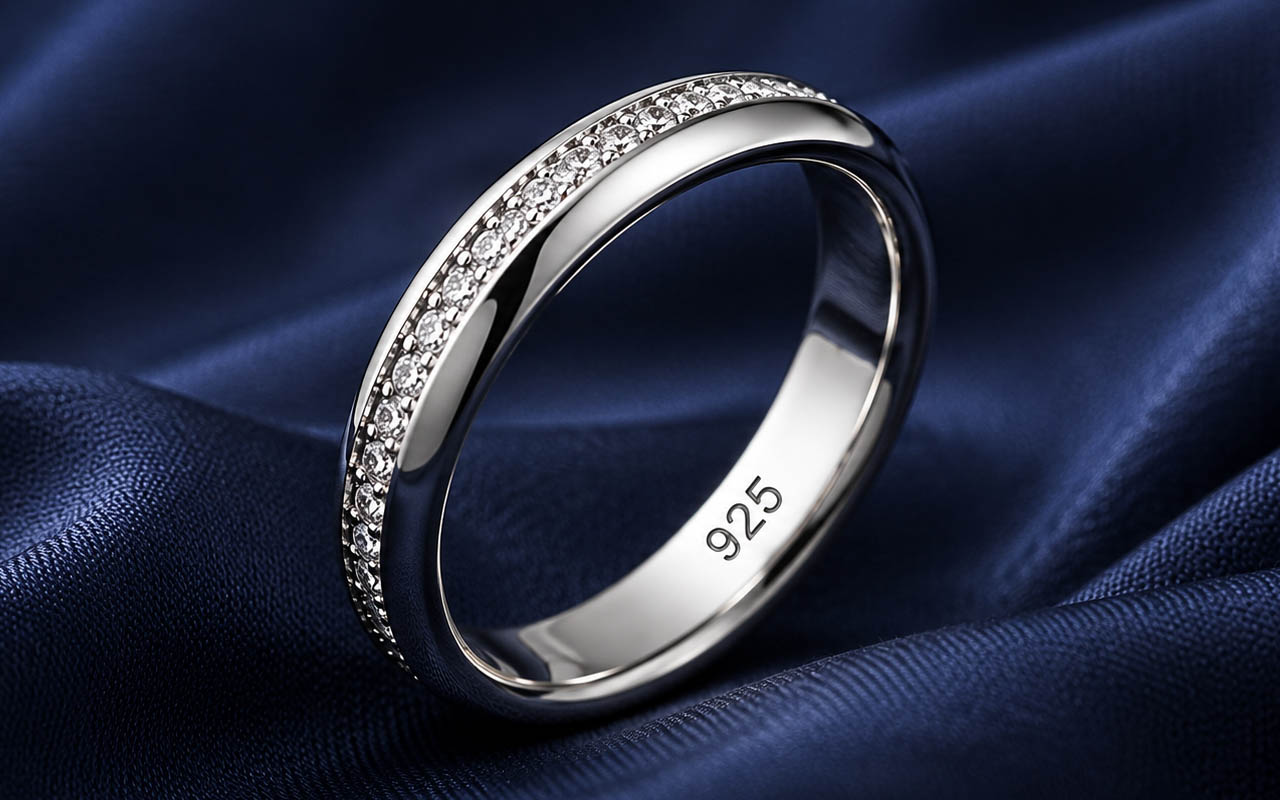
The 925 silver mark on jewelry indicates that the piece is made of sterling silver, containing 92.5% pure silver alloyed with other metals. It’s a trusted hallmark that confirms the jewelry’s quality and authenticity.
The meaning behind the 925 silver mark on jewelry is that the piece meets certain quality standards. It’s a quick way to identify genuine silver and its level of purity.
We’ll break down the meaning of the 925 stamp on jewelry and explain what it reveals about the metal’s composition.
We’ll also discuss how this type of jewelry metal compares with other silver options to help you make an informed decision when shopping.
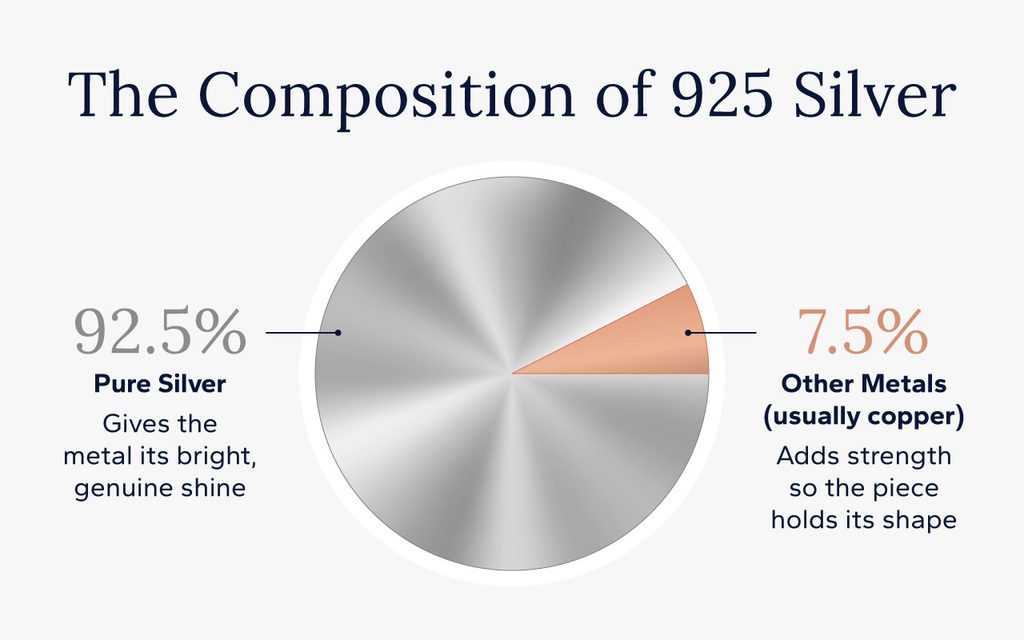
What Is 925 Sterling Silver?
925 sterling silver is a standard hallmark indicating the jewelry contains 92.5% pure silver. The remaining 7.5% in these pieces consists of other metals, like copper.
Since pure (999) silver is quite soft and easily deformed, jewelers add alloying elements to strengthen the piece. This alloying process creates a radiant, durable accessory that retains its shape over time and is suitable for daily wear.
In addition to its high purity and excellent durability, 925 silver has several other key characteristics:
- Hypoallergenic qualities
- Bright, polished appearance
- Malleability for detailed designs
- Excellent resistance to corrosion
These qualities make 925 silver a classic choice for jewelry that combines beauty with lasting strength.
How Much Is 925 Silver Worth?
Currently, one gram of 925 silver trades at about $2.16, based on APMEX’s latest data as of August 29, 2026. The raw metal value of silver jewelry fluctuates with the daily silver market, ranging between $2 and $2.50 per gram.
You can also trade silver in troy ounces, with one troy ounce equal to approximately 31.1 grams. At current rates, a troy ounce of silver is around $69.
These prices change in response to market supply levels, global economic conditions and currency strength. Over the past decade, silver’s price has ranged from around $0.50 during periods of low demand to over $2.50 amid economic uncertainty.
While not as stable as gold, silver jewelry can still be a worthy addition to your investment portfolio.
What Drives the Price of 925 Silver Jewelry?
Since 925 silver jewelry is made of 92.5% pure silver, its basic value is determined solely by its weight. The amount you pay or receive for it varies depending on context.
Here are the main ways its value can differ:
- Melt Value (Scrap): If you decide to melt down the jewelry, you’ll only get paid based on the raw silver inside.
- Retail Value: When you buy brand-new 925 silver jewelry, it costs significantly more due to labor, design, branding, and markups.
- Resale Value: If you sell a piece as wearable jewelry on online platforms, you can get far more than its scrap value, especially if it’s vintage or has gemstones.
Where Does the “925” Stamp on Jewelry Come From?
The “925” stamp’s history begins in medieval England, where King Henry II established a silver purity standard at 92.5%. German traders, called “Easterlings,” influenced this standard by using high-quality silver coins, giving rise to the term “sterling”.
In the 14th century, King Edward I introduced hallmarking laws, requiring silver items to bear marks like the leopard’s head to verify their quality and prevent fraud. As trade expanded across borders, pictorial marks gave way to a simple, universal numbering system. By the 19th and 20th centuries, 925 on jewelry and coins became the international standard.
Why Hallmarking Still Matters Today
Today, we still use the stamp “925 silver”, meaning that despite advances in technology, this label remains a sign of transparency for customers worldwide.
Here is why hallmarking still matters:
- While different countries once used various symbols, hallmarking now provides a universal language that ensures clarity across borders and makes international trade easier.
- Hallmarking certifies the metal content, preventing counterfeit or inferior silver from reaching buyers and helping uphold industry standards.
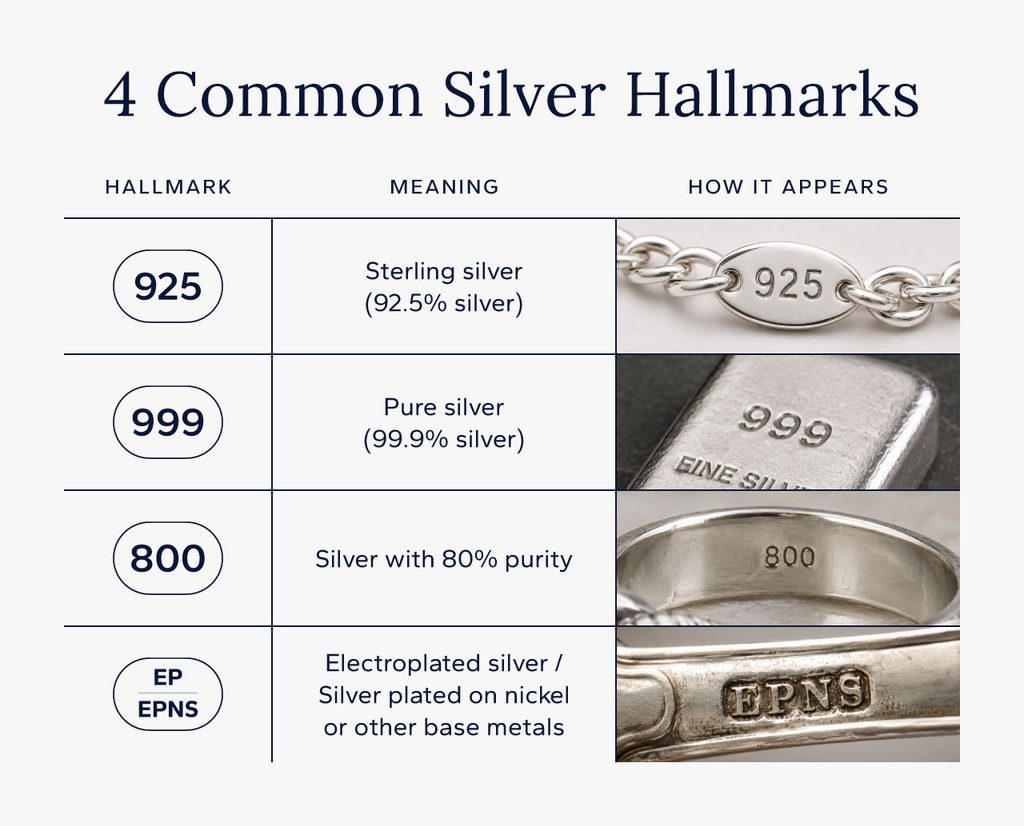
In addition to the “925” hallmark, there are various other signs to indicate different silver qualities. Here is a look at some of the most common marks and their meanings:
| Hallmark | Meaning |
|---|---|
| 925 | Sterling silver (92.5% silver) |
| 999 | Pure silver (99.9% silver) |
| 800 | Silver with 80% purity |
| EP / EPNS | Electroplated silver / Silver plated on nickel or other base metals |
925 Silver vs. Sterling Silver vs. Pure Silver vs. Fake Silver
Once you understand what the 925 on jewelry means, it’s natural to wonder how it compares to other silver varieties. Silver comes in various forms, often with different names and markings. Each has specific uses and qualities that set it apart.
If you intend to buy or sell silver jewelry, you must understand these differences to know exactly what you’re paying for and avoid potential fraud. Here is a closer look at how the 925 variety compares to other types of silver.
| Types of Silver | Usage | Markings |
| Fine/pure silver (999) | Used mainly in high-end jewelry, bullion and some collectibles | 999 / .999 |
| Sterling silver (925) | Widely used in jewelry, silverware and decorative items | 925 / sterling / sterl |
| Silver-plated | Used in costume jewelry and household items | EP / EPNS / plated |
| Nickel silver or “German silver” | Commonly used in military insignia, musical instruments and some hardware | No official hallmarks |
925 Silver vs. Sterling Silver
The terms “925 silver” and “sterling silver” refer to the same alloy, and people use them interchangeably in the jewelry world. While “sterling silver” is more common among US and UK customers, “925” is mostly used in the manufacturing and hallmarking side of jewelry making.
This overlap can lead to misunderstandings, but rest assured that both refer to the same high-quality silver alloy, valued for its durability and beauty.
925 Silver vs. Pure Silver
Pure silver, also known as fine silver, contains 99.9% silver and the mark 999 or .999. It’s very soft and malleable, making it less suitable for everyday jewelry that needs to hold its shape. Jewelers alloy it with other metals to create 925 silver. 999 silver is useful in creating high-end bullion, coins and collector’s items.
While pure silver has a higher silver content, 925 sterling silver offers a better balance of purity and strength, making it ideal for daily wear and long-lasting pieces. 999 silver is better suited for investment or display than for jewelry meant to withstand everyday wear.
925 Silver vs. Fake Silver
Fake silver includes materials like electroplated silver and nickel or “German silver,” which contains no real silver. These are useful in fashion jewelry, household items, hardware, and inexpensive accessories. They have labels like EP and EPNS or contain no hallmarks at all.
Fake silver is much less valuable and easily distinguishable from genuine 925 silver by appearance and weight. Unfortunately, some sellers use these materials to trick buyers into thinking they are purchasing authentic silver. Be cautious of deals that seem too good to be true. Always verify hallmarks and markings before purchasing.
How to Distinguish 925 Silver From Other Types
To ensure you’re getting authentic 925 silver, it’s important to recognize the key differences from fakes and other types of silver. Genuine sterling silver has distinct signs that set it apart from plated or alloyed materials.
Here are some tips to help you identify real silver:
- Check for a clear “925,” “sterling,” or “sterl” mark on the piece.
- Feel the weight. Real silver feels heavier than plated or fake options.
- Test with a magnet. Genuine silver isn’t magnetic.
- Observe for tarnish. Real silver tarnishes evenly, and it’s easy to polish back.
- Examine the color. 925 sterling silver has a bright, consistent shine.
- Verify with a silver testing kit for added certainty.
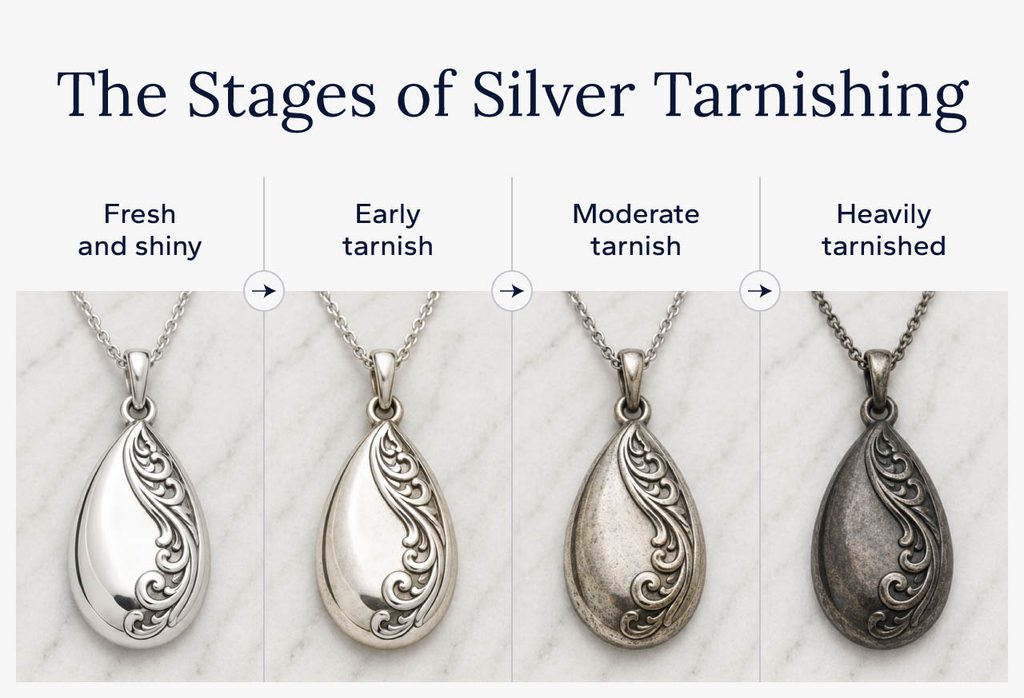
Does 925 Sterling Silver Tarnish?
925 silver can get wet and tarnish over time due to exposure to air and chemicals. The tarnish shows up as a dark or blackish film, which can dull its natural radiance. Fortunately, with simple care, you can keep your silver looking new.
Here are some quick tips to care for your jewelry:
- Clean silver jewelry regularly with a special silver polish.
- Keep your silver jewelry in a dry, airtight box or pouch when not in use.
- Wipe your jewelry with a soft cloth after wearing to remove oils and dirt.
- Avoid contact with chemicals like household cleaners, perfumes and scented lotions.
Shop Sterling Silver with Confidence
Now that you know the meaning of 925 silver, you can buy your next piece with confidence. This knowledge ensures you’re investing in authentic sterling silver pieces that stand the test of time.
If you’re ready to shop, Blue Nile offers an extensive array of silver accessories to choose from. Whether you’re looking for an everyday staple or an elegant gift, you can find it here. Shop silver jewelry today and add a touch of sophistication to any outfit.
Frequently Asked Questions
If you’ve taken a jewelry metal quiz and landed on silver, Blue Nile is the best place to buy from. That said, knowing the meaning of 925 doesn’t guarantee every seller sells genuine silver.
It’s important to choose a reputable shop with clear hallmarks, quality craftsmanship and positive reviews. Blue Nile meets all these criteria and more.
Sterling silver is real silver, but not 100% pure. It contains 92.5% silver and 7.5% other metals, typically copper. These additional metals enhance the jewelry’s strength while preserving its authentic silver identity.
Yes, 925 silver has intrinsic value based on its weight and the current market price of silver. While it’s not as valuable as pure silver or gold, it still holds worth, especially in vintage or designer jewelry pieces. You can melt it down or resell it online whenever you want.
925 silver is more affordable than other jewelry metals like gold because it’s less rare and less costly to produce. It still offers a luxurious look with excellent durability. That is why sterling silver is the choice of many buyers who want budget-friendly accessories.
Yes, 925 sterling silver is good quality jewelry. It’s durable, malleable and resistant to tarnish when properly cared for. Its radiant shine and hypoallergenic nature make it a popular choice for both jewelry lovers and those with sensitive skin.


Share