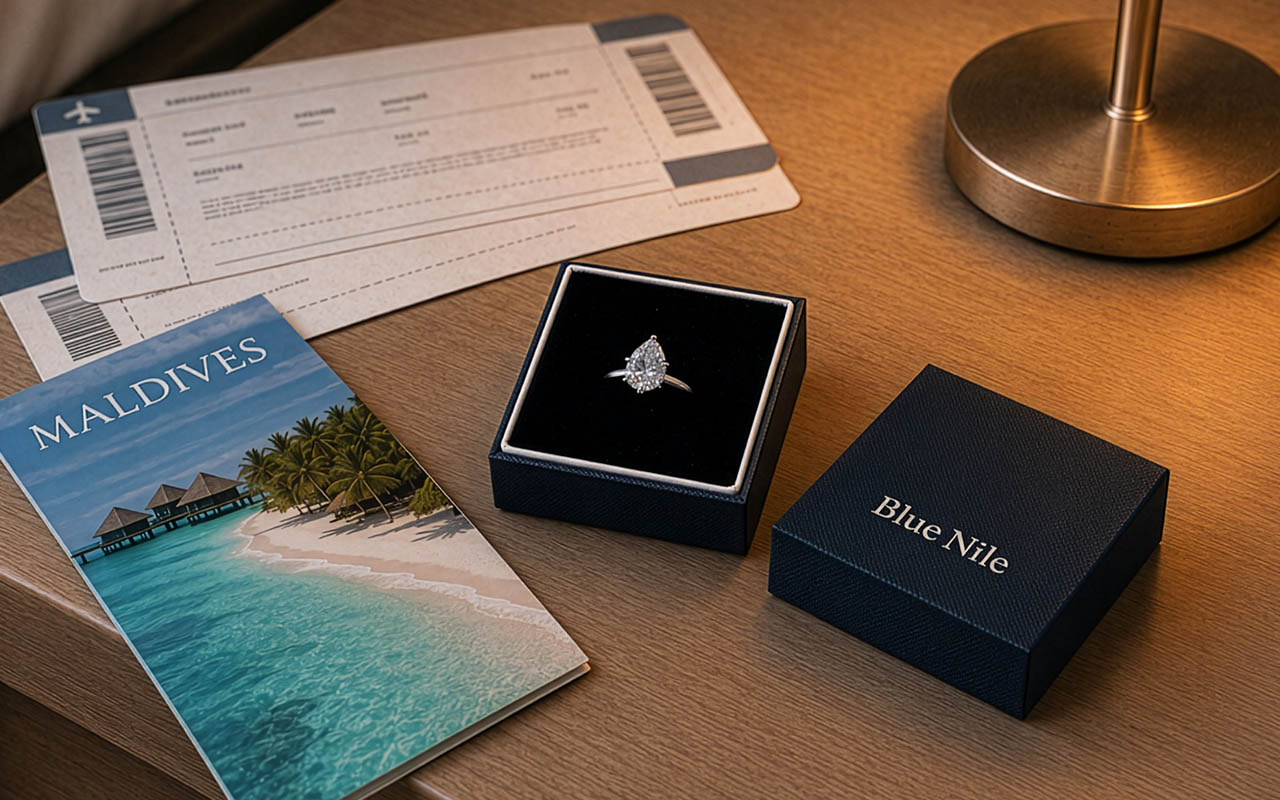
- Insuring an engagement ring starts with getting a professional appraisal, comparing coverage options and choosing a policy that fits your needs. Keep your records up to date and review your coverage over time.
- Engagement ring insurance typically covers unexpected events like loss, theft and accidental damage.
- Engagement ring insurance costs about 1–2% of your ring’s appraised value per year. Your exact premium depends on factors like your location, coverage level and deductible.
The moment after “yes” is unforgettable, and protecting the ring that marks the occasion helps preserve that moment for years to come.
An engagement ring is a priceless symbol of commitment to one another, but it’s also a major investment. Knowing how to insure an engagement ring can give you peace of mind if your ring is ever lost, stolen or accidentally damaged.
From a timeless solitaire to more intricate types of ring settings, the right insurance helps safeguard your ring through every chapter ahead.
Below, we’ll explain why engagement ring insurance is worth considering and the steps to insure your ring.
1. Get Your Ring Appraised
A recent professional jewelry appraisal establishes your ring’s current value, giving insurers the information they need to provide accurate coverage. An outdated or inflated appraisal could lead to higher premiums or complications if you ever need to file a claim.
Keep your appraisal and original purchase receipt in a safe place, along with any diamond grading reports or certificates that came with your ring. These documents will verify your ring’s value and qualities if it’s ever lost, stolen or damaged.
If your engagement ring includes a certified diamond, keep the grading report that came with your purchase. Most jewelers provide this documentation to verify a diamond’s quality and characteristics. Every Blue Nile diamond includes a grading report from a leading independent laboratory that evaluates the diamond’s 4Cs.
2. Choose Your Coverage Type
Once you have the necessary documentation, it’s time to choose your coverage. Most people insure their ring by adding a rider or floater to their homeowners or renters insurance or by buying a standalone jewelry insurance policy.
The right choice depends on your coverage needs and lifestyle:
| Coverage type | Best for | Coverage details |
| Rider (or floater) | Adding coverage to an existing homeowners or renters policy | Added coverage for a high-value item; convenient, but may have lower jewelry payout limits, often capped at $1,500 |
| Standalone jewelry insurance | Specialized jewelry protection | Broader coverage for loss, theft and accidental damage; flexible repair or replacement options |
3. Compare Quotes and Providers
Not all insurance policies offer the same level of protection, so it’s worth comparing quotes from multiple providers before making a decision.
As you evaluate your options, look beyond the monthly premium and review what’s covered and the deductible you’ll pay if you file a claim. Check whether the insurer will repair, replace or reimburse your ring if it’s lost or damaged.
Because coverage details, exclusions and claims processes vary, be sure to confirm what’s covered in a policy before choosing a plan.
4. Purchase Your Policy and Keep Records
Once you’ve chosen the right coverage, complete your application. You’ll want to keep copies of your policy, appraisal, purchase receipt and any diamond grading reports organized in case you need to file a claim more quickly in the future.
Blue Nile customers can explore coverage options through Jewelers Mutual and find a policy that fits each individual’s needs.
5. Update Periodically
Engagement rings are long-term investments, and, like all investments, they can increase in value. Plan to have your ring reappraised every two to three years, or sooner if diamond or precious metal prices rise significantly.
Because the cost to replace your ring may increase, an outdated appraisal could leave a coverage gap. Keeping your records current will ensure your coverage reflects your ring’s true value.
It’s also a good idea to notify your insurer after any upgrades, resizing your engagement ring or major repairs. These changes can affect your ring’s appraised value and should be reflected in your policy.
| Homeowners/Renters Rider | Standalone Jewelry Policy | |
| Coverage scope | Adds coverage to your existing homeowners or renters policy. Coverage varies by insurer. | Specialized coverage for jewelry, often with broader protection. |
| Typical cost | Typically 1–2% of the ring’s insured value per year, depending on your insurer and location. | Typically 1–2% of the ring’s insured value per year, depending on your insurer and location. |
| Deductible | May include a deductible, depending on the policy. | Often offers flexible deductible options, including $0. |
What Does Engagement Ring Insurance Cover?
Every policy is different, but most engagement ring insurance is designed to protect your ring from the unexpected. Commonly covered events include:
- Loss: Loss occurs if your ring slips off your finger or is accidentally misplaced.
- Theft: Theft occurs if your ring is stolen from your home, while traveling or from another covered location.
- Accidental damage: Accidental damage includes bent prongs, a chipped diamond or other damage that occurs unexpectedly.
- Mysterious disappearance: Some policies cover situations where your ring goes missing, but the exact cause is unknown.
Most policies don’t cover normal wear and tear or regular maintenance like cleaning your jewelry at home. Always review your policy’s coverage details before purchasing, and note how repairs or replacements are handled.
How Much Is Engagement Ring Insurance?
Most engagement ring insurance policies cost about 1–2% of your ring’s appraised value each year. For example, insuring a ring appraised at $6,000 may cost roughly $60–$120 annually, depending on your location and coverage. As with all insurance, policies without deductibles have higher premiums.
Because every ring and policy is different, the best way to estimate your cost is to compare quotes from a few insurance providers.
Why Insure Your Engagement Ring?
Your engagement ring is one of the few valuable items you’ll likely wear every day. Whether you’re commuting to work, traveling or simply going about your routine, daily wear increases the risk of loss, theft or accidental damage.
With the average U.S. engagement ring costing about $5,200, it’s worth protecting such a meaningful investment. To see how that compares across the country, explore which states spend the most on engagement rings.
Protect the Ring Behind the Moment
Learning how to insure an engagement ring is a simple step towards protecting one of your most meaningful purchases. Choosing the right coverage means you can enjoy wearing your ring with confidence.
When you’re ready to explore your options, learn more about jewelry insurance for Blue Nile customers and find coverage that fits your ring and your needs.
Frequently Asked Questions
Engagement ring insurance helps protect your ring in the event of a covered incident. Depending on the policy, coverage may include a cash payout, a repair, or a full replacement based on your ring’s value. Whether you wear your ring every day or you’re traveling with jewelry, the right coverage gives you peace of mind.
Insurance for engagement rings works much like other types of insurance. Here’s a breakdown of the steps:
- Get your ring appraised and gather your purchase documentation.
- Compare coverage options and choose the policy that’s right for you.
- Purchase your policy and pay the annual premium.
- File a claim if your ring is lost, stolen or damaged and the incident is covered.
- Receive a repair, replacement or reimbursement based on your policy’s terms.
The best engagement ring insurance option depends on your ring, your budget and the level of coverage you want. Many people choose between adding a rider to their homeowners or renters insurance or purchasing a standalone jewelry insurance policy with more specialized coverage.
If your ring holds a lot of sentimental value and you wear it every day, it’s worth insuring. An engagement ring that you wear daily is more prone to damage and loss. Alternatively, if you don’t wear it often, you may not need insurance.
If you purchase the ring before the proposal, you’ll pay for the insurance when you buy the ring. If you didn’t insure the ring when you purchased it, you and your partner can choose to split the cost of coverage later.
Yes, most insurers require a recent appraisal or proof of purchase to verify the value of your ring. It’s smart to keep your appraisal current so your coverage reflects your ring’s replacement value.
If your ring is lost, stolen or damaged, contact your insurance provider as soon as possible to begin the claims process. You’ll need your policy information, documentation such as an appraisal or receipt and any additional details about the incident before the insurer determines the next steps.


Share