A bangle is a rigid, slip-on wrist ornament with a fixed circular or oval shape, while a bracelet is usually a flexible ornament with clasps and closures. The main practical difference comes down to structure and fit: bangles hold their shape at all times, while bracelets drape and conform to the wrist.
Bangles and bracelets: People across cultures have worn them as statement pieces and cultural symbols for millennia. Still, the words used to describe them aren’t always clear.
When comparing bracelets vs. bangles, they may look similar at first glance, but they have distinct differences worth knowing before you shop. Here’s what sets them apart and how to find the right style for you.
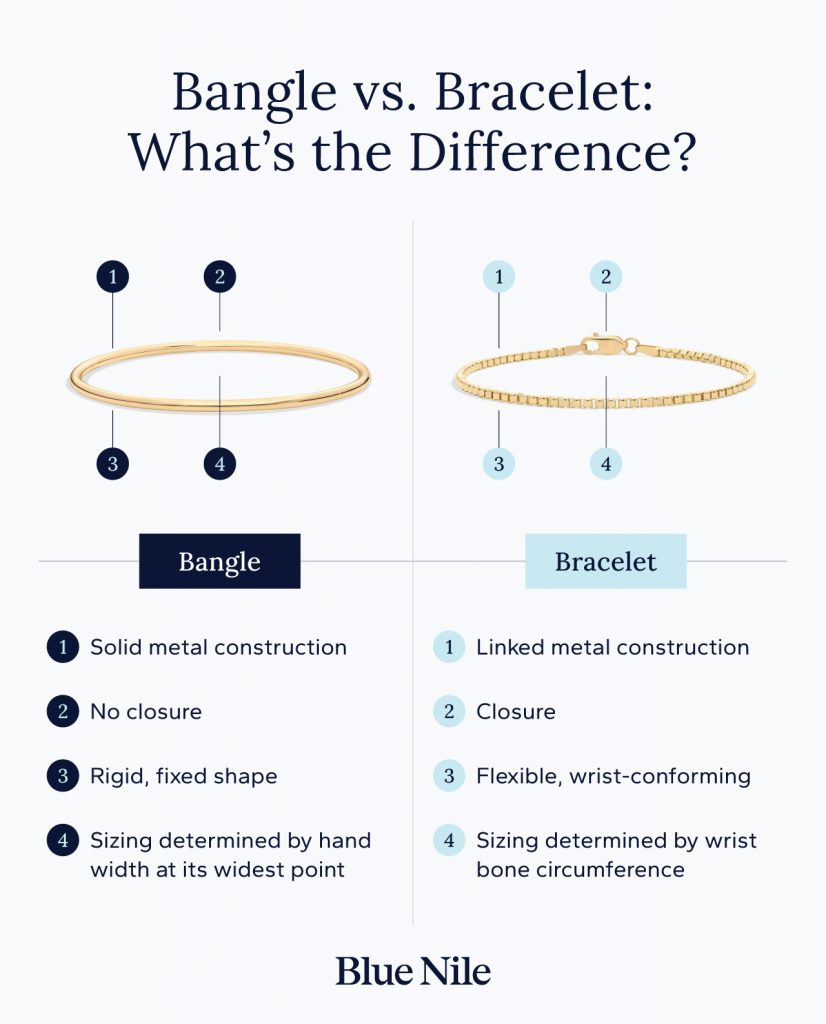
What’s the Difference Between a Bangle and a Bracelet?
Bangles and bracelets share a lot in common, but a few key differences set them apart: structure, fit, style, closure and materials. Each one affects how the piece looks, how it feels on the wrist and how you care for it over time.
Use the comparison chart below to quickly see how the two stack up across structure, fit, style, closure and material.
| Bangle | Bracelet | |
| Structure | Rigid, fixed circular or oval shape | Flexible; links, strands or fabric conform to the wrist |
| Fit | Sized by hand/knuckle circumference; slides over the hand | Sized by wrist circumference; fastened at the wrist |
| Style | Uniform circular or oval shape | Wide variety of styles; drapes naturally along the wrist |
| Closure | No closure | Various closures, including lobster clasp, spring ring clasp and box clasp |
| Materials | Metals, gemstones, wood, glass and natural materials | Metals, gemstones, leather and fabrics |
Structure
A bangle is rigid, maintaining its fixed circular or oval form on the wearer’s wrist. As the wearer moves their wrist, the bangle moves as one uniform unit.
By contrast, bracelets are flexible. They’re held together by links, chains or beads, which means they follow the natural contour of the wrist and conform to the wearer’s movements.
Fit
For most bangles, sizing is determined by the widest part of your hand. To find your size, you measure the circumference of your knuckles (with your thumb tucked toward the palm). It’s important to find your ideal measurement because a bangle that’s too small will be impossible to put on and one that’s too large will fall off the wrist.
Bracelet sizing is determined by measuring the circumference of your wrist bone, then adding 1/2 inch for a comfortable fit. Because bracelets are linked together, they’re typically easier to adjust to your precise measurements if needed.
Style
Bangles and bracelets both offer a range of styles that serve different aesthetic, cultural and functional preferences.
Bangles are typically worn stacked in multiples and styled with both ethnic and contemporary outfits. Common bangle styles include:
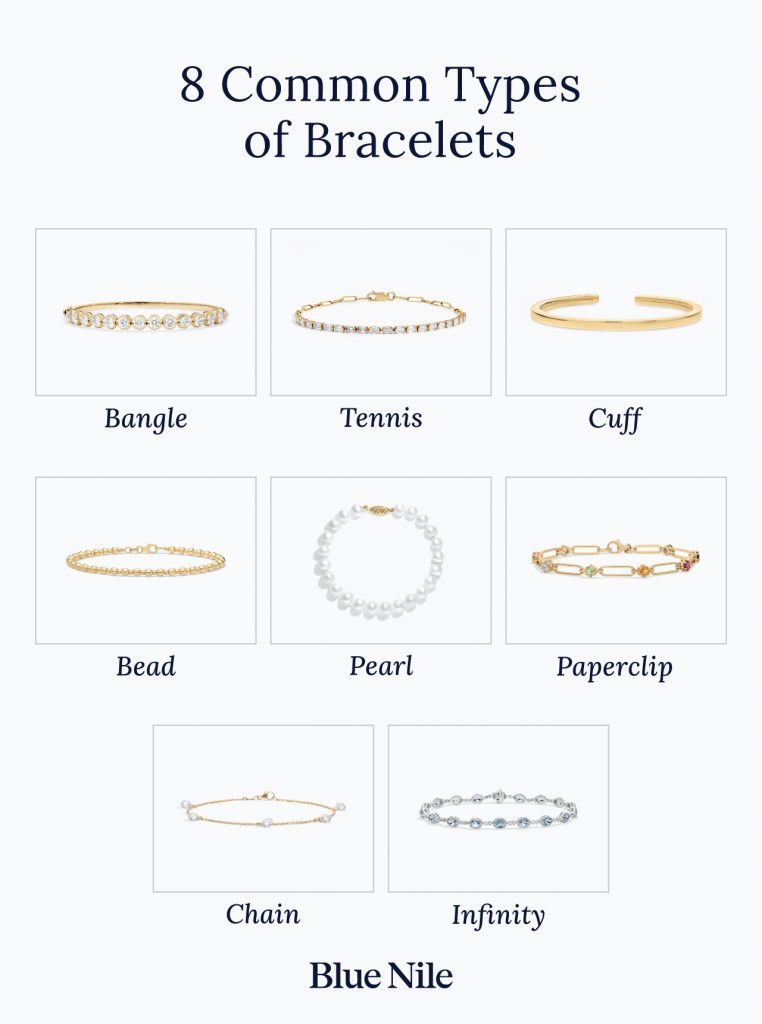
- Round bangles: The most common style of bangle, defined by a uniform circular or oval shape.
- Open-ended bangles: A bangle that has a gap on one side (similar to a cuff), allowing people to fasten it directly onto the wrist rather than slipping it over the hand or securing it with a clasp.
- Russian wedding bangles: A bangle made of three separate, interlocking metal bands that blend together into one silhouette.
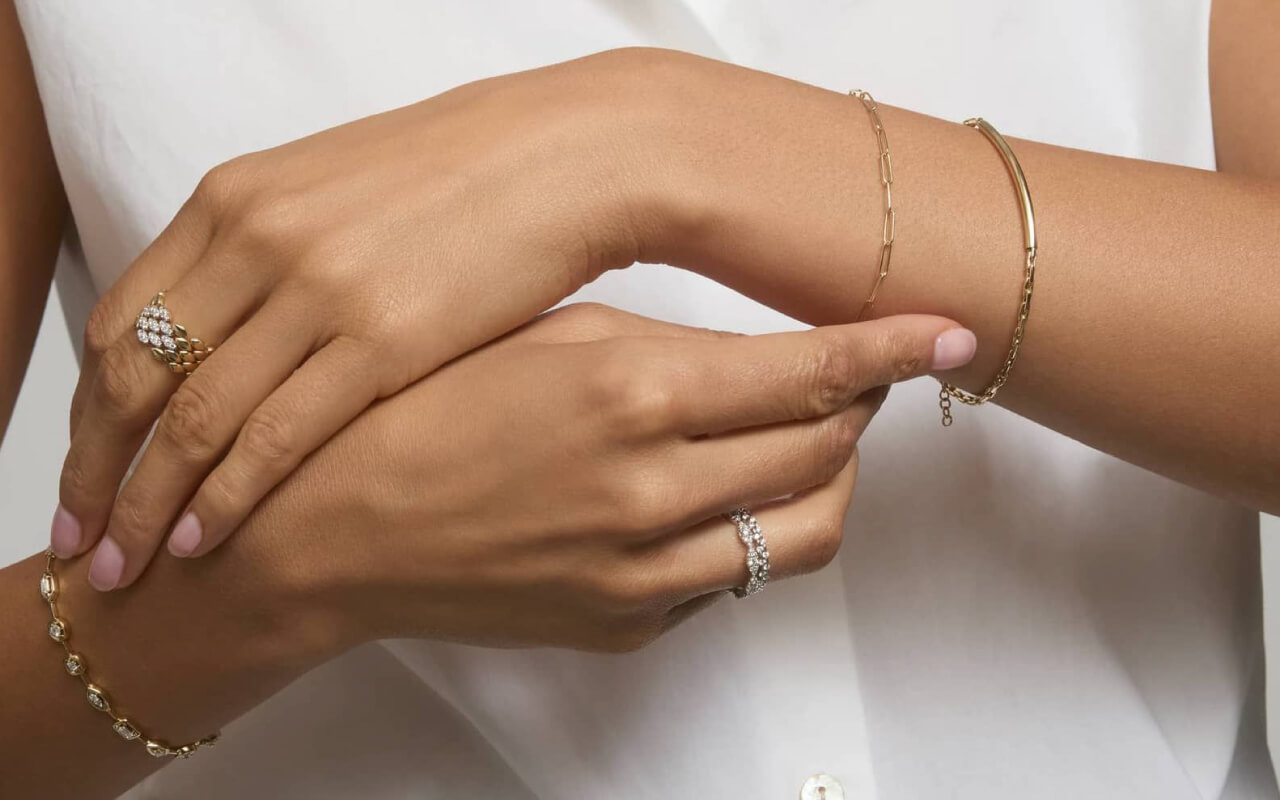
Bracelets are usually worn singly or lightly layered and styled for everyday or formal wear, sitting close to the wrist as a subtle finishing touch. Common bracelet styles include:
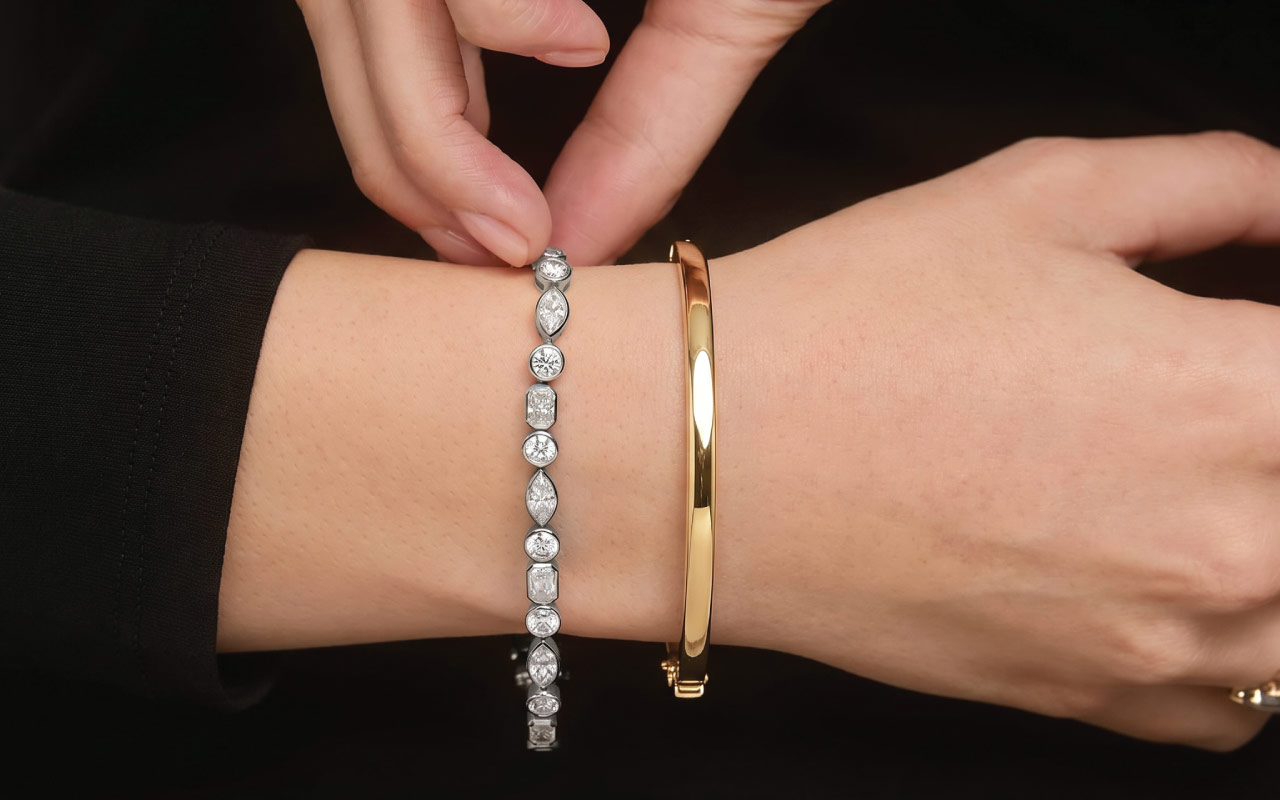
- Tennis bracelets: A bracelet consisting of a continuous, symmetrical line of diamonds, gemstones or other precious metals.
- Beaded bracelets: A bracelet made by connecting beads of gemstones, metals or other materials together with an elastic cord or wire.
- Chain bracelets: A bracelet made from interlinked metals, fabrics or leather segments.
Take our bracelet style quiz to identify the aesthetic that suits you best.
Closure
Bangles are typically solid slip-ons with no closure. Meanwhile, bracelets almost always come with a mechanical closure, such as a lobster claw or spring ring clasp.
Materials
Bangles are typically made from solid precious metals such as gold, silver and platinum. In some cultures, bangles are made from glass, wood or natural materials such as seashells. Bracelets are also usually made with precious metals, but can also be made from gemstone strands, leather and a wide variety of other materials.
What Is a Bangle?
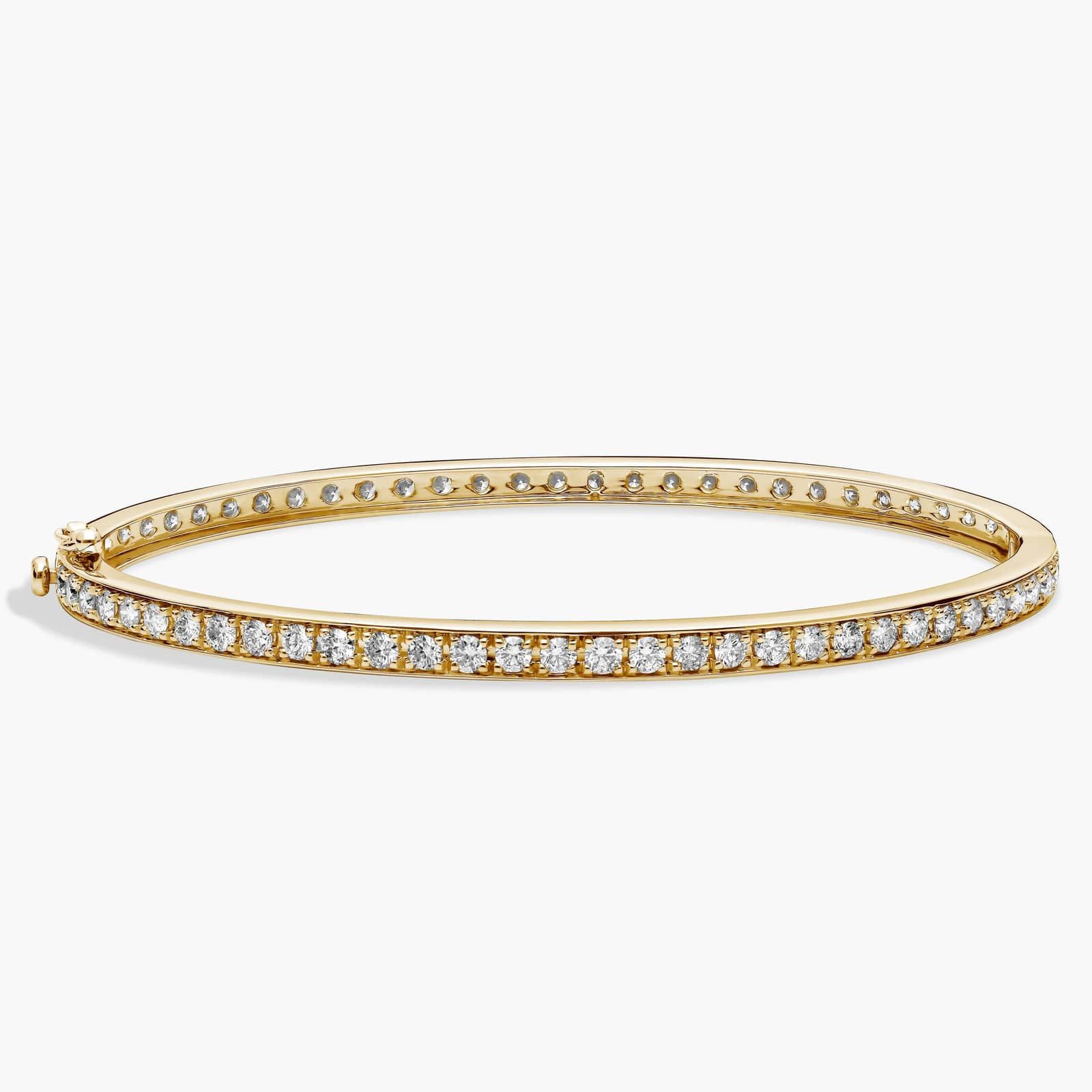
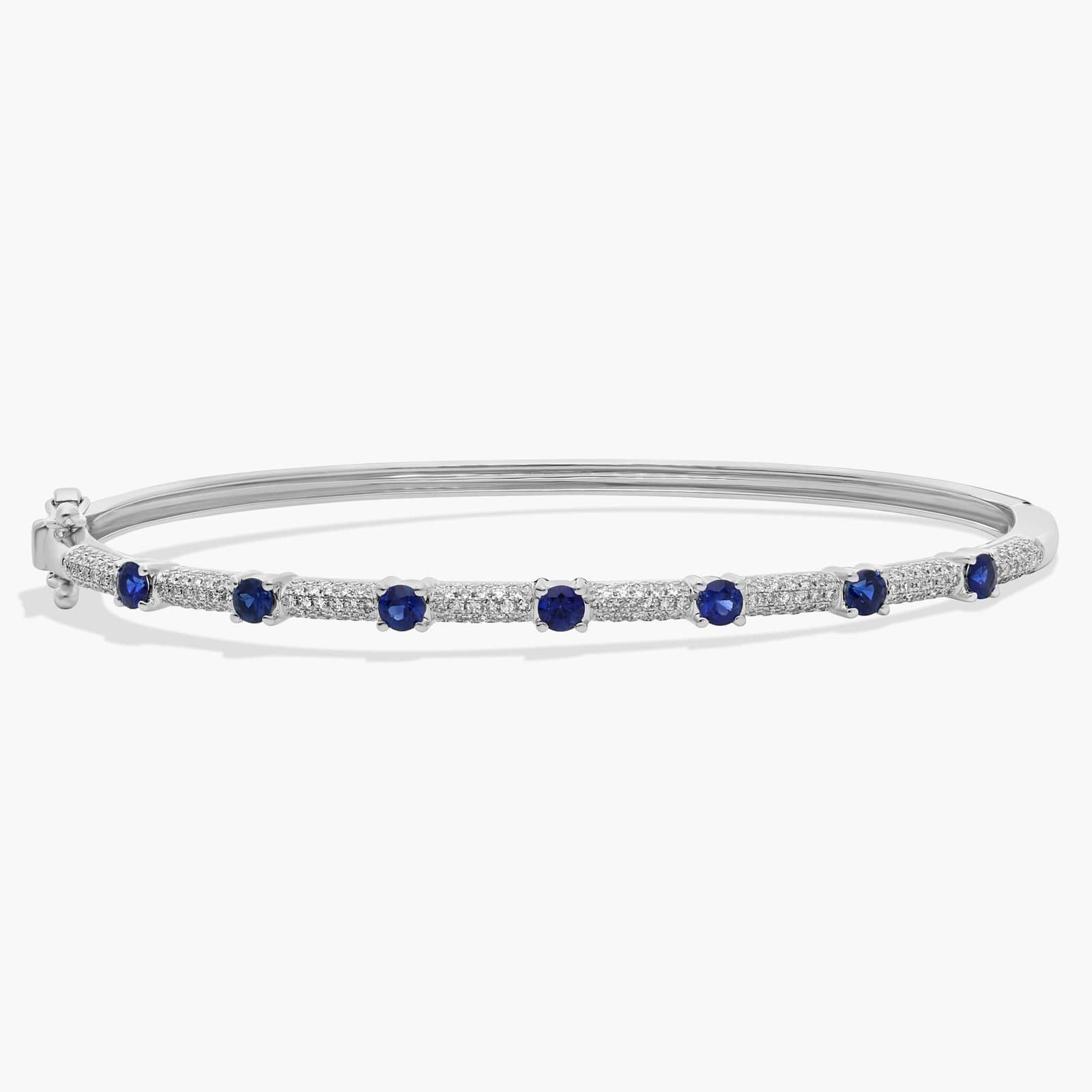
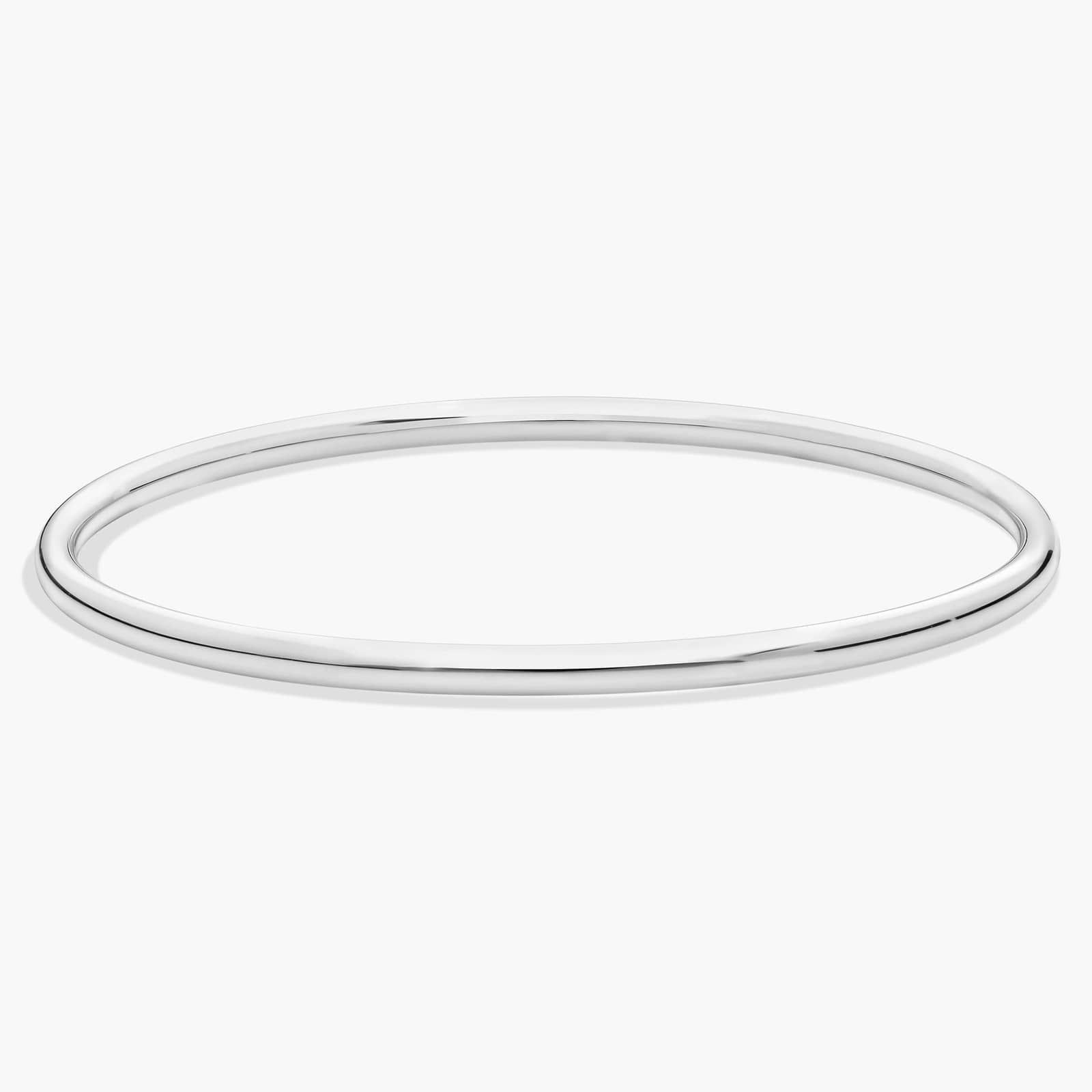
A bangle is a rigid, closed-form wrist ornament, typically taking on a circular or oval shape. Unlike bracelets, which are often flexible, bangles have a solid structure and hold their shape over time. They’re typically worn in stacks, creating a layered look and an unmistakable, rhythmic clinking sound.
Bangles date back thousands of years, with early examples from the Indus Valley civilization around 2600 BCE and similar ornaments appearing across cultures worldwide. They carry unique cultural significance across regions. For instance, in some South Asian communities, bangles can symbolize marital status or prosperity.
What Is a Bracelet?
The term “bracelet” can refer to any decorative wrist ornament, but it’s most commonly used to describe a flexible, loosely fitting piece made from connected materials and fastened with a clasp. Their malleable structure allows them to drape naturally against the skin and fluidly change shape to conform to the wearer’s wrist.
Bracelets come in various styles, including:
- Chain bracelets
- Tennis bracelets
- Charm bracelets
- Beaded bracelets
Bracelets are among the oldest forms of jewelry, dating back to ancient Mesopotamia, and have carried distinct cultural meanings wherever they’ve been worn. In ancient Egypt, for example, scarab bracelets symbolized rebirth and were worn as protective charms.
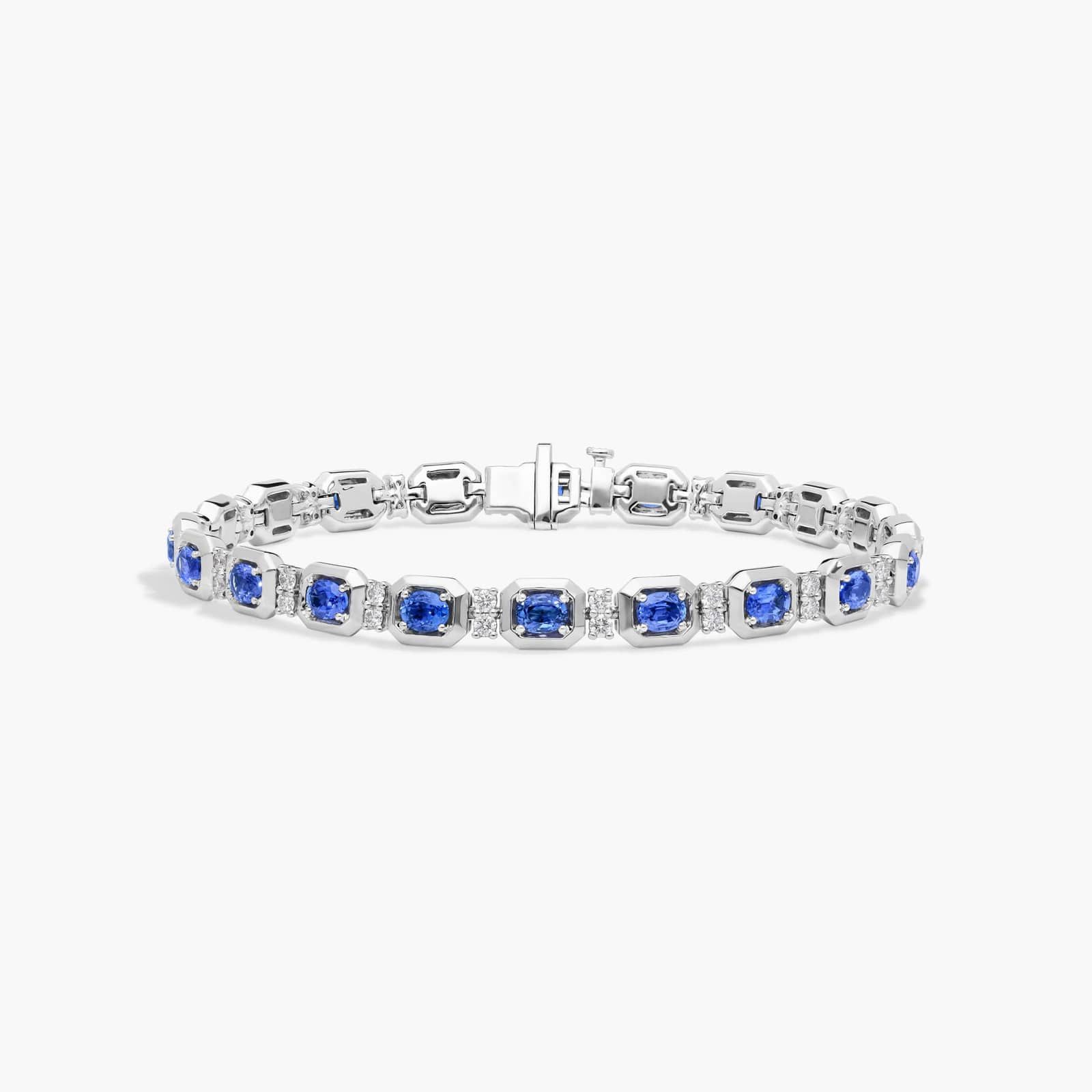
Oval Cut Blue Sapphire and Diamond Alternating Tennis Bracelet In 14K White Gold
Shop Tennis Bracelets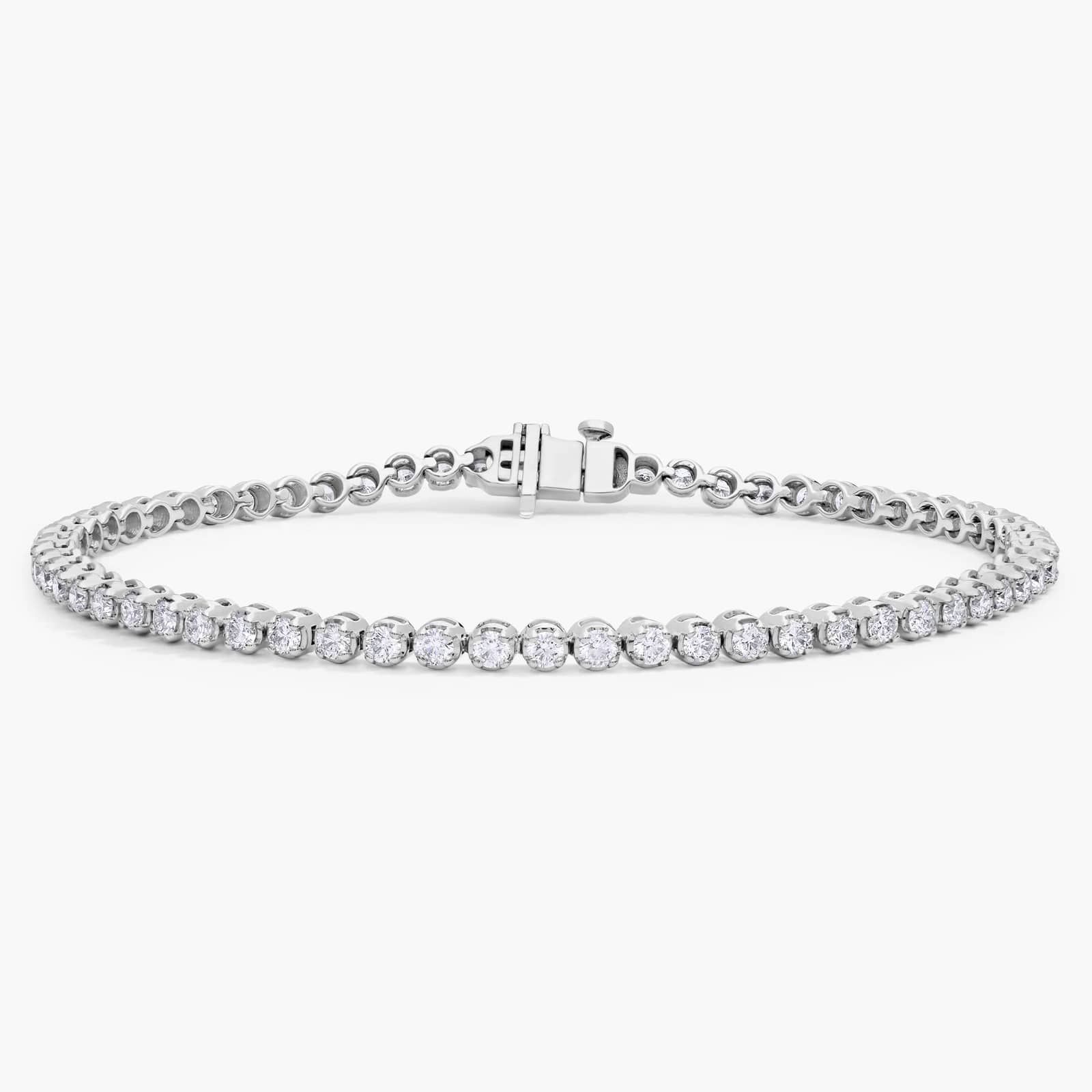
7 " Four Prong Diamond Tennis Bracelet In Platinum (2 Ct. tw. – H-I / SI1-SI2)
Shop Diamond Bracelets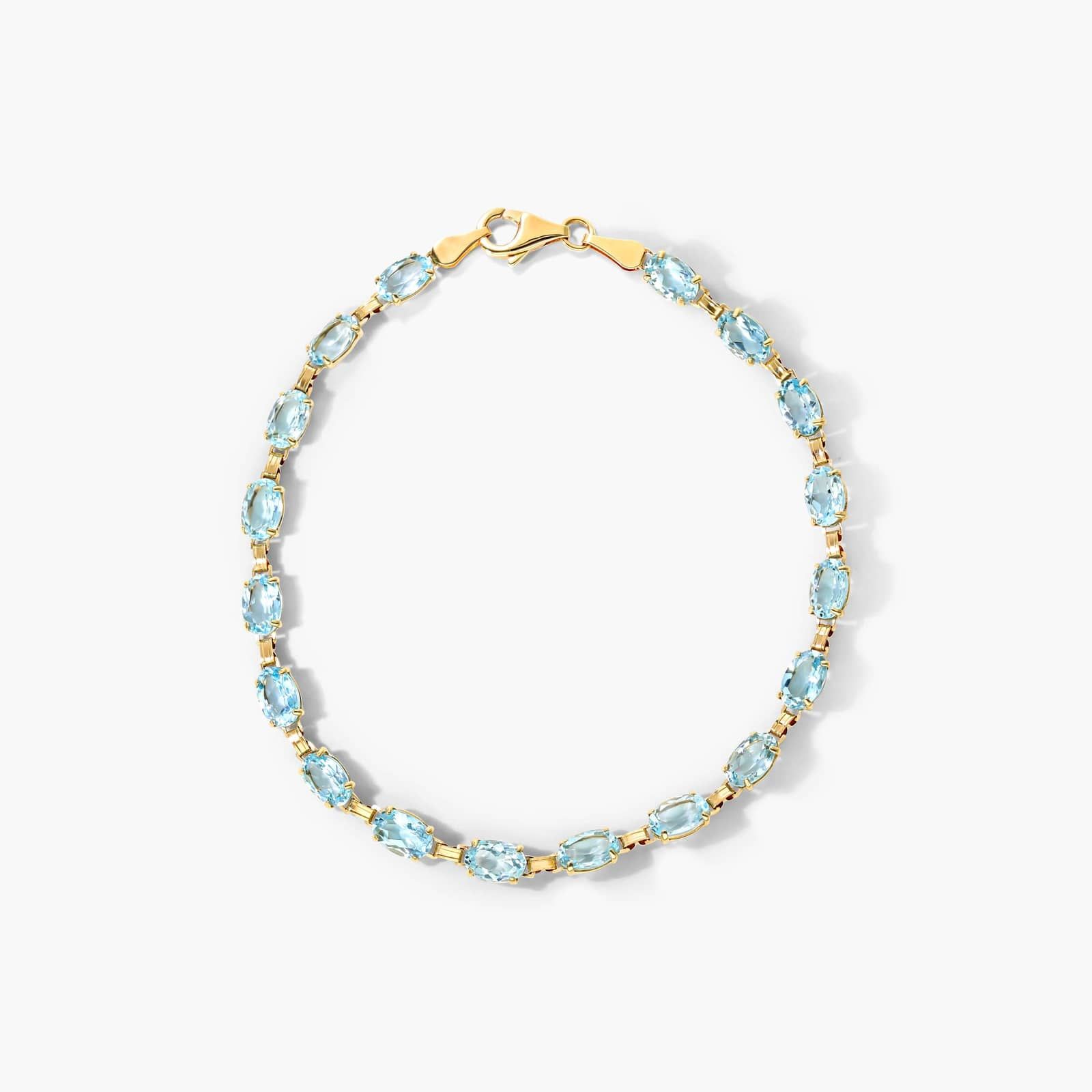
How to Choose Between a Bangle and a Bracelet
Whether you choose a bangle or a bracelet depends on how you plan to wear the piece, what you want it to do for your look and, sometimes, what wrist ornaments you already own.
A few factors worth considering before you decide include:
| Bangles | Bracelets | |
| Occasion | A thick bangle with diamonds or colorful gemstones makes a great statement piece for special occasions | A more subtle option for daily wear that still elevates your look |
| Lifestyle | Worth considering if you take jewelry on and off frequently or want an elegant piece for a few hours a day | Comfortable for constant, everyday wear since they feel softer and more natural on the wrist |
| Personal style | Better suited to larger profiles that stand out on the wrist, especially when stacked | Plenty of options for those who prefer minimalist, subtler looks |
| Stacking | Ideal for stacking, since they don’t tangle and let you combine multiple colors without damage or hassle | Can tangle when stacked together on the same wrist |
| Stones | Can incorporate gemstones, so it comes down to stylistic preference | Tennis and charm bracelets are great for showcasing gemstones |
Find Your Perfect Piece at Blue Nile
Making the bangle vs. bracelet decision doesn’t have to be difficult. Blue Nile has been connecting people with their ideal jewelry for more than 25 years. We offer pieces crafted to last, high-quality and responsibly sourced materials and expert guidance for purchasing decisions.
Browse our selection of bangles and bracelets to find the right piece, whether you’re building a wrist stack, shopping for a gift or adding an everyday piece to your collection.
Frequently Asked Questions
A bangle is generally easier to put on by yourself, since in most cases, all you have to do is slip it over your hand. A bracelet, on the other hand, can be tricky to put on, because you need to hold it in place while fastening a small clasp with your other hand.
The two-finger rule is a simple way to check whether a bracelet fits comfortably. Once the bracelet is fastened, you should be able to slide two fingers side by side between the band and your wrist. If both fingers fit without forcing, the bracelet has enough room to move naturally without being so loose that it slips over your hand.
Neither bangles nor bracelets are inherently better for sensitive skin. The biggest determining factor here is the material your bangle or wristband is made of. Sterling silver, high-purity gold and nickel-free metals tend not to trigger rashes or irritations.
Yes. Mixing bangles and bracelets on the same wrist is a popular styling approach, often called stacking. Refer to our stacking guide for tips on how to stack jewelry tastefully.
Most bangles don’t have clasps, so to find out your proper size, you’ll need to measure the circumference of your hand at the widest point. Typically, this means measuring across the knuckles with your thumb tucked toward your palm. However, this isn’t true for every bangle, so make sure you carefully identify which type you’re buying to align your measurement technique.
What’s better for everyday wear truly depends on your preferences and needs. For instance, bracelets are typically more comfortable because of their loose fit and their natural movement with your wrist. However, bangles are easier to put on and take off and they’re usually more durable due to their solid structure.
A bracelet is the broad category that covers all wrist jewelry, but usually refers to a flexible wrist ornament made from linked materials and fastened with a clasp.
A bangle is a specific type of bracelet defined by its rigid, closed form—it holds its shape at all times and slides onto the wrist by passing over the hand.
A cuff is also a rigid wrist ornament, but unlike a bangle, it has an open gap that allows it to slide onto the wrist from the side rather than over the hand.
Yes. Bangles are timeless designs and are in style today. Right now, stackable bangles are popular, letting people mix different gold tones with platinum and silver. Open-ended bangles decorated with diamonds and pearls are also on-trend.
Bangles can be made from virtually any metal, from platinum and silver to gold (including yellow gold, white gold and rose gold).


Share