


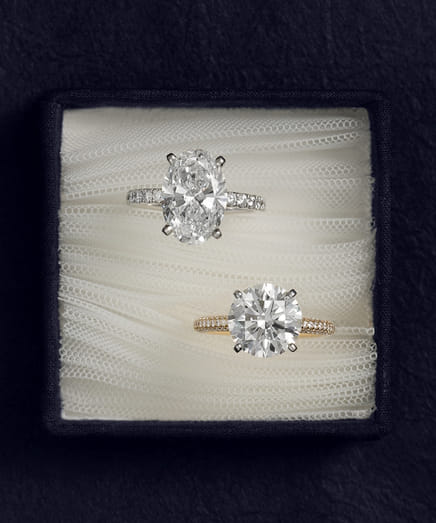





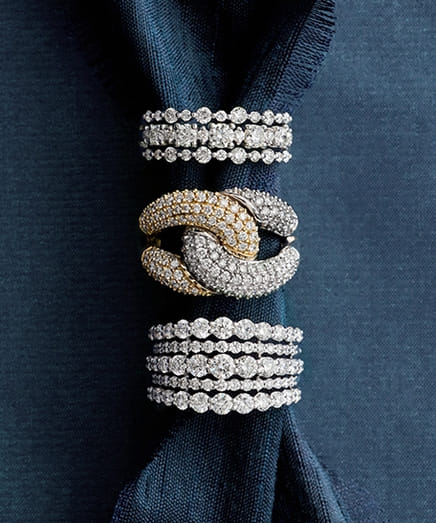
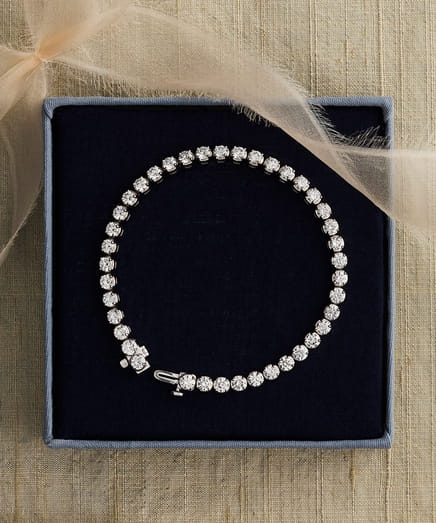
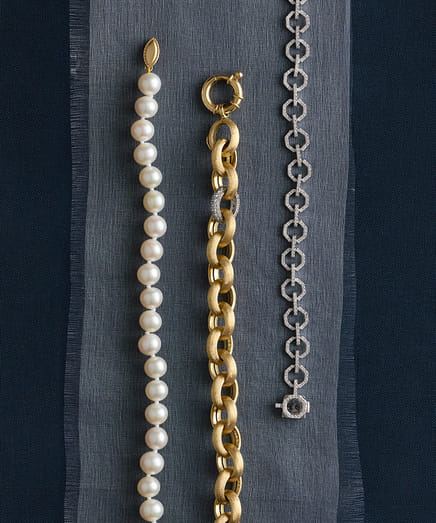
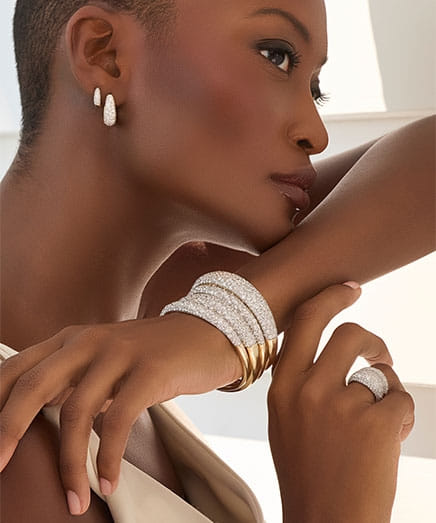





The color of gold you choose can shape the entire look of a piece of jewelry.
When comparing white gold vs. yellow gold vs. rose gold, the differences go beyond appearance. Each metal has its own alloy composition and maintenance needs, which can influence how gold jewelry looks, how it complements gemstones and how it wears over time.
In this guide, we’ll compare the characteristics of each type of gold, explore their pros and cons and explain how to decide which option fits your style and lifestyle.
What’s the Difference Between White Gold vs. Yellow Gold vs. Rose Gold?
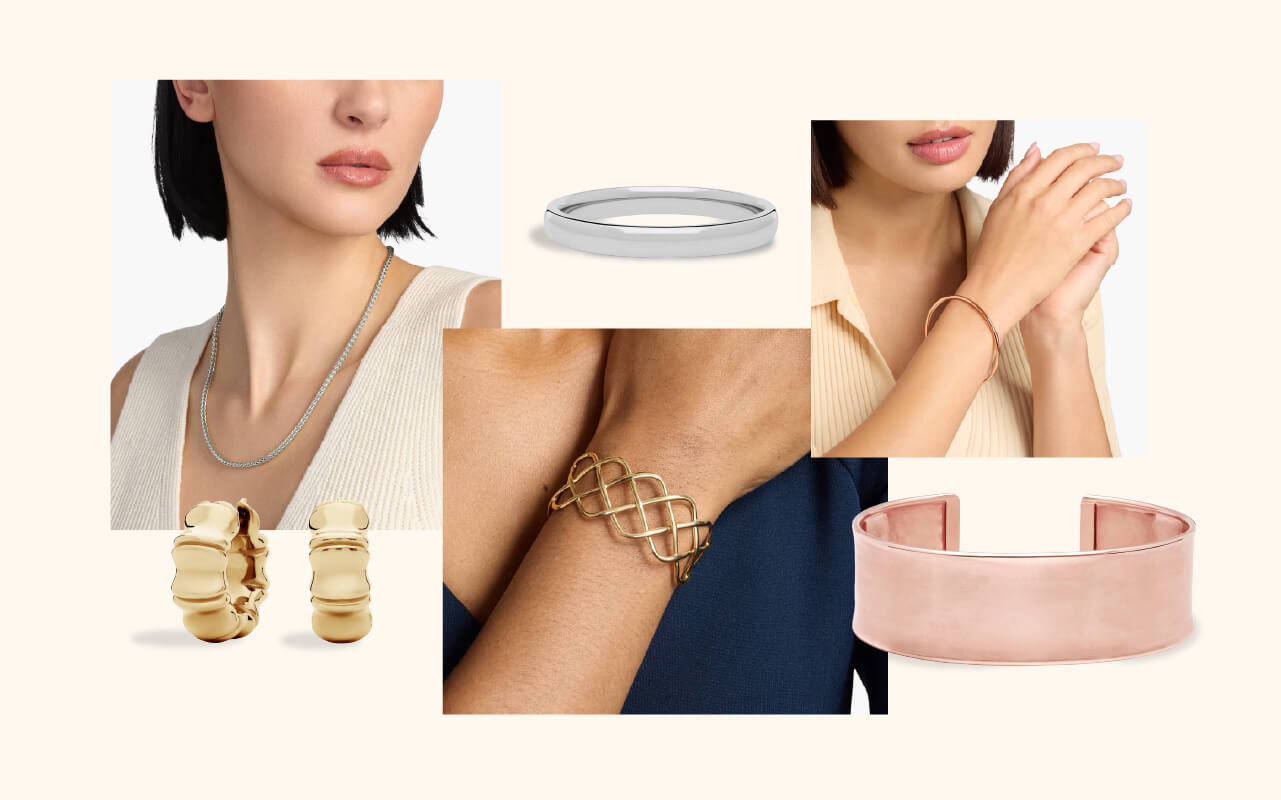
The colors of white gold, yellow gold and rose gold come from different metals mixed with pure gold. Naturally yellow and relatively soft, gold is often blended with other metals to create stronger alloys. These combinations determine the metal’s color, durability and how gold responds to everyday wear.
While the color and properties of these metals vary, their weight and cost are usually similar when the gold karat is the same. The table below highlights the key differences.
| White Gold | Yellow Gold | Rose Gold | |
| Appearance | Bright white finish that resembles platinum | Rich yellow tone that reflects gold’s natural color | Soft pink tone |
| Composition | Gold blended with white metals such as nickel or palladium, usually finished with rhodium plating | Gold mixed with alloys such as copper and silver that preserve its yellow color | Gold blended primarily with copper to create its pink hue |
| Durability | Durable metal, though rhodium plating may wear over time | Durable but slightly softer depending on the alloy blend | Copper alloy increases hardness and scratch resistance |
| Maintenance | May require occasional rhodium replating to maintain its bright finish | Generally low maintenance beyond routine cleaning | Low maintenance and does not require replating |
| Hypoallergenic Properties | May cause irritation for people sensitive to nickel in some alloys | Well tolerated, especially in higher karat gold | Usually well tolerated, though copper content may affect sensitive skin |
| Style Aesthetic | Sleek, modern appearance | Classic and traditional look | Romantic pink tone with a soft vintage feel |
| Common Uses | Popular for engagement rings and diamond jewelry | Traditional choice for wedding bands and classic jewelry styles | Often chosen for vintage-inspired and Art Deco revival designs |
What Is White Gold?
Best for: Contemporary aesthetic
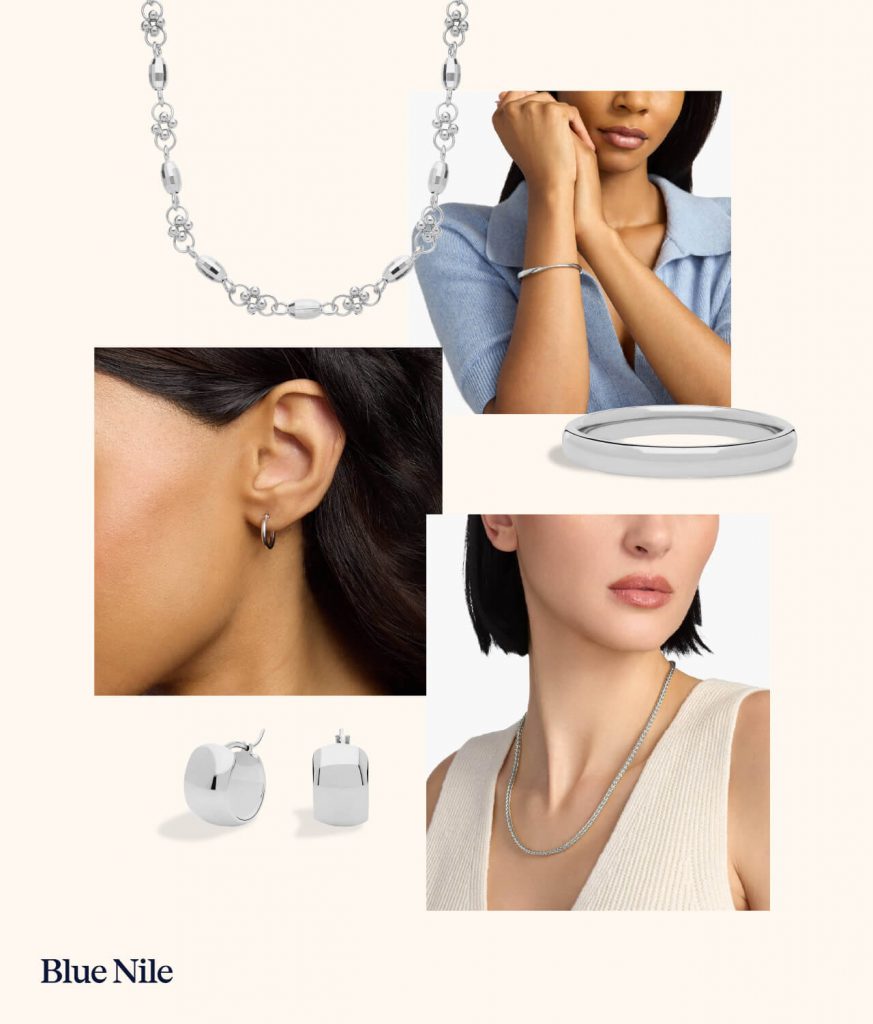
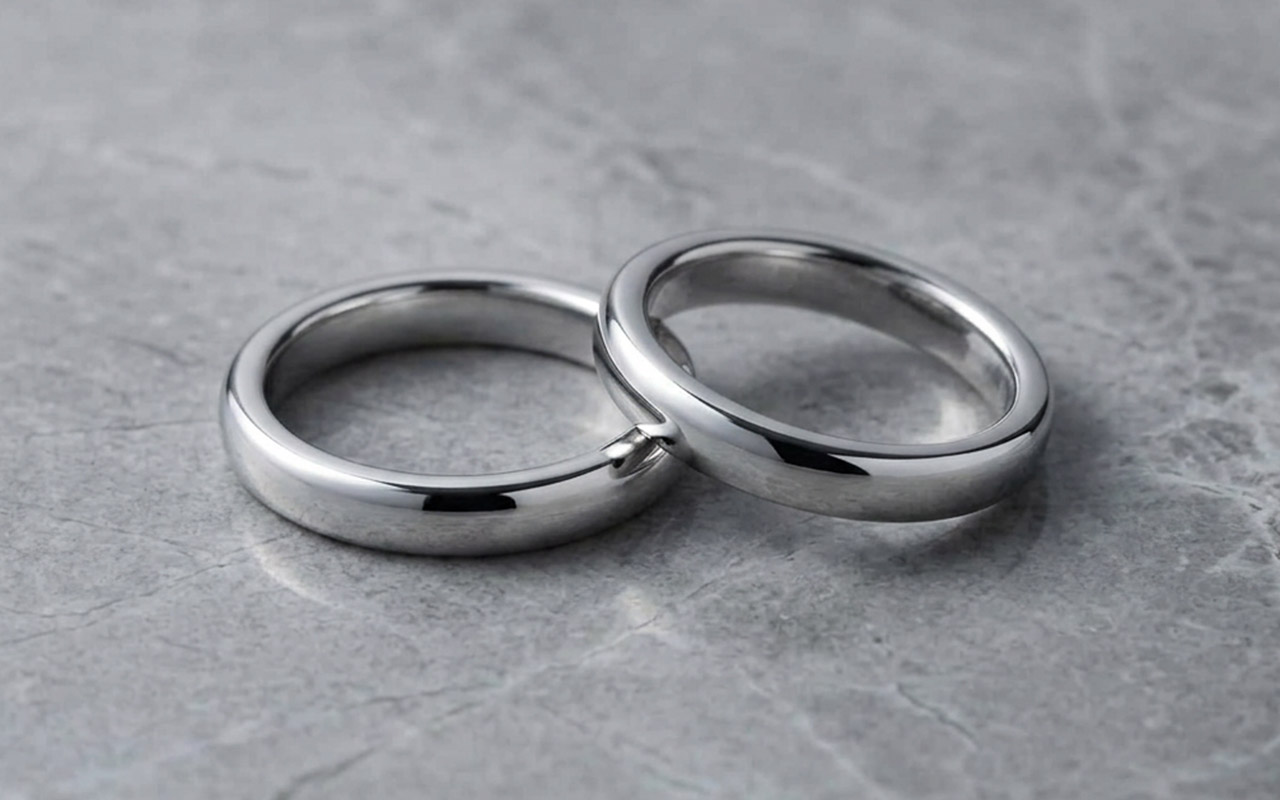
Blending pure gold with white metals such as nickel or palladium creates the alloy known as white gold. Most white gold jewelry is finished with a thin layer of rhodium plating, which gives the metal its bright white shine and reflective surface.
Because of its sleek tone and modern appearance, white gold has become one of the most popular choices for engagement rings and diamond jewelry. Due to their similar appearance, many compare platinum vs. white gold when deciding which metal best suits their style and budget.
| Pros | Cons |
| Bright white finish that enhances diamonds with a modern aesthetic | Surface may appear slightly yellow as the rhodium plating wears |
| Durable alloy suitable for everyday jewelry | Rhodium plating may require periodic professional replating |
| Often more affordable than platinum | Some alloys may contain nickel, which may irritate sensitive skin |
Appearance, Aesthetic and Color
With its bright, silvery-white appearance, white gold vs. yellow gold gives jewelry a more modern look. Rhodium plating enhances that brightness and creates a reflective finish. Its neutral tone also makes it easy to pair with a range of jewelry styles, from minimalist solitaires to detailed designs.
Composition and Karat
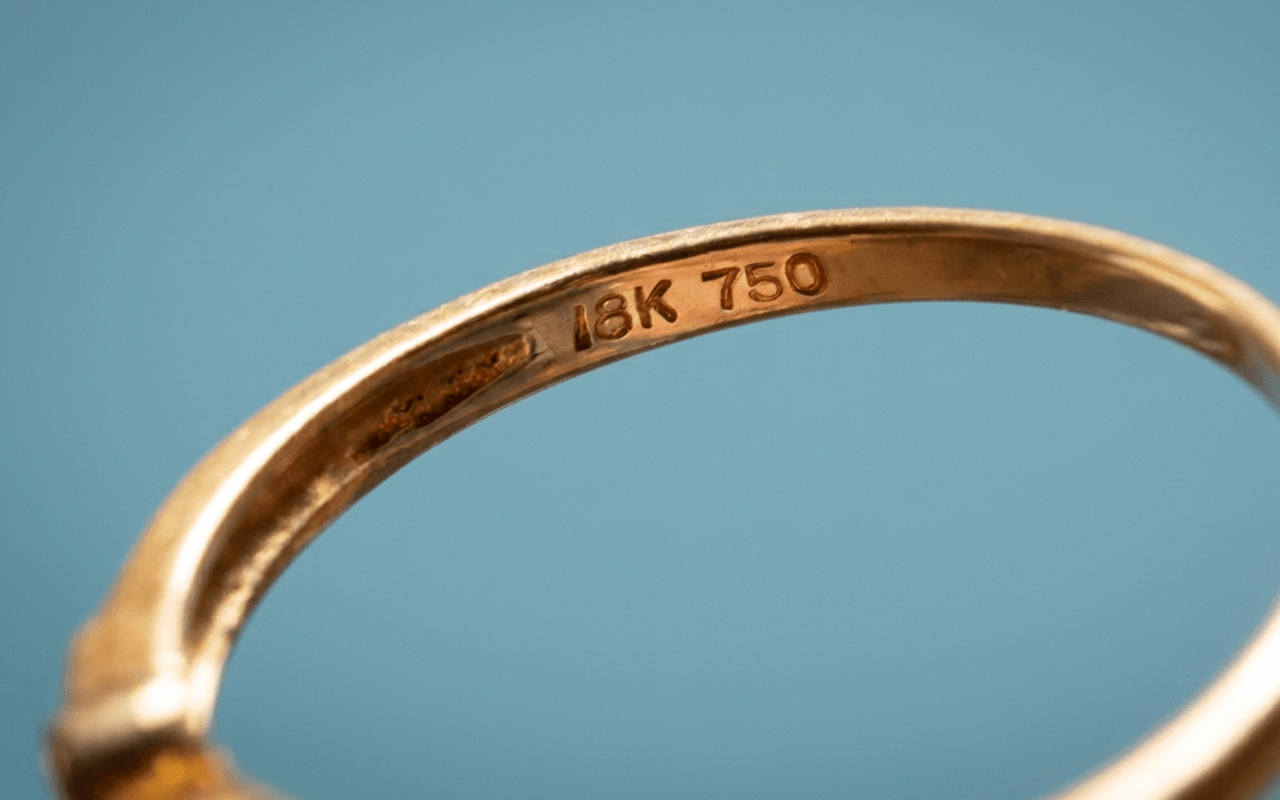
White gold is created by mixing pure gold with white metals such as nickel, palladium or zinc. Those metals strengthen the gold and shift the yellow color toward white. When comparing 10k vs. 14k vs. 18k vs. 24k, 14k or 18k is often chosen to optimize durability and achieve a lighter color. Most white gold pieces are also rhodium-plated.
Strength and Resilience
White gold is durable enough for everyday wear, particularly in 14k and 18k, thanks to its alloy, which helps the metal hold up well over time. However, everyday wear will gradually thin the plating, allowing the underlying yellow tone of the white gold alloy to show through.
Maintenance
Requiring more upkeep than yellow gold or rose gold, white gold depends on rhodium plating for its bright finish. Depending on wear, plating may last one to several years before needing to be redipped by a professional jeweler. For everyday care, routine cleaning with warm water, mild soap and a soft brush can help maintain shine.
Why People Choose White Gold
To achieve a contemporary aesthetic or maximize the brilliance of colorless gems and diamonds, white gold remains a strong choice. Its bright finish gives it a platinum-like look, while 14k and 18k options offer a balance of durability and refined appearance.
What is Yellow Gold?
Best for: Timeless aesthetic
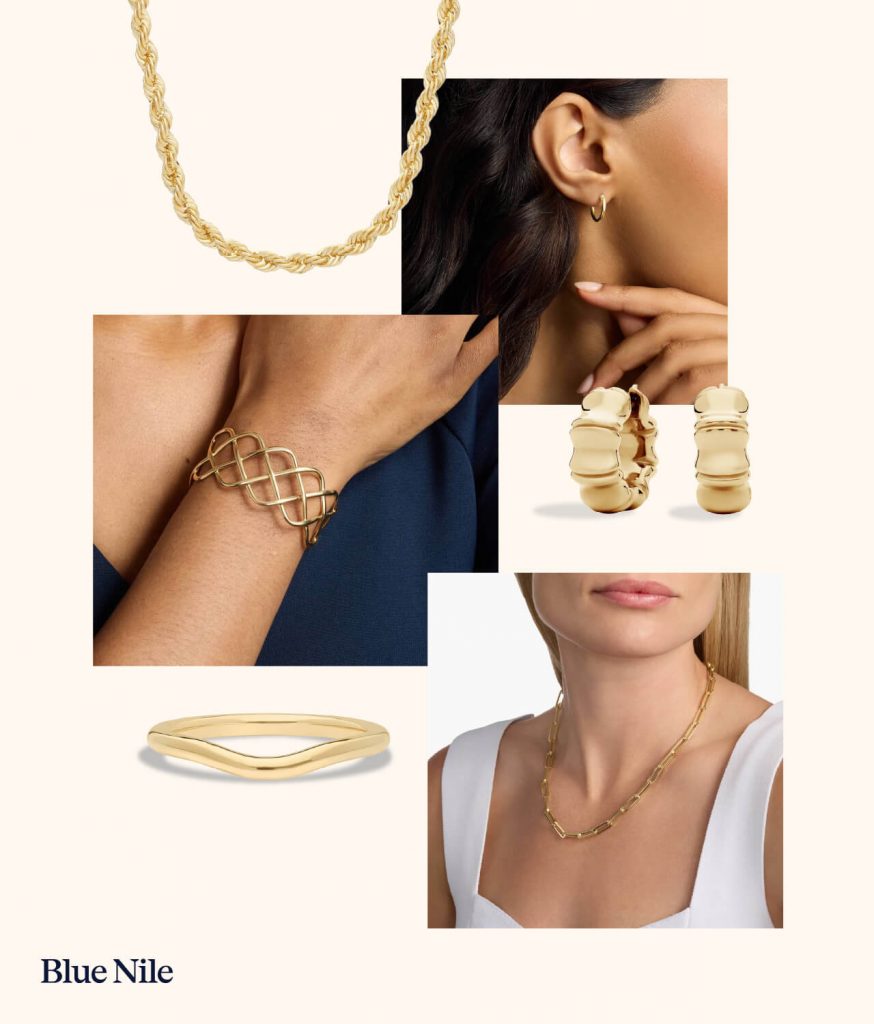
Known for its natural color, yellow gold is made by blending pure gold with small amounts of metals, such as copper and silver, to enhance strength. Because the alloy maintains the metal’s classic tone, yellow gold closely resembles pure gold while remaining durable enough for everyday jewelry.
For centuries, yellow gold has been associated with traditional fine jewelry and enduring design. Many timeless jewelry pieces — including classic wedding bands, chain necklaces and signet rings — are commonly crafted in yellow gold.
| Pros | Cons |
| Classic gold tone that reflects gold’s natural color | Higher karat alloys are softer and may bend and scratch more easily |
| Generally low maintenance | Scratches may be more visible on polished surfaces |
| Strong association with traditional jewelry styles | Deep yellow tone may not complement every gemstone |
Appearance, Aesthetic and Color
With its rich tone, yellow gold reflects the natural color of pure gold. This classic appearance has made it a defining feature of traditional jewelry styles. Higher-karat yellow gold often displays a deeper, richer color because it contains a higher percentage of pure gold. This metal also pairs well with gemstones such as emeralds, rubies and sapphires.
Composition and Karat
Yellow gold is created by blending pure gold with metals such as copper and silver to improve strength while preserving its natural color. Jewelry is commonly produced in 10k, 14k or 18k, with higher karats containing a greater percentage of pure gold.
Strength and Resilience
Particularly in 14k or 18k yellow gold, it is durable enough for everyday jewelry. Lower-karat alloys contain more strengthening metals, which improve resistance to bending and wear. While the surface may develop small scratches over time with regular use, the metal itself remains structurally stable and can be polished to restore its shine.
Maintenance
Comparing yellow gold vs. white gold, yellow gold requires relatively little maintenance because it does not rely on plating to maintain its color. Routine cleaning with mild soap and water is usually sufficient to keep the metal looking bright. Occasional professional polishing can help remove surface scratches and restore the jewelry’s finish.
Why People Choose Yellow Gold
One of the most recognizable and enduring metals in jewelry design, yellow gold remains favored across cultures. Many people choose yellow gold because it conveys a classic, timeless aesthetic, especially for wedding bands and heirloom-style jewelry. However, yellow gold can also be layered or styled with mixed metals for a more modern look.
What is Rose Gold?
Best for: Vintage aesthetic
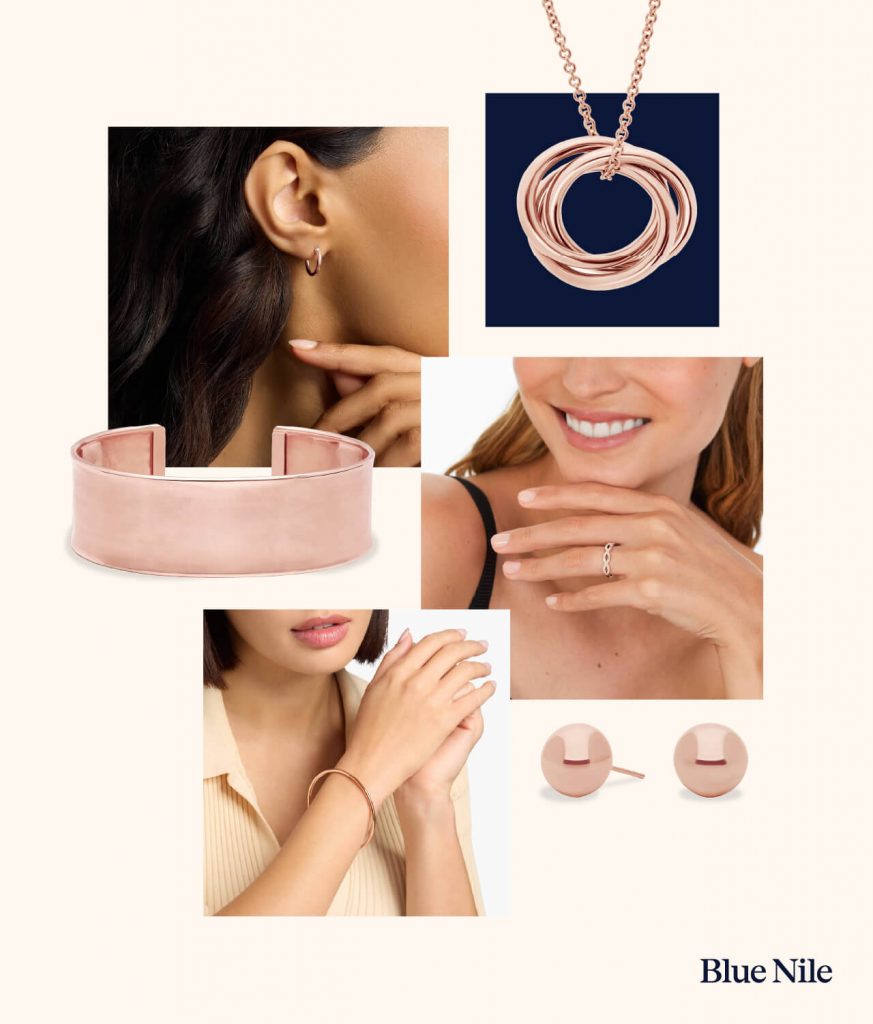
Rose gold is an alloy of pure gold and copper that gives the metal its distinctive pink tone. The amount of copper used in the alloy determines the intensity of the color, with higher copper content producing deeper rosy hues.
When comparing rose gold vs. yellow gold, rose gold is often associated with romantic, antique-inspired jewelry. Many vintage jewelry styles incorporate rose gold settings, especially those influenced by early 20th-century design movements.
| Pros | Cons |
| Soft pink tone creates a distinctive romantic aesthetic | Copper alloy may cause skin sensitivity for some wearers |
| Durable alloy strengthened by copper | Color may not complement every gemstone |
| Naturally colored metal that does not require plating | Less traditional choice for some classic jewelry styles |
Appearance, Aesthetic and Color
Soft blush tones give rose gold its distinctive character, with color ranging from a light pink tint to a deeper rosy hue. When paired with diamonds and neutral gemstones, rose gold adds shine and contrast.
Composition and Karat
Copper is the primary alloy used to create rose gold, sometimes balanced with small amounts of silver. This combination strengthens the metal while producing its signature color. As with other gold jewelry, rose gold is commonly available in 10k, 14k or 18k. Higher karat pieces contain more pure gold and often display a softer, more subtle rose tone.
Strength and Resilience
The copper-rich alloy used in rose gold increases the metal’s hardness compared with many other gold alloys. As a result, rose gold jewelry tends to hold its shape well and resists bending during everyday wear. Minor surface scratches can still develop over time, but the underlying metal remains stable and durable.
Maintenance
Rose gold does not rely on plating to maintain its color. Regular cleaning with soap and water is all that’s needed to preserve the metal’s shine. When needed, professional polishing can remove light scratches and restore a smooth finish.
Why People Choose Rose Gold
In recent years, rose gold has experienced a renewed surge in popularity across both engagement rings and fashion jewelry. Its pink color offers a romantic alternative to traditional yellow gold and the cooler tone of white gold. Many shoppers choose rose gold for its distinctive appearance and its connection to vintage-inspired design.
How To Choose Between White Gold, Yellow Gold and Rose Gold
When comparing white gold vs. yellow gold vs. rose gold, your choice depends on several practical factors that shape how the jewelry will look and wear over time. Each gold color has distinct visual qualities, maintenance needs and alloy characteristics that may influence your decision.
- Style: White gold often suits contemporary or minimalist designs, while yellow gold reflects a more traditional aesthetic. Rose gold is frequently chosen for romantic or vintage-inspired styles.
- Skin tone: Warmer skin tones often complement yellow and rose gold, while cooler undertones can pair well with white gold.
- Preference: Many people simply choose the gold color they find most appealing. Trying on different metals can help you see how each tone looks against your skin and alongside other jewelry.
- Cost: White, yellow and rose gold are typically priced similarly. White gold alloys sometimes cost slightly more due to palladium or rhodium plating, while rose gold alloys may be slightly less expensive because they use copper. However, these differences are usually small and rarely affect the final retail price.
- Allergies: Some white gold alloys contain nickel, and rose gold’s copper content can trigger reactions in certain wearers. Yellow gold, particularly higher karats, is often considered the most hypoallergenic jewelry option.
- Karats: Gold jewelry is commonly available in 10k, 14k and 18k. Higher karats contain more pure gold and display richer color, while lower karats generally offer greater durability for everyday wear.
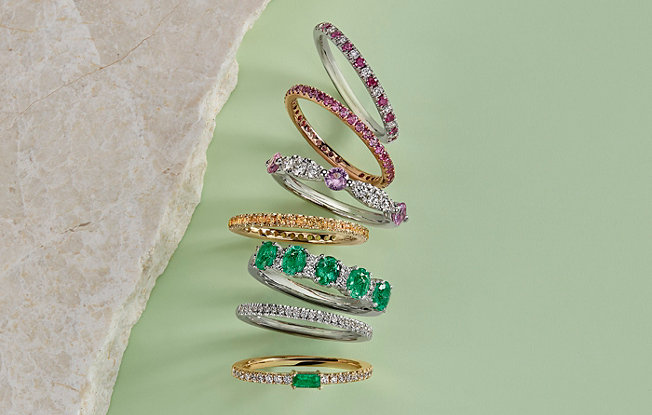
- Gemstone pairings: White gold enhances the brilliance of diamonds and other colorless stones, while yellow gold pairs well with richly colored gems such as emeralds and rubies. Rose gold adds contrast, particularly with neutral or blush-toned gemstones.
- Lifestyle: For jewelry worn daily, durability and maintenance may influence your choice. Lower-karat alloys and metals that require less upkeep can be practical options for active lifestyles.
- Existing jewelry: Consider how the metal will coordinate with pieces you already wear. Choosing a gold color that complements your current jewelry can make stacking rings, layering necklaces or mixing styles easier.
Which gold color is right for you?
Each gold type offers distinct advantages depending on your style, maintenance preferences and how you plan to wear the jewelry.
- Yellow gold: Best for those who prefer a classic gold tone and low-maintenance jewelry, especially for traditional styles or sensitive skin.
- White gold: Best for those who want a sleek, versatile metal that enhances diamonds and pairs well with modern designs or silver-toned jewelry.
- Rose gold: Best for those who want a distinctive pink hue with vintage-inspired appeal and a durable metal suited for everyday wear.
Step Up Your Style With Gold Jewelry From Blue Nile
Choosing between white gold vs. yellow gold vs. rose gold ultimately comes down to personal style. Each option offers its own distinctive appeal, whether you’re following the latest jewelry trends or adding a timeless piece to your collection.
Browse Blue Nile’s collection of gold jewelry to discover rings, necklaces, bracelets and earrings crafted in each of these enduring metals. Exploring different gold tones can help you find pieces that reflect your style while complementing the rest of your jewelry collection.
Frequently Asked Questions
No, yellow gold jewelry is not pure gold. Pure gold (24k) is very soft, so jewelers blend it with small amounts of metals, such as copper and silver, to improve its strength while maintaining its natural color. Most yellow gold jewelry is made in 10k, 14k or 18k alloys.
Yes, rose gold is real gold. It is created by blending pure gold with copper alloys, which give the metal its characteristic pink tone. The percentage of gold depends on the karat, just like yellow or white gold.
White gold is typically priced similarly to yellow gold when the karat and design are the same. The main price difference comes from the gold content and craftsmanship, rather than the alloy’s color. However, white gold may require occasional rhodium replating, which can add to long-term maintenance costs.
Neither is universally better — the choice depends on durability and gold content. 9k gold contains less pure gold and is generally more durable for everyday wear, while 18k gold contains more pure gold and offers a richer color. Many shoppers choose 14k or 18k for a balance of durability and appearance.
Rose gold gets its color from copper mixed into the gold alloy. The copper gives rose gold jewelry its distinctive pink or blush tone. Higher copper content typically produces a deeper rose color.
No single gold color is inherently better than the others. Each option offers a different aesthetic and durability profile. The best choice usually depends on personal style, gemstone pairing and how the jewelry will be worn.
Both white gold and yellow gold can appear elegant depending on the design. Yellow gold is often associated with classic, traditional styles, while white gold is commonly used for contemporary jewelry. The overall look depends more on the piece’s design and craftsmanship than the metal color alone.
White gold, yellow gold and rose gold are usually priced similarly when the karat and design are the same. Jewelry cost is primarily determined by the amount of pure gold in the alloy and the piece’s design. However, white gold may have slightly higher maintenance costs because of rhodium replating over time.


Share




 Live Chat
 +1‑800‑242‑2728
 Email Us

