Key takeaways:
- The main difference between SI1 vs SI2 diamonds is how visible their inclusions are.
- SI1 diamonds are more consistently eye-clean, while SI2 diamonds vary more.
- Choosing the right option depends on balancing clarity, diamond shape and price.
A single clarity grade can change how your diamond looks and how much you spend. When comparing SI1 vs. SI2, the difference may seem subtle on paper, but it can have a noticeable impact in real life.
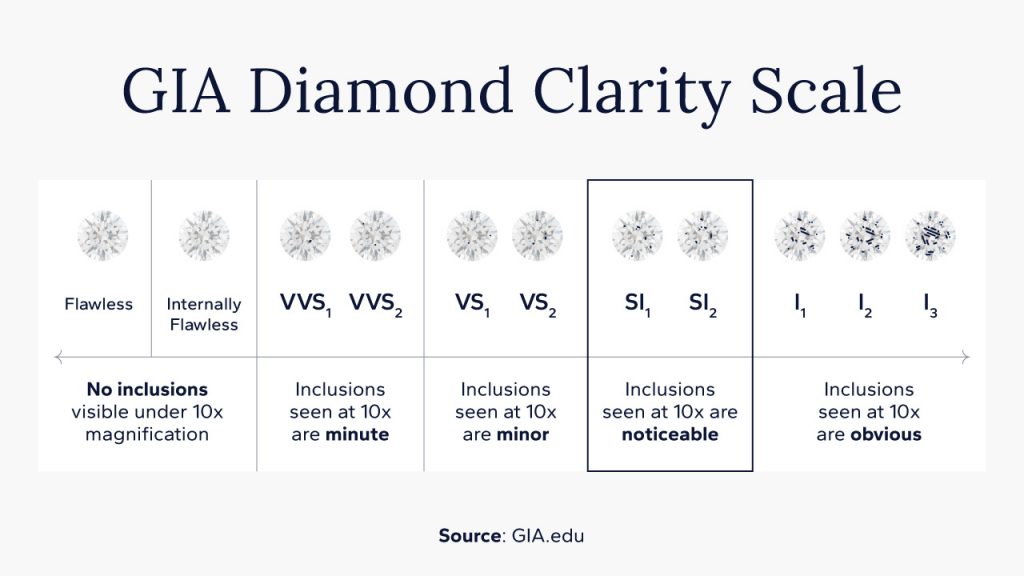
So, what does SI1or SI2 clarity mean? Both SI1 and SI2 fall under the “slightly included” category on the GIA scale, meaning they contain inclusions visible under magnification.
In this guide, we’ll break down the difference between SI1 and SI2, explain how to find eye-clean diamonds, and help you make a confident, informed choice.
What’s the Difference Between SI1 vs. SI2 Diamond Clarity?
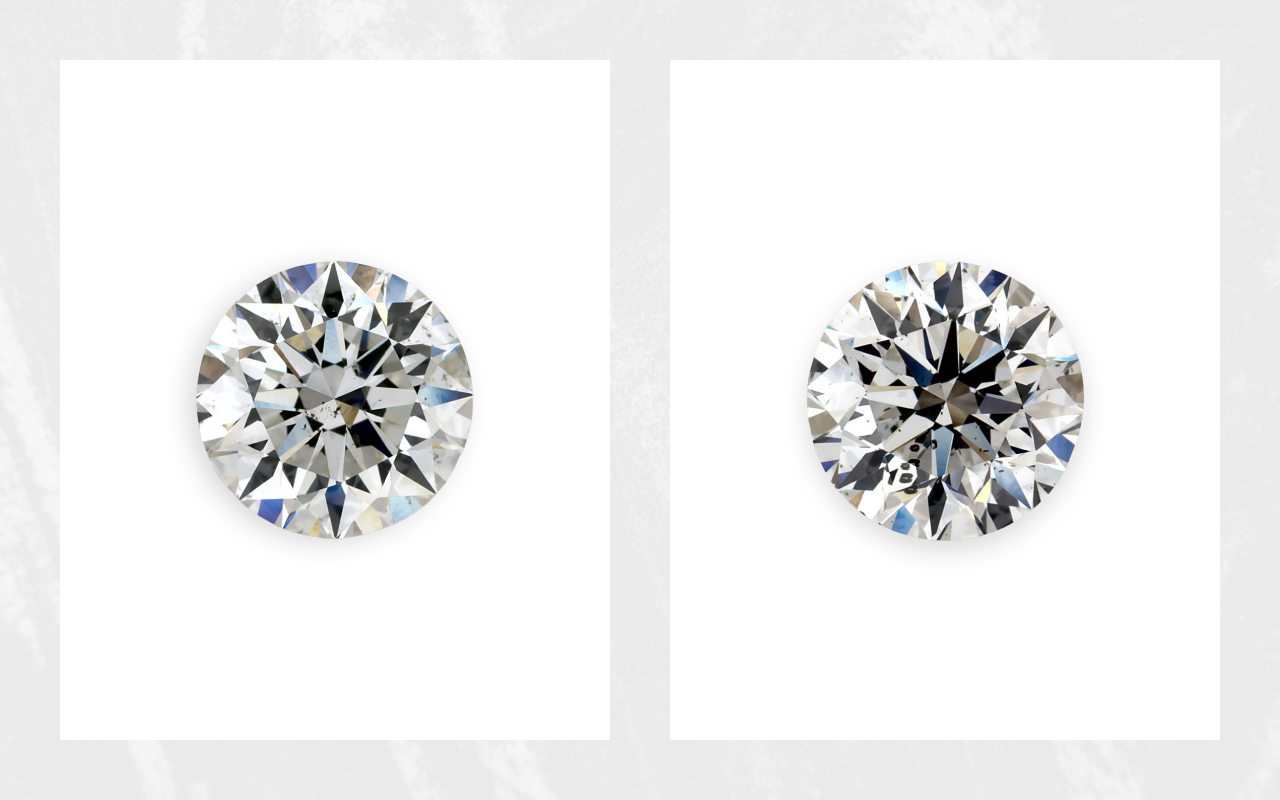
The difference between SI1 and SI2 comes down to the size, number and placement of inclusions. Both are part of SI diamonds, meaning “slightly included,” but SI1 inclusions are typically less noticeable than those in SI2 stones.
| SI1 | SI2 | |
| Eye-clean likelihood | Often eye-clean | Sometimes eye-clean |
| Typical visibility | Hard to see without magnification | May be visible to the unaided eye |
| Price difference | Higher | 10–15% lower |
| Recommended shapes | All shapes | Best in brilliant cuts |
Understanding diamond clarity between SI1 vs. SI2 helps you balance appearance and price more effectively.
Eye-Cleanliness and Inclusion Visibility
Eye-cleanliness means a diamond has no visible inclusions to the unaided eye when viewed face-up at about 10–12 inches. Most SI1 clarity diamonds meet this standard, while SI2 clarity stones are less consistent.
As carat weight increases, inclusions become easier to detect:
- A 0.80 Ct. SI2 diamond may appear eye-clean
- A 2.00 Ct. SI2 diamond is more likely to show inclusions
To evaluate properly:
- Review HD or 360° imagery: See how inclusions appear under real lighting conditions.
- Request a clarity plot: Understand the inclusions’ exact location.
- Compare multiple diamonds: Identify the best balance of appearance and price.
This approach helps you interpret the true SI diamond meaning beyond the grading label.
Price and Value Comparison
The SI1 vs. SI2 price difference between comparable diamonds is typically around 10%–15%. For example, a 1.00 Ct. round, G color, excellent cut diamond can go for: ~$4,500–$5,200 if it’s a SI1 or ~$3,800–$4,500 if it’s a SI2.
This pricing difference reflects the higher likelihood of visible inclusions in SI2 diamonds. However, a carefully selected SI2 can offer strong value. So, to determine whether an SI1 or an SI2 is better, it depends on whether you prioritize visual consistency or maximizing the budget.
How Diamond Shape Impacts Clarity Choice
The diamond shape directly affects how visible inclusions appear because facet patterns control how light moves through the stone. In simpler terms, a diamond cut can either hide inclusions or make them easier to see, depending on the angle and the size of the inclusions.
Brilliant cuts, such as round or cushion, feature many small, angled facets that scatter light in multiple directions. This sparkle helps mask inclusions, making them less noticeable even in lower clarity grades like SI2.
On the other hand, step cuts, such as emerald and Asscher, have long, open facets that act more like windows into the diamond. Instead of hiding inclusions, they can make them easier to spot, especially near the center. These less forgiving cuts may benefit from higher clarity grades like VS1 or VS2.
SI1 Diamonds: Characteristics, Pros, and Cons
SI1 diamonds contain small inclusions that are visible when viewed under 10x magnification by a professional, but in most cases, those inclusions aren’t noticeable to the unaided eye in normal lighting. This makes SI1 clarity a practical choice for buyers who want a diamond that looks clean without paying for higher clarity grades.
In some cases, SI1 may be loosely referred to as an S1 diamond, though SI1 is the correct grading term.
| Pros | Cons |
| Often eye-clean | Higher price than SI2 |
| Balanced price and appearance | Requires verification for eye-clean quality |
| Suitable for most shapes |
SI2 Diamonds: Characteristics, Pros, and Cons
SI2 diamonds have more noticeable inclusions often in the center, which may be visible without magnification, depending on the stone. That said, some SI2 diamonds still appear eye-clean.
When comparing clarity tiers, SI diamonds are rated higher than Included grades, such as I2. This makes SI2 a middle-ground option, offering better appearance than I2, but with more variability than SI1.
| Pros | Cons |
| Lower price point | Inclusions may be visible |
| Potential for larger carat weight | Less consistent than SI1 |
| Good value when carefully selected | Requires careful inspection |
How SI1 and SI2 Compare to Other Clarity Grades
SI1 vs VS2
VS2 clarity is one grade above SI1, with inclusions so small and difficult to detect even under 10x magnification. This means VS2 diamonds are almost always eye-clean and offer greater visual consistency.
However, that added clarity typically comes with a 10%–20% price premium compared to SI1 diamonds of the same carat weight, color and cut. In many cases, a well-selected SI1 diamond delivers a very similar face-up appearance to that of a VS2, especially in brilliant shapes, making it a strong choice for buyers focused on smart spending.
SI2 vs I1
I1 clarity is one grade below SI2, and this is where inclusions often become visible to the unaided eye. These inclusions can sometimes affect not just appearance, but also the diamond’s brilliance—and in some cases, durability, depending on their size and placement.
By comparison, SI2 diamonds sit at the lower end of the “slightly included” range, where inclusions may still be visible but are less likely to significantly impact overall performance.
As a general guideline, SI2 is often considered the lowest clarity grade worth considering for an engagement ring diamond. It offers a better balance between appearance and price while avoiding the more noticeable inclusions typically found in I1 diamonds.
Selecting the Right Setting for SI1 and SI2 Diamonds
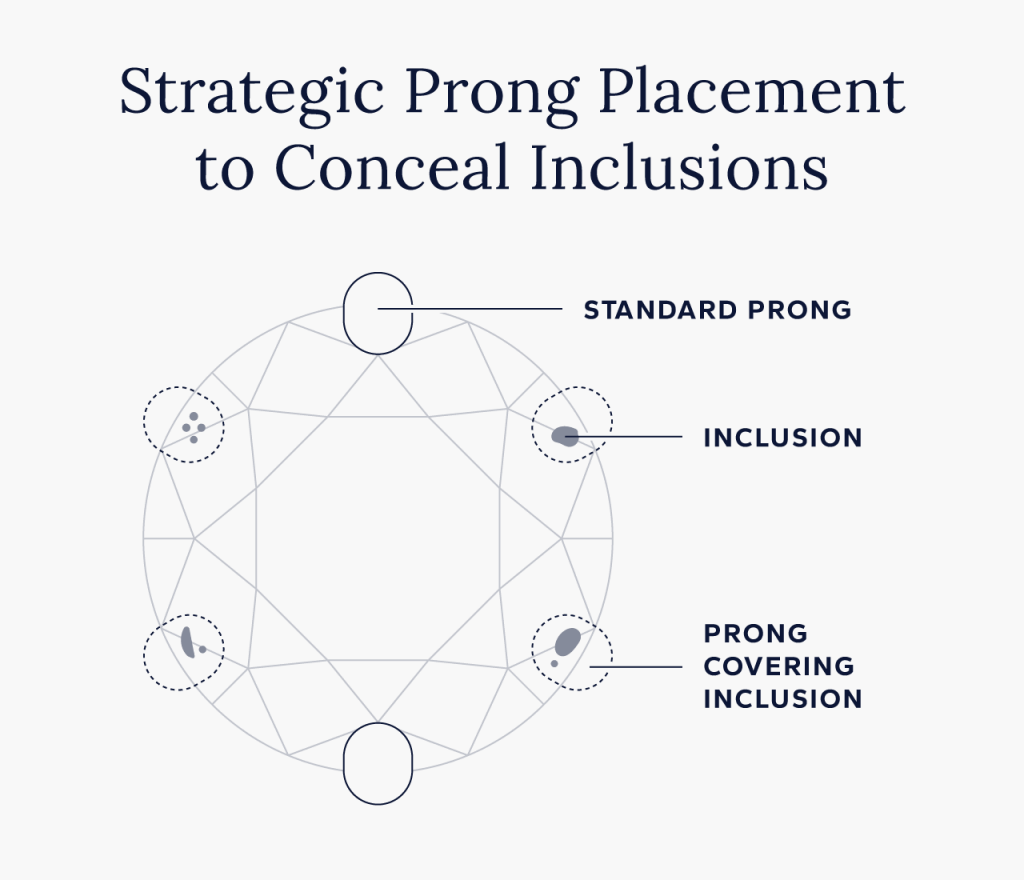
The right setting can help conceal inclusions and enhance the appearance of your diamond. For both SI1 and SI2 diamonds, inclusions are often located near the edges (girdle), which means smart setting choices can minimize their visibility.
Certain settings are especially effective, such as:
- Bezel settings: These wrap a thin rim of metal around the diamond’s edge, covering inclusions near the girdle and offering a clean, modern look.
- Prong settings: Prongs can be strategically positioned to sit directly over inclusions, helping hide them from view while still allowing maximum light exposure.
- Halo settings: A ring of smaller diamonds surrounds the center stone, drawing attention outward and away from any inclusions in the middle
Always share your diamond’s clarity plot with your jeweler. This allows them to place prongs precisely over specific inclusions, helping your diamond appear more eye-clean in everyday wear.
How to Choose Between SI1 and SI2
Choosing between SI1 and SI2 comes down to diamond shape, carat weight and how much certainty you want in an eye-clean appearance. Both can offer strong value, but each works best in specific situations.
Choose SI1 if:
- You’re selecting step cuts like emerald or Asscher, where inclusions are easier to see.
- The diamond is over 1.50 Ct., since larger stones make inclusions more noticeable.
- You want added peace of mind without stepping up to higher-priced grades like VS2.
Choose SI2 if:
- You’re buying a brilliant-cut diamond (round, oval, cushion) that helps hide inclusions.
- The diamond is under 1.50 Ct., where inclusions are less likely to be visible.
- You can review images and confirm that the diamond is eye-clean.
Final SI1 and SI2 inspection checklist
Before making a decision, evaluate these key details to ensure the diamond meets your expectations:
- Inclusion type: Avoid dark or black crystals, which are easier to see than lighter inclusions.
- Inclusion position: Look for inclusions near the edges rather than the center of the diamond.
- Grading entity: Choose diamonds graded by trusted labs like GIA for consistent standards.
Taking these steps helps ensure you select a diamond that looks clean, performs well and aligns with your budget.
Trust Blue Nile for Beautiful Diamonds Within Your Budget
Whether you prioritize consistency with SI1 or value with SI2, the right choice depends on how the diamond looks to your eye and fits your priorities. To continue your research, explore our guide to diamond inclusions and how they affect appearance.
When you’re ready to take the next step, browse our curated selection of slightly included diamonds to compare real options side by side. With high-quality imagery and expert guidance, we make it easier to find a stone that delivers both beauty and value.
Frequently Asked Questions
No, SI1 diamonds are not always eye-clean, but most appear clean to the unaided eye in normal light. Visibility depends on the size, type and placement of inclusions, so it’s important to review imagery or grading details before purchasing.
Yes, SI2 diamonds can be good for engagement rings if they appear eye-clean. The key is to carefully evaluate each stone, as inclusion visibility varies more than in SI1 diamonds.
Round brilliant diamonds hide SI2 inclusions best due to their light-scattering facet pattern. Other brilliant shapes like oval and cushion, also help mask inclusions more effectively than step cuts.
The price difference between SI1 and SI2 diamonds is typically around 10–15%. This gap reflects the higher likelihood of visible inclusions in SI2 stones than in SI1 stones.
Yes, SI1 diamonds generally hold their value slightly better than SI2 diamonds. Their more consistent eye-clean appearance makes them more desirable in the market.
No, there is no visual difference in clarity grading between lab-grown and natural SI1 or SI2 diamonds. Both are graded using similar standards, though lab-grown diamonds are evaluated with separate reporting criteria by grading labs like GIA.


Share