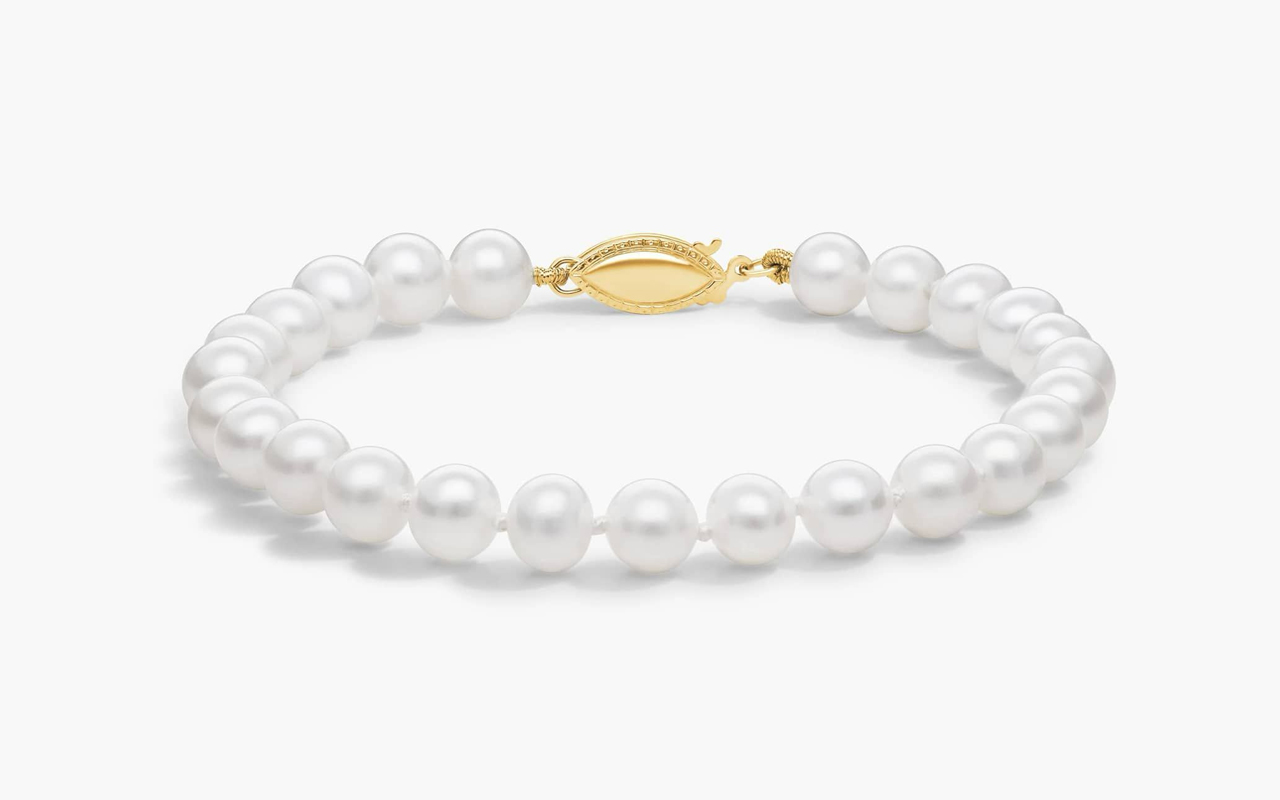
Real pearls are easily distinguished from imitations if you know what to look for. Authentic pearls have distinct characteristics, such as shape, luster and weight, that set them apart from synthetic pearls.
Pearls have earned their place as a jewelry classic, naturally lustrous, understated and built to last generations.
A timeless pearl necklace pairs as easily with a little black dress as it does with everyday wear, making it one of the few pieces that truly carry through a lifetime.
With today’s wide selection of pearl jewelry and advances in imitation techniques, telling real pearls from faux ones isn’t always obvious. Here’s how to identify the real thing.
| Feature | Real pearls | Fake pearls |
| Texture | Rough, bumpy, sandy | Perfectly smooth |
| Luster | Soft sheen with depth | Bright glassy shine |
| Temperature | Cold regardless of room temperature, gradually warms up on the skin | Room temperature to the touch and warms up very quickly |
| Drill hole | Small, clean hole, no debris | Large hole with possible debris from coating visible |
| Weight | Heavy | Very lightweight |
| Shape | Not perfectly round, small imperfections like bumps | Perfectly round |
1. Try the Tooth Test
- Real: A real pearl will feel slightly gritty or sandy against your teeth. That texture comes from its layered nacre structure, made up of crystallized calcium carbonate and protein that builds up unevenly over time.
- Fake: A fake pearl will feel very smooth. Imitation pearls generally have a uniform, even surface because of their coating.
The tooth test is one of the oldest and easiest ways to verify the authenticity of a pearl. Gently rub the pearl against the edge of your front teeth. Keep in mind that high-quality imitation pearls can mimic this texture, so the tooth test works best alongside other methods.
2. Check the Luster
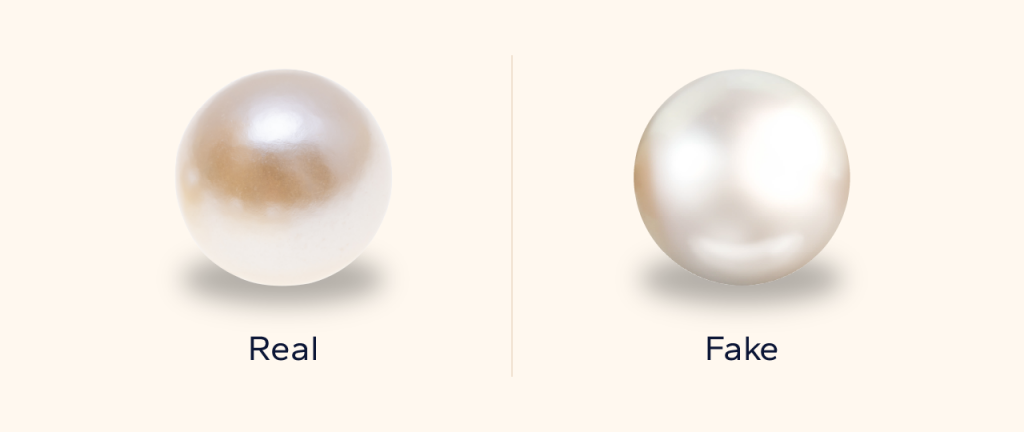
- Real: Genuine pearls have a soft sheen that subtly changes based on the angle of the light. The luster has a depth in its tones.
- Fake: Faux pearls often have a flat shine that lacks depth. The shine may appear glassy and one-dimensional in the light.
Both real and synthetic pearls may have a beautiful shine. However, when examined in closer detail, there’s a significant difference in the luster of authentic and imitation pearls.
Examine how the pearls reflect light. Hold them up to the real lighting near a window. Check how they look against dark backgrounds. What type of shine are you seeing?
3. Use the Temperature Test
- Real: Real pearls feel cold when you touch them, regardless of the room temperature. When you hold them against your skin, they warm up gradually.
- Fake: Fake pearls usually feel room temperature when you touch them. They warm up quickly when held against your skin.
Temperature testing is another way to tell if a pearl is real. Real and synthetic pearls differ in temperature because of their compositions. Natural pearls react to the warmth of your skin differently than synthetic materials.
Keep in mind that this test isn’t always accurate because faux pearls made of glass will also feel cold like real pearls. It’s a good idea to run multiple tests to verify the authenticity of the gemstones.
4. Inspect the Drill Holes
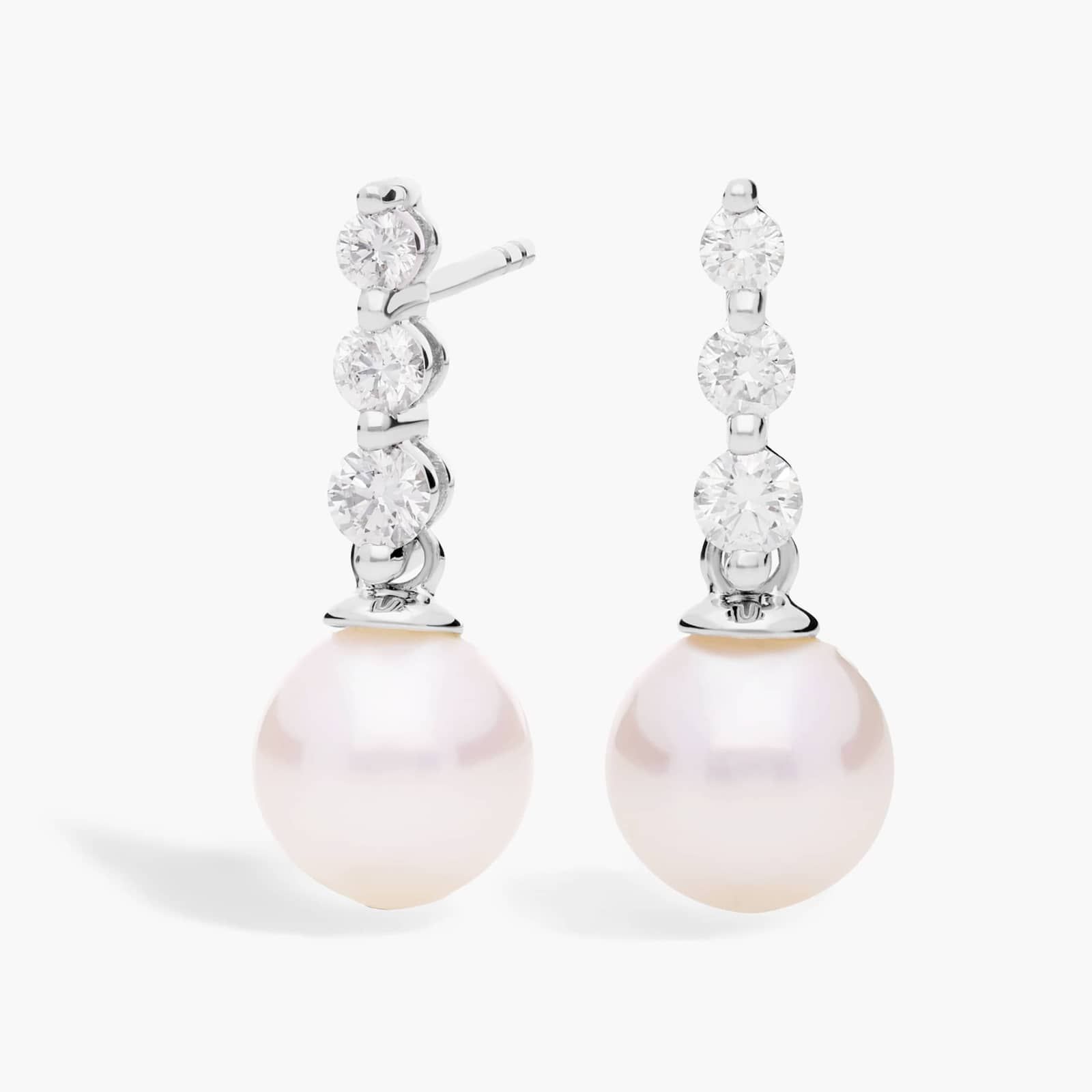
- Real: An authentic pearl’s drill hole will be a small, clean hole that pierces through the stone. There shouldn’t be any debris.
- Fake: An imitation pearl’s drill hole will reveal the layers of coating over the bead to create the pearl-like appearance. There may be a little peeling of the coating around the hole.
Inspecting the drill holes of pearls can also reveal their authenticity. Real pearls react to drilling differently from fake ones. Drilling can reveal more details about the composition of each gemstone.
5. Test the Weight
- Real: True pearls feel heavy due to their real composition. Even dainty pearls have a light but weighted feeling to them.
- Fake: Fake pearls feel less substantial in weight than real ones. Most imitation versions feel extremely lightweight.
The real materials that compose real pearls often feel different in weight than synthetic materials that make up most faux pearls. Checking the weight of your pearls can help you determine if they’re genuine.
6. Observe the Shape
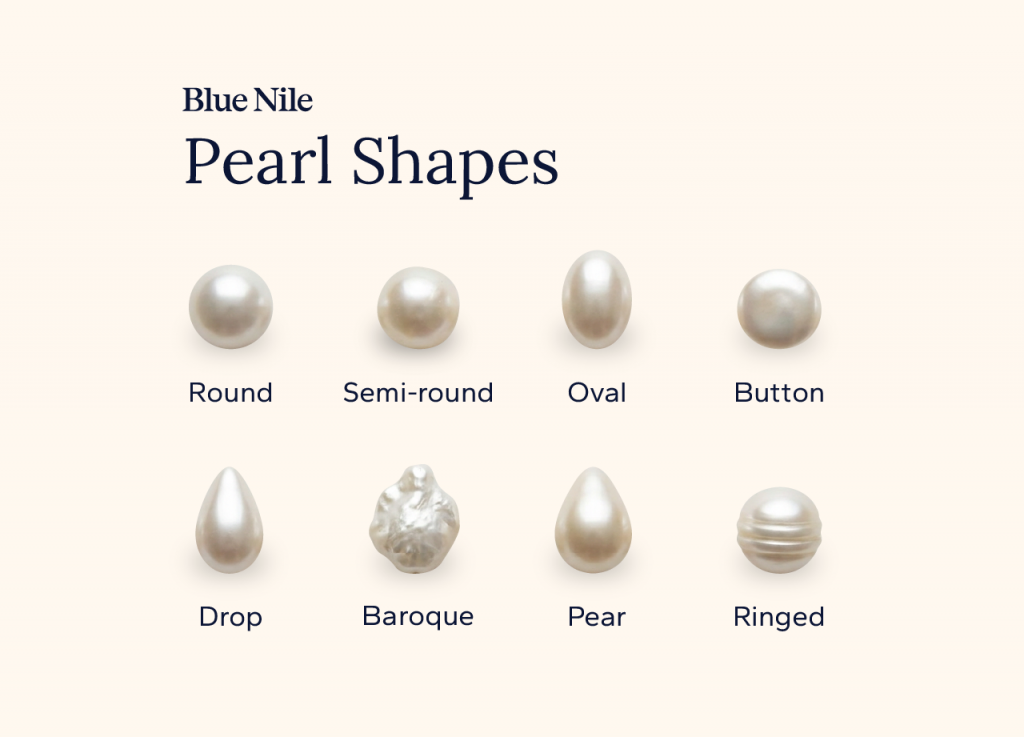
- Real: Genuine pearls often have subtle differences in shape. The stones are rarely perfectly rounded and often exhibit irregularities, such as small bumps or pitting. Pearls on the strand won’t be identical in shape.
- Fake: Imitation pearls are usually perfectly shaped and identical. The lack of imperfections is a clue that you may be dealing with a fake.
The shape of pearls can also give clues to the authenticity of the gemstones. Both natural and cultured pearls can generally be recognized by shape when compared to imitations.
When to Get a Professional Inspection
At-home tests offer a solid starting point, but a professional inspection is the only way to confirm pearl authenticity with certainty. Consider seeking one if you need to:
- Evaluate a family heirloom
- Verify authenticity for insurance or legal purposes
- Assess a potentially rare or high-value piece
Seek out a reputable jeweler with a GIA or American Gem Society gemologist on staff. A professional jeweler typically:
- Examines nacre layers, luster and surface imperfections like ridges or pitting
- Assesses shape, weight and luster through a formal appraisal
- Uses tools such as a microscope, loupe or UV light to check for coatings
- Takes an X-ray to confirm the presence of a nucleus, which only real pearls have
Once complete, request written documentation or a certificate of authenticity. This serves as an official record of your pearl’s origins, type and value.
Real Pearls vs. Common Imitations
Not all pearls are created equal. Knowing the difference between authentic and imitation varieties helps you shop with confidence and recognize quality when you see it.
Authentic pearls fall into two categories: natural and cultured. Note that mother-of-pearl is neither a real pearl nor an imitation. It refers to the nacre lining found inside mollusk shells.
- Natural pearls: Natural pearls form in wild oysters and mollusks without human intervention. Because the process is entirely random, only 1 in 10,000 wild mollusks produces a pearl, making them exceptionally rare. These gemstones have historically been found in the Arabian Gulf, the Persian Gulf, the Red Sea and the Strait of Manaar.
- Cultured pearls: Cultured pearls are real gemstones grown inside oysters, mussels or other mollusks on pearl farms. Almost all pearls on today’s market, including freshwater pearls, are cultured. China leads freshwater pearl cultivation, while Japan, Tahiti and Australia are known for saltwater varieties.
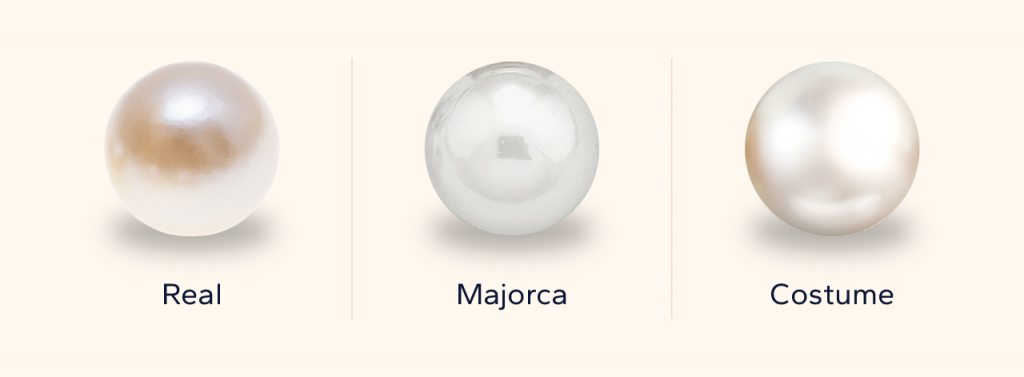
- Majorica pearls: Majorica pearls are high-quality imitation stones made from solid glass beads coated with a mixture that includes fish scales and mother-of-pearl. Handmade in Mallorca (Majorca), Spain, since 1890, these are among the most convincing faux pearls available.
Costume pearls: Costume pearls are typically made from plastic or glass beads. They’re lightweight and less durable. You can recognize them by their shiny, flat appearance, peeling coating and drill holes.
Invest in Certified Real Pearls
Real pearls are a lasting investment. With proper care, they retain their natural luster for a lifetime without chipping or peeling. For complete confidence in your purchase, look for certified pearls. Browse the full selection of genuine pearl jewelry to find a classic piece of your own.
Frequently Asked Questions
Pearls aren’t always perfectly round. Since real pearls are naturally-occurring, they vary in shape and usually have small blemishes like bumps or pitting. Mollusks like oysters form pearls from overlapping layers of nacre, a calcium carbonate secretion. The layering of nacre results in rounded shapes with some irregularities.
No, a properly performed tooth test won’t scratch the pearl. The tooth test doesn’t involve biting the pearl, which could damage your teeth and the jewelry. Instead, you gently rub the pearl along your front teeth, which shouldn’t scratch the pearl.
Yes, cultured pearls are real. They’re composed of the same substances as natural pearls. Cultured pearls are grown on pearl farms in areas like China, Tahiti, Japan and Australia. These farms cultivate mollusks, such as oysters and mussels, to grow pearls, then harvest them.


Share