









- Metal is one of the most personal choices in any wedding band style, and the right one comes down to how you work, what you wear, and how you want your ring to look for years to come.
- If you work with your hands or live an active lifestyle, highly resilient metals such as tungsten, titanium, cobalt or tantalum can help minimize visible wear.
- Hypoallergenic options like platinum, titanium, cobalt and tantalum are worth considering if you have sensitive skin or metal allergies.
For years, women have enjoyed hundreds of stylistic options, including different shapes of diamonds and gemstones to complement an engagement ring. Traditionally, men have had far fewer choices.
Today, there are more types of wedding rings for men than ever, from classic yellow gold to contemporary metals like tungsten and tantalum. This guide walks through nine popular wedding band types, compares how they look and wear, and helps you decide which metal is right for you.
The Best Metals for Men’s Wedding Bands: A Comparison Chart
When you compare different men’s wedding band types side by side, it’s easier to see how they differ in resilience, feel and care. Use this chart to quickly narrow your shortlist before you dive into specific styles.
| Look and color | Resilience | Resizable | Hypoallergenic | Price | |
| 1. Platinum | Naturally white, substantial feel, and refined luster that develops a patina | Highly durable and dense; develops a soft patina rather than losing metal | Yes | Yes | $800 – $10,000 |
| 2. Yellow gold | Warm, rich yellow tone in 14k and 18k, from minimalist to detailed styles | Softer than other metals, more prone to scratching and denting | Yes | Usually well tolerated | $500 – $8,000 |
| 3. White gold | Silvery-white tone created by alloying gold with white metals and rhodium plating | Slightly more resilient than yellow gold but can show wear on plating over time | Yes | Some white gold alloys contain nickel, which can irritate sensitive skin | $500 – $6,000 |
| 4. Rose gold | Pink‑to‑red hue from added copper, often used for matching couples’ bands | Similar to yellow gold, with extra hardness from copper content | Yes | May cause irritation for those sensitive to copper | $500 – $5,500 |
| 5. Titanium | Cool gray, contemporary appearance; very lightweight on the finger | Strong, corrosion‑resistant, and holds up well to daily wear | Usually not resizable due to the metal’s structure | Yes | $50 – $1,000 |
| 6. Palladium | Steely‑white tone with a similar family feel to platinum | Strong, tarnish‑resistant and maintains its shine over time | Yes | Usually well-tolerated | $400 – $4,000 |
| 7. Tungsten | Deep gray or white tones with a bold, modern look and strong weight in hand | Extremely hard, highly scratch‑ and tarnish‑resistant | No | Yes | $300 – $1,000 |
| 8. Tantalum | Rich blue‑gray base often finished with a matte black ceramic glaze | Highly scratch‑resistant, shatter‑resistant and nonreactive to most chemicals | No | Yes | $500 – $2,500 |
| 9. Cobalt | Bright white tone similar to white gold with a polished, long‑lasting shine | Extremely scratch‑, chip‑ and corrosion‑resistant | Typically difficult to resize due to hardness | Yes | $100 – $500 |
1. Yellow Gold Wedding Bands
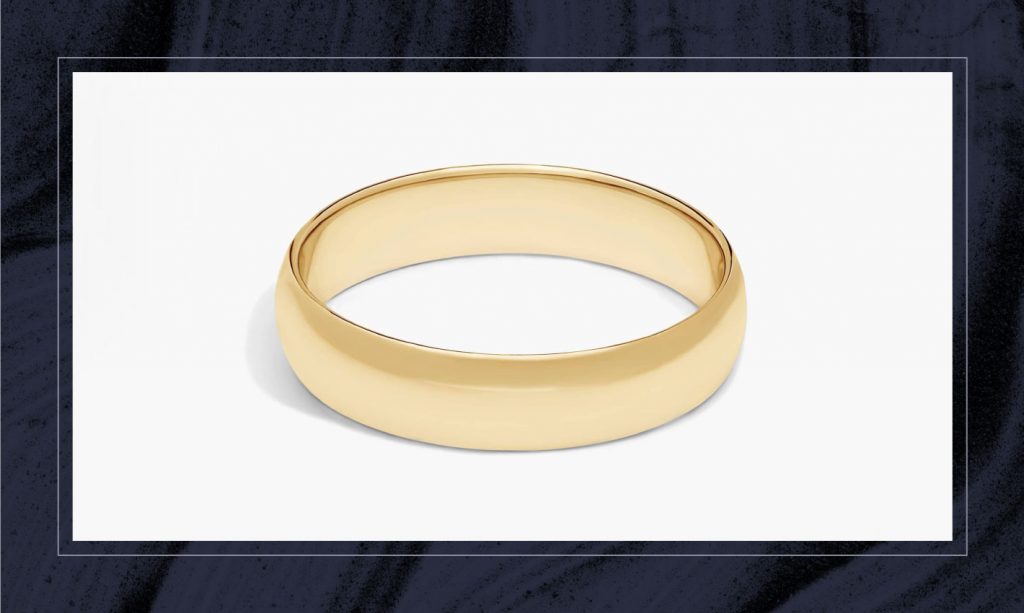
Yellow gold wedding rings come in a wide variety of styles, from minimalist to embellished. While this metal is valued for its naturally rich-looking warm tones, pure gold is far too soft to wear without the addition of copper and zinc alloys to make it more durable.
The amount of pure gold that’s in a ring determines its karat value—usually 14k or 18k. Another benefit of yellow gold is that it’s highly resistant to rust, tarnish, and corrosion, and easy to engrave and resize.
It’s also lightweight and comfortable, and won’t typically discolor skin or cause allergic reactions thanks to the absence of reactive metals in the alloy. On the other hand, the high content of malleable pure gold affects durability. Of all the precious metals, yellow gold is the most likely to misshape, dent and scratch. And, because of its scarcity, it is also one of the most expensive types of wedding bands.
- Resilience: Moderate; more likely to show scratches and dents than harder metals
- Price range: Higher, especially in 18k and wider bands
- Allergy information: Often a good option for most skin types; check alloy details if you have known sensitivities
- Best for: Classic style, ease of resizing and a traditional precious‑metal feel
2. Rose Gold Wedding Bands
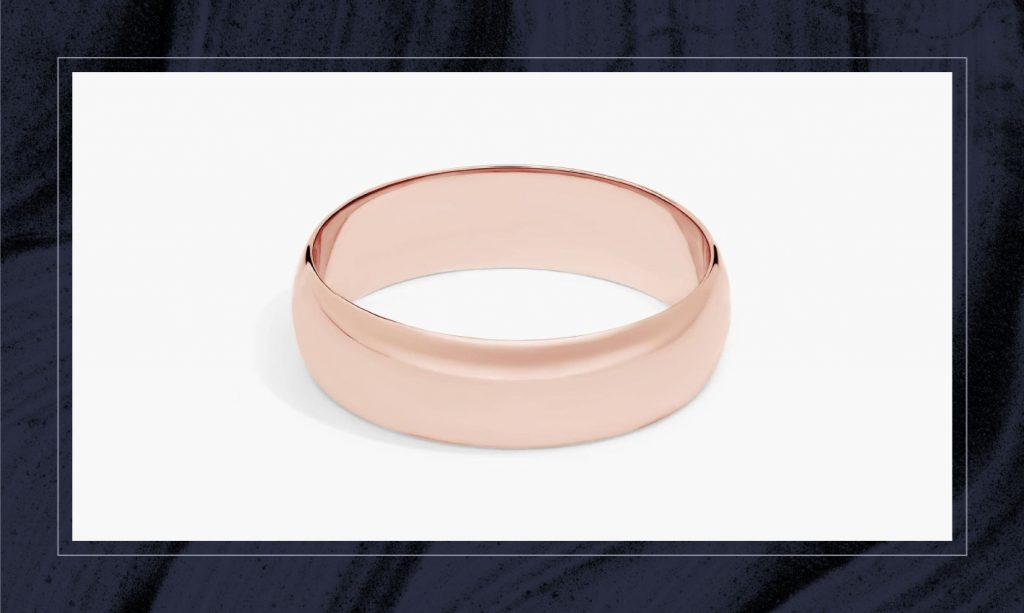
Rose gold wedding bands offer a warm, romantic hue created by adding copper to the gold alloy. It’s an increasingly popular choice in engagement rings. Because many couples look for matching wedding bands, it’s no surprise that men’s rose gold rings are a corresponding trend.
The composition of rose gold is much like yellow gold, but needs around 25% copper in the mix to achieve its romantic hue. Good news: All that copper increases this metal’s durability. The bad news? This gold/copper alloy is more likely to discolor skin or cause an allergic reaction than other golds.
- Resilience: Moderate, with some extra hardness from copper compared to yellow gold
- Price range: Similar to yellow gold, influenced by karat and design.
- Allergy information: May not be ideal for those sensitive to copper alloys
- Best for: Coordinated couples’ rings, warm skin tones and a distinctive but still classic look
3. White Gold Wedding Bands
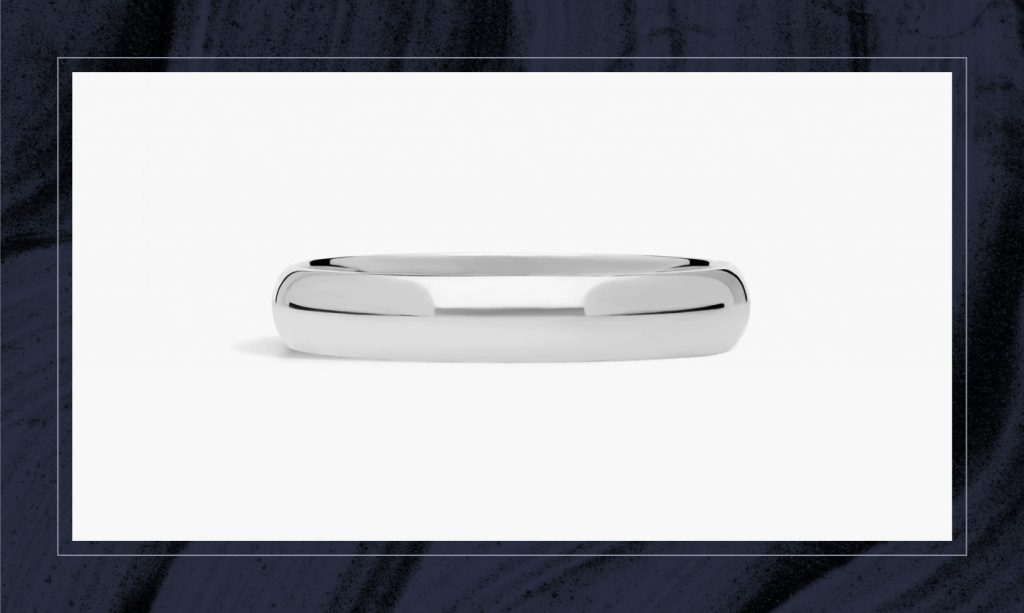
White gold has all the pros of yellow gold, and it’s slightly more durable. To achieve its signature silvery color, pure gold is mixed with nickel and silver then plated in rhodium.
It’s this alloy that makes it a bit more resilient than yellow gold. If you like the look of platinum but are looking for a less expensive alternative, white gold is a great choice. Over years of wear, white gold may gradually soften and lose its color, and can be refreshed to restore its original luster. If you have nickel sensitivities, you may want to explore white gold alloy details or consider platinum instead.
- Resilience: Moderate‑to‑good; the alloy and rhodium plating help with daily wear
- Price range: Typically less than platinum, more than many modern alternatives
- Allergy information: Some alloys include nickel; sensitive wearers may prefer nickel‑free options or platinum
- Best for: A platinum‑style look at a lower price point and easy access to many wedding ring styles
4. Platinum Wedding Bands
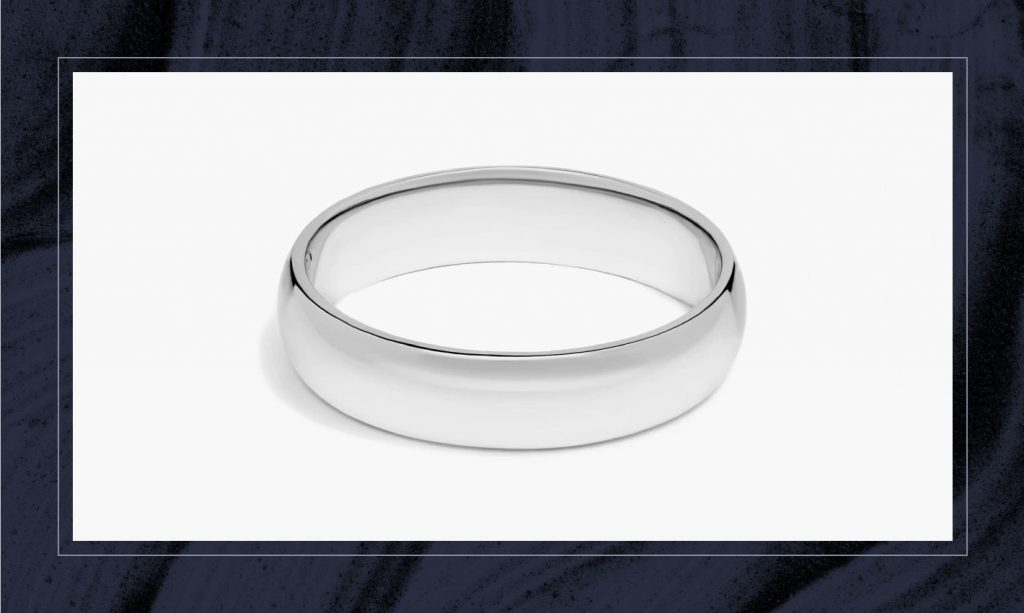
Platinum wedding rings are prized for their timeless beauty and inherent value. Securing its top-of-the-line status, natural platinum is 30 times rarer than gold. And unlike gold, the platinum used to make wedding rings is around 95-98% pure.
Platinum is inherently dense, but not too rigid or dense for engraving or resizing. Scarcity and density are also platinum’s downside. A similar style of ring will be heavier—and more expensive—than its visually-identical white gold counterpart.
Though platinum’s brilliance is truly stunning, it can wear and develop a patina over a lifetime. But if you’re looking for a ring that will carry its value better than any other, platinum jewelry is a good investment.
- Resilience: High; durable enough for long‑term daily wear
- Price range: Higher than most other metals, reflecting purity and rarity
- Allergy information: Generally hypoallergenic due to high platinum content
- Best for: A long‑lasting, premium ring with classic appeal and low‑maintenance color
5. Tungsten Wedding Bands
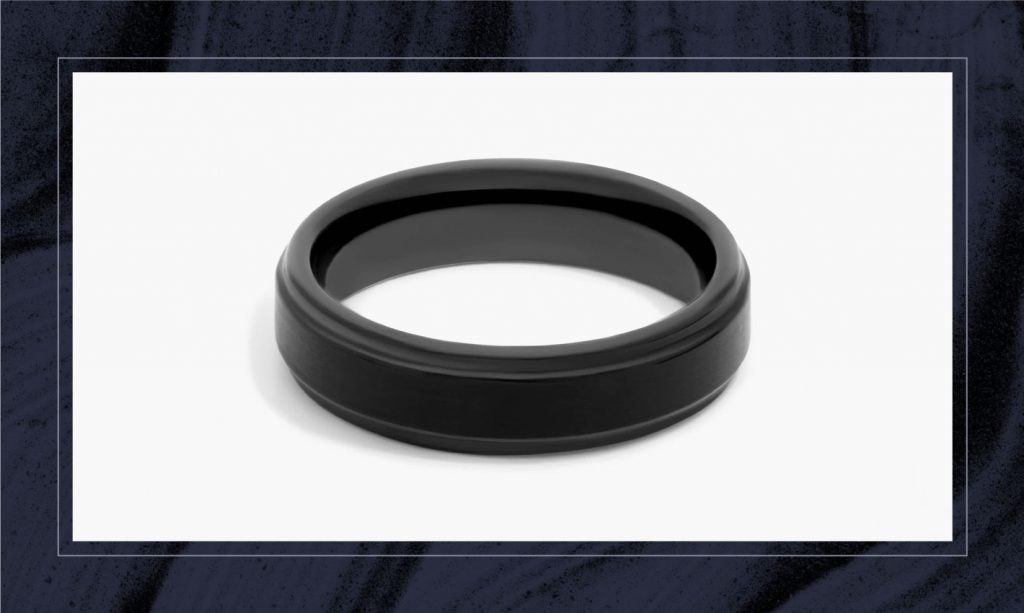
Modern metals recently entered the wedding ring field with Tungsten leading the pack as the epitome of “tough.” An alloy of tungsten and carbon bonds to form an incredibly hard, scratch-resistant wedding ring. The abundance of natural tungsten also makes it extremely affordable, and its stalwart nature highlights bold, masculine designs.
It’s also non-reactive, so it won’t discolor your skin or cause an allergic reaction. While tungsten is a popular modern choice, all that resilience has a few downsides. Tungsten wedding rings can’t be resized or engraved and their color options are limited. They’re also the heaviest of all your wedding ring options.
Tungsten jewelry can react to harsh chemicals and chlorine, so if you frequently swim indoors or work with industrial cleaning products, tungsten may not be the best choice. But if you’re looking for something affordable, stylistically modern and nearly indestructible, tungsten is a great option.
- Resilience: Very high; exceptionally scratch‑resistant
- Price range: Often more accessible than precious metals
- Allergy information: Tungsten carbide is generally hypoallergenic
- Best for: Active lifestyles, bold modern designs and value‑driven shoppers who prioritize scratch resistance
6. Titanium Wedding Bands
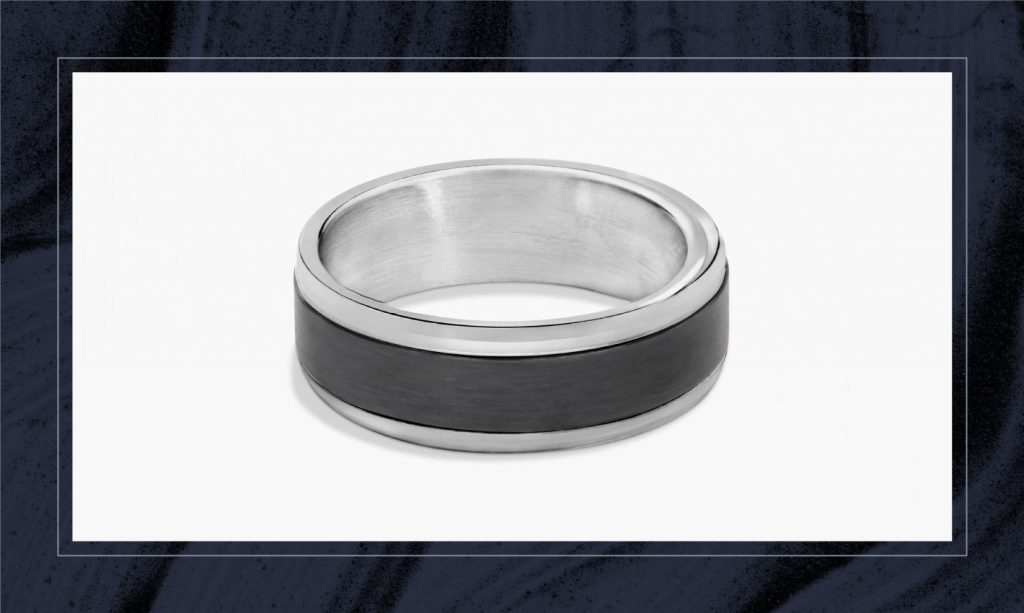
Trendy and abundant titanium ticks all the boxes for many men. This 99% pure alloy is far more versatile than tungsten and can be shaped into a variety of styles, including options that integrate other metals.
Strong enough for commercial aircraft and hypoallergenic enough to be used medically, titanium is truly the superhero of metals. Bonus, it creates the lightest ring of any you’ll come across.
While far more durable than gold and platinum, titanium wedding rings can’t be resized and are more expensive than their modern metal counterparts. Like tungsten, however, this metal may be affected by industrial chemicals and chlorine. The appeal of titanium largely lies in its featherweight nature.
- Resilience: High; strong and corrosion‑resistant
- Price range: Typically moderate, depending on design and any added materials
- Allergy information: Considered hypoallergenic for most wearers
- Best for: Lightweight comfort, active lifestyles and modern, streamlined styles
7. Cobalt Wedding Bands
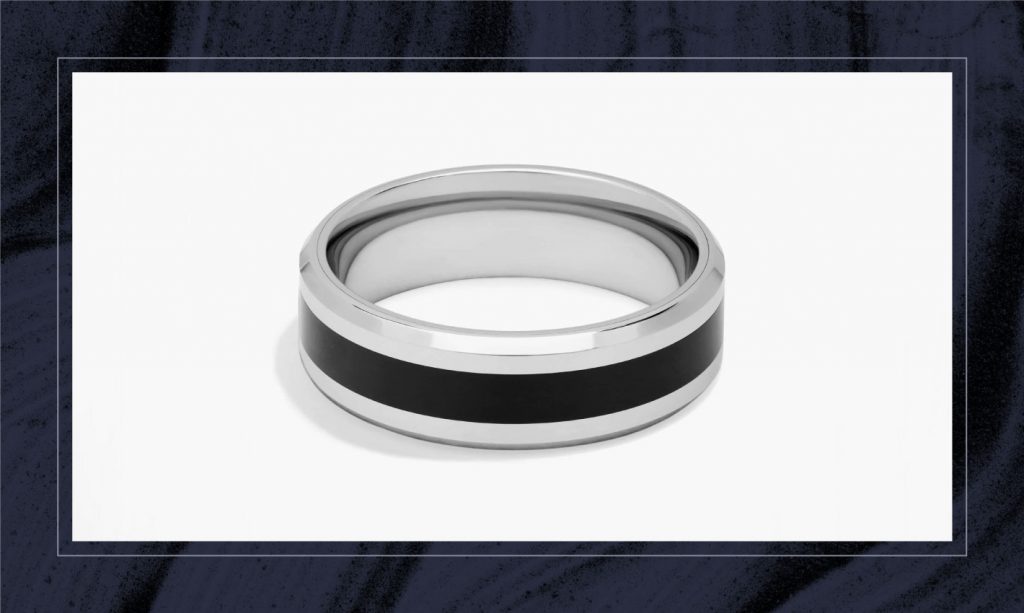
Cobalt wedding rings are incredibly affordable, especially considering that their luster rivals white gold, and it stands up to scratches and dents better than titanium and platinum.
While similarly rated, cobalt jewelry is lighter than tungsten. It also offers more style options than many other modern metals. The cons are similar to those for titanium and tungsten, with a limited selection of colors due to the metal’s unique resilience.
- Resilience: High; very scratch‑ and corrosion‑resistant
- Price range: Generally lower than other metals
- Allergy information: Hypoallergenic in the alloys offered by Blue Nile
- Best for: Everyday durability, bright white color and value‑driven shoppers
8. Palladium Wedding Bands
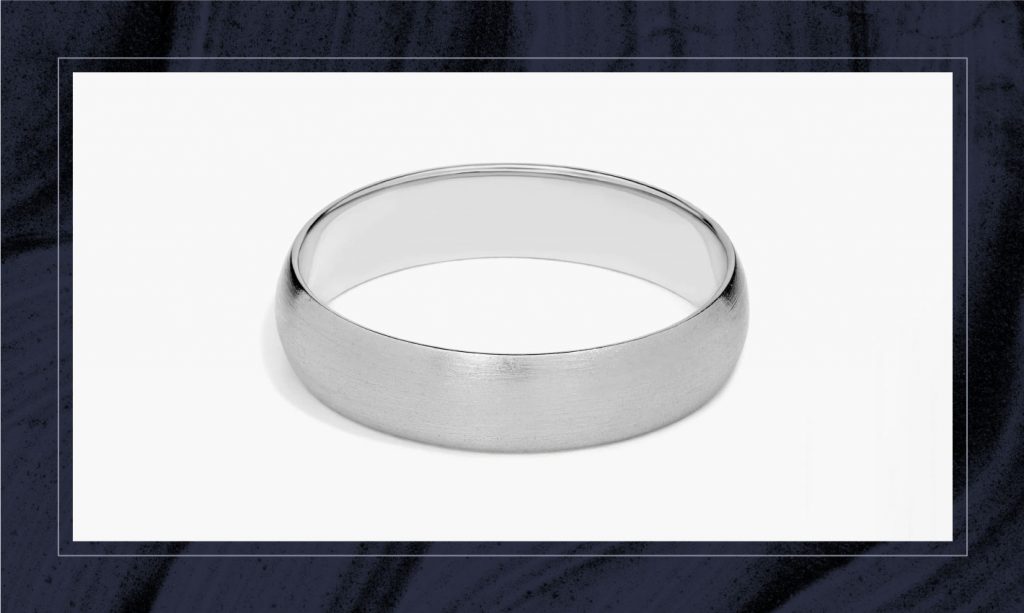
Palladium is a relatively new trend in men’s wedding rings. Palladium offers the steely-white appeal and resilience of platinum but with added toughness—and a far less expensive price tag. Despite the test of time, it won’t lose its shine and its non-reactive properties mean it won’t tarnish or discolor skin.
Palladium is also one of the only tough, modern metals that can be engraved. Palladium’s rarity makes it relatively pricey amongst its peers and at the moment, the style options are limited. Choose this band metal if you work with your hands and would like to engrave it.
- Resilience: High; resists tarnish and maintains its color
- Price range: Generally positioned between titanium and gold
- Allergy information: Typically low‑reactive and suitable for many skin types
- Best for: A platinum‑family metal with a slightly lighter feel and a refined, white finish
9. Tantalum Wedding Bands
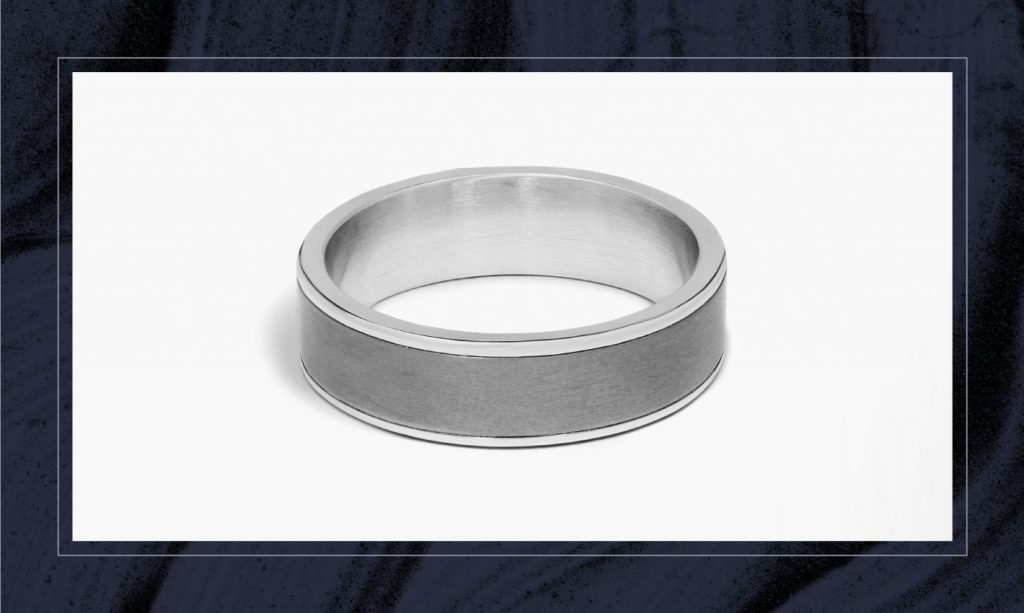
Tungsten’s neighbor on the periodic table of elements and with similar properties to platinum, tantalum is popular thanks to its affordability and durability. Its natural blue-grey color is coated in a matte black ceramic plating to give it a masculine and modern feel.
Tantalum is hypoallergenic, widely used in medical applications and, unlike titanium, won’t be affected by caustic chemicals like industrial acids. It’s also heat-resistant, so if you’re playing (or working) with fire, tantalum is a good choice. Because of its unique hardness, tantalum rings can’t be resized or engraved.
While tantalum can be controversial because it’s not always ethically mined and produced, all tantalum at Blue Nile is conflict-free. Like palladium, as a newer metal to enter the wedding ring arena, there simply aren’t a lot of styles out there. But despite the limited range of options, it’s worth a second look.
- Resilience: High; resistant to scratching and everyday wear
- Price range: Often more affordable than many platinum‑like options
- Allergy information: Hypoallergenic and suitable for most sensitive skin
- Best for: A modern, darker look with strong performance for hands‑on jobs
How to Choose a Wedding Band Metal
Choosing the best metal for men’s wedding bands comes down to how you live, work and want your ring to look years from now. A few practical elements can help you narrow your choices.
- Assess durability and maintenance: Metals, like tungsten, titanium, cobalt and tantalum, offer higher scratch resistance than softer gold alloys. Precious metals such as gold and platinum can be polished and maintained, but may show wear more readily.
- Consider your activity level and job: If you work in construction, mechanics, healthcare or other hands-on roles, consider a sturdy metal and think about a backup silicone band for high‑risk tasks. Office‑based roles may give you more flexibility to choose any type of wedding band.
- Evaluate how you present at formal occasions: Yellow gold and platinum have a long association with timeless wedding jewelry, while titanium, tungsten, cobalt, palladium and tantalum can provide a more contemporary feel that still works with formalwear.
- Buy for significance and personal style: Some people prioritize the traditional symbolism of precious metals, while others connect more with a modern, minimal or darker look. Consider whether you want your ring to coordinate with your partner’s, match your watch or other jewelry, or stand out on its own.
- Don’t ignore resizing and long‑term fit: If you expect weight or lifestyle changes over time, resizable metals like gold, platinum and palladium can offer added flexibility. Non‑resizable metals such as tungsten, titanium, cobalt and tantalum require more precise sizing from the start.
Should Men Get Wedding Rings with Diamonds?
Men can absolutely choose wedding rings with diamonds if they want extra dimension, light or detail in their band. Options range from subtle channels‑set diamonds to more statement‑making designs with larger stones or multiple rows.
If you prefer a low‑profile look that’s easy to wear every day, a simple metal band might be the right choice. If you like the idea of added brilliance, a men’s diamond wedding ring can echo your partner’s ring, highlight a particular metal color, or bring a little more personality into your daily style.
For very active lifestyles, you may decide to wear a diamond band for special occasions and a simpler or silicone band for work or workouts.
Why Having a Backup Band Is Important
A backup silicone wedding band can be an easy way to protect both your hand and your primary ring. If you lift weights, play sports, or work around machinery or harsh chemicals, wearing a silicone band for those situations reduces the risk of damage or discomfort while still keeping a symbol of your commitment on your finger.
This approach lets you choose the metal you truly want for your main ring, whether that is gold, platinum or a modern alternative, without worrying about every scratch or impact. You can wear your primary ring for daily life, date nights and formal events, and swap to a backup band whenever your schedule calls for extra protection.
Let Blue Nile Match You with the Perfect Wedding Band
The best metal for men’s wedding bands is the one that matches how you work, what you wear and how you want your ring to look years from now.
Hopefully, you’re on the way to deciding which option is right for you. But if you want to know more or need a little extra help, call or chat with one of our Diamond and Jewelry Experts any time, day or night.
Thanks to our chemistry consultant, John Marklewicz. He holds a Master’s degree in Chemistry from California University of Pennsylvania and has 35 years of college and high school-level teaching experience.
Frequently Asked Questions
There is no single best metal for men’s wedding rings. The right choice depends on how you balance durability, maintenance, comfort and budget. Gold and platinum offer classic, resizable options, while metals like tungsten, titanium, cobalt, palladium and tantalum provide extra scratch resistance and contemporary style.
Titanium is better if you want a strong, very lightweight and hypoallergenic ring that feels comfortable for all‑day wear. Tungsten is better if you prioritize maximum scratch resistance, a heavier feel, and a bold, modern look.
A platinum wedding band is better if you want a precious metal with classic status, natural white color and the ability to resize over time. A tungsten wedding band is better if you prefer a more value‑conscious, extremely scratch‑resistant option and don’t mind that it cannot be resized.
The main downsides of a tungsten ring are that it cannot be resized, style and color options are more limited, and it can react to certain harsh chemicals and chlorine. Its heavier weight may also feel too substantial for some wearers.
If you have sensitive skin, it is wise to be cautious with alloys that contain nickel or other metals that have caused reactions in the past. You may also want to avoid metals that cannot be resized if you expect significant changes in ring size over time.
No ring is completely scratch‑proof, but tungsten, cobalt and tantalum are among the most scratch‑resistant metals used in men’s wedding bands. Titanium also offers strong day‑to‑day wear resistance for many lifestyles.
A tungsten ring is designed to last for many years of wear due to its hardness and resistance to scratching and tarnishing. As long as it is properly sized and cared for, most signs of wear will be minimal compared to softer metals.


Share






 Live Chat
 +1‑800‑242‑2728
 Email Us

