- A simple soak in warm water with mild dish soap is the safest homemade jewelry cleaner for most gold, platinum, and diamond jewelry.
- Use targeted methods like baking soda for silver tarnish or diluted ammonia for diamonds, to safely remove stubborn buildup.
- Avoid harsh chemicals, abrasive materials and extreme heat, and schedule professional cleanings every six months to keep jewelry secure and sparkling.
Your jewelry naturally collects residue from everyday wear, but keeping it radiant is simpler than you’d think. A safe homemade jewelry cleaner can maintain the brilliance of your favorite pieces and help restore their shine.
Below, we’ll share seven easy methods to clean everything from gold and sterling silver to lab-grown diamonds at home. We’ll also share essential gemstone care tips to help you care for your pieces safely between professional cleanings.
1. All-Purpose Jewelry Cleaner
A gentle soak made with dish soap and warm water is widely considered the most effective way to clean jewelry at home. This method removes everyday buildup like lotions, oils and dust without damaging most fine metals or durable gemstones. It’s an effective at-home jewelry cleaner for routine care.
| Best for | Avoid with | |
| Metal types | Gold, platinum | Sterling silver (frequent soaking may encourage tarnish) |
| Gemstones | Diamonds, sapphires, rubies | Porous or delicate stones like pearls, opals, and turquoise |
What you’ll need:
- Warm water
- Mild dish soap
- Soft-bristle toothbrush
- Small bowl
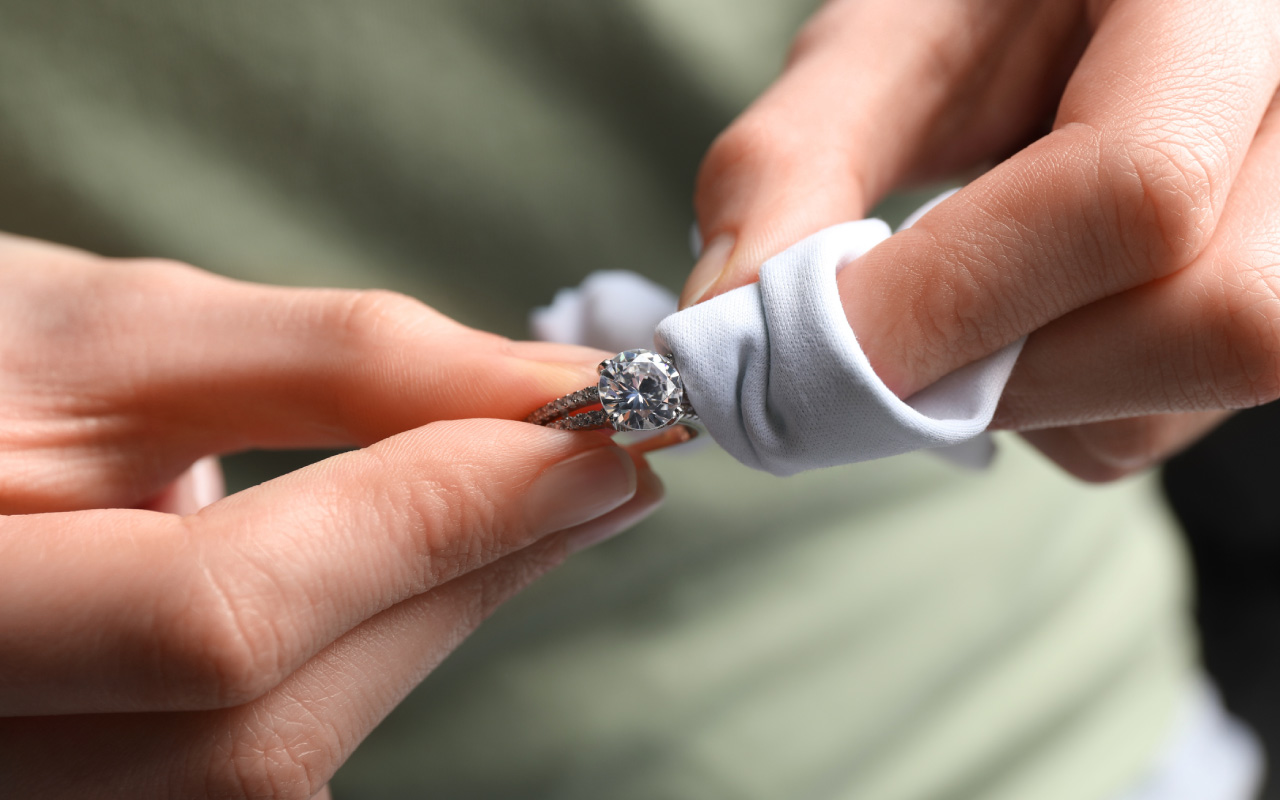
- Lint-free or microfiber cloth
How to use it:
- Mix warm water with a few drops of mild dish soap in a small bowl.
- Soak the jewelry for 15–20 minutes.
- Gently brush crevices with a soft toothbrush.
- Rinse with clean warm water.
- Pat dry with a lint-free cloth.
2. Baking Soda Jewelry Cleaner
Baking soda is a popular ingredient in DIY jewelry cleaner recipes. As a mild abrasive, it can help lift stubborn buildup or tarnish. This jewelry cleaning solution works best for sturdy metal pieces without delicate gemstones.
| Best for | Avoid with | |
| Metal types | Sterling silver, durable gold pieces without stones | Gold with delicate finishes or plated jewelry |
| Gemstones | Jewelry without gemstones | Soft or porous gemstones such as pearls, opals and turquoise |
What you’ll need:
- Baking soda
- Warm water
- Small bowl
- Soft cloth
How to use it:
- Mix baking soda with a small amount of water to form a paste.
- Gently rub the paste onto the metal with a soft cloth.
- Rinse thoroughly with warm water.
- Pat dry with a lint-free cloth.
3. Vinegar Jewelry Cleaner
White vinegar can help dissolve residue and light tarnish, making it a simple option for a quick jewelry cleaner solution. Because vinegar is acidic, never use it on porous or delicate gemstones like pearls. This method works best for plain silver pieces and can be a helpful option for cleaning silver jewelry that has started to dull.
| Best for | Avoid with | |
| Metal types | Sterling silver | Gold, platinum, plated jewelry |
| Gemstones | Jewelry without gemstones | Diamonds, pearls and all other gemstones |
What you’ll need:
- White vinegar
- Small bowl
- Soft cloth
- Soft toothbrush (optional)
How to use it:
- Place the jewelry in a small bowl and cover it with white vinegar.
- Let it soak for 10–15 minutes.
- Gently brush away loosened residue if needed.
- Rinse thoroughly with warm water.
- Pat dry with a lint-free cloth.
4. Foil Jewelry Cleaner
This method uses a simple chemical reaction between aluminum foil, baking soda and hot water to lift tarnish from silver. It’s a classic silver cleaner DIY technique that can help revive shine without heavy scrubbing.
| Best for | Avoid with | |
| Metal types | Sterling silver | Gold, platinum, plated jewelry |
| Gemstones | Jewelry without gemstones | Diamonds and all other gemstones |
What you’ll need:
- Aluminum foil
- Baking soda
- Hot water
- Small bowl or dish
- Soft cloth
How to use it:
- Line a bowl with aluminum foil, shiny side up.
- Place the silver jewelry on the foil.
- Sprinkle baking soda over the jewelry and pour hot water into the bowl.
- Let the jewelry sit for 5–10 minutes while the tarnish transfers to the foil.
- Remove the jewelry, rinse with warm water, and pat dry with a soft cloth.
5. Microfiber + Soap Jewelry Cleaner
For quick touch-ups between deeper cleanings, a microfiber cloth and mild soap are one of the top jewelry cleaners. This method helps remove light surface oils without soaking delicate pieces. It’s especially useful for routine maintenance for pieces you wear often, and it’s a safe option for gemstone care.
| Best for | Avoid with | |
| Metal types | Gold, platinum | Heavily tarnished silver |
| Gemstones | Diamonds, sapphires, rubies | Porous stones such as pearls, opals and turquoise |
What you’ll need:
- Mild dish soap
- Warm water
- Microfiber cloth
How to use it:
- Mix a few drops of mild dish soap with warm water.
- Dampen a microfiber cloth in the solution.
- Gently wipe the jewelry to remove surface residue.
- Wipe again with a clean, damp cloth.
- Dry with a soft microfiber cloth.
6. Club Soda Jewelry Cleaner
The mild carbonation in club soda can help loosen dirt and other residues from your jewelry. Reach for this simple soak as a quick way to restore sparkle to your gold and diamond jewelry, and avoid it with pearls.
| Best for | Avoid with | |
| Metal types | Gold, platinum | Tarnished sterling silver |
| Gemstones | Diamonds, sapphires, rubies | Porous stones such as pearls, opals, and turquoise |
What you’ll need:
- Club soda
- Small bowl
- Soft cloth
- Soft toothbrush (optional)
How to use it:
- Pour club soda into a small bowl.
- Place the jewelry in the bowl and let it soak for 10–15 minutes.
- Gently brush around settings if needed.
- Rinse with clean water.
- Pat dry with a lint-free cloth.
7. Ammonia Dilution Jewelry Cleaner
A diluted ammonia solution can cut through oils and buildup, making it a powerful at-home jewelry cleaner for gold and diamonds when used sparingly. Jewelers often rely on similar solutions to bring back brilliance to diamond jewelry.
| Best for | Avoid with | |
| Metal types | Gold, platinum | Sterling silver, plated jewelry |
| Gemstones | Diamonds, sapphires, rubies | Pearls, opals, emeralds and other delicate gemstones |
What you’ll need:
- Household ammonia
- Warm water
- Small bowl
- Soft toothbrush
- Lint-free cloth
- Rubber gloves
How to use it:
- Put on gloves before starting to clean.
- Mix one part ammonia with six parts warm water in a small bowl.
- Soak the jewelry for no more than 10 minutes.
- Gently brush around settings with a soft toothbrush.
- Rinse thoroughly with clean water.
- Pat dry with a lint-free cloth.
What to Avoid When Cleaning Jewelry
When exploring how to clean jewelry at home, it’s just as important to know what not to use as it is to know the safest methods. The following cleaning methods can damage fine jewelry if used incorrectly:
- Bleach or chlorine: These chemicals can weaken or discolor gold and silver alloys over time.
- Toothpaste or hard brushes: Abrasive textures can scratch metal surfaces and dull polished finishes.
- Vinegar, lemon juice, or witch hazel on pearls and porous stones: Acids can permanently damage delicate materials.
- Boiling water: Sudden heat can crack stones such as opals or emeralds.
- Paper towels: The fibers can leave micro-scratches on polished metal.
- Ultrasonic cleaners for fragile stones: Vibrations may loosen settings or damage delicate gemstones.
- Unprotected rinsing: Always plug the drain or rinse jewelry in a separate bowl to prevent accidental loss.
Why Routine Jewelry Care Matters
Even the finest jewelry collects residue from everyday wear, which can gradually dull its brilliance. Oils from skin, lotions and environmental debris build up over time, preventing your pieces from reflecting light as they should.
Learning how to keep your diamonds clean—along with other pieces in your collection—helps them keep their shine between professional cleanings. Consistent care also allows you to assess your jewelry’s condition over time.
Caring for your jewelry properly also supports responsible sourcing in a practical way, well-maintained pieces made from durable, repurposed metals need replacing far less often.
When to Use a Professional Jewelry Cleaner
At-home methods are great for routine care, but professional cleanings help maintain your jewelry in the long term. Most jewelers recommend scheduling a checkup and deep cleaning every six months. During these visits, experts can ensure prongs are tight and settings remain secure.
Whether you’re maintaining a favorite piece or buying fine jewelry, regular professional care helps preserve both the brilliance and structural integrity of your pieces. For added peace of mind, explore the Blue Nile jewelry protection plan to take advantage of free lifetime inspections and cleanings.
Frequently Asked Questions
Vinegar should only be used on plain sterling silver without gemstones. The acidity in vinegar can damage gold, platinum and porous stones like pearls or opals. Always confirm the materials in your jewelry before using vinegar-based cleaning methods.
You should gently wash your engagement ring about once a week. Regular cleaning removes oils and everyday buildup that can dull a diamond’s brilliance. Pair at-home routine cleaning with professional inspections every six months to keep the setting secure.
Yes, diamond stud earrings can be cleaned safely at home using warm water, mild dish soap and a soft brush. Always dry the earrings carefully with a lint-free cloth.
Yes, sterling silver can get wet, but repeated exposure to moisture can cause it to tarnish over time. Dry silver thoroughly after exposure to water to preserve its finish.


Share