










Key takeaways
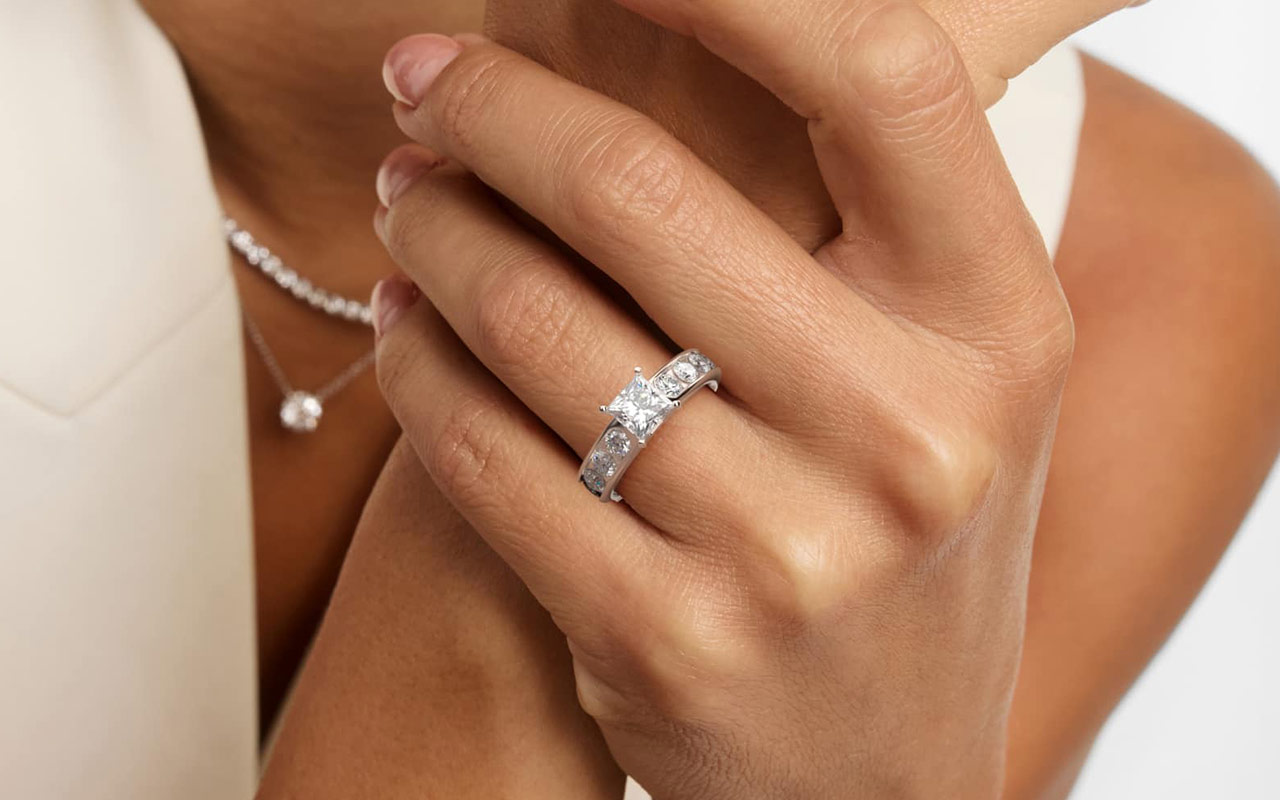
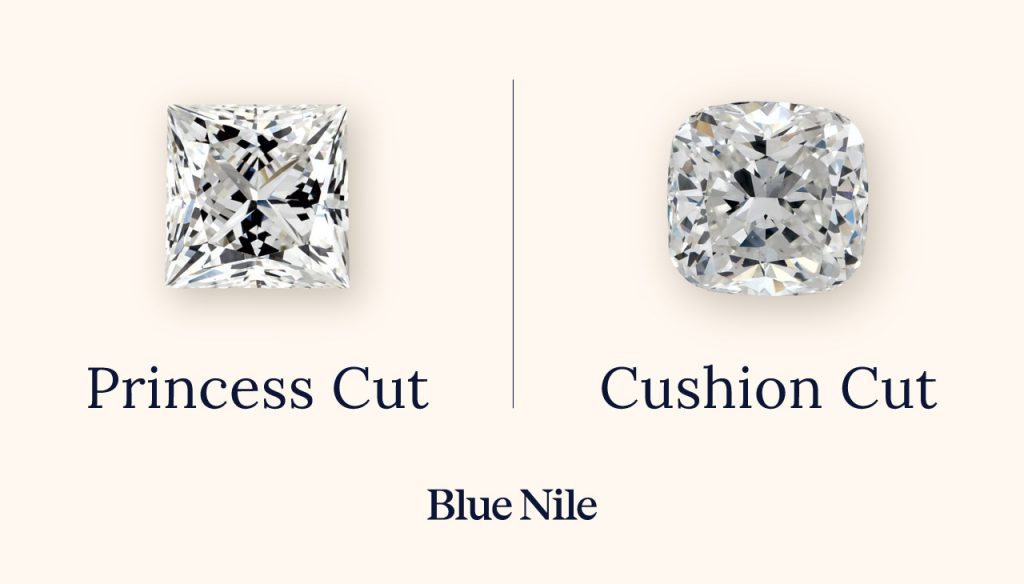
- Princess cut diamonds have sharp corners and a geometric shape, creating a bright, crisp style of sparkle.
- Cushion cut diamonds feature rounded corners and a pillow-like outline with a softer, more romantic look.
- Both shapes are popular for engagement rings, but differ in durability, sparkle style and overall appearance.
Choosing between a princess cut vs. cushion cut diamond often comes down to how you want a piece of jewelry to look and feel when worn. Both shapes are widely used across fine jewelry, from earrings and pendants to engagement rings. However, they create distinctly different visual impressions once set.
Despite having similar shapes, princess and cushion cut diamonds differ noticeably in sparkle, durability and overall style. Comparing these details side by side can clarify what a princess cut is and what a cushion cut diamond is, helping you decide which may be a better match based on your preferences.
What’s the Difference Between Cushion Cut and Princess Cut?
The difference between cushion cut and princess cut comes down to understanding several key characteristics that affect appearance, wear and value. Here’s a side-by-side comparison of how each performs.
| Princess Cut | Cushion Cut | |
| Shape | Square or rectangular with sharp, pointed corners | Square, rectangular or elongated outline with softly rounded corners |
| Brilliance | Bright, crisp sparkle with clear, defined flashes of light | Softer sparkle that may appear more diffused depending on facet pattern |
| Durability | Sharp corners can be more vulnerable to chipping and often benefit from secure settings | Rounded corners tend to be more forgiving for everyday wear |
| Face-up appearance | Often appears slightly larger for its carat weight when viewed from above | Can look slightly smaller if more weight is carried in depth |
| Value | Typically priced competitively and often costs less per carat than round shapes | Pricing varies by facet style and proportions, with some offering strong value |
| Popular settings | Solitaires, channel-set designs and modern styles | Halo settings, vintage-inspired designs and softly contoured styles |
Shape
A diamond’s shape plays a major role in how a piece of jewelry looks once set. Over time, diamond shapes have evolved due to changing styles, cutting techniques and design preferences. The princess cut is a relatively modern cut developed in the 1960s, while the cushion cut has been around since the 1700s.
Cushion and princess cut diamonds are both commonly described as square or rectangular in outline. With cushion cuts, rectangular proportions are often referred to as elongated, while princess cuts tend to have a more uniform square shape. Differences in corner structure and proportions create noticeably different visual effects once set in jewelry.
| Princess Cut Shape | Cushion Cut Shape |
| Square or slightly rectangular outline | Square or elongated outline |
| Sharp, pointed corners | Softly rounded corners |
| Straight, angular edges | Gently curved edges |
| Clean, geometric appearance | Pillow-like, softly contoured appearance |
| Typically uniform proportions | Available in a wider range of outline shapes |
Brilliance
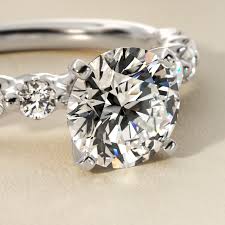
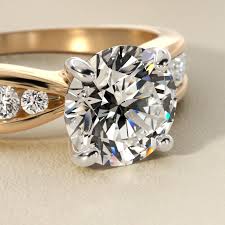
Brilliance refers to how a diamond reflects white light. Princess cut diamonds are typically brilliant-style diamonds, faceted to emphasize sparkle rather than the mirrored look associated with brilliant and step-cut faceting. Cushion diamonds offer a wider range of sparkle styles and are available in both brilliant and modified brilliant facet patterns.
Square cushion cuts are often faceted for bolder brilliance, while elongated cushion cuts are more likely to show a softer, more diffused “crushed ice” effect. This variation is why some buyers compare elongated cushion and radiant brilliant diamonds when choosing between diffused sparkle and sharper flashes.
| Princess Cut Brilliance | Cushion Cut Brilliance |
| Bright, high-contrast white light brilliance | Brilliance can range from bold to softly diffused |
| Sparkle appears crisp and evenly distributed | Sparkle pattern varies widely by facet style |
| Faceting designed for consistent light return | Faceting may be brilliant or modified brilliant |
| Uniform sparkle appearance from stone to stone | Greater variation in sparkle between individual stones |
| Produces sharp, lively flashes of light | May show a softer glow or “crushed ice” effect |
Durability
While diamonds are one of the most durable gemstones, daily wear can expose them to impacts that may cause damage over time. When comparing princess cut and cushion cut diamonds, the main durability difference comes down to corner structure.
Sharp corners, like those found on a princess cut, can be more vulnerable to chipping if struck. Cushion cuts feature rounded corners, which help distribute impact more evenly which reduces the risk of damage during everyday wear.
However, this doesn’t mean you should avoid a princess cut. Choosing a well-crafted ring with secure prong placement and thoughtful design can significantly reduce the risk of damage. Blue Nile settings are engineered to help protect the diamond and support long-term wear.
| Princess Cut Durability | Cushion Cut Durability |
| Mohs scale: 10 (extremely hard and scratch resistant) | Mohs scale: 10 (extremely hard and scratch resistant) |
| Sharp, pointed corners | Rounded corners |
| Corners may be more vulnerable to impact | Corner structure helps distribute impact |
| Benefits from designs that protect corners | Performs well across a wide range of designs |
Face-up Appearance
When set in jewelry, a diamond’s face-up appearance describes how the stone appears when viewed from above. Factors like surface area, outline, proportions and overall footprint shape its visual impact on the hand.
In addition, because carat measures weight rather than visible size, different proportions can influence how large each shape appears. Princess cuts tend to spread more of their carat weight across the surface, which can make them look larger from above, while cushion cuts may carry more weight in depth which can make them appear slightly smaller face-up.
| Princess Cut Face-up Appearance | Cushion Cut Face-up Appearance |
| Weight spread across the surface | Deeper profile can hide weight |
| Often appears larger at equal carat weights | May appear smaller face-up |
| Face-up size is generally consistent at a given carat weight | Face-up size can vary depending on shape and proportions |
| Angular outline creates a bold, structured footprint | Rounded outline creates a softer footprint |
| Appears evenly proportioned across the finger | Elongated cushion diamond styles emphasize length over width |
Value
Value reflects how much visual impact and quality you get for a given budget, not just the price tag. Diamond prices can vary by shape due to cutting efficiency and marketing. For example, round diamonds typically command higher premiums because of their popularity and the greater loss of rough material during cutting.
In contrast, fancy shapes like cushion and princess diamonds are often considered strong alternatives to round diamonds, in terms of value. Princess cuts offer consistent pricing and competitive cost per carat, while cushion cuts can provide especially strong value depending on proportions and facet style.
Because pricing for cushion shapes can vary more widely, careful comparison helps identify options that deliver the most visual impact for the budget.
| Princess Cut Value | Cushion Cut Value |
| Price range: $3,100 – $4,500* | Price range: $2,400 – $4,300* |
| More consistent pricing across stones overall | Pricing can vary widely by style and outline |
| Typically strong value per carat | Value tied closely to cut quality and proportions |
| Typically priced below round diamonds | Typically priced below round diamonds |
| Easier to compare stones at similar price points | Rewards careful comparison to find strong value |
*Price comparison based on 1 carat, VS1, Excellent cut diamonds with D or E color.
Popular Settings
A diamond’s setting influences its overall style, how well the stone is protected and how prominently it’s displayed once worn. Because princess and cushion cuts have different corner shapes and outlines, certain settings better highlight each cut’s strengths.
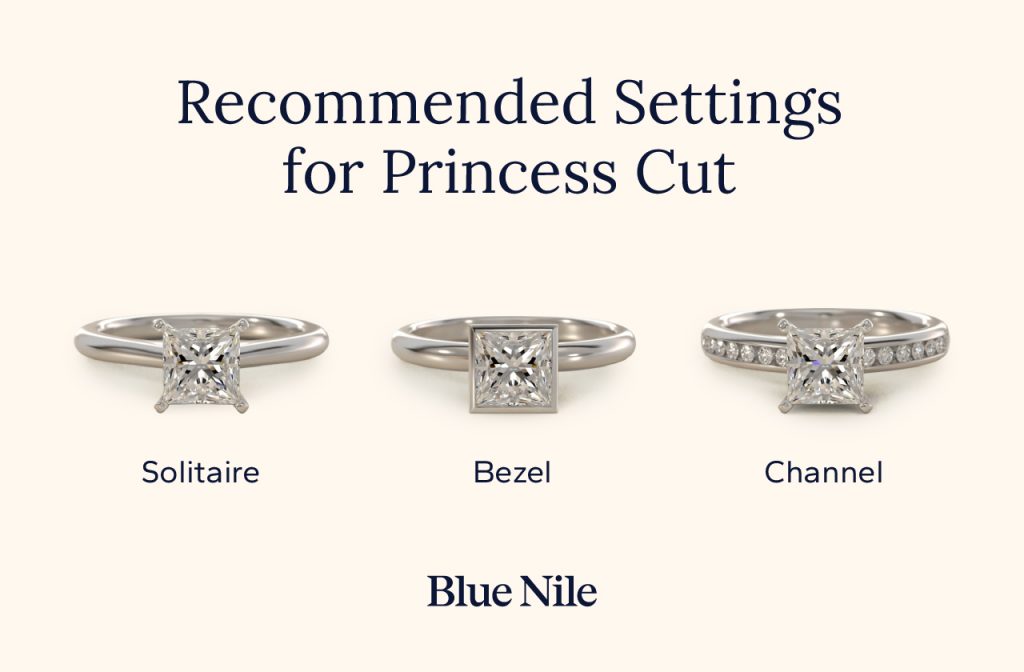
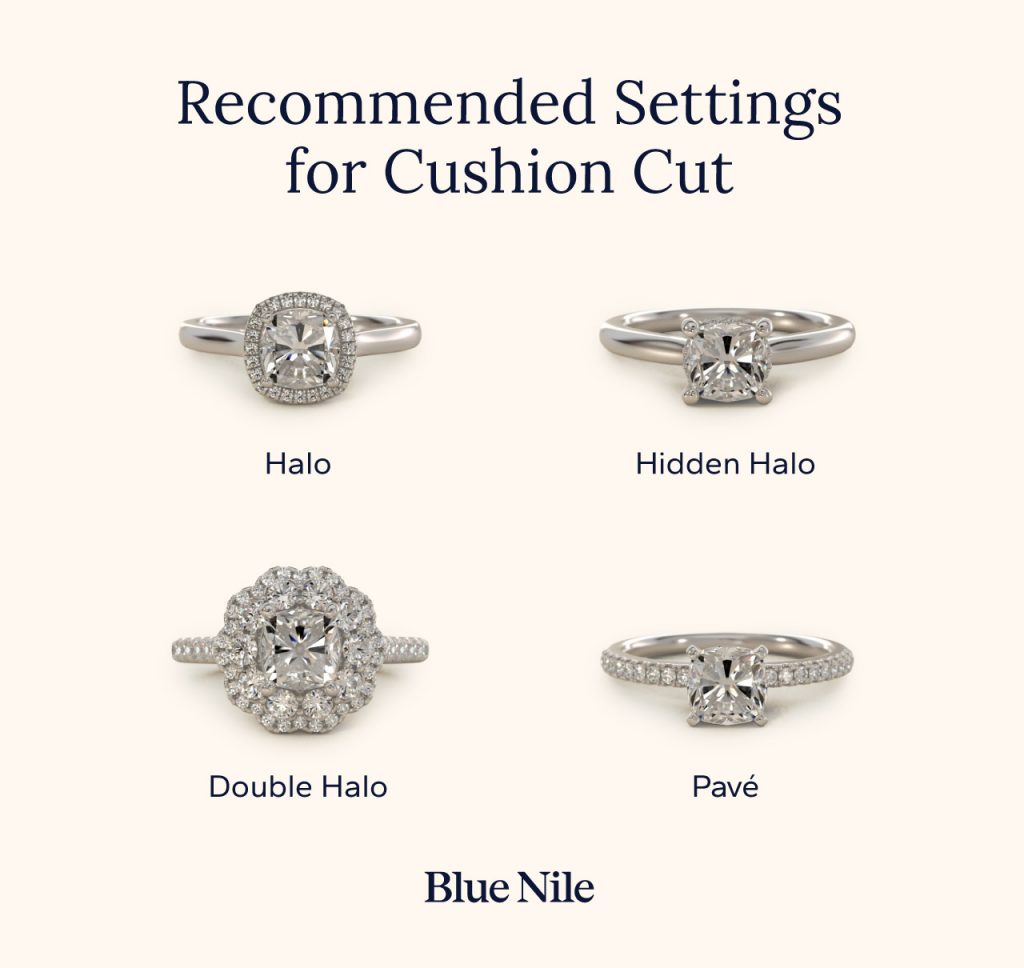
Setting choice balances visual impact with practical protection. Princess cuts often benefit from designs that shield their pointed corners, while cushion cuts pair well with softly contoured settings that complement their shape. This decision is especially important for cushion cut rings, because the setting strongly influences the final appearance.
| Princess Cut Settings | Cushion Cut Settings |
| V-prongs protect sharp corners | Halo and hidden halo settings complement rounded corners |
| Solitaire settings emphasize the clean geometry | Pavé bands enhance the soft outline |
| Bezel settings add security and a modern look | Vintage-inspired settings highlight cushion shapes |
| Channel-set or structured designs reinforce sharp lines | Double-halo and softly contoured settings emphasize cushion proportions |

How to Choose Between Princess and Cushion Cut Diamonds
Choosing between princess and cushion cut diamonds often comes down to how the stone looks and wears once set in jewelry. Both shapes are widely used in engagement rings and fine jewelry, but differences in outline, depth and corner structure directly influence sparkle, durability and overall appearance.
When chosen thoughtfully, both can become part of a timeless jewelry collection designed to be worn and enjoyed for years to come. Here are some factors to consider when deciding between a princess or a cushion cut diamond:
- Design style: Princess cuts emphasize clean lines and symmetry, creating a modern, geometric look. Cushion cuts feature rounded corners and softer edges, often appealing to those drawn to classic or vintage-inspired designs.
- Sparkle character: Princess cuts typically deliver bright, high-contrast sparkle with crisp flashes of light. Cushion cuts can range from bold to more diffused sparkle depending on shape and facet pattern.
- Appearance once set: Depth and outline influence how large a diamond looks from above. Princess cuts often spread weight across the surface for a larger face-up appearance, while cushion cuts may appear slightly smaller unless elongated.
- Durability considerations: Princess cuts have pointed corners that benefit from protective settings, while cushion cuts’ rounded corners tend to be more forgiving in daily wear.
- Budget flexibility: Princess cuts generally offer more consistent pricing, while cushion cuts can vary widely based on proportions and cut quality, making careful comparison especially important.
Both Cuts Make the Cut at Blue Nile
When comparing princess cut and cushion cut diamonds, there’s no single right answer—only the shape that best fits your style, lifestyle and priorities. Princess cut designs are known for crisp lines and a modern look, while cushion cut rings offer a softer outline and more varied sparkle.
A popular choice for engagement rings, explore Blue Nile’s selection of princess cut engagement rings or discover cushion cut diamonds within our extensive selection of engagement rings to see which fits you best.
Frequently Asked Questions
Both princess and cushion cut diamond engagement rings are popular with celebrities. Iconic celebrity engagement rings like those worn by Taylor Swift, Kim Kardashian and Hailey Bieber reflect a range of styles, from crisp, modern cuts to softer, vintage-inspired designs. Celebrities often prioritize visual impact, using distinctive designs to make a lasting statement.
No, princess cut engagement rings are not out of style. Their clean lines and contemporary look continue to appeal to shoppers who prefer a modern aesthetic, making them a consistent choice alongside round and cushion cuts.
Princess cut diamonds often have more predictable pricing, while cushion cut prices can vary more widely based on proportions and cut style. When comparing a cushion cut diamond ring and princess cut at similar carat weight and quality, careful side-by-side comparison helps identify the best value.
Elongated shapes and cuts with shallower depth appear larger when viewed from above. Princess cuts often look sizable for their carat weight, while elongated cushion cut diamond ring styles can also create a greater visual footprint due to their length. This also applies when comparing the rectangular radiant and elongated cushion cuts.
Other cuts known for maximizing face-up size include oval, marquise and pear shapes, which distribute weight across a longer outline and increase visible finger coverage.
Meghan Markle’s engagement ring featured a 3-carat cushion cut center diamond, flanked on either side by smaller diamonds from Princess Diana’s collection.
A princess cut diamond may not be ideal if you prefer rounded edges or a softer sparkle style. Its pointed corners can also benefit from more protective settings, which can limit certain setting options compared to a cushion cut ring.
There is no single “best” cut for every buyer. The best choice depends on personal preference, whether you prioritize sparkle, durability or appearance, and how a diamond will be worn—whether in a cushion cut diamond ring or a princess cut setting.


Share




 Live Chat
 +1‑800‑242‑2728
 Email Us

