






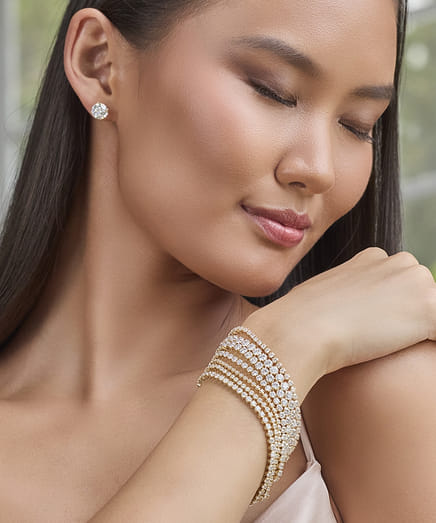


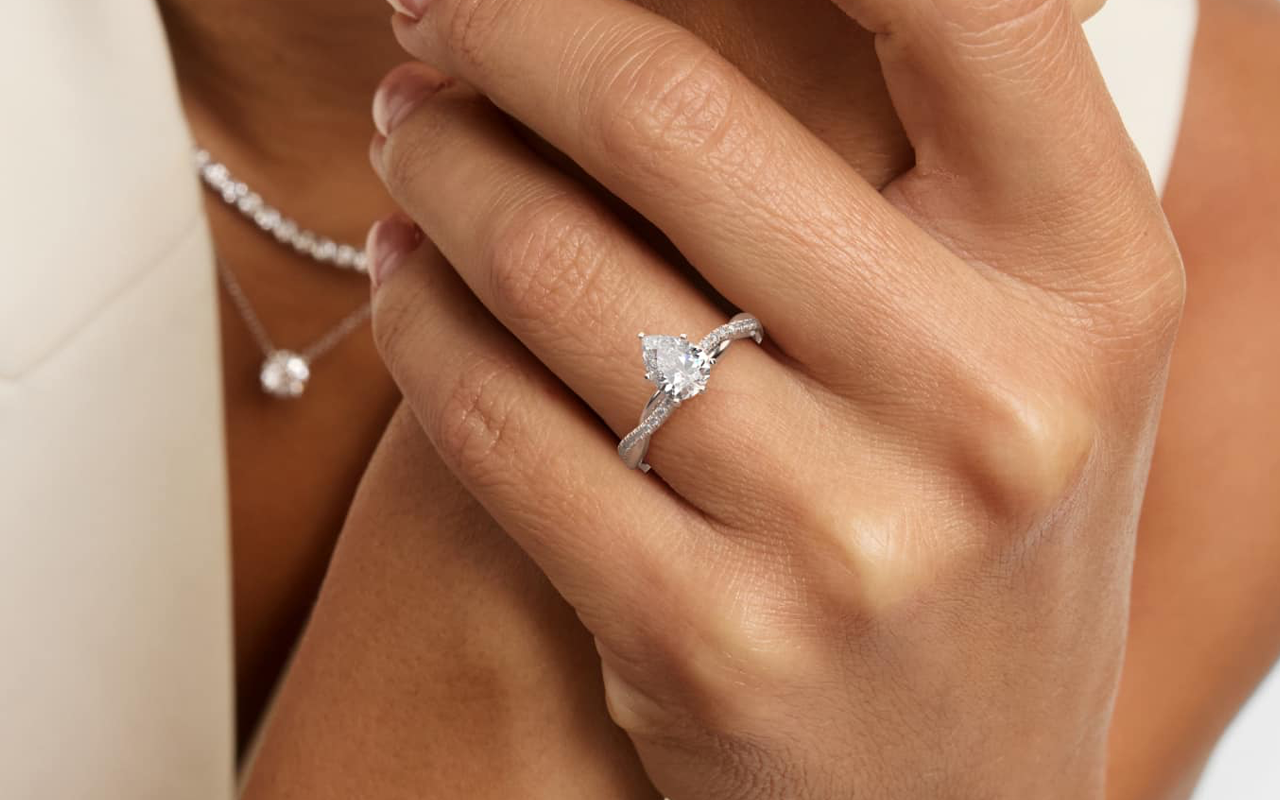
| H color diamonds are graded within the Gemological Institute of America (GIA) near-colorless range. They show a faint hint of warmth that is typically not visible to the unaided eye once set. |
Diamonds naturally occur in a range of tones, and are graded on a letter scale from D to Z. Many people assume only the highest grades — D through F — look truly white. However, when a buyer learns what is H color diamond, they’re often surprised by how white it appears once set.
H color diamonds are a popular choice for buyers who want a white-looking diamond without paying the premium associated with higher color grades.
In this guide, we’ll explain what H color means, how it compares to other grades, how it looks in different metals and settings and how to choose from our selection of H color diamonds.
What Is an H Color Diamond?
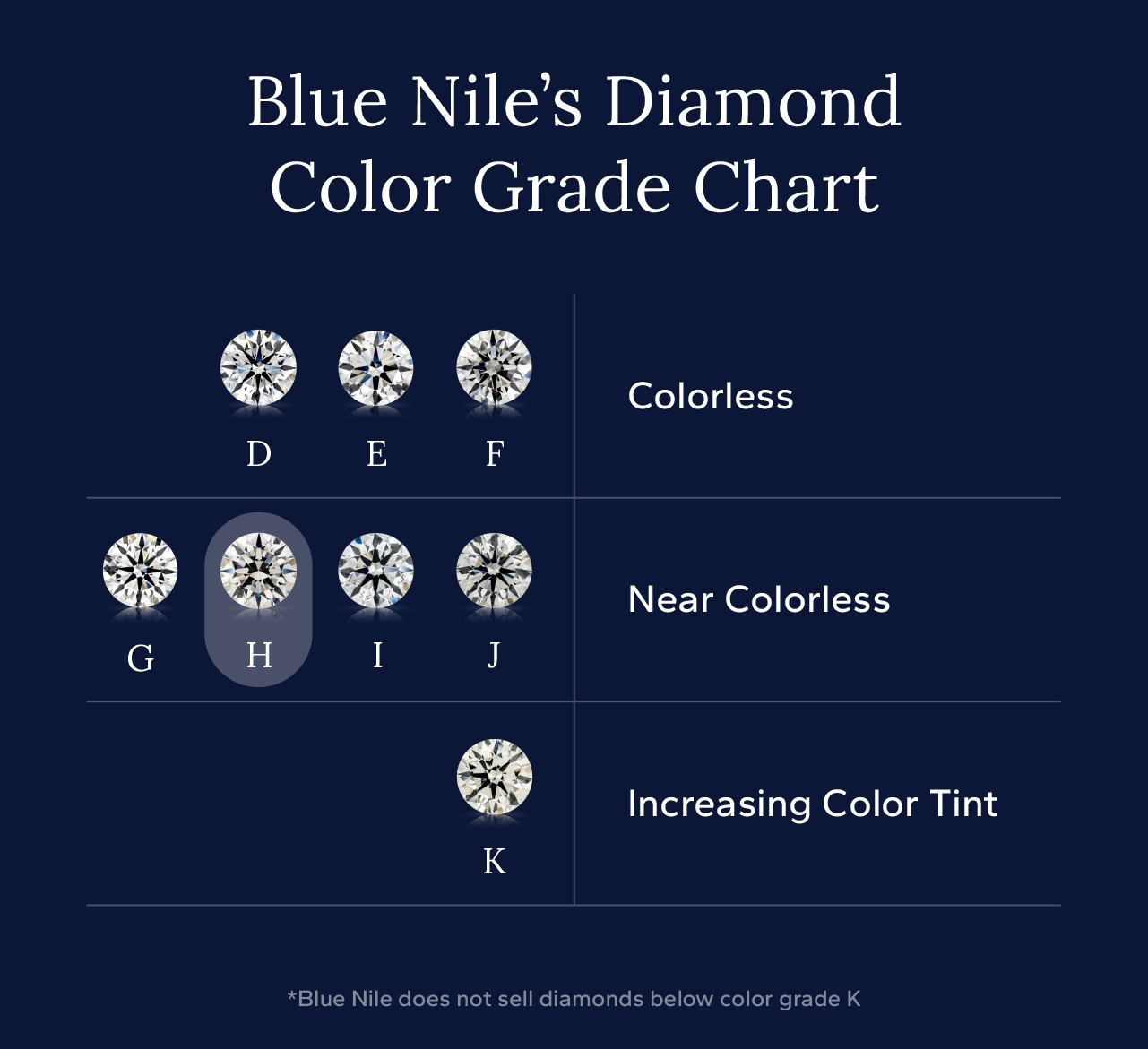
An H color diamond sits in the upper tier of the near-colorless range on the color scale developed by the Gemological Institute of America (GIA). GIA is the industry’s leading authority on diamond grading. This range spans grades G through J and shows only a faint hint of warmth that is difficult for most people to detect once the diamond is set.
This makes H a popular choice for buyers who want a bright, clean-looking diamond. Many prefer to prioritize cut quality, setting style or carat weight rather than paying more for color differences that are hard to see.
Color and the 4Cs
Diamond color is one of the 4Cs used to evaluate a diamond’s overall quality, alongside cut, clarity and carat weight. While each C plays a role, color specifically refers to how much natural warmth or tint is present in a diamond.
Understanding where H falls on the diamond color scale shows why it’s often considered a sweet spot. It sits just below the colorless range, where diamonds can still appear white in everyday wear.
Here’s how the GIA diamond color scale is grouped:
| Color Range | Classification | What to Expect |
| D–F | Colorless | Appears icy white with virtually no visible color. Rarest grade and typically carries the highest prices. |
| G–J | Near Colorless | Shows slight warmth difficult to detect once set. H color falls in this range. |
| K–Z | Faint to Light Color | Displays increasingly noticeable warmth. Especially noticeable in larger diamonds or lighter metal settings. |
How Does H Compare to Other Color Grades?
Because color differences between adjacent grades can be subtle once a diamond is set, many buyers compare H color diamonds to nearby grades to understand what changes visually. While diamonds that sit closer together on the color scale tend to look similar once set, their pricing can vary more noticeably due to rarity.
The comparison below shows how H stacks up against other common color grades:
| Color Grades | Appearance Difference | Typical price Difference |
| H vs. D | D appears completely colorless; H may show a faint warmth. | D usually carries the highest premium due to rarity. |
| H vs. E | Differences between H and E color diamonds are difficult to notice. | E is generally priced higher because it is classified as colorless. |
| H vs. F | Differences between H and F color diamonds are minimal once set. | F typically costs more due to its colorless grade. |
| H vs. G | G and H appear very similar, only a slight difference in warmth. | G color diamonds often carry a modest premium. |
| H vs. Lower Grades | I–J may show more noticeable warmth, especially in larger stones or lighter settings. | I color diamonds through J color diamonds are generally priced lower. Blue Nile does not carry diamonds graded L-Z. |
Where Diamond H Color Works Best by Jewelry Style
How a diamond is worn can influence how color is perceived, especially at normal viewing distances. Because H color diamonds sit in the near-colorless range, they adapt well across a wide variety of jewelry styles. This section focuses on how H color performs across different jewelry styles and identifies when color differences may be easier to see.
Engagement and Wedding Rings
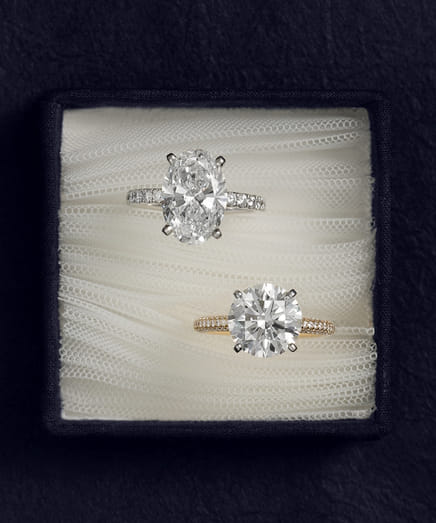
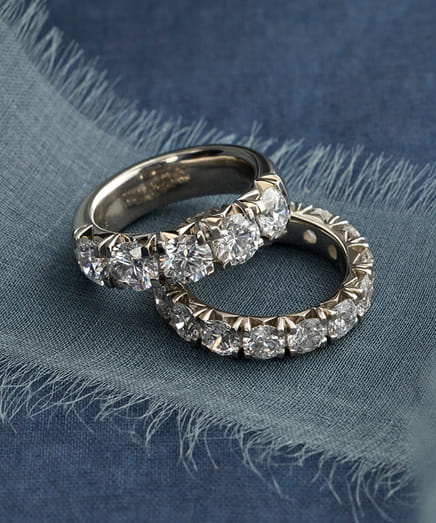
In many cases, the setting and overall design have more impact on appearance than the difference between nearby color grades. Diamond color H is a popular choice for wedding and engagement rings because they appear white in most settings.
When cut quality is strong, an H color diamond can look just as bright as a G color diamond in everyday wear. This makes it a versatile option for classic solitaires as well as more detailed ring designs.
General Wear Jewelry
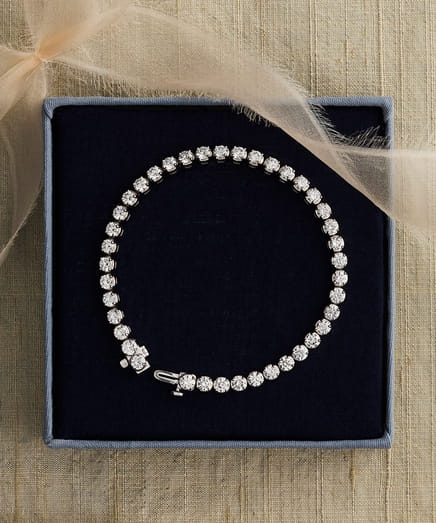
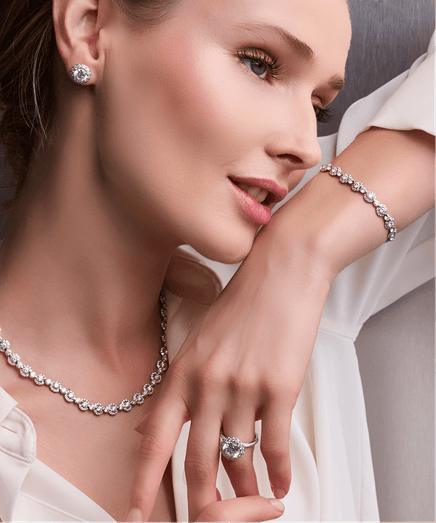
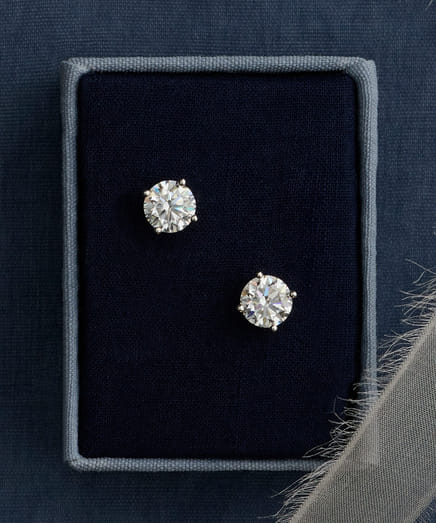
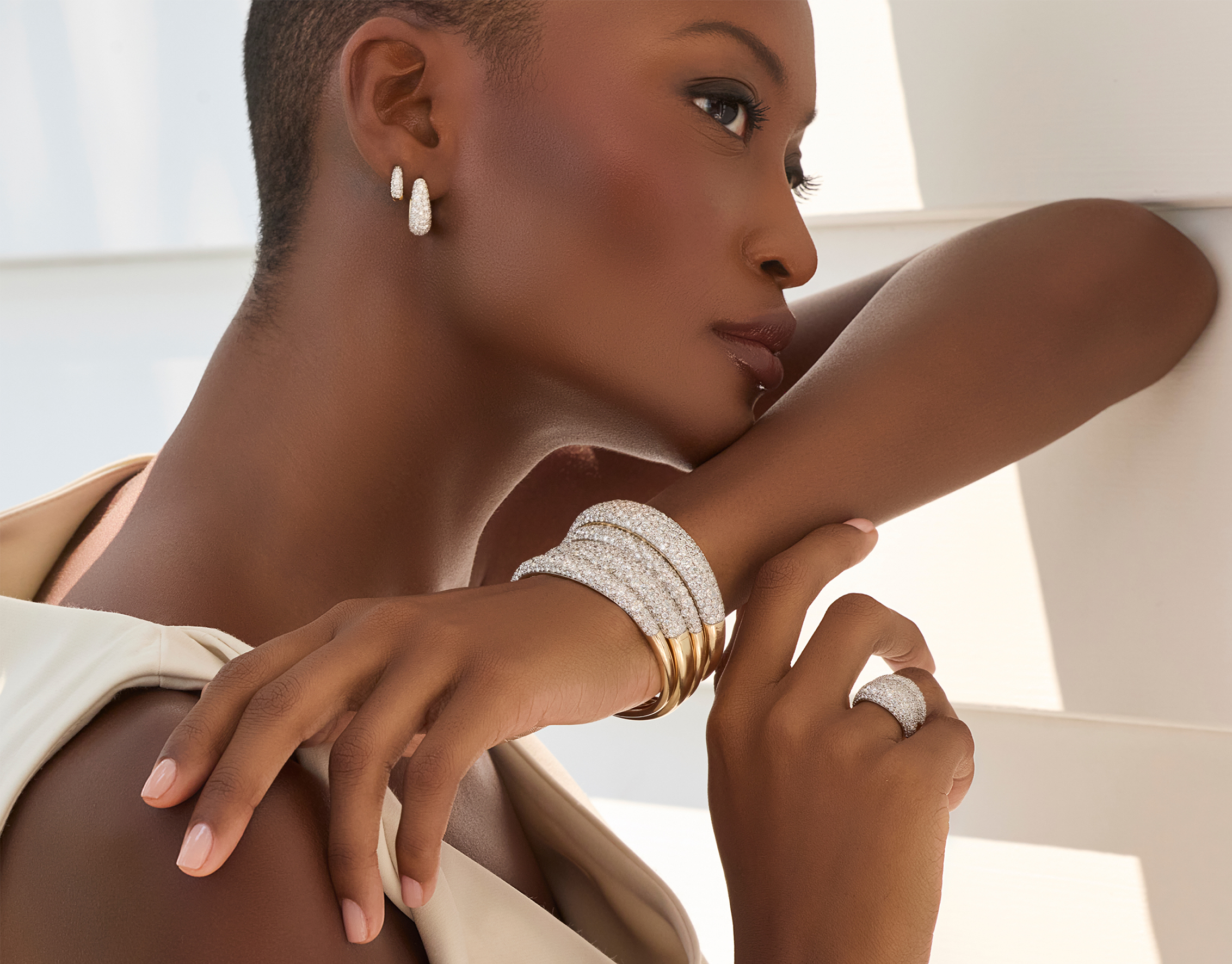
As near-colorless diamonds, H color stones work especially well for earrings, pendants and bracelets. Because the diamonds are often viewed at a distance or in motion, subtle color differences are difficult to notice.
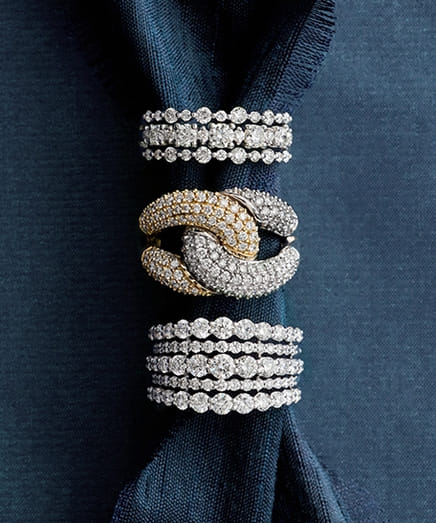
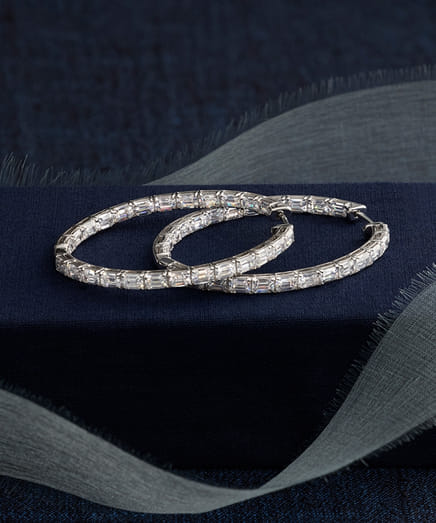
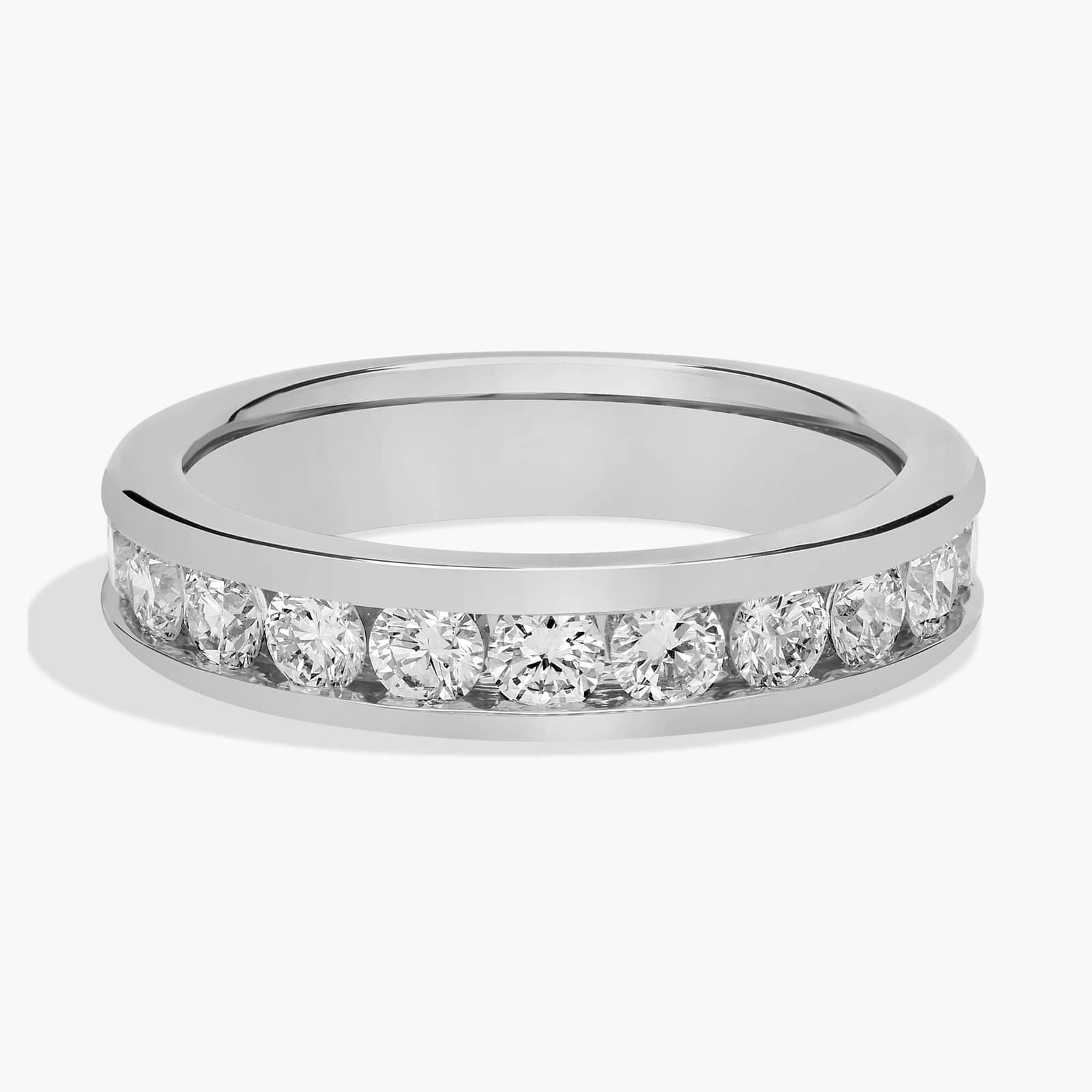
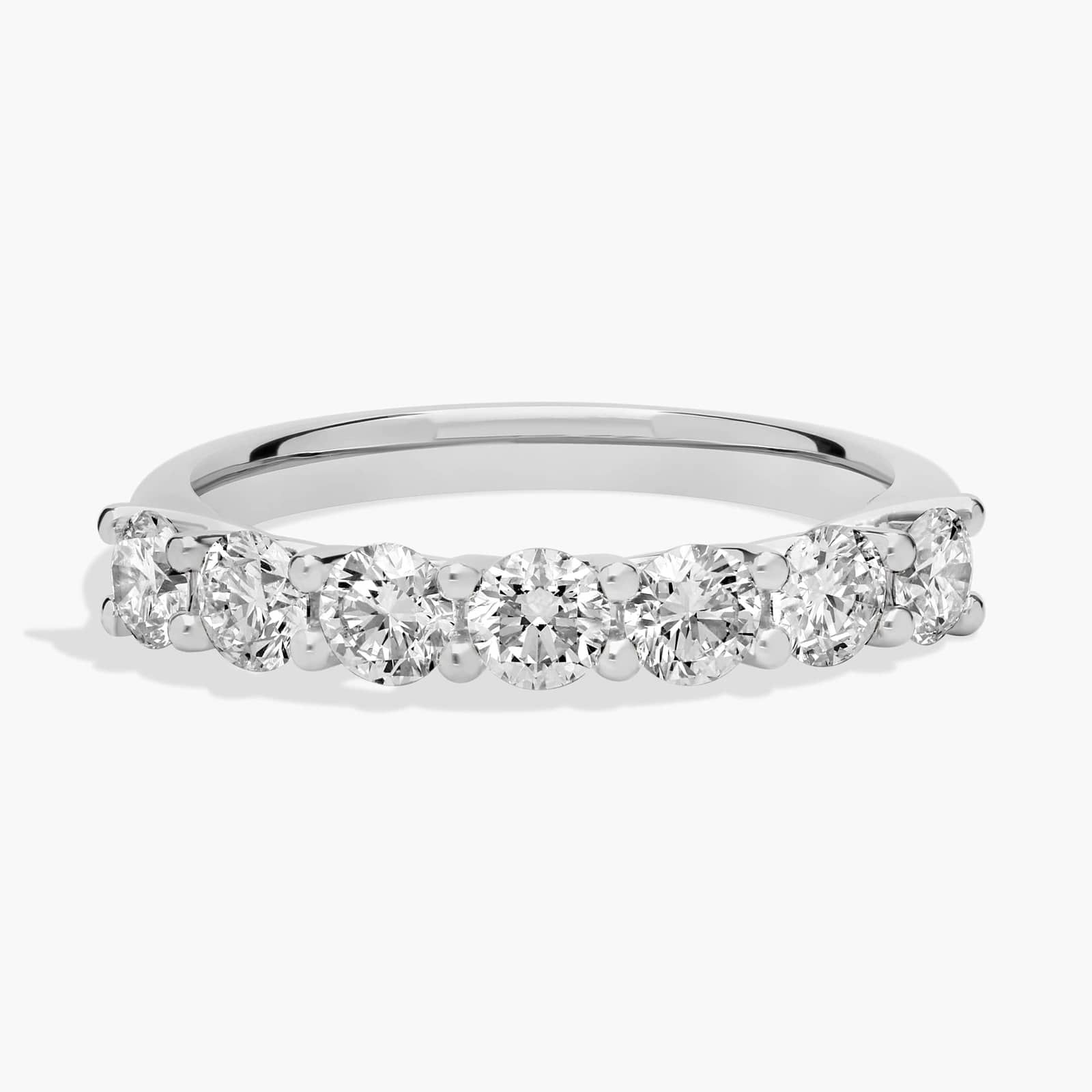
Many buyers choose H color diamonds for multi-stone designs. In these settings the consistency of sparkle and overall look matter more than fine color distinctions. This makes H well suited to everyday styles that emphasize balance and visual consistency.
When It May Not Be Ideal
H color diamonds may be less suitable for buyers who are especially sensitive to color and prefer a completely colorless appearance. In designs where the diamond is viewed closely or framed by minimal metal, even near-colorless grades can reveal small differences in tone.
Certain jewelry styles place more visual emphasis on the diamond itself. High-exposure designs, such as tension settings, open gallery styles, or settings with little metal coverage, can make color more noticeable. In these cases, some buyers prefer a higher color grade.
How H Diamonds Look with Different Metals
The metal you choose for a setting can subtly influence how a diamond’s color is perceived. Because H color diamonds fall within the near-colorless range, they pair well with a wide variety of metals. Understanding how different metal tones interact with diamond color with H helps identify settings that highlight the stone’s natural brightness.
With White Gold or Silver
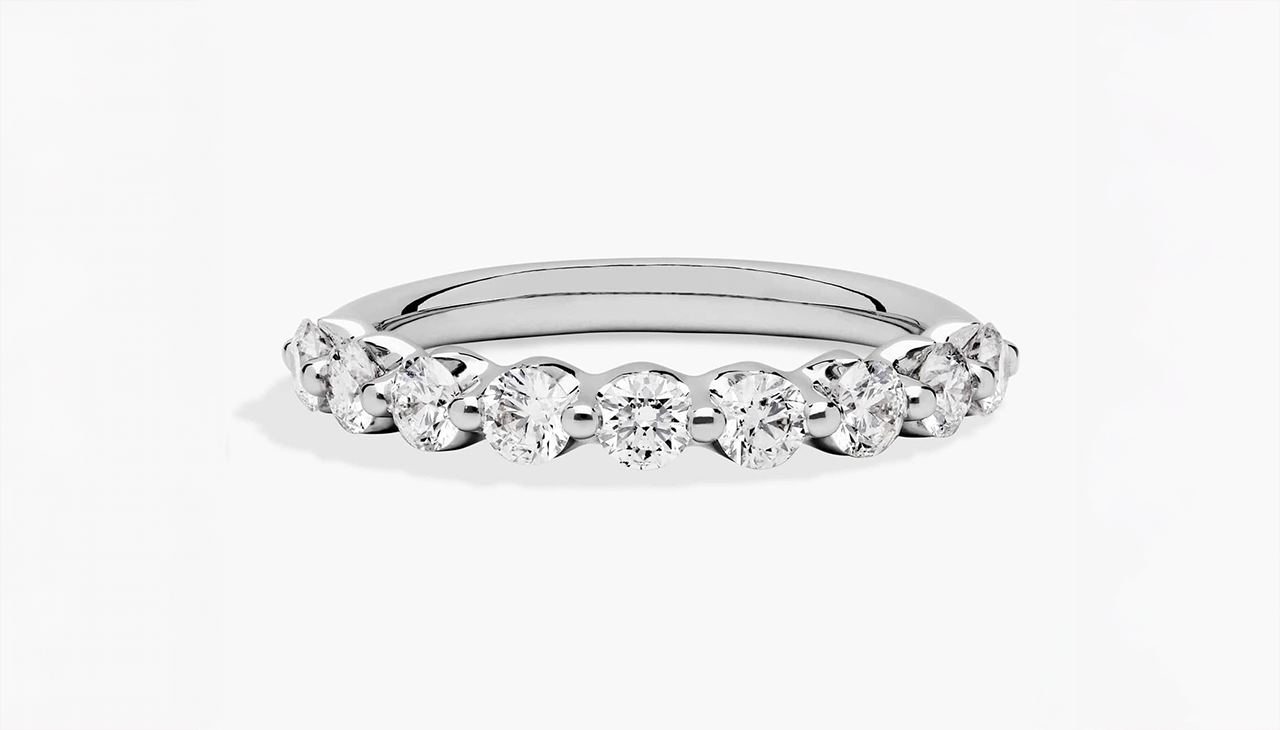
When paired with white gold or silver, an H color diamond typically appears bright and white. The cool tone of these metals reflects light back into the diamond, helping minimize any visible warmth.
This combination is especially popular for shoppers who want a crisp, modern look, as the metal and stone work together to emphasize brightness and sparkle.
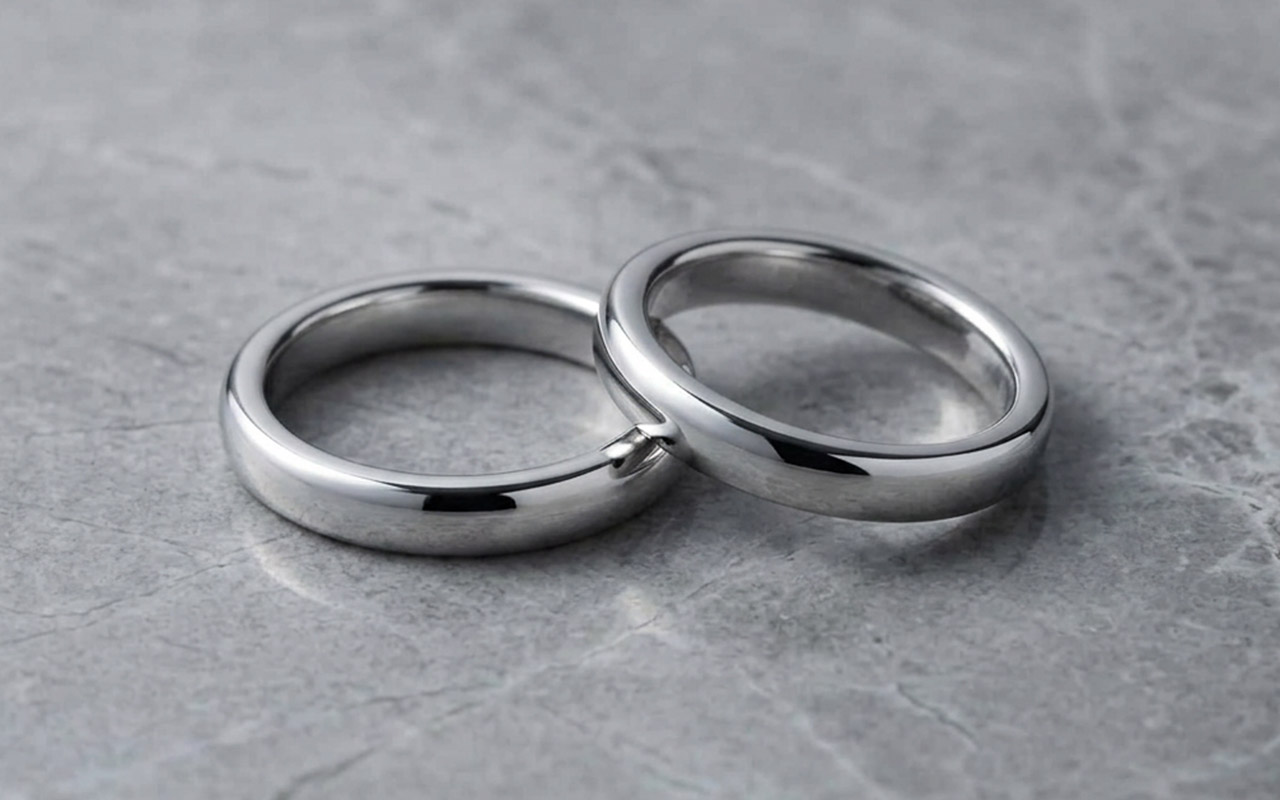
With Platinum
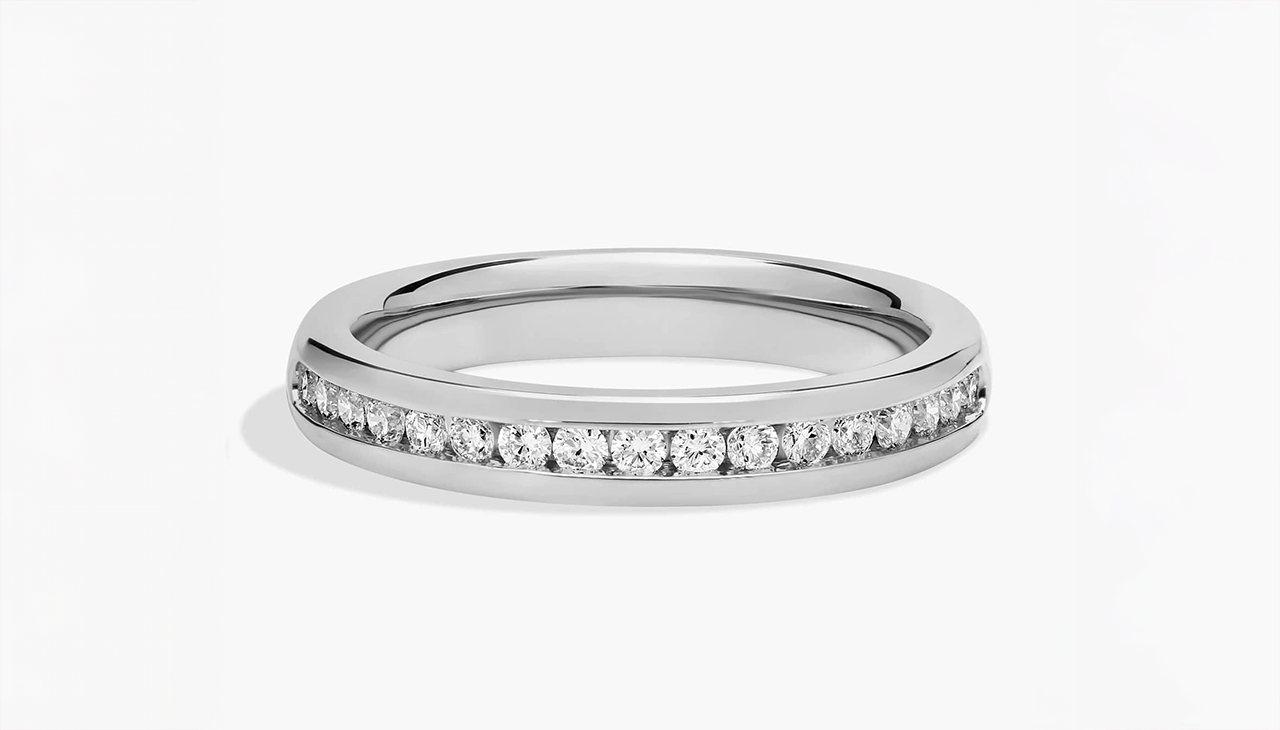
Platinum settings are known for their durability and naturally bright white finish, which helps keep an H color diamond looking crisp. Because platinum does not cast warm tones, it allows the diamond’s brightness to stand out clearly. This makes H a strong match, particularly in classic or minimalist designs.
Differences in finish and reflectivity between white metals can also influence how light is returned to the diamond, which is why platinum and white gold can produce slightly different visual effects.
With Yellow Gold
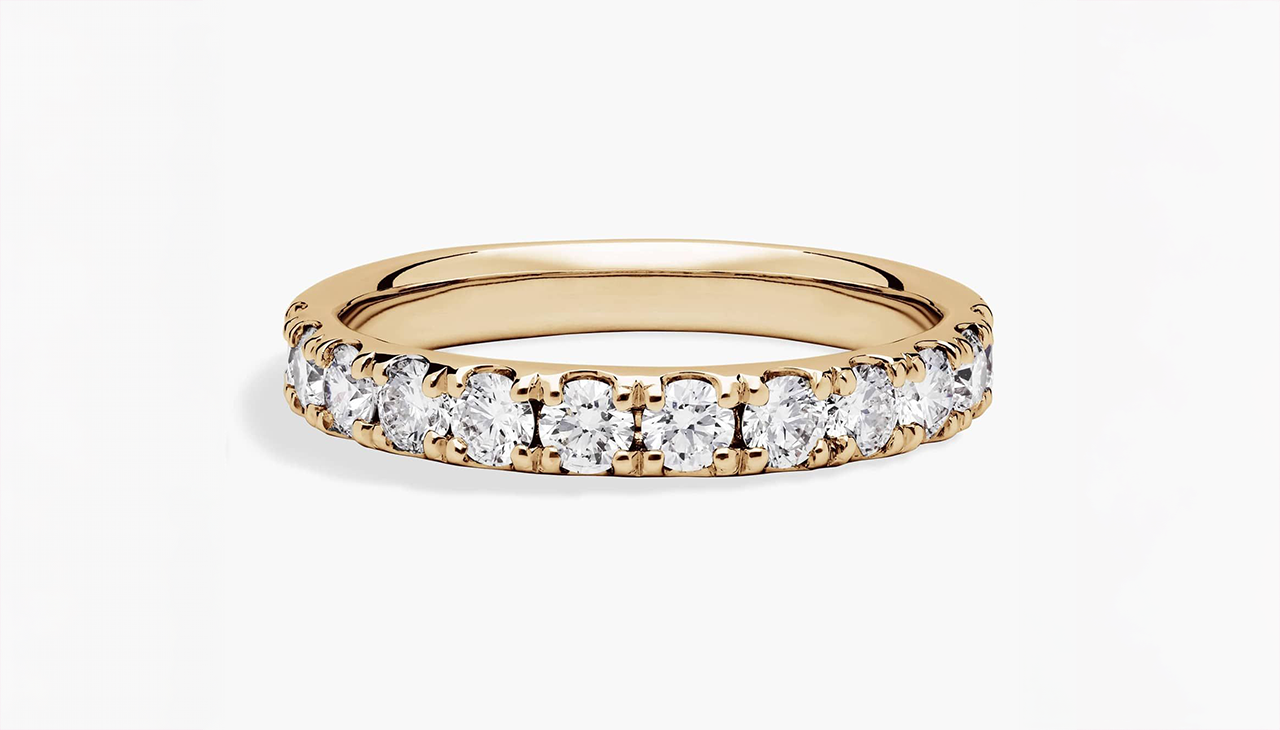
Yellow gold settings can make H color diamonds appear even whiter by blending naturally with the diamond’s faint warmth. The contrast between the warm metal and the stone often softens subtle color differences.
The tone of yellow gold can vary depending on karat, which can subtly influence how the diamond’s color is perceived in the finished piece. This pairing is especially flattering for near-colorless diamonds and is a popular choice for vintage-inspired or traditional styles.
With Rose Gold
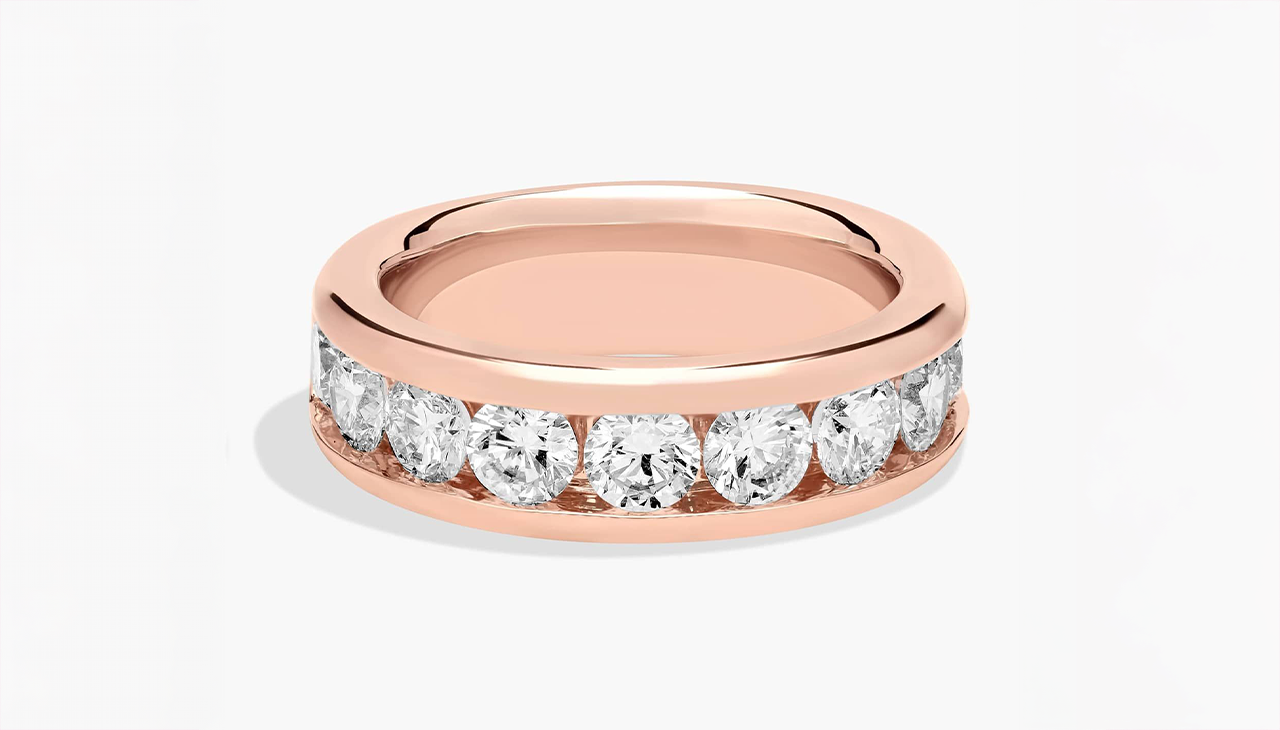
Rose gold has a similar effect to yellow gold, with warm undertones that complement the slight warmth found in H color diamonds. The metal’s pink hue pairs naturally with the diamond, creating a cohesive, balanced look.
Because of this harmony, H color diamonds often work beautifully in rose gold settings, particularly in romantic or contemporary designs.
How to Choose the Best H Color Diamond
After learning what an is H color diamond is and deciding it aligns with your priorities, the next step is refining the details. Technical factors like cut, setting and size play a major role in how bright and white the diamond appears once worn. This section focuses on how to fine-tune those choices based on your preferences.
Natural vs. Lab-Grown
Natural and lab-grown diamonds are identical in appearance and crystal structure, meaning an H color diamond will look the same in either option. The difference comes down to origin, availability and long-term considerations.
Many choose H color lab-grown diamonds because they often allow for a larger carat weight at the same budget. Natural H diamonds, on the other hand, are rarer and tend to retain stronger long-term value, which may matter to buyers focused on tradition or collectability.
Setting Type
Setting style plays an important role in how diamond color H appears when worn. This is because the amount of metal surrounding a diamond and how much light enters the stone can influence how color is perceived. Solitaire, halo and pavé settings all work especially well with H color.
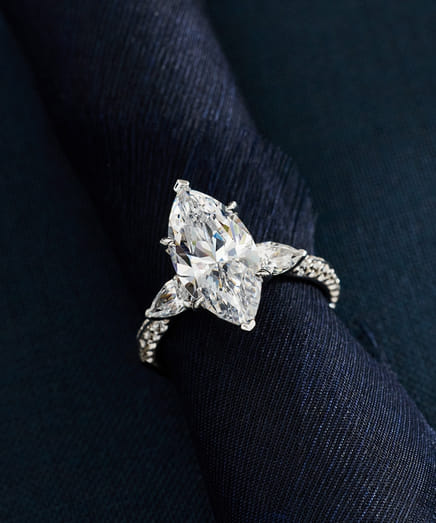
Although solitaire settings expose more of the stone, an H color diamond still looks white in most metals, particularly when paired with a complementary cut. Halo and pavé settings enhance brightness by surrounding the center stone with smaller diamonds, which helps minimize the appearance of subtle warmth and contributes to a brighter overall look.
Cut and Shape
Cut has the greatest influence on how diamond color is perceived because it affects how light moves through the stone. Facet arrangement and the way a diamond reflects and disperses light can either soften subtle warmth or make it more visible, even within the same color grade.
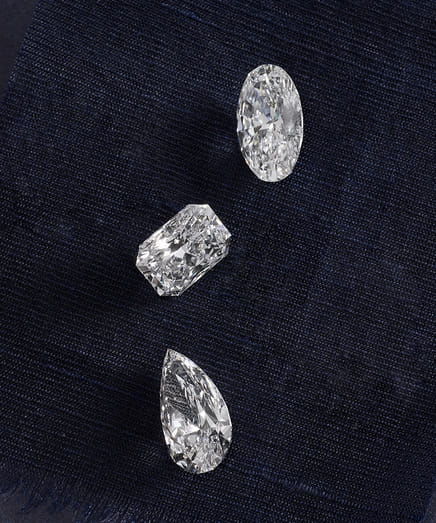
Brilliant-cut shapes, such as round, cushion, radiant and princess cuts, tend to diffuse color by breaking light into many smaller reflections. Step-cut shapes, including Asscher and emerald cut diamonds, feature broader, open facets that allow color to be seen more easily.
For larger step-cut diamonds, particularly those above two carats, some buyers choose a higher color grade to reduce the appearance of warmth.
Clarity
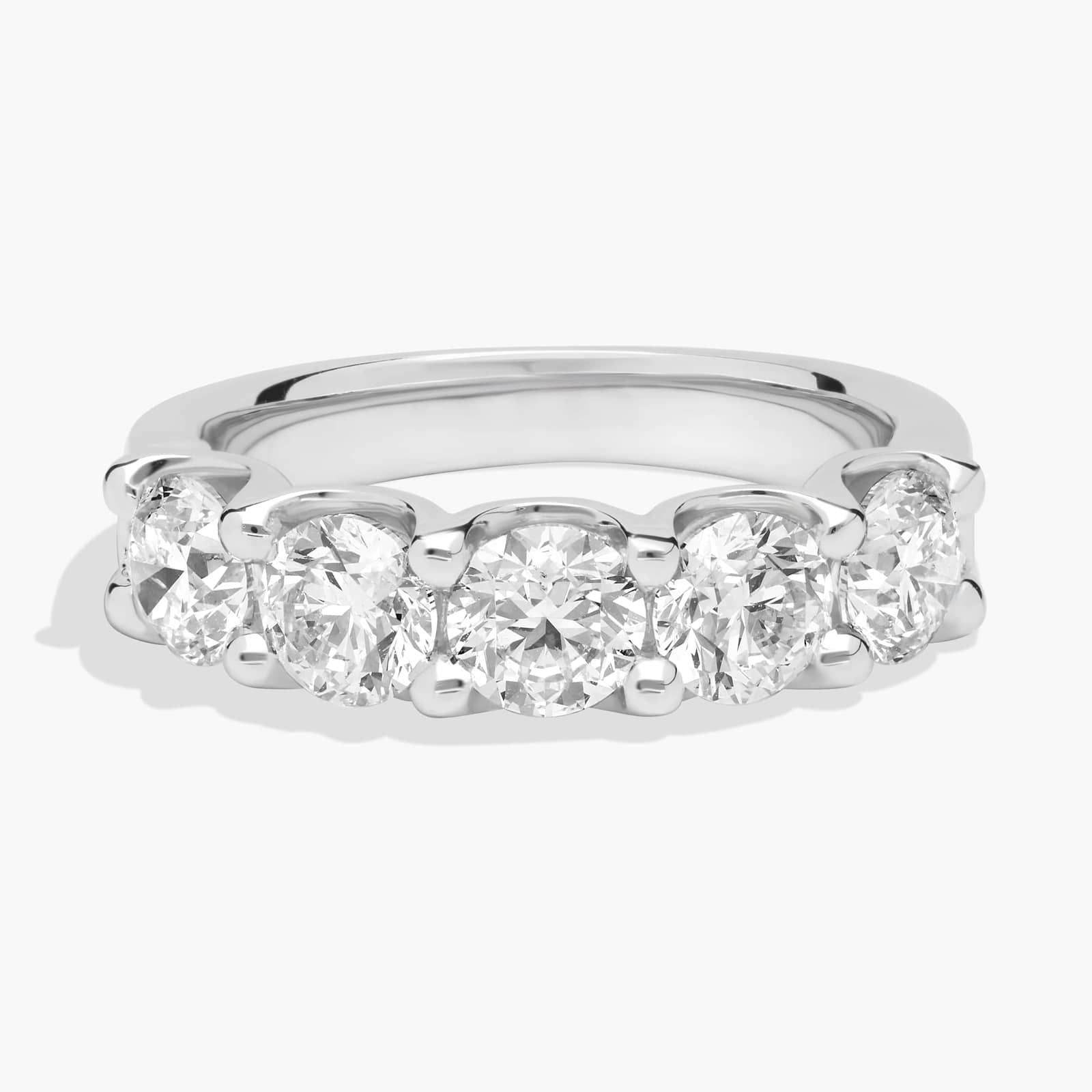
Clarity describes the presence of natural inclusions or surface characteristics within a diamond and is graded on a scale ranging from Included (I) to Flawless (FL). Lower grades have more noticeable inclusions, while higher clarity grades have fewer and smaller inclusions that are harder to detect.
Choosing a VS1 or VS2 clarity often results in an H diamond that appears free of visible inclusions to the unaided eye, without requiring a move to a higher clarity grade. This is especially true for brilliant-cut shapes. For step-cut diamonds, selecting a higher clarity grade can help maintain a clean, refined appearance, particularly as carat weight increases.
Carat
As diamonds increase in size, color becomes easier to detect. In most shapes, a well-cut color H diamond performs beautifully up to around 1.5 carats, appearing white in everyday wear.
For diamonds above two carats, especially in shapes or settings that expose more of the stone, some buyers choose a higher color grade to help reduce the visibility of warmth. This consideration becomes more important as size increases and color differences are easier to detect.
Why H Color Diamonds Are a Strong Choice
Positioned in the near-colorless range, H color diamonds appear bright and white once set and adapt easily across many styles. This allows buyers to balance color with cut, carat and design across the 4 Cs of diamond grading.
If you’re ready to move forward, the next step is narrowing in on your personal preferences, whether you’re selecting a center stone or designing a custom piece. Shop H color diamonds and explore and compare available stones to find the option that best fits your vision.
Frequently Asked Questions
An H color diamond is graded within the near-colorless range on the GIA color scale and typically appears white once set. It may show a faint hint of warmth compared to higher color grades, but this difference is subtle in everyday wear.
Yes, while there is no best color for a diamond, the color H is considered a good choice. This is because it falls within the near-colorless range and typically appears white once set. It offers a balance between visual brightness and flexibility when choosing cut, size and setting.
No, an H color diamond does not usually look yellow in real life, especially when viewed face-up in a setting. Any faint warmth is subtle and is difficult for most people to detect in everyday wear.
Yes, H is a good choice for engagement rings because it appears bright and white in most settings and works well with a wide range of designs. It is commonly used in solitaires, halos and pavé styles without drawing attention to color.
Yes, an H VS1 diamond is a strong combination because the VS1 clarity grade minimizes visible inclusions while the H color maintains a clean, white appearance once set. This pairing works especially well in brilliant-cut shapes.
Yes, an H color diamond is often considered a good value compared to higher color grades because it typically looks similar once set while allowing more flexibility in cut, carat size or design choices. Differences between H and higher grades are subtle in normal wear and often only noticeable in side-by-side comparisons.


Share




 Live Chat
 +1‑800‑242‑2728
 Email Us

