


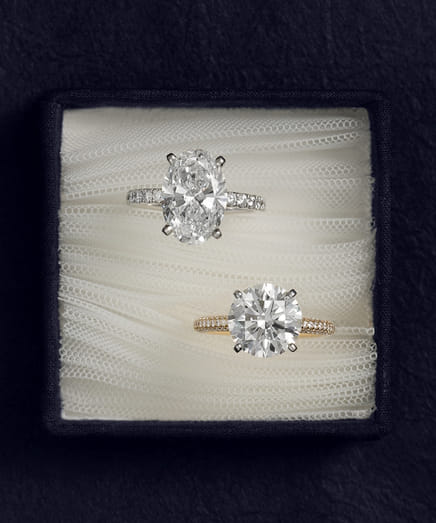
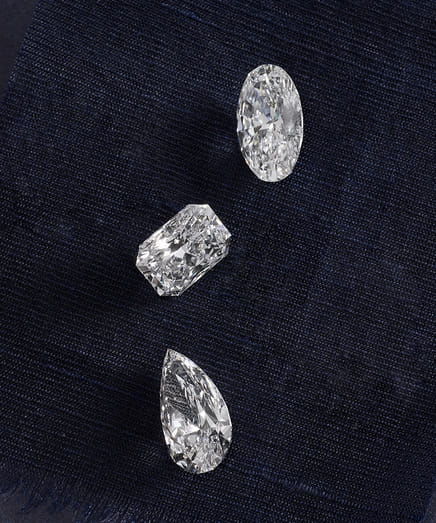


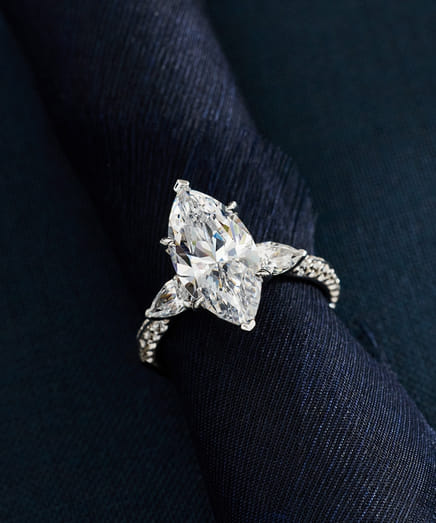
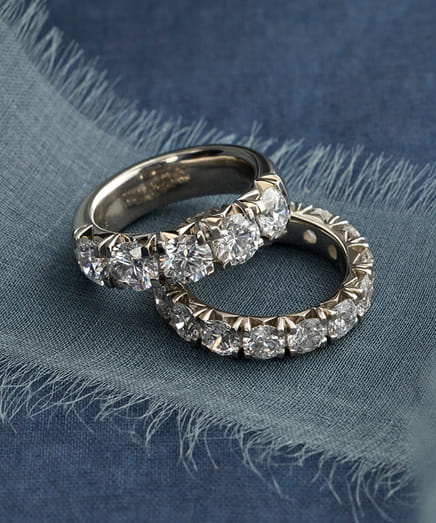
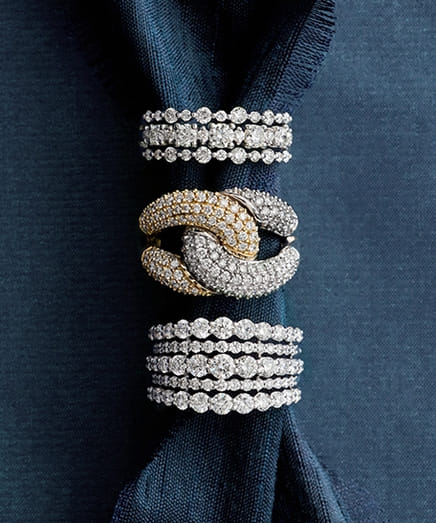
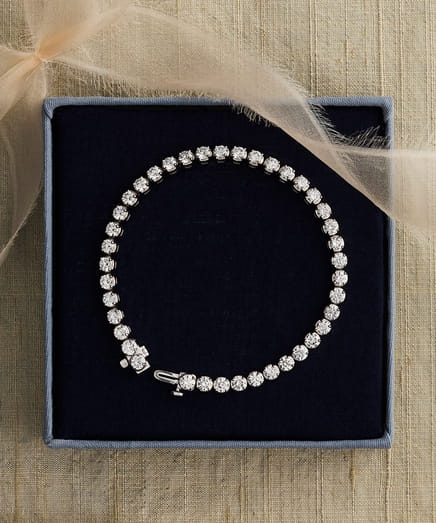
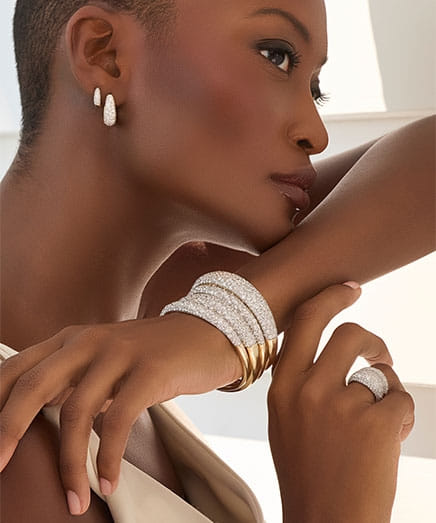
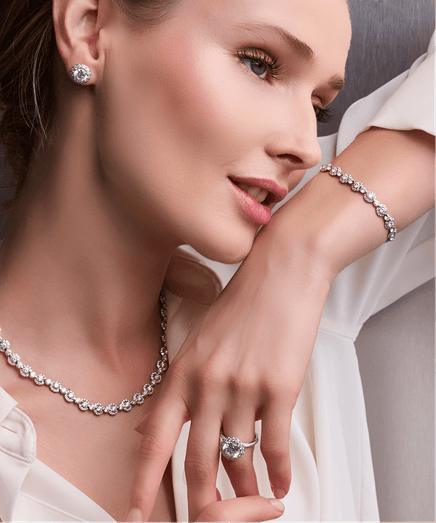


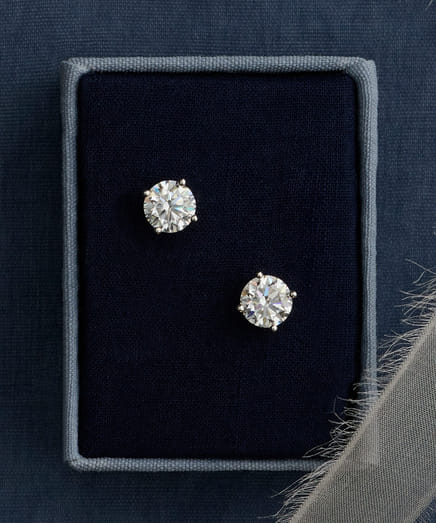
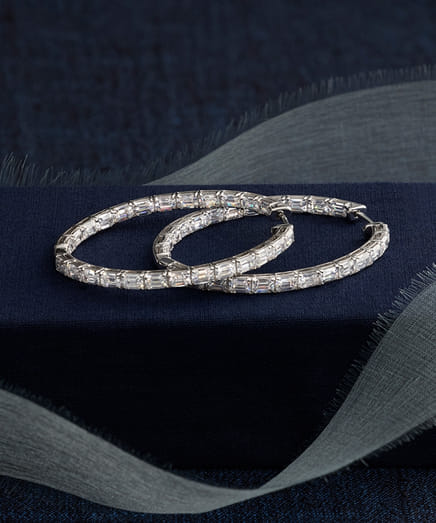

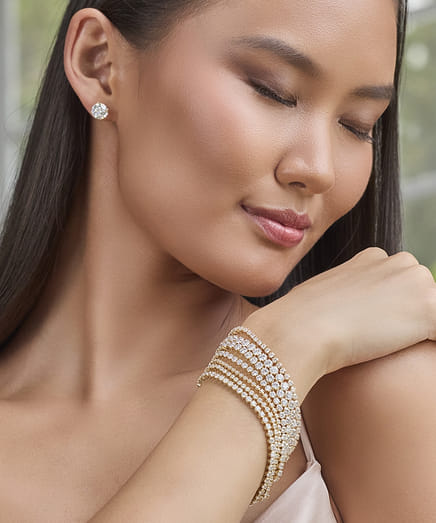


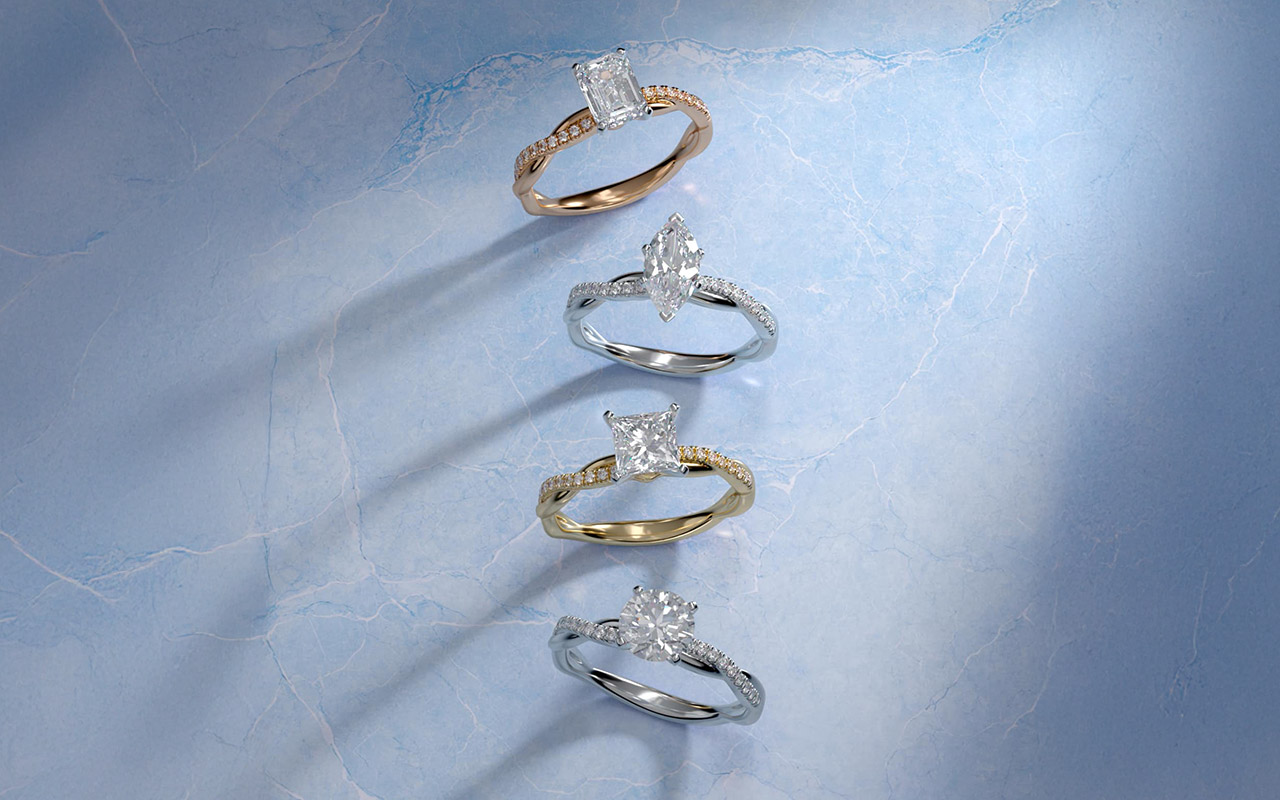
| A G color diamond sits at the top of the near-colorless range on the GIA color scale. It appears bright and white in most settings, offering an appealing balance of quality and value. |
Choosing the right diamond color often comes down to one question: how white does a diamond need to look to feel truly special? G color diamonds strike that balance, delivering a near-colorless appearance without the premium pricing of higher color grades.
To understand what a G color diamond is, it helps to look at how it compares to neighboring grades. From appearance and price to setting and shape considerations, this guide breaks down what makes G color diamonds one of the most versatile and widely chosen options available.
What are G Color Diamonds?
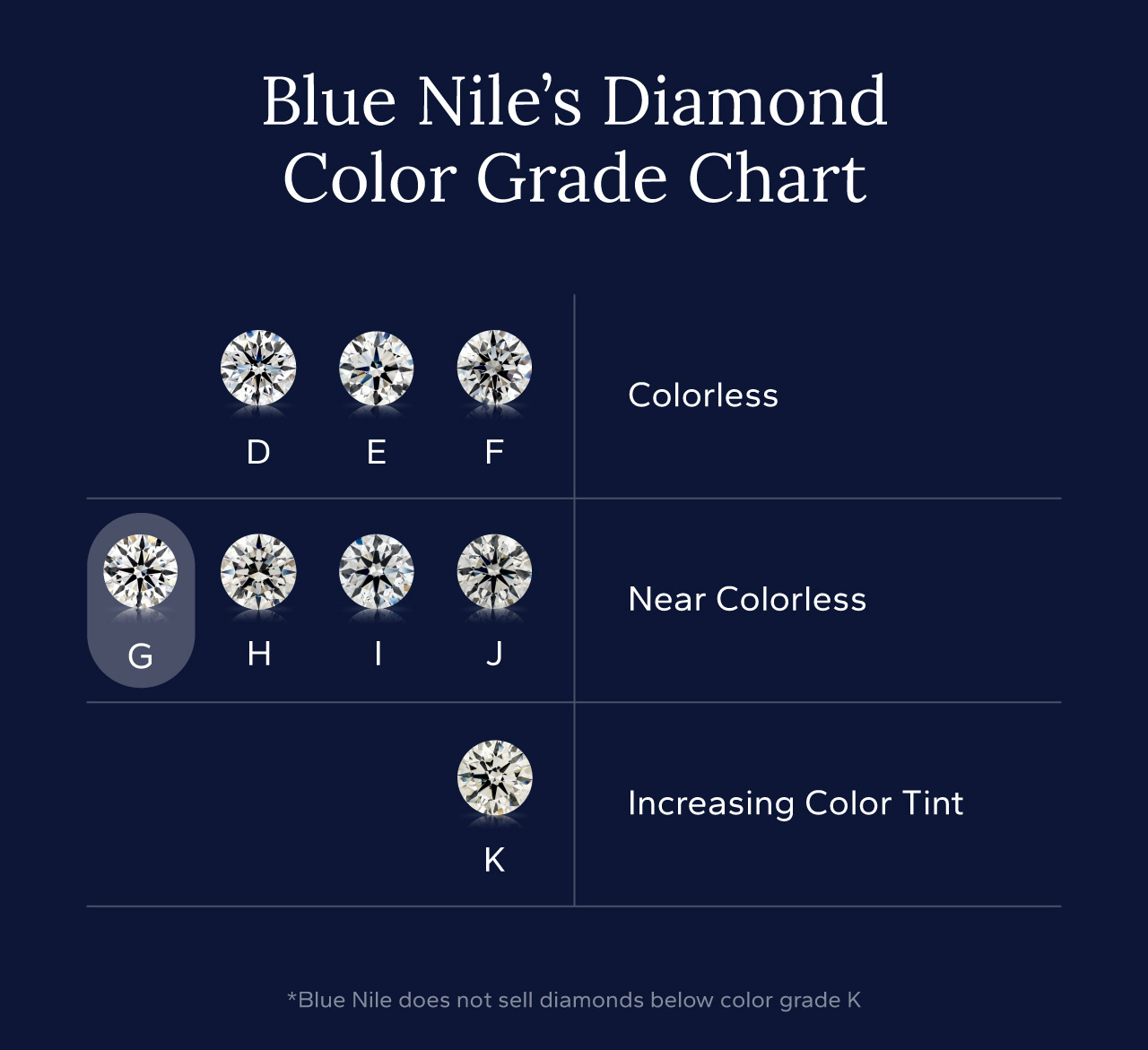
G color diamonds are classified as near-colorless, meaning they show little to no visible warmth when viewed face-up. In most settings, a G color diamond appears bright and white, with any subtle color only noticeable under controlled grading conditions rather than in everyday wear.
On the Gemological Institute of America (GIA) diamond color scale, grades range from D (colorless) to Z (light yellow or brown), with G sitting at the very top of the near-colorless category. This placement explains why G color diamonds are often chosen for their balance of white appearance and relative value compared to higher color grades.
How Much G Color Diamonds Cost
Compared to colorless grades, G color diamonds are generally priced lower while still offering a near-colorless appearance once set. Pricing is also influenced by overall quality and design details. As a reference point, a 1-carat round G color diamond typically ranges between about $2,000 and $6,000.
The wide price range is due to a variety of factors. For example, larger carat weights may show subtle color more readily, while well-cut diamonds often appear whiter and brighter regardless of size. Clarity and shape further impact cost, as higher clarity grades and certain shapes typically command higher prices.
Key Considerations When Choosing a G Color Diamond
The same characteristics that influence the cost of a G color diamond also shape how its color appears once the stone is set and worn.
Color and the 4Cs
One of the 4Cs used to evaluate overall quality, diamond color sits alongside cut, clarity and carat weight. While G color sits at the top of the near-colorless range, how that color appears once set depends on how it interacts with the other three characteristics.
- Color: A G color diamond appears bright and white in most settings, with little visible warmth when viewed face-up.
- Cut: Cut affects how light moves through G color diamonds. Styles with more facets reflect more light, which can help minimize the appearance of subtle color, while simpler facet patterns may show color more readily.
- Clarity: Clarity grades range from flawless to included, describing internal characteristics. G color diamonds are commonly paired with mid-range grades such as SI clarity (slightly included), where inclusions are often not noticeable once set.
- Carat Weight: As carat weight increases, color can become slightly more noticeable. G color remains a versatile choice across sizes, particularly when paired with light-reflective cuts.
Metal Type
The metal you choose is another factor that can subtly influence how a G color diamond looks once it’s set.
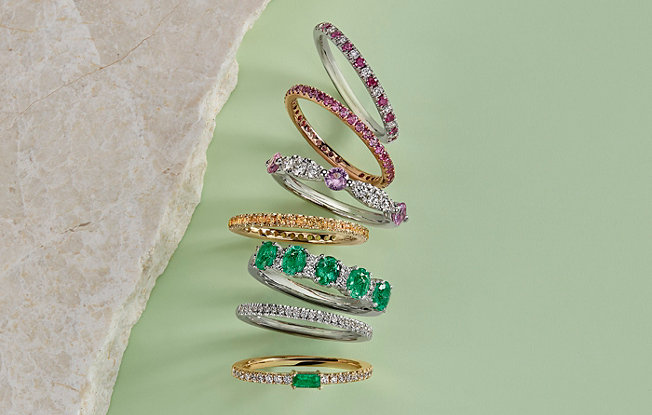
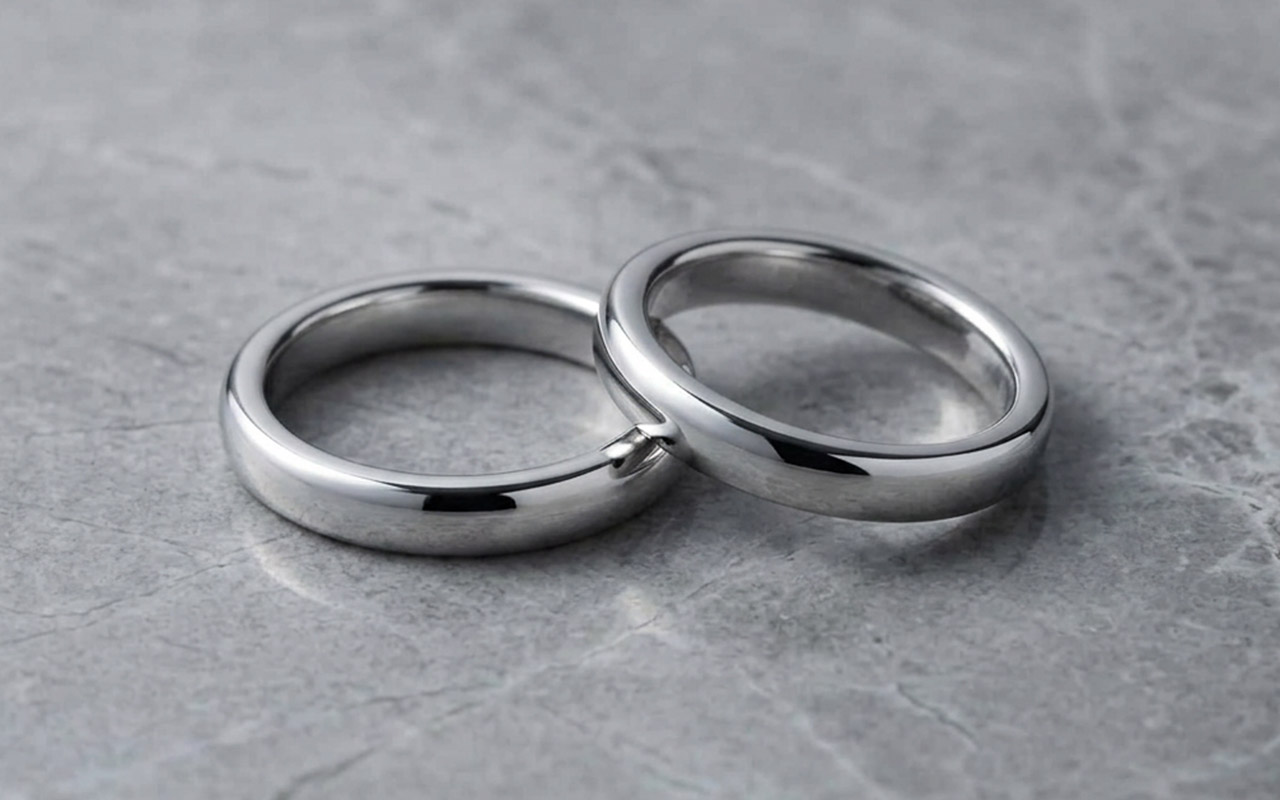
- Platinum or white gold: Both platinum and white gold emphasize a diamond’s bright, white appearance, making G color diamonds appear especially crisp.
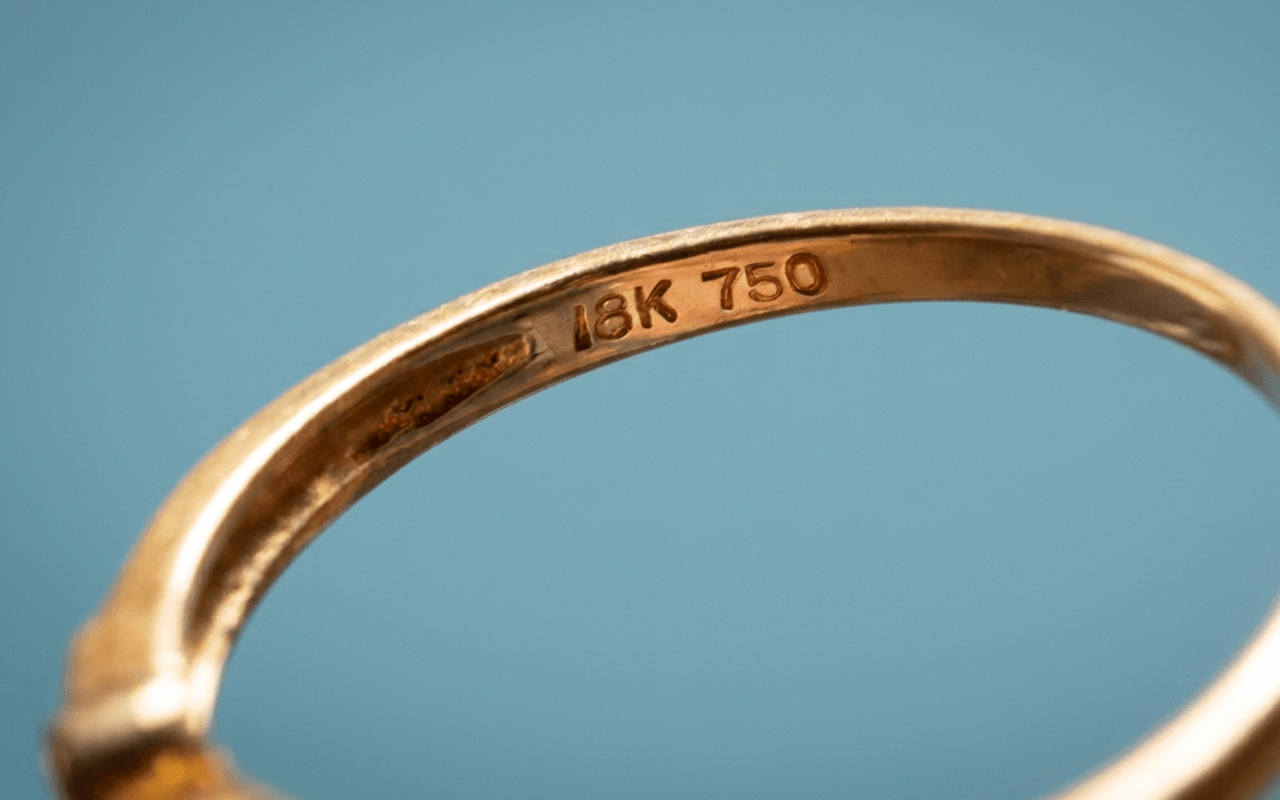
- Yellow or rose gold: Warmer metals can help blend any faint warmth in the diamond, making G color diamonds an excellent choice for these settings as well.
Diamond Shape
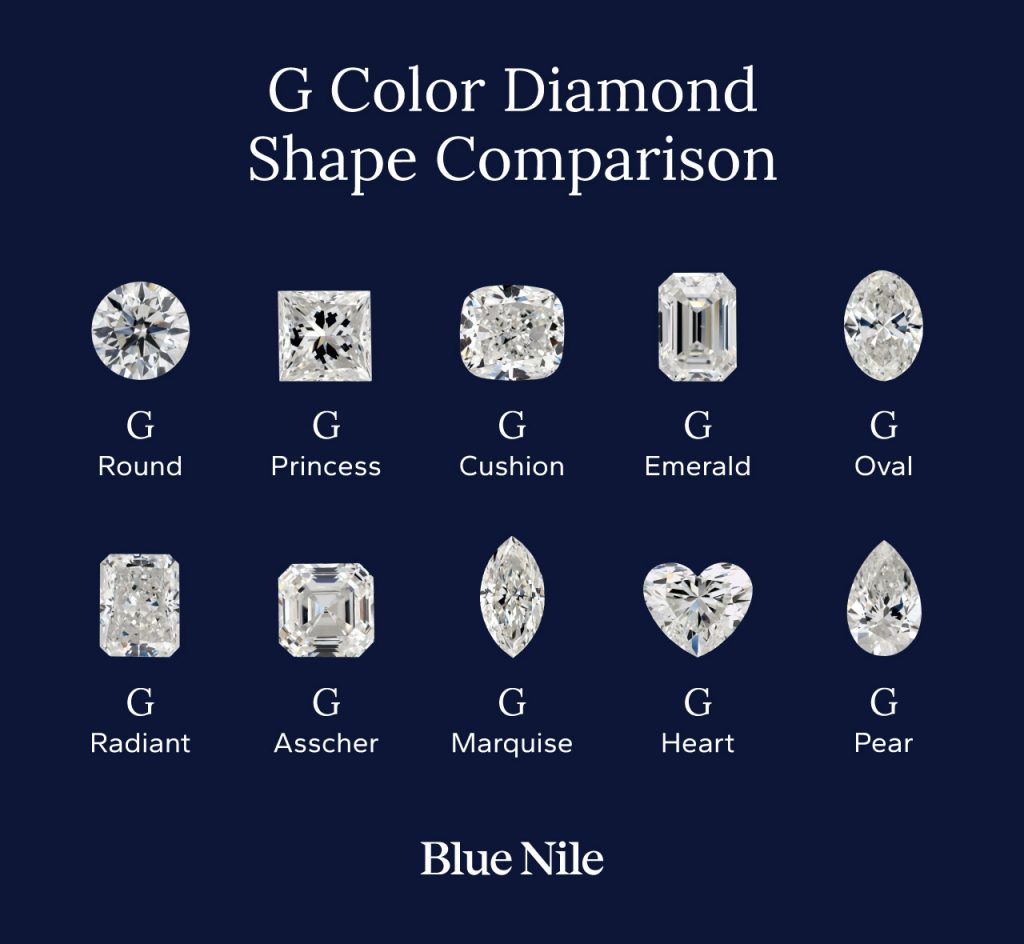
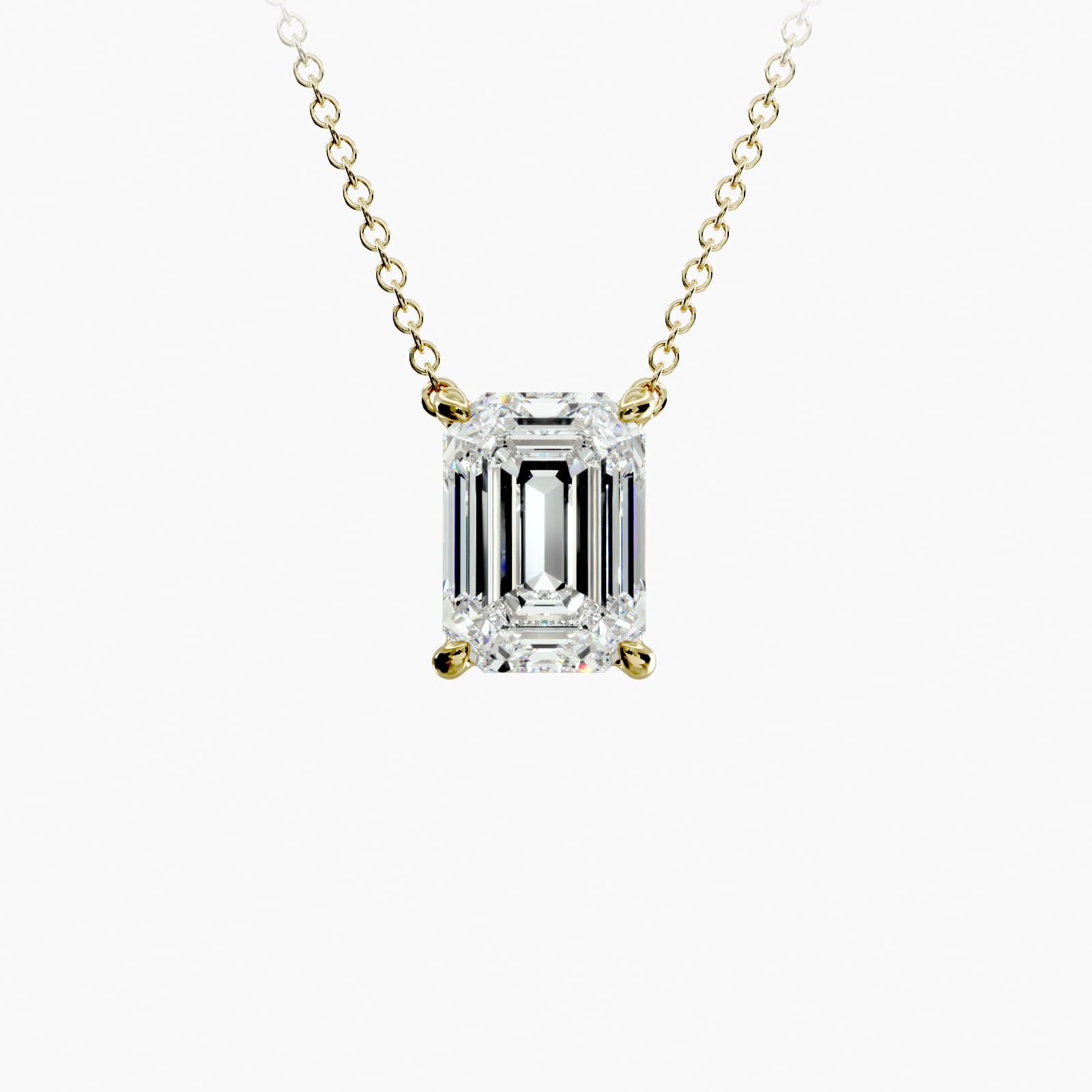
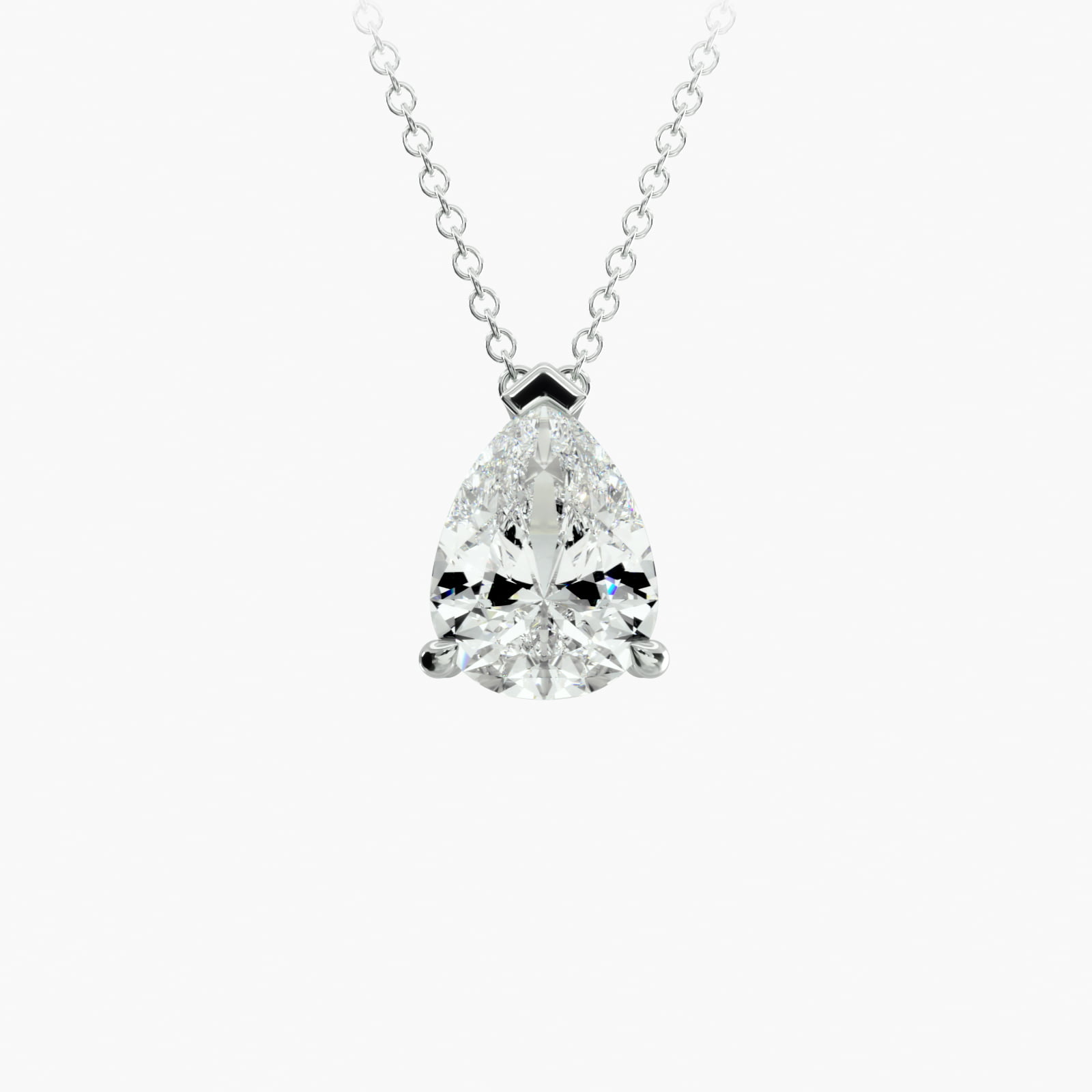
Diamond shape affects how color is revealed or concealed. Round brilliant diamonds tend to hide color best due to their faceting pattern and light return. In contrast, step-cut shapes such as emerald and Asscher diamonds have long, open facets that make color more noticeable.
Because G sits at the top of the near-colorless range, it remains a strong option across all shapes, including those that show color more readily. This versatility is one reason G color diamonds are so widely used.
Setting
The setting style can also influence how a G color diamond is perceived. Settings that allow more light to enter the diamond can enhance brightness, while designs that expose the side profile may make subtle color more noticeable.
Prong style, gallery openness and side stone placement can all affect how color appears once the diamond is worn. Choosing a setting that complements the diamond’s cut and shape helps ensure a balanced, polished look.
What G Color Diamonds Are Best For
If you’re considering what a G color diamond is best for, its versatility across styles and settings is one of its defining strengths. With a near-colorless appearance that performs well in a wide range of designs, G color diamonds adapt easily to both statement pieces and everyday jewelry.
Engagement and Wedding Rings
G color diamonds are a popular choice for both engagement rings and wedding rings because they appear bright and white once set, especially in commonly used metals and settings. Once set and worn, the visual difference between G and higher color grades is minimal, making G a comfortable choice for rings intended to be worn daily.
Their adaptability across shapes and setting styles also makes G color diamonds well suited for custom and classic ring designs alike, from solitaires to multi-stone settings.
General Wear Jewelry
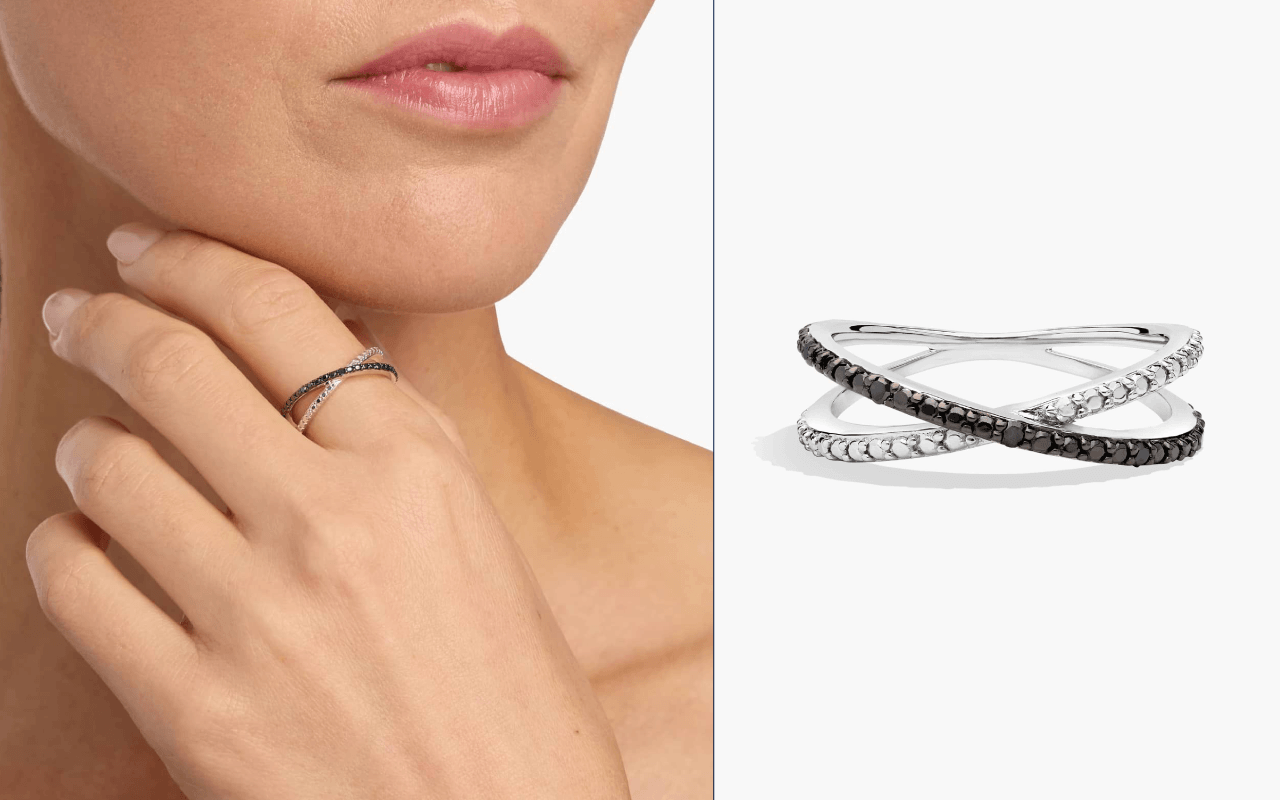
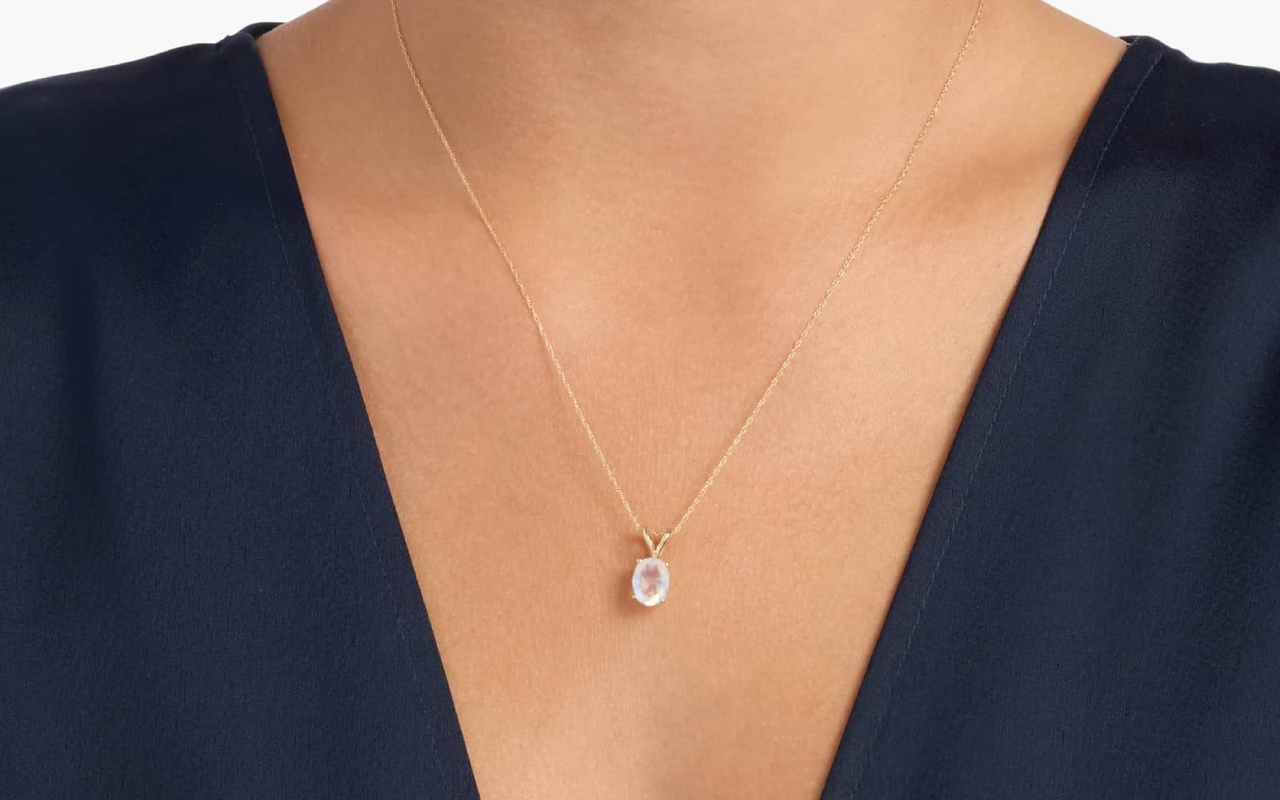
G color diamonds offer visual consistency and durability that works well for jewelry pieces worn regularly. In these designs, diamonds are often seen from a distance or in motion, where near-colorless grades maintain a clean, white appearance without drawing attention to subtle color.
This versatility makes G color diamonds a more budget-friendly option for everyday jewelry, especially when balancing appearance with long-term wear. They work well in designs where thoughtful material choices matter as much as overall look.
When It May Not Be Ideal
In some cases, a G color diamond may not align with specific preferences or design goals. Those who are highly sensitive to color differences may prefer a higher color grade, particularly in side-by-side comparisons.
Larger diamonds, typically two carats and above, can show subtle color more readily due to their size. Additionally, high-exposure settings, such as tension or open gallery designs, may make faint warmth easier to notice depending on lighting and viewing angle.
G Color vs. Other Color Diamonds
Comparing color grades side by side can clarify how a color diamond G differs from nearby options in the colorless and near-colorless ranges. While D–F diamonds fall within the colorless category, G sits at the top of the near-colorless range and often appears just as bright once set.
In most designs, the differences between neighboring grades can be subtle, but they may become easier to notice in larger stones or settings that expose more of the diamond. The table below outlines typical similarities and differences between G color diamonds and D, E, F and H color diamond grades across appearance, cost, wear and overall value.
| Feature | D Color Diamond | E Color Diamond | F Color Diamond | G Color Diamond | H Color Diamond |
| Appearance | Colorless; no visible color under standard viewing | Colorless; extremely subtle differences from D | Colorless; may show minimal warmth in some lighting | Near-colorless; appears white in most settings | Near-colorless; faint warmth visible in some settings |
| Typical Cost | Typically highest within the color scale | Slightly lower than D, still premium | Lower than D and E, still within colorless range | Typically lower than colorless grades | Generally lower than G, depending on other factors |
| Wear | Ideal for high-exposure designs and large stones | Well suited for high-visibility pieces | Performs well across most settings | Adaptable for frequent wear and a wide range of settings and shapes | Best suited for warmer metal tones |
| Value | Prioritizes absolute color purity | Maintains a colorless look with room for compromise elsewhere | Offers a colorless look with moderate flexibility | Balances appearance and flexibility across designs | Often chosen to allow more design flexibility |
Are G Color Diamonds Worth It?
When deciding if a G color diamond is good for you, it helps to know they’re generally less expensive than colorless grades while still appearing bright once set. In everyday wear, the visual difference between colorless and near-colorless diamonds is often subtle, especially without side-by-side comparison.
G color diamonds are also valued for their versatility. Design choices often influence appearance more than small differences in color grade and G color performs consistently across a wide range of jewelry styles. For many designs, that combination of appearance, flexibility and relative cost makes G color a practical choice.
Choose G Color Diamonds for Near-Colorless Value
If you’re deciding what G color diamonds are best suited for, it often comes down to priorities rather than perfection. Sitting at the top of the near-colorless range, it’s a strong option for those who prioritize jewelry design and how a diamond looks once worn more than the color grade.
Once you’ve narrowed your focus, you’re ready to apply that knowledge. Explore our selection of G color diamonds to help refine your options and move from research to selection with confidence, whether you’re planning an engagement ring or choosing a piece meant to be lived in every day.
Frequently Asked Questions
No, G color diamonds do not typically look yellow when viewed face-up or worn in jewelry. As the highest grade in the near-colorless range, G color diamonds usually appear bright and white in most settings, with any subtle warmth only noticeable under controlled grading conditions or side-by-side comparison.
A G VS1 diamond refers to a diamond with a G color grade and a VS1 (Very Slightly Included 1) clarity grade. This combination indicates a near-colorless diamond with very small inclusions that are difficult to see even under magnification, resulting in a clean appearance once set.
Yes, G is considered a good color grade for diamonds, particularly for those who value a bright appearance without prioritizing the highest color grades. G color diamonds offer a near-colorless look that performs well across different design styles. This makes them a popular and versatile choice for everyday wear and special pieces alike.


Share




 Live Chat
 +1‑800‑242‑2728
 Email Us

