![18 Necklace Clasp Types For All Jewelry Styles [Chart]](https://bluenile-blog-stage1.r2net.com/wp-content/uploads/necklace-clasp-types-hero.jpg)
A necklace clasp may seem like a small detail, but it plays a major role in both style and security.
Checking the necklace clasp types can help you choose jewelry that’s comfortable to wear, matches your personal style, is easy to fasten and secure enough for everyday life. From classic lobster clasps to elegant vintage closures, each design serves a different purpose.
In this guide, we’ll explore 18 types of jewelry clasps, explain how they work, what they’re best for and share tips for what to consider when buying a necklace.
Necklace Clasp Types: A Comparison Chart
Different types of necklace clasp designs vary in security, ease of use and style. Some are nearly invisible, while others act as decorative elements.
| Clasp Type | Best For | Ease of Use | Description |
| Lobster Claw | Everyday chains | Easy | Spring-loaded clasp shaped like a lobster claw |
| Spring Ring | Lightweight necklaces | Moderate | Small circular clasp opened with a lever |
| Toggle Clasp | Statement necklaces | Easy | Bar slides through a ring |
| Fishhook | Pearl strands | Moderate | Hook slides into decorative box |
| Barrel Clasp | Delicate chains | Moderate | Screws together |
| Slide/Tube Clasp | Multi-strand jewelry | Moderate | Strands slide into the tube lock |
| Bolt/Enhancer Clasp | Pendant necklaces | Easy | Circular clasp with an opening hinge |
| Box Clasp | Formal jewelry | Moderate | Tab slides into decorative box |
| S-Hook Clasp | Artisan necklaces | Easy | S-shaped hook connects loops |
| Push Button | Modern jewelry | Very easy | Button releases clasp |
| Albert Swivel | Pocket watch chains | Moderate | Swiveling clasp |
| T-Bar and Ring | Chunky necklaces | Easy | Bar slides through the ring |
| Padlock Clasp | Vintage styles | Moderate | Small decorative lock |
| Bayonet Clasp | Luxury strands | Easy | Twist-lock closure |
| Multi-Strand Clasp | Layered necklaces | Moderate | Multiple loops lock together |
| Fold-Over Clasp | Bracelets & chains | Easy | Folding clasp snaps closed |
| Ball/Bead Clasp | Pearl necklaces | Moderate | Two halves snap together |
| Infinity Clasp | Fine chains | Easy | Hook shaped like an infinity symbol |
1. Lobster Claw
A lobster claw clasp is one of the most popular necklace clasp types because it’s secure and easy to operate. This clasp uses a small spring mechanism that opens when you press a lever. The hook then clips onto a jump ring at the other end of the chain.
Because they’re durable and reliable, lobster clasps are often considered the gold standard among types of jewelry clasps for daily wear.
2. Spring Ring
A spring ring clasp is a classic circular clasp commonly used on lightweight chains. To open it, you pull back a tiny lever that retracts the internal spring mechanism. The ring then clips onto the opposite loop of the necklace.
Spring ring clasps are smaller than lobster clasps, which makes them subtle and discreet. However, the small lever can make them slightly harder to use for people with limited dexterity. Despite this limitation, spring rings remain one of the most common jewelry clasps used in fine chain necklaces.
3. Toggle Clasp
Unlike more hidden closures, toggle clasps often act as decorative elements. Designers may place them at the front or side of a necklace so they become part of the overall style.
Toggle clasps are popular for chunkier chains or statement pieces because the bar and ring are large enough to operate easily. This combination of functionality and style makes toggle clasps a favorite among modern jewelry designs.
4. Fishhook
A fishhook clasp is a decorative clasp often found on pearl necklaces. The design features a hook that slides into an oval-shaped box, which then locks securely in place.
Many pearl strands also include a safety latch for extra protection. For this reason, fishhook clasps are common in vintage pearl necklace clasps and heirloom jewelry.
5. Barrel Clasp
A barrel clasp secures a necklace by screwing the two ends together. The design resembles a small barrel with threaded ends that twist tightly into place. This creates a strong connection that stays hidden within the chain.
Barrel clasps are especially common on delicate necklaces because they blend seamlessly into the design. However, they require two hands to open and close, which can make them slightly less convenient than other necklace clasp types.
6. Slide/Tube Clasp
Many people prefer slide or tube clasps for layered necklace styles, combining multiple chains into a single cohesive piece. In this design, several strands slide into a hollow tube that locks them together. This keeps the strands aligned and prevents tangling.
7. Bolt/Enhancer Clasp
A bolt or enhancer clasp is a circular clasp that opens with a hinge mechanism. This type of clasp allows wearers to easily attach or remove pendants, making it especially useful for customizable jewelry. Charm necklaces or statement pendants often feature enhancer clasps to support flexibility.
8. Box Clasp
A box clasp uses a small tab that slides into a decorative box-shaped closure. Once inserted, the tab locks into place with tension. Many box clasps also include side safety latches for additional security.
Because of their elegant look, box clasps are commonly found in tennis necklaces, gemstone strands and other formal jewelry pieces.
9. S-Hook Clasp
An S-hook clasp features a simple S-shaped hook that connects two loops of the necklace. The design is straightforward and easy to fasten without having to look behind your neck.
S-hooks are popular in artisan jewelry and handmade pieces. They add a slightly rustic, handcrafted aesthetic.
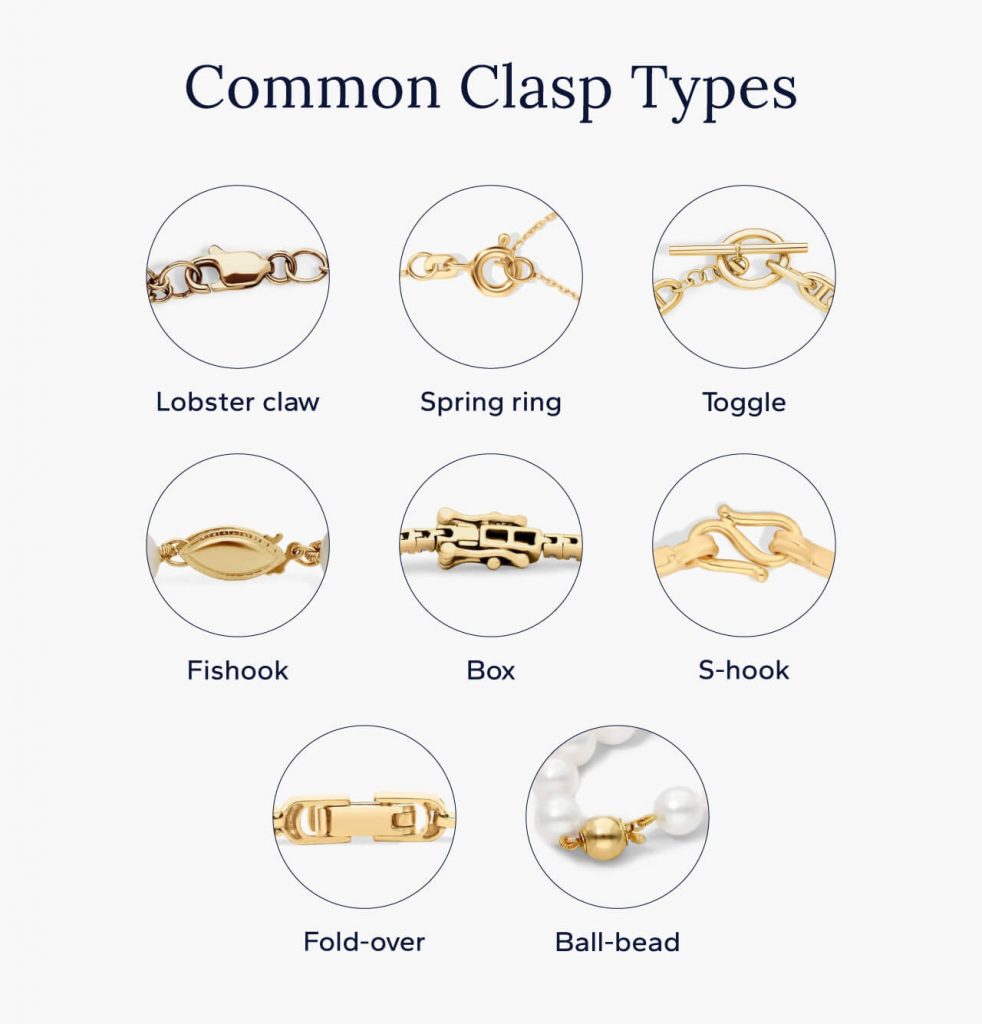
10. Push Button
A push-button clasp uses a small release button to open the clasp mechanism. When the button is pressed, the clasp unlocks and separates. Releasing the button locks it again.
This type of clasp is extremely user-friendly and is often used in modern fine jewelry.
11. Albert Swivel
An Albert swivel clasp originates from pocket watch chains. It includes a swivel mechanism that allows the chain to rotate freely without tangling. Today, it appears in vintage-inspired jewelry and watch chains.
12. T-Bar and Ring
A T-bar clasp consists of a straight bar that slides through a circular ring. This design resembles a toggle clasp but is often smaller and more minimalist.
The T-bar clasp is a favorite for chunky chains and fashion necklaces since it’s easy to fasten with one hand and has an edgy look.
13. Padlock Clasp
A padlock clasp functions like a miniature lock. The clasp may open with a tiny lever or key-like mechanism, securing the necklace in place. Padlock closures are common in dating vintage necklace clasps, particularly in Victorian and Edwardian jewelry.
14. Bayonet Clasp
A bayonet clasp secures a necklace using a twist-and-lock mechanism. You insert one side into the other and rotate it slightly until it clicks into place. This design is especially common in luxury pearl necklaces because it’s both secure and easy to operate.
15. Multi-Strand Clasp
A multi-strand clasp connects several necklace strands into a single closure. Each strand attaches to a separate loop, ensuring the necklace remains evenly spaced and untangled. These clasps are commonly used in layered or statement necklaces.
16. Fold-Over Clasp
A fold-over clasp works by folding a hinged metal piece over the connecting bar. Once closed, the clasp snaps into place and stays secure. Fold-over clasps are versatile, appearing in bracelets as well as in heavier necklaces.
17. Ball/Bead Clasp
A ball or bead clasp connects two rounded halves that snap together. The design blends seamlessly with pearl necklaces and gemstone strands.
The ball clasp has a particularly decorative appearance. For this reason, this clasp is a favorite among vintage pearl necklace clasp types.
18. Infinity Clasp
An infinity clasp features a hook shaped like the infinity symbol. The design allows one end of the chain to slide through the loop and secure in place.
Infinity clasps are both decorative and functional, making them popular in minimalist jewelry styles.
Why the Type of Necklace Clasp Matters
While often overlooked, the clasp is one of the most functional components of any necklace and can significantly impact how practical the piece is for everyday wear. Designers use different necklace clasp types for specific purposes. Some prioritize strength and safety for valuable jewelry, while others focus on ease of use or decorative appeal.
If you have the chance to choose between different necklace clasp types, consider the following factors:
- Comfort: A clasp should sit smoothly against the skin without snagging hair or clothing. Smaller clasps like spring rings or barrel clasps tend to feel more discreet, while larger clasps, such as toggles, may be more noticeable depending on the necklace design.
- Durability: Strong clasps, like lobster claws and bayonet clasps, are built to withstand regular wear. These closures often use reinforced mechanisms that hold up well over time, making them ideal for necklaces worn frequently.
- Security: Reliable closures help prevent accidental loss of valuable jewelry. Premium pieces, such as diamond or pearl necklaces, can include secure mechanisms or secondary safety latches to keep the necklace firmly fastened.
- Accessibility: Some designs are easier to fasten without assistance. People who prefer jewelry that can be put on quickly find it easier to use larger clasps, such as toggle or push-button clasps.
- Design integration: Certain jewelry clasps are meant to blend into the chain, while others serve as decorative features. Padlocks and vintage box clasps usually become part of the necklace’s visual design.
How to Choose the Right Necklace Clasp
The right necklace clasp depends on your lifestyle and how frequently you wear the piece. While many people focus on the chain or pendant design, the clasp plays a key role in how secure and practical the necklace will be over time.
When evaluating types of necklace clasps, consider the following:
- Typical wear: Everyday jewelry benefits from durable clasps like lobster claws or box clasps because they’re built to withstand frequent use. If you wear a necklace daily, choosing a strong clasp helps maintain both security and longevity.
- Desired style: Decorative clasps, such as toggles and padlocks, can be incorporated into the necklace’s overall design. Some necklaces intentionally showcase the clasp at the front or side, turning a functional element into a stylish feature.
- Ease of use: Larger clasps are generally easier to operate, especially for those who prefer jewelry that can be fastened quickly. Lobster clasps and push-button closures are often easier to handle than small spring ring clasps.
- Value: Premium jewelry often includes more secure clasp mechanisms or additional safety features. For example, many fine necklaces feature box clasps with safety latches to provide extra protection against accidental opening.
- Necklace weight: Heavier necklaces require stronger closures. Thick chains, gemstone strands or multi-strand necklaces typically use reinforced clasp designs that can support the additional weight without loosening over time.
- Maintenance and longevity: Some clasp designs are easier to maintain or replace than others. Choosing a sturdy, well-constructed clasp can help ensure your necklace remains reliable for years of wear.
Durable and Secure Necklaces from Blue Nile
Having the right necklace clasp type helps ensure your jewelry looks great and stays secure. The right clasp adds comfort, durability, style and peace of mind.
The right clasp makes all the difference. Discover necklaces designed for everyday confidence and lasting style.
Frequently Asked Questions
The most secure clasp for a necklace is typically a lobster claw or box clasp, as both feature strong locking mechanisms that prevent accidental opening.
Common types of necklace clasps include lobster claw, spring ring, toggle, box clasp, barrel clasp, fishhook clasp, S-hook clasp and fold-over clasp.
A butterfly clasp is most commonly used on earrings rather than necklaces. It’s a small backing that secures a stud earring post with spring tension.
An alligator clasp is a jewelry clasp that opens and closes with a spring-loaded hinge, similar to an alligator’s jaws. It typically features small interlocking teeth that grip the opposite end of the necklace or bracelet securely. This clasp style is sometimes used in heavier jewelry pieces or designs that require extra stability and a stronger hold.


Share